

If your back feels stiff after a long day, the cat cow stretch can help you feel loose again in under two minutes. It gently moves your whole spine through flexion and extension, and your breath guides every part of the movement. In addition, it needs no equipment and no special skills, so anyone can start today.
In this guide, you will learn exactly how to do it with clean form. First, we will walk through the setup and the two phases. Then you will see the most common mistakes, plus simple variations for tight backs and sensitive knees. Finally, we will show you how to fit it into your day so it becomes a real habit.
What Is the Cat Cow Stretch?
The cat cow stretch is a gentle yoga move done on your hands and knees. It pairs one breath with one slow spinal wave. As a result, your back, neck, and core all get moving together.
You inhale into an arched-back position called cow. Then you exhale into a rounded-back position called cat. Moreover, the whole move stays slow and controlled, so it works for almost every fitness level.
Yoga teachers use it as a warm-up before harder poses. However, you do not need to practice yoga to enjoy it. For instance, desk workers, new parents, and older adults all use it daily to ease morning stiffness.
It also works as a quick posture reset between long tasks. In fact, many physical therapists recommend it because it is gentle enough for injured or deconditioned clients. Additionally, athletes use it to wake up the spine before training without adding fatigue.
How to Do the Cat Cow Stretch Step by Step
The cat cow stretch pairs one breath with one spinal wave. Therefore, your breathing sets the pace, not your muscles. Let us break it into four simple parts.
Set Up Your Tabletop Position
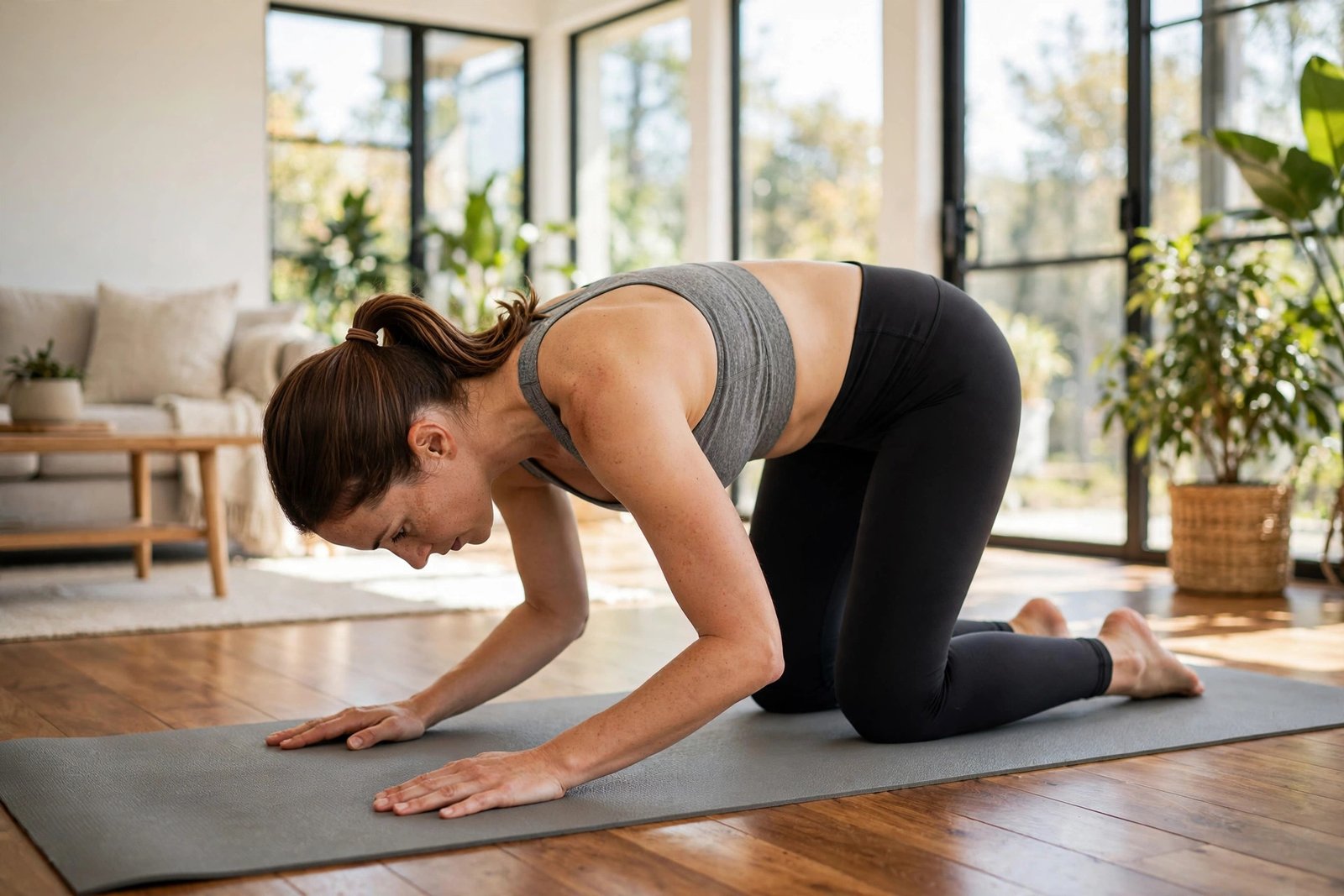
Start on all fours on a mat or a soft rug. Place your wrists directly under your shoulders and your knees under your hips. In addition, spread your fingers wide and press the floor away with your palms.
Keep your shins flat on the floor behind you. Your back should start flat like a tabletop, not sagging or arched. Meanwhile, keep your head in line with your spine and let your eyes look at the floor.
Cow Phase: Inhale and Open Up
Take a slow breath in through your nose. Let your belly sink gently toward the floor as your back arches down. At the same time, lift your head and tailbone slightly toward the ceiling.
This is the “cow” half of the move. Open your chest and draw your shoulder blades together behind you. However, do not force the arch or push your belly down hard.

Cat Phase: Exhale and Round Up
Now breathe out slowly through your nose or mouth. Round your whole back up toward the ceiling like a stretching cat. Tuck your chin toward your chest and draw your belly button in toward your spine.
Press the floor away with your hands to feel the stretch between your shoulder blades. In addition, let your tailbone tuck slightly under. Hold this rounded shape for one full exhale.
Link Breath to Movement
Flow between the two shapes for five to ten full breaths. Inhale into cow, then exhale into cat. Meanwhile, keep your movements smooth instead of jerky.
Your breath should lead, and your body should follow. For example, if your breath is short, your movement will be short too. Therefore, breathe slowly and let each round last about eight to ten seconds.
When you want more detail on the pose itself, this step-by-step cat pose guide offers helpful photos and alignment cues.
Why the Cat Cow Stretch Feels So Good
The cat cow stretch gently wakes up your spine after hours of stillness. Indeed, it moves every segment from your neck to your lower back. As a result, stiff joints get warm, flowing blood, and tight muscles begin to relax.
Here are seven benefits you may notice after a few weeks of daily practice.
1. It loosens a stiff spine. Sitting locks your spine in one rounded shape for hours. In contrast, this move gently flexes and extends the whole column, so each joint gets its full range back.
2. It eases lower-back tension. The slow wave of motion calms tight muscles along your spine. Moreover, the gentle pumping action can relieve the dull ache that builds during desk work.
3. It improves posture awareness. You learn what a rounded back and an arched back actually feel like. Consequently, you start to notice when you slouch at your desk, and you can correct it sooner.
4. It warms up your core. Drawing your belly in during the cat phase wakes up your deep abdominals. Additionally, these muscles support your spine all day long once they are active.
5. It relieves neck and shoulder tightness. The movement carries up through your upper back into your neck. As a result, the tension from hunching over a phone or laptop begins to melt.
6. It calms your nervous system. Slow, rhythmic breathing signals safety to your body. Therefore, a few rounds can lower stress and help you feel centered before a busy day or at bedtime.
7. It prepares your body for harder moves. Trainers use it as a warm-up because it wakes up the spine safely. Similarly, it pairs well before strength work, running, or deeper stretching.
If you enjoy spinal extension and want to go further, our backbend stretch guide teaches safe, beginner-friendly backbends for once your spine feels warmed up.
Common Mistakes in the Cat Cow Stretch
Most people learn the shapes in one minute, but small errors limit the benefits. Rushing turns the flow into a sloppy wiggle. Fortunately, each mistake below has an easy fix.
1. Moving Too Fast
Speeding through the move skips the whole point. The benefit comes from slow, breath-led motion. Therefore, aim for at least five seconds per phase instead of bouncing between shapes.
2. Holding Your Breath
Many beginners forget to breathe and tense up instead. In fact, the breath is the engine of this stretch. So inhale clearly into cow, exhale fully into cat, and never rush either one.
3. Collapsing the Shoulders
During the cat phase, some people let their shoulders creep up by their ears. However, your shoulders should stay down and away from your ears. Press the floor away and feel your shoulder blades spread wide.
4. Overarching the Lower Back
In the cow phase, it is easy to dump all the arch into your lower back. This can pinch or ache, especially if your back is sensitive. Instead, spread the arch across your whole spine and keep your belly gently engaged.
5. Craning the Neck
Throwing your head back hard in the cow phase strains your neck. Similarly, jamming your chin to your chest in cat creates tension. Keep your neck long and let it follow your spine, not lead it.

Simple Cat Cow Stretch Variations to Try
Once the classic version feels easy, these variations add a fresh challenge. In addition, two of them work great if your knees hurt on the floor.
Seated Cat Cow Stretch
Sit tall in a sturdy chair with your feet flat on the floor. Place your hands on your knees. Then inhale as you arch your back and lift your chest forward.
Exhale as you round your back, tuck your chin, and press your hands into your knees. Moreover, this version is perfect for office breaks since you never leave your chair.
Standing Cat Cow Stretch
Stand with your feet hip-width apart and your knees slightly bent. Place your hands on your thighs. Next, inhale into a gentle arch and exhale into a round, just like the floor version.
This is a great option during travel or long meetings. Additionally, it warms up your back before lifting or exercise when no mat is nearby.
Slow-Motion Cat Cow Stretch
Move through the wave one vertebra at a time. Start the round at your tailbone and let it ripple up to your neck. As a result, you build deep awareness of every part of your spine.
Try three ultra-slow rounds that last a full minute each. On the other hand, if your mind wanders, shorten the rounds and focus on matching your breath exactly.
For extra mid-back opening alongside these variations, pair the routine with our thoracic mobility exercises. They target the stiff upper-back area many desk workers struggle with.
When to Do the Cat Cow Stretch During Your Day
The best time is whenever your back feels stiff. However, certain moments give you the biggest payoff for the least effort.
First thing in the morning. Your spine loses fluid overnight and feels creaky at dawn. For instance, five slow rounds right after you get up can make the whole day feel easier. In fact, many people pair it with a short morning stretching routine for a complete wake-up.
During work breaks. Set a timer every hour and do one minute of the seated version. As a result, you undo the rounding that builds up from typing and meetings. Moreover, your focus often improves after the movement break.
Before workouts. Two minutes of the classic version warms up your spine for lifting, running, or sports. Similarly, it works as a gentle reset between long sets at the gym.
Before bed. Slow rounds with long exhales calm your nervous system. Consequently, your body gets the signal that it is time to wind down. Healthline also lists cat-cow among its recommended morning yoga poses for starting the day with better mobility.
During recovery days. On rest days between harder workouts, ten gentle rounds keep blood flowing without strain. Similarly, it soothes soreness after long runs or heavy lifting sessions. As a result, you recover a little faster and feel less achy the next morning.

Frequently Asked Questions
Is the cat cow stretch good for back pain?
It can help with mild, everyday back stiffness. The gentle motion increases blood flow and loosens tight muscles. However, stop if you feel sharp or shooting pain, and see a doctor or physical therapist for ongoing pain.
How many rounds of cat cow stretch should I do?
Five to ten slow rounds is a great daily target. That takes about two to three minutes. Additionally, you can do more if it feels good, since this move is very gentle on the body.
Can beginners do the cat cow stretch?
Yes, it is one of the best moves for beginners. It needs no flexibility and no strength to start. In fact, many yoga classes open with it because it teaches breath control right away.
Should my knees hurt during the stretch?
Your knees should not hurt. If they do, place a folded blanket or pillow under them. Alternatively, try the seated or standing version until your knees feel more comfortable.
Is it safe during pregnancy?
Many prenatal programs include a gentle version of it. It can ease lower-back pressure during pregnancy. Nevertheless, always check with your doctor first and stop if anything feels uncomfortable.
What is the difference between cat-cow and child’s pose?
Cat-cow is a moving flow between two shapes, while child’s pose is a still resting position. Both stretch the back, but cat-cow builds mobility through motion. Therefore, they pair nicely together in one routine.
Conclusion
The cat cow stretch proves that small moves can create big change. Two minutes of slow, breath-led spinal waves can undo hours of sitting. Moreover, it asks nothing of you beyond a patch of floor and your own breathing.
Start with five rounds tomorrow morning. Then add a midday round at your desk using the seated version. As a result, within two weeks you will likely notice a looser back, easier posture, and a calmer mind.
Keep it simple, keep it slow, and keep it daily. Indeed, the best stretch is the one you actually do, and this one makes showing up easy.
