


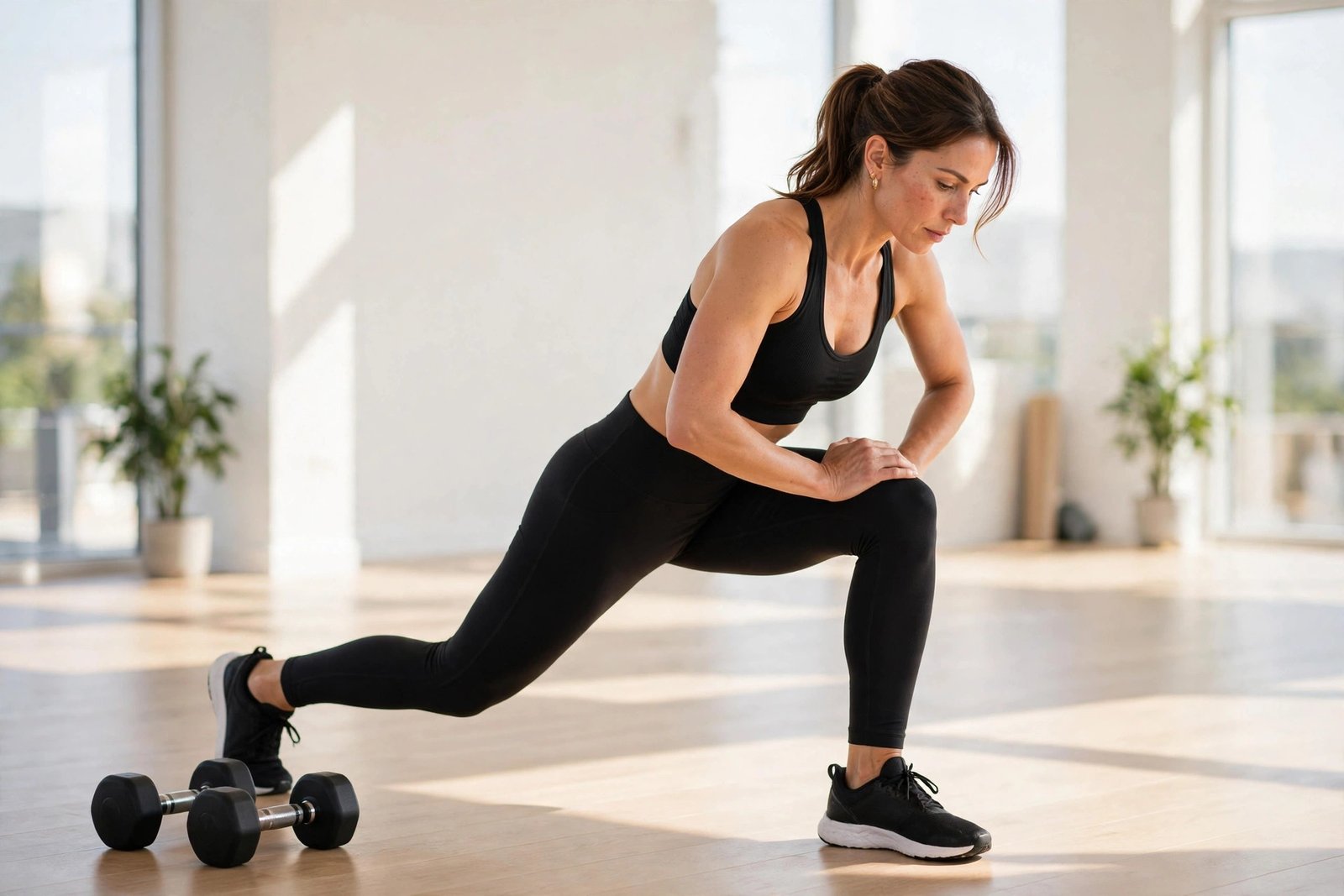
If you are new to exercise and wondering about stretching vs strength training, you are asking one of the best beginner questions out there. Both build a healthier body, but they do it in very different ways. This guide gives you the honest answer, including the one question everyone asks: can you get flexible from lifting weights?
The short answer is yes: you need both. However, it probably works differently than you expect. Lifting can improve your range of motion more than most people think. Stretching, on the other hand, does things no amount of lifting can replace.
Below, this stretching vs strength training guide breaks down what each one does and where each wins. Then you will get a simple weekly plan that fits real life. You do not need a gym membership or fancy gear to start either one.
What Stretching Actually Does for Your Body
Stretching gently lengthens your muscles and the connective tissue around them. Over time, this improves your range of motion, which means your joints can move more freely.
It also tells your nervous system to relax. That is why a calm stretch session can lower muscle tension after a long day. In addition, regular stretching helps you notice tight spots before they turn into pain.
Stretching improves blood flow to your muscles. Better circulation means your body recovers faster and moves more easily. For example, people with stiff hips often feel noticeably looser after just two weeks of daily stretching.
First, know that there are two main types worth knowing. Dynamic stretching uses controlled movement, like leg swings, and works best before activity. Static stretching holds a position, like a hamstring stretch, and works best after activity or on its own.
Health experts agree on its value. Harvard Health explains why keeping muscles flexible matters for healthy movement at every age. Their advice lines up with what you will read here: stretch regularly, stay consistent, and keep it gentle.
If you are starting from zero, our guide to flexibility exercises for beginners gives you simple, safe moves you can do at home. No equipment is needed, and every move includes an easier version.
What Strength Training Actually Does for Your Body
Strength training means making your muscles work against resistance. That resistance can be dumbbells, resistance bands, machines, or simply your own body weight.
It builds muscle. Moreover, muscle is useful for far more than looks. Stronger muscles support your joints, protect your bones, and make everyday tasks easier. For instance, climbing stairs or carrying groceries gets simpler as you get stronger.
Strength training also improves your metabolism. Muscle burns more energy than fat, even when you are resting. As a result, regular lifting helps with healthy weight management over time.
For your bones, the benefit is huge. Weight-bearing exercise signals your bones to stay dense and strong. This matters a lot as you age. Indeed, bone density naturally drops over time.
It also builds confidence. However, many beginners skip it because they fear getting “too bulky.” In fact, building big muscles takes years of heavy, focused training. A simple home routine will just make you stronger and more toned.
You can start with zero equipment using weight bearing exercises at home. Bodyweight squats, wall push-ups, and glute bridges are perfect first moves. When you are ready for a structured start, the American Council on Exercise offers a helpful beginner guide to strength training.
Stretching vs Strength Training: Can You Get Flexible From Lifting?
This is the question at the heart of the stretching vs strength training debate. The answer surprises most beginners: yes, lifting weights can make you more flexible.
Here is why. When you lift through a full range of motion, your muscles lengthen under load. A deep squat, for example, stretches your hips, ankles, and calves while also strengthening them. That combination builds what experts call “strength through length.”
Research backs this up. Studies have found that full-range resistance training improves flexibility almost as much as static stretching. In other words, a well-designed lifting program is already a flexibility program in disguise.

However, there are limits. Lifting improves flexibility only in the ranges you actually train. If you never move your shoulders overhead, for instance, your overhead mobility will not improve much. Similarly, lifting will not relax a chronically tight muscle the way a slow stretch can.
Therefore, the honest verdict is this: lifting gives you “functional” flexibility for the moves you practice. Stretching gives you broader, deeper, and more relaxed flexibility everywhere else. You get the best result from both together.
Where Each One Wins: A Side-by-Side Comparison
To settle the stretching vs strength training question for your own goals, it helps to see them side by side. Each one has clear strengths, and neither does everything.
| Goal | Stretching | Strength Training |
|---|---|---|
| Improving flexibility | The clear winner: deep, targeted, and relaxing | Good, but only in the ranges you train |
| Building muscle and tone | Minimal effect on its own | The clear winner |
| Protecting your joints | Keeps joints moving freely | Strong muscles stabilize and support joints |
| Bone health | Little direct effect | Builds and maintains bone density |
| Posture | Releases tight, shortened muscles | Strengthens weak, lengthened muscles |
| Stress relief | Calming, especially slow evening sessions | Great mood boost, but more energizing |
| Weight management | Burns few calories | Builds calorie-burning muscle |
| Injury prevention | Helps with stiffness and ease of movement | Strong muscles resist injury better |
In fact, notice how they cover each other’s weaknesses. That is exactly why combining them works so well. On the other hand, doing only one leaves real gaps in your fitness.
Stretching vs Strength Training: Which One Matches Your Goal?
In fact, your best choice depends on what you want most. Below are the three most common beginner goals, and what to do for each.
If Flexibility Is Your Main Goal
Choose stretching as your foundation. Aim for at least 10 minutes of gentle stretching on most days of the week. Focus on the areas that feel tightest, usually the hips, hamstrings, chest, and shoulders.
In addition, add strength training twice a week. Even light full-body sessions keep your new range of motion stable and safe. Indeed, flexible joints without strong muscles around them are more prone to injury.
If Strength and Muscle Tone Is Your Main Goal
Make lifting your priority, two to three times per week. Use full-range movements like squats, lunges, push-ups, and rows. These build strength and improve mobility at the same time.
Add 5 to 10 minutes of stretching after each session. In addition, one longer stretch session per week keeps everything feeling loose. This small addition prevents the stiffness many lifters complain about.
If You Want Both (What Most Beginners Should Do)
Split your week simply: lift on some days and stretch on others. In addition, never skip your rest days. For example, lift on Monday, Wednesday, and Friday, then do gentle stretching on Tuesday, Thursday, and Saturday.
This balanced approach is the real answer to the stretching vs strength training question. You build a body that is both strong and supple, which is the true meaning of moving well.
How to Combine Both Without Overdoing It
Combining the two is simple. First, always warm up before lifting with 5 minutes of light movement, like marching in place or arm circles. Cold muscles do not like sudden hard work.
Second, save deep static stretching for after your workout or for separate days. Long holds before heavy lifting can temporarily reduce your power. Dynamic moves before, static stretches after: that is the easy rule to remember.
Third, keep the total manageable. Two to three strength sessions plus two to three stretch sessions per week is plenty for beginners. More is not always better. In fact, recovery is where your body actually improves.

Fourth, listen to your body. Mild tension during a stretch is fine, but sharp pain never is. Similarly, muscle soreness after lifting is normal, but joint pain is a warning sign. When in doubt, back off and try an easier version.
If you need a starting routine, our stretching exercises for beginners guide pairs perfectly with any beginner lifting plan. It takes about 10 minutes and covers your whole body.
Stretching vs Strength Training: A Sample Weekly Plan for Beginners
Here is a simple week that uses both without eating up your life. Also, each session takes only 20 to 30 minutes. Moreover, you can shift the days around to fit your schedule.
| Day | Session | What to Do |
|---|---|---|
| Monday | Strength (full body) | Squats, push-ups, rows, glute bridges, 25 min |
| Tuesday | Stretch | Hips, hamstrings, chest, shoulders, 15 min |
| Wednesday | Strength (full body) | Lunges, wall push-ups, light deadlifts, planks, 25 min |
| Thursday | Rest or gentle walk | Optional 10-minute easy stretch |
| Friday | Strength (full body) | Repeat Monday with slightly more reps, 25 min |
| Saturday | Stretch | Full-body relaxing session, 20 min |
| Sunday | Full rest | Let your body recover |
Start lighter than you think you need to. The first two weeks are about learning the moves, not pushing hard. As a result, you will build the habit without burning out.
After a month, you can add a fourth strength day or lengthen your stretch sessions. However, many people stay with this exact plan for months and keep seeing progress. Consistency beats intensity every single time.
Common Mistakes Beginners Make
The first mistake is stretching cold muscles aggressively. Always warm up first, even for just a few minutes. Cold tissue is less elastic and easier to strain.

The second mistake is lifting with poor form to handle heavier weights. In contrast, lighter weights with a full range of motion build more useful strength and flexibility. Leave your ego at the door, especially in month one.
The third mistake is doing only one of the two. Lifters who never stretch often end up stiff and achy. Stretchers who never lift often stay weak in their new ranges. Consequently, the stretching vs strength training balance is the whole point of this guide.
The fourth mistake is skipping rest days. Your muscles repair and grow stronger between sessions, not during them. Meanwhile, your nervous system also needs downtime to absorb new movement patterns.
Finally, many beginners hold their breath during hard efforts. Breathing steadily keeps your blood pressure stable and helps your muscles work better. Inhale on the easy part, and exhale on the effort.
Stretching vs Strength Training: Frequently Asked Questions
Is it better to stretch or lift weights first?
It depends on your session. Before lifting, do dynamic stretches only, like leg swings and arm circles. Save long static holds for after your workout or for a separate day.
Can stretching replace strength training?
No. In fact, stretching improves range of motion and eases tension, but it does not build meaningful muscle or bone strength. If you want a stronger body, you need resistance work.
Can strength training replace stretching?
Almost, but not completely. Full-range lifting improves flexibility in the ranges you train. However, it does not relax chronically tight muscles or improve mobility in ranges you never load.
How many days per week should beginners do each?
Two to three strength sessions and two to three stretch sessions is the sweet spot. That gives each type enough frequency to work, while leaving room for rest.
Will lifting weights make me stiff?
Only if you lift with short ranges of motion and never stretch. Full-range lifting plus regular stretching actually leaves most people feeling looser, not tighter.
What if I only have 15 minutes a day?
Alternate: lift one day, stretch the next. In fact, short consistent sessions beat long occasional ones. Fifteen focused minutes, five days a week, will transform how you feel.
The Bottom Line
The stretching vs strength training debate has a simple ending: you do not have to choose. Lifting through a full range of motion builds surprising flexibility, while dedicated stretching keeps your whole body loose, relaxed, and pain-free.
Start with the sample week above, keep your sessions short, and focus on showing up. As a result, within a month, you will likely feel stronger and move more easily. You will wonder why you ever thought you had to pick just one.
Your body was built to be both strong and supple. Give it both, and it will thank you for years to come.
