

If your muscles feel stuck no matter how hard you stretch, diaphragmatic breathing for flexibility might be the missing piece. Most people breathe high and shallow into their chest, which keeps the body tense. However, when you learn to breathe low into your belly, your muscles receive a clear signal to relax. As a result, your stretches suddenly go deeper with far less effort.
This guide shows you exactly how to use it. First, you will learn what diaphragmatic breathing is and why it matters. Then you will practice two simple drills: hook-lying and rib expansion. Finally, you will get a 10-minute routine that pairs each breath with your stretches. For example, office workers often notice their shoulders dropping within days. In addition, athletes use these same drills before training. Therefore, this guide works whether you are stiff, active, or somewhere in between.
What Is Diaphragmatic Breathing, Really?
Your diaphragm is a dome-shaped muscle that sits under your ribs. When it contracts, it pulls downward and your belly fills with air. In contrast, shallow chest breathing barely moves this muscle at all.
Many of us have lost this natural breathing pattern. Stress, long hours at a desk, and slouched posture all train us to breathe high into the chest. In fact, chest breathing is the default pattern for most adults during a busy day.
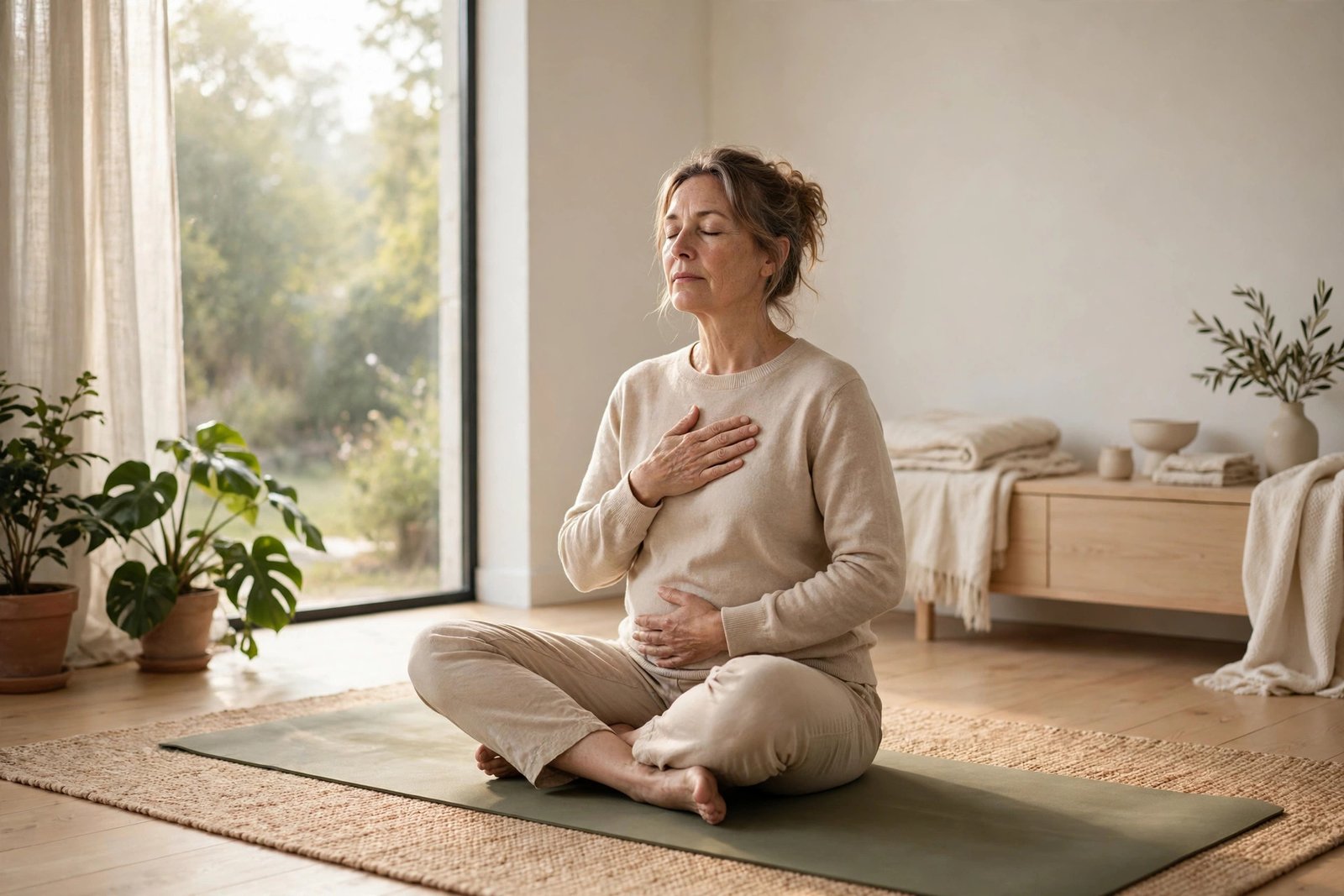
Diaphragmatic breathing simply restores the natural pattern. You breathe in slowly through your nose and let your belly rise. Then you breathe out slowly through your mouth and let your belly fall. That is all it takes.
Similarly, singers and swimmers train this same muscle for better control. Indeed, the mechanics are identical. However, our focus here is different: we use the breath as a relaxation tool. Consequently, diaphragmatic breathing for flexibility is less about lung capacity and more about calming the nervous system.
Why Diaphragmatic Breathing for Flexibility Actually Works
First, understand this: stretching is not only about your muscles. Your nervous system decides how far a muscle is allowed to go.
When you breathe shallowly and quickly, your body stays in alert mode. Consequently, your muscles guard themselves and resist the stretch. For example, ever notice how your hamstrings feel tighter on stressful days? That is not a coincidence.
Deep belly breathing flips that switch. It activates the parasympathetic nervous system, the branch that handles rest and recovery. As a result, muscle tension drops within seconds and your range of motion opens up.
More Air, Less Tension
Full belly breaths also move more air than quick chest breaths. Moreover, steady airflow helps muscles stay warm and supple while you stretch.
Think of it this way: tight muscles need calm, not force. Diaphragmatic breathing delivers that calm on every single exhale. Therefore, pairing breath with stretching is one of the simplest upgrades you can make to your routine.
Additionally, slow exhales lower your heart rate in a measurable way. For instance, research on slow breathing shows a clear calming effect on the body. As a result, you spend more of each stretch in a relaxed state. Ultimately, that relaxed state is where real flexibility gains happen.
How to Do Diaphragmatic Breathing for Flexibility: The Basics
You only need a quiet spot and a few minutes. No equipment is required at all. In addition, you can do these drills lying down or sitting up.
Moreover, each drill takes only two minutes to learn. First, read through the steps below. Then try the drill slowly, without rushing. Finally, repeat it daily until it feels automatic.
Practice the two drills separately at first. Then you will combine them with real stretches later in this guide.
The Hook-Lying Drill
Hook-lying means lying on your back with your knees bent. This position relaxes your hip flexors and lets your belly move freely. For instance, it is the easiest way to feel your diaphragm working.
- Lie on your back with your knees bent and your feet flat on the floor.
- Place one hand on your chest and the other on your belly.
- Breathe in slowly through your nose for about four counts.
- Feel your belly rise while your chest stays mostly still.
- Breathe out slowly through your mouth for about six counts.
- Feel your belly fall as the air leaves. Repeat for 8 to 10 breaths.
For example, if your chest hand keeps rising more than your belly hand, your breath is too shallow. Simply slow down and direct the air lower into your belly. Meanwhile, keep your shoulders heavy and relaxed.

The Rib-Expansion Drill
This drill teaches the sides of your ribs to open outward. It is especially helpful for tight upper backs and stiff shoulders. In fact, many people notice their posture improving within a week of daily practice.
- Sit tall on the floor or in a sturdy chair.
- Wrap your hands around your lower ribs, fingers pointing forward.
- Breathe in through your nose and push your ribs sideways into your hands.
- Keep your shoulders down and relaxed throughout.
- Exhale slowly and feel your ribs draw gently back in.
- Repeat for 8 to 10 full breaths.
You may notice one side moves less than the other. That is completely normal at first. On the other hand, if your neck and shoulders do all the work, reset and try again more slowly. Indeed, awareness of these patterns is the first step toward fixing them.

Pairing Your Breath With Stretches
This is where diaphragmatic breathing for flexibility truly shines in real workouts. Instead of forcing a position, you breathe your way into it. The stretch then becomes a conversation with your body rather than a battle.
Use this simple five-breath method with any gentle static stretch. First, ease into the position until you feel a mild pull, never pain. Then take a slow belly breath in through your nose. As you exhale through your mouth, let your body sink a little deeper. Finally, repeat for five full breaths before switching sides.

Similarly, you can use this breathing method with seated stretches, standing stretches, and floor stretches. Moreover, it works beautifully alongside a structured set of static stretching exercises for flexibility and recovery. In addition, the calm it creates makes longer holds feel much more comfortable.
A useful rule: exhale to deepen, inhale to settle. For example, in a forward fold, breathe in to lengthen your spine slightly. Then breathe out and fold a touch deeper. Never bounce or force the movement.
10-Minute Diaphragmatic Breathing for Flexibility Routine
This simple routine combines both drills with full-body stretches. Do it daily, ideally at the same time. Consequently, it quickly becomes a habit your body looks forward to.
- Hook-lying breathing (2 minutes). Lie back with knees bent. Practice slow belly breaths with one hand on your chest and one on your belly. Let your whole body feel heavy.
- Rib-expansion drill (2 minutes). Sit up tall. Wrap your hands around your lower ribs and breathe sideways into them. Meanwhile, keep your shoulders relaxed and down.
- Butterfly stretch with breathing (2 minutes). Sit with the soles of your feet together and knees open. Ease forward gently. Take five slow belly breaths, sinking slightly deeper on each exhale.
- Standing forward fold with breathing (2 minutes). Stand with soft knees and fold forward. Let your head hang heavy. Breathe into your belly and lower back for five slow breaths.
- Child’s pose with breathing (2 minutes). Kneel and fold forward with arms extended. This is your cool-down. In fact, the gentle pressure on your belly naturally deepens each breath. Finally, finish with three slow breaths and notice how calm you feel.
If you are new to stretching, this routine pairs well with flexibility exercises for beginners that use the same gentle approach. Additionally, doing the routine in the evening can help you unwind before bed. For example, many people fall asleep faster after just ten minutes of slow breathing.
Simple Cues for Diaphragmatic Breathing for Flexibility
Small mental cues can make each breath more effective. First, pick one cue per session so you stay focused. Then apply it to every stretch you do. Finally, notice how much deeper you can relax.
“Breathe into your back.” Imagine the air filling your lower back and sides. For instance, in child’s pose you will feel your back rise against your thighs. Consequently, your whole torso joins the breathing movement.
“Soften on the exhale.” Each time you breathe out, release one tense spot. Start with your jaw, then your shoulders, then your hands. Moreover, this cue works during any stretch, at any time.
“Count your breath.” Breathe in for four counts and out for six. The longer exhale keeps your nervous system calm. Additionally, counting gives a busy mind something gentle to follow. As a result, you stay present instead of rushing.
Common Mistakes to Avoid
These errors are easy to make but just as easy to fix. First, avoid breathing too fast. Quick breaths keep you in alert mode and cancel the relaxing effect. Instead, make each exhale longer than each inhale.
Second, do not push the stretch during the inhale. The exhale is your moment to relax deeper. For instance, straining on the inhale often causes muscles to tighten right back up.
Third, never hold your breath while stretching. Holding your breath spikes tension throughout your body. Similarly, clenching your jaw or fists works against the calm you are building. Therefore, scan your face and hands often and let them soften. Indeed, the whole point of diaphragmatic breathing for flexibility is relaxation, not strain.
Finally, watch out for chest-only breathing creeping back in during the day. If your upper back feels stiff, gentle thoracic mobility exercises combined with rib-expansion breathing can help a great deal. Moreover, good breathing posture during the day makes your stretching sessions far more effective.
When to Use This During Your Day
You are not limited to workout time. In fact, short breathing breaks throughout the day multiply the benefits. For example, try two minutes of belly breathing before your morning stretch. As a result, the whole session feels smoother.
Indeed, making diaphragmatic breathing for flexibility part of your morning changes the whole day. Use it after workouts too. Slow breathing helps your heart rate settle and your muscles release. Additionally, a few minutes at your desk can undo hours of shallow breathing. On the other hand, avoid practicing right after a large meal, since a full stomach limits diaphragm movement.
Before bed is another perfect window. Pair the hook-lying drill with dim lights and quiet. Consequently, both your body and mind shift into rest mode. Indeed, many people report deeper sleep within the first week.
Frequently Asked Questions
How soon will diaphragmatic breathing for flexibility make a difference?
Most people feel calmer after the very first session. Noticeable flexibility gains usually appear within one to two weeks of daily practice. However, consistency matters far more than session length. In addition, pairing the breathing with regular stretching speeds up the results.
Can I practice this while sitting at my desk?
Absolutely. Sit tall with both feet flat on the floor. Place your hands on your lower ribs and breathe sideways into them. For example, five slow breaths between meetings can release surprising tension. Meanwhile, keep your shoulders away from your ears.
How many breaths should I take in each stretch?
Five slow breaths is a great starting point. That gives your nervous system enough time to release tension. For instance, tighter areas like hips and hamstrings may need eight to ten breaths. Consequently, let your body decide rather than watching the clock.
Should I inhale or exhale to deepen a stretch?
Exhale to deepen. The out-breath is when your nervous system gives muscles permission to relax. Therefore, sink a little further into the stretch each time you breathe out. Inhale simply to settle and prepare for the next release.
Is belly breathing the same as diaphragmatic breathing?
They are closely related but not identical. Belly breathing describes where you feel the movement. Diaphragmatic breathing describes the muscle doing the work. In practice, though, the terms are used interchangeably. As a result, you can follow any belly-breathing guide and get the same benefits.
Is this suitable for complete beginners?
Yes, it is one of the safest places to start. The drills are gentle and you control the pace. For example, you can begin with just two minutes of hook-lying breathing. Moreover, there is no equipment and no experience needed. Finally, stop if you ever feel dizzy and simply breathe normally.
Can this help with stress and poor sleep too?
Yes, that is one of its best side effects. Slow diaphragmatic breathing lowers heart rate and calms the nervous system. Consequently, many people use it as a wind-down tool before bed. For instance, the hook-lying drill in a dark room works like a natural off-switch. You can learn more from trusted guides such as Healthline’s diaphragmatic breathing overview and the American Lung Association’s breathing exercises.
Conclusion
Diaphragmatic breathing for flexibility is one of the simplest tools you can add to your movement practice. It costs nothing, takes minutes, and works with every stretch you already do. Moreover, the calm it brings reaches far beyond your muscles.
Start small. Practice the hook-lying drill for two minutes today. Then add the rib-expansion drill tomorrow. Finally, weave the five-breath method into your regular stretches this week.
Finally, remember that diaphragmatic breathing for flexibility is a skill, not a trick. In addition, small daily sessions beat occasional long ones. Therefore, keep it simple and keep it consistent.
Your body already knows how to breathe this way. You are simply reminding it. So take a slow belly breath right now, let your shoulders drop, and enjoy the deeper stretch waiting on the other side.
