

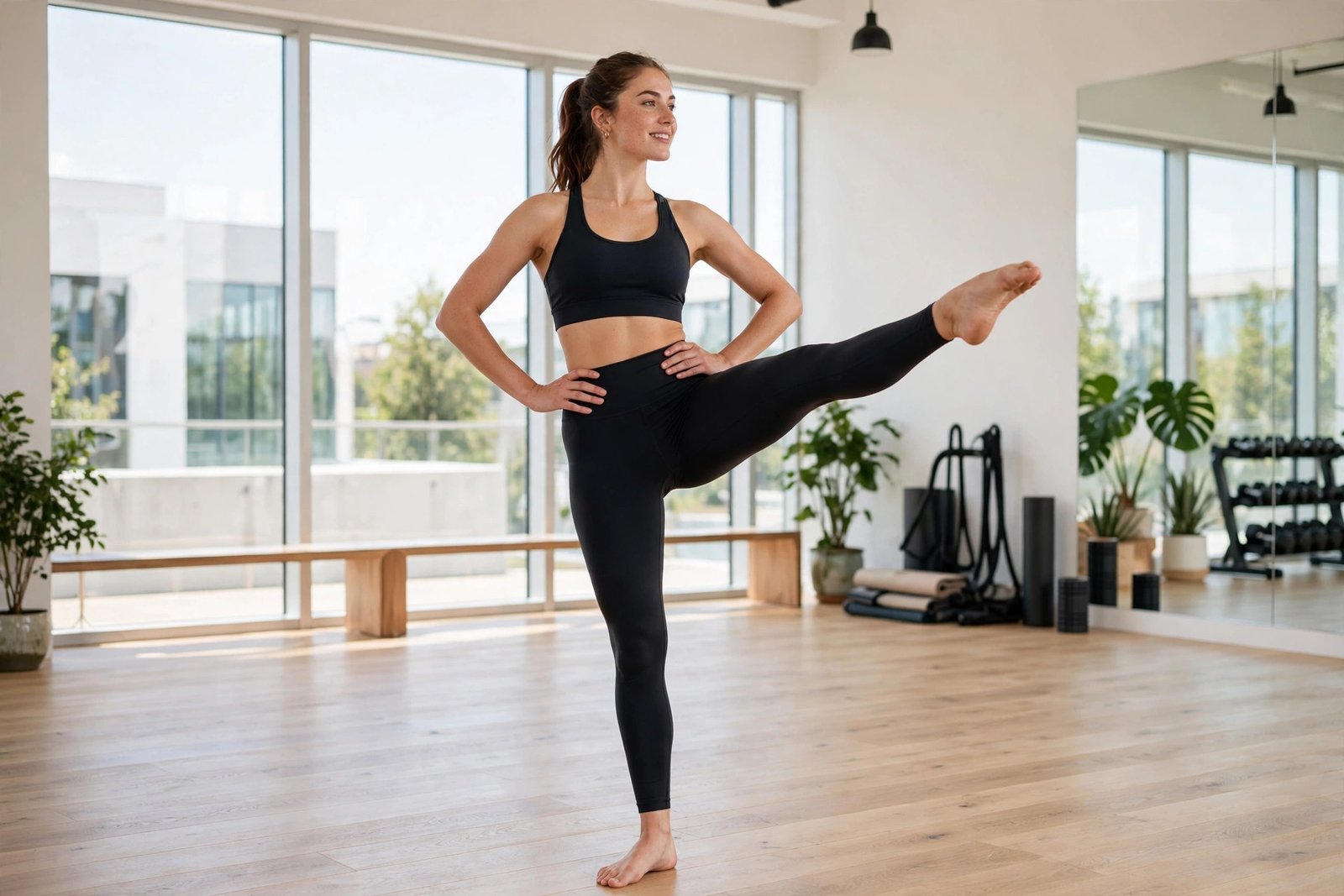
A dancer flexibility routine is one of the most graceful and effective ways to become more flexible at home. You do not need a dance studio, a ballet background, or a dance partner to benefit from it. This kind of routine borrows the best mobility and stretching work from dance training and packages it into a simple plan for your living room.
Many people assume dancers are simply born flexible. Indeed, their beautiful lines come from patient, repeated practice. Also, they train their joints and muscles almost every day, and the payoff is real. and this article gives you that same system as a 25-minute session you can repeat several times per week.
Below you will find a full warm-up, lower-body and upper-body stretches, and a special section on gymnastics stretches for adults folded into the plan. And you will also get a weekly schedule, safety tips, and answers to common questions. So first, let us look at why dancers stay so supple.
Why Dancers Stay So Flexible
Dancers treat flexibility like a daily habit, not a weekend project. Thus, their muscles and joints adapt a little more with each session. Moreover, consistency matters far more than intensity, and that is good news for beginners.
Dance training also targets the whole body in a balanced way. Moreover, hips, hamstrings, back, and shoulders all get attention in every session. Indeed, a single ballet class works turnout at the hips, extension in the legs, and lift through the spine. Also, a dancer flexibility routine copies this balanced approach for home practice.
Another secret is how dancers warm up. Also, they never stretch cold muscles. Instead, they raise their heart rate first with gentle movement. Moreover, warm tissue stretches more easily, so every minute of effort goes further. Additionally, a proper warm-up protects your joints and lowers the risk of strains.
Dancers also breathe deeply while they stretch. Moreover, deep breathing tells your nervous system to relax, and relaxed muscles lengthen more willingly. And you can use the same trick even if you have never taken a dance class. Also, breathe in through your nose and out through your mouth on every stretch.
Finally, dancers respect recovery. Also, they stretch often, however they never force a stretch to the point of sharp pain. And you should follow the same rule in your own dancer flexibility routine. Also, aim for a gentle pulling sensation and never push through a pinch.
Warm-Up First: 5 Minutes That Make Every Stretch Work Better
Skip the warm-up and your stretching results will suffer. Moreover, cold muscles resist lengthening, however warm muscles welcome it. Additionally, five minutes of easy movement prepares your body for deeper, safer stretches. Also, think of the warm-up as the foundation of your dancer flexibility routine.
Warm-Up Moves Before Your Dancer Flexibility Routine
March in place with high knees (1 minute). Lift your knees toward your chest and swing your arms naturally. Also, this raises your heart rate and loosens your hips. and start slowly and build a gentle rhythm.
Arm circles (30 seconds each direction). Extend your arms to the sides and make small circles. Also, gradually make the circles bigger. And your shoulders and upper back will start to feel warm and loose.
Standing leg swings (30 seconds per leg). Hold a wall or chair for balance and swing one leg forward and back. Also, keep the movement relaxed and controlled. and this opens your hips without forcing anything.
Spine rolls (1 minute). Stand tall with soft knees and roll your spine down one vertebra at a time. Also, let your head and arms hang heavy at the bottom. Finally, roll back up to standing slowly. And your spine will feel more awake and mobile with each repetition.
Gentle squats (1 minute). Stand with your feet shoulder-width apart and bend your knees. Also, go only as low as feels comfortable today. and this warms your thighs, hips, and ankles at the same time. Moreover, by now your whole body should feel ready to stretch.
Your Dancer Flexibility Routine: The Full 25-Minute Session
Now comes the heart of the plan. Also, this dancer flexibility routine takes about 25 minutes from start to finish. and hold each stretch for 30 to 60 seconds per side, and breathe slowly the entire time. Also, move smoothly between exercises like a dancer would, with no rushing.
Lower Body: Hips, Legs, and Splits Progress
Plié squat with hip opener. Stand with your feet wide and your toes turned out at 45 degrees. Also, bend your knees and sink into a deep squat while keeping your chest lifted. and press your elbows gently against your inner thighs. Also, this classic dancer move opens the hips and groin beautifully.
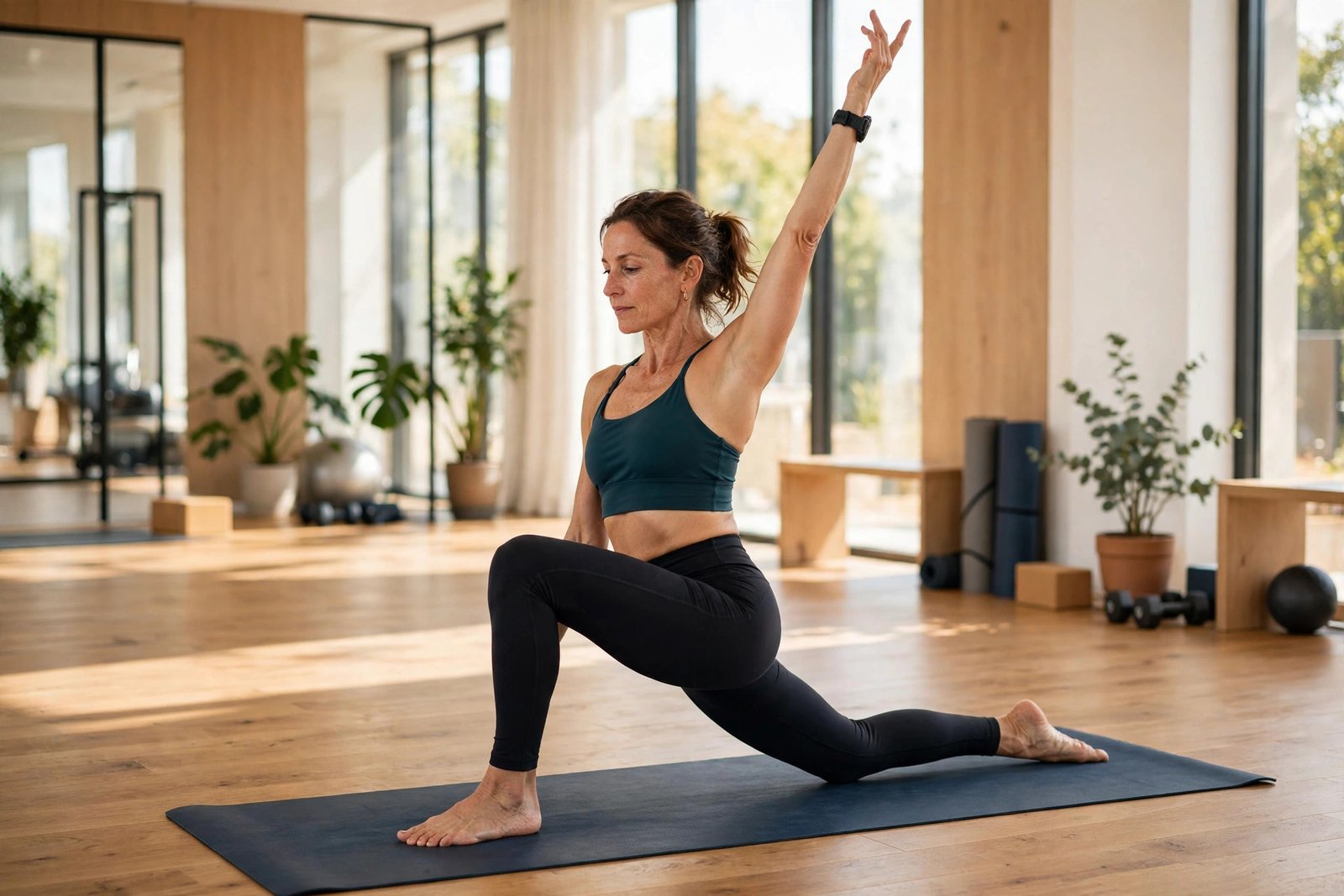
Deep lunge with overhead line. Step one foot far forward into a lunge and let your back knee rest on the floor. Also, reach both arms overhead with soft shoulders, like an arabesque line. And you should feel a long stretch through your hip flexors and quads. Also, hold, breathe, and then switch sides.
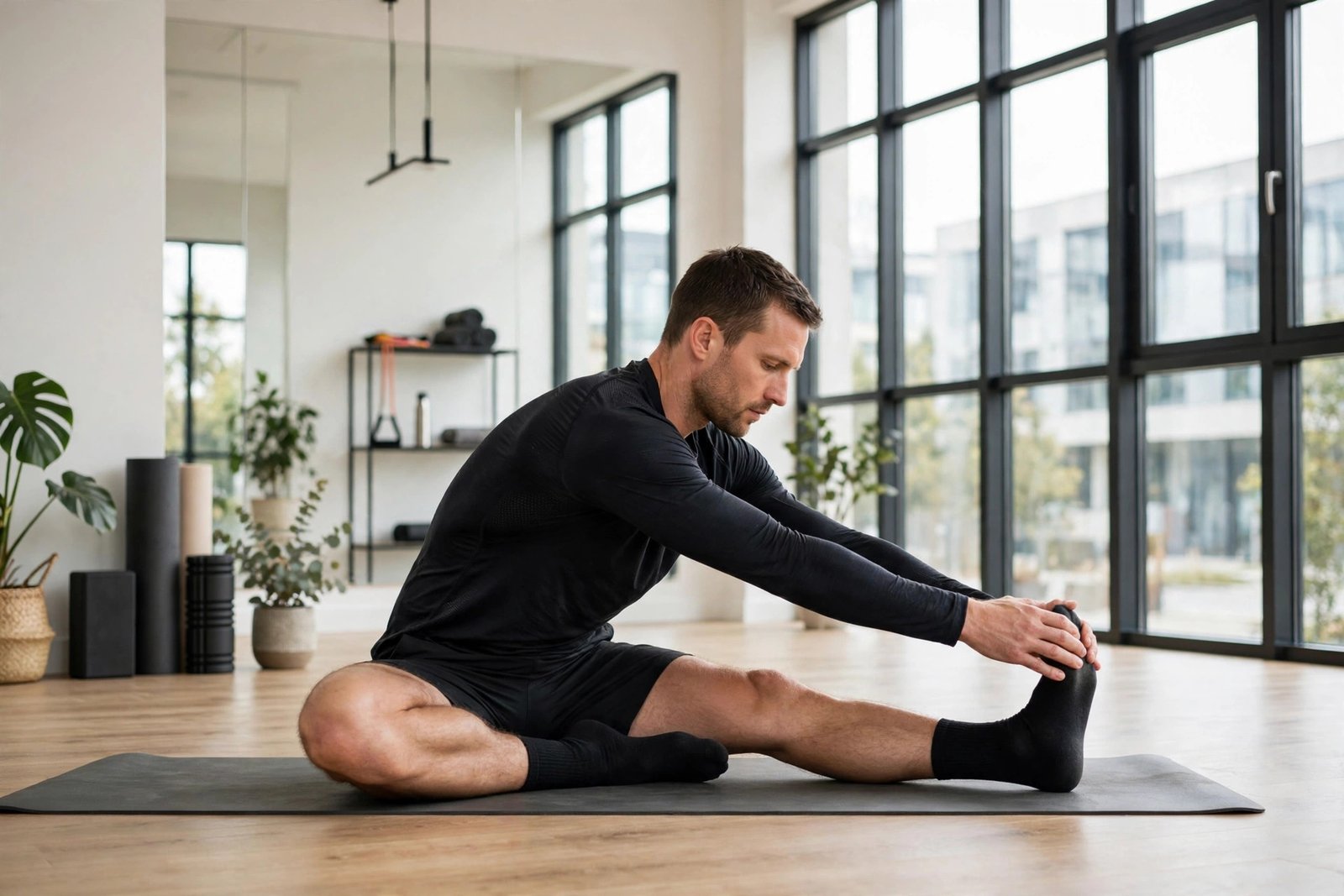
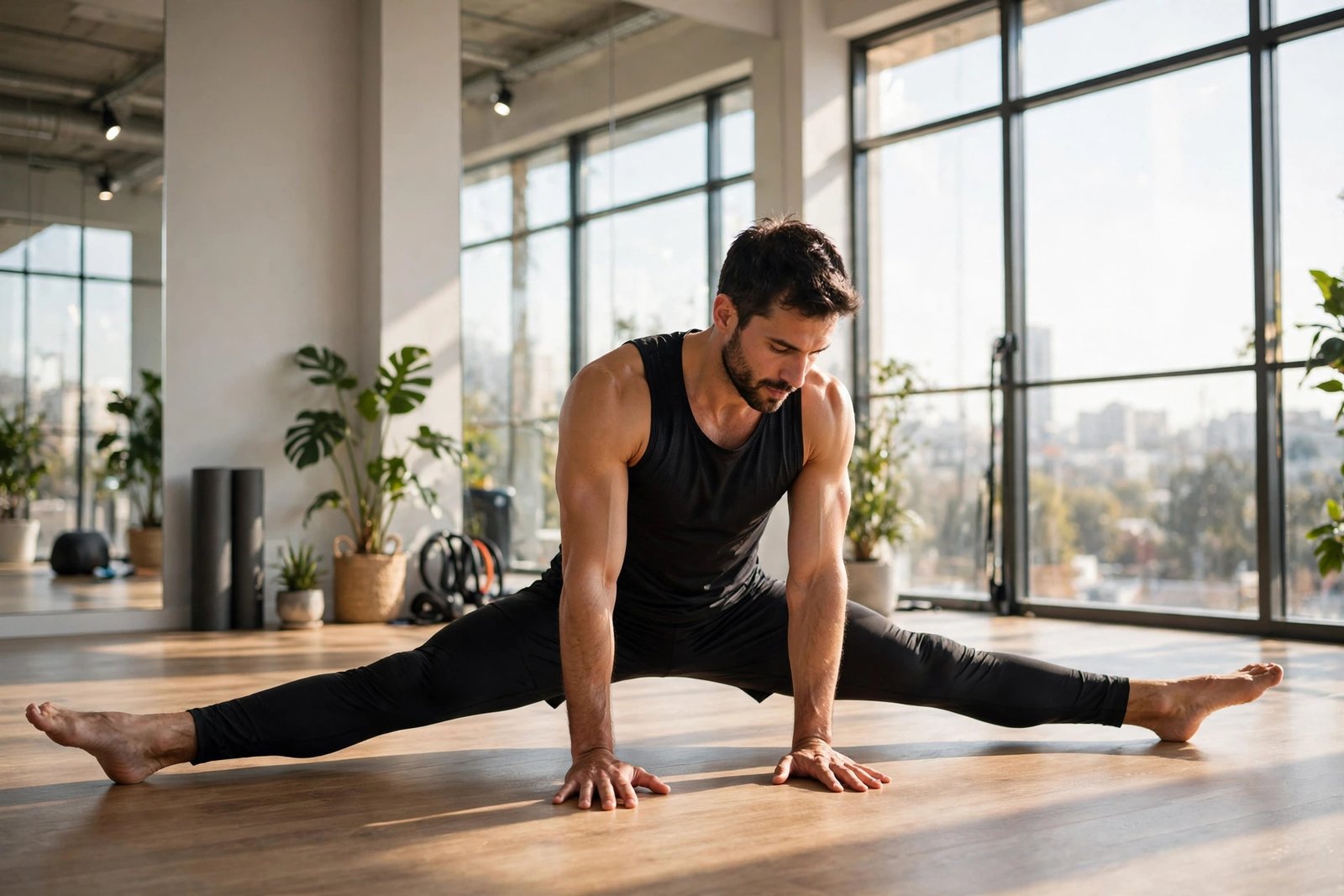
Seated straddle fold. Sit on the floor with your legs spread wide in a V shape. Also, walk your hands forward and fold toward the floor with a long, flat back. and keep your toes pointed like a dancer. Also, you will feel this in your inner thighs and hamstrings at the same time.
Butterfly stretch. Bring the soles of your feet together and let your knees fall open. Also, sit tall and lean forward slightly from the hips. Moreover, for a deeper stretch, gently press your knees down with your elbows. Also, this move is a dancer staple for turnout and hip mobility.
Half-split hamstring stretch. From a low lunge, shift your hips back and straighten your front leg. Moreover, flex your front foot and fold your chest toward your thigh. Also, this stretch builds the hamstring length you need for front splits. When you are ready for more, our guide to the front splits stretch breaks down the form step by step.
Kneeling hip flexor stretch. Kneel on one knee with your other foot flat in front. Also, tuck your pelvis slightly and shift your weight forward. And you should feel a deep release at the front of your back hip. Moreover, tight hip flexors limit high kicks and extensions, so this one matters.
Standing quad stretch with balance. Stand on one leg and pull your opposite foot toward your glute. Also, keep your knees close together and your torso tall. and use a wall for balance if you need it. Moreover, in addition to stretching your quads, this move trains the balance dancers are famous for.
If the full split is your long-term goal, consider reading our dedicated guide on how to do the splits. Also, it gives you a safe week-by-week progression. Moreover, the exercises in this dancer flexibility routine build the foundation that progression needs.
Upper Body and Core: Lines, Posture, and Breath
Thread the needle. Start on all fours and reach one arm under your body, resting your shoulder on the floor. And your upper back and shoulders get a deep, gentle twist. Also, this move improves the spinal rotation that dance port de bras requires.
Doorway chest opener. Place your forearms on a doorframe with your elbows at shoulder height. Also, step one foot forward until you feel a stretch across your chest. Dancers need an open chest for lifted posture. Also, hold for 45 seconds and repeat if one side feels tighter.
Eagle arm stretch. Cross one arm under the other at the elbows and press your palms together. Also, lift your elbows slightly while dropping your shoulders down. And you will feel a strong stretch between your shoulder blades. Also, this relieves the tension that desk work builds up.
Side bend from kneeling. Kneel with your hips stacked and raise one arm overhead. Also, lean gently to the opposite side until you feel a long line from hip to fingertips. Dancers call this a cambré side bend. Also, it lengthens the obliques and opens the ribs.
Child’s pose with side reach. Sit back toward your heels with your arms extended forward. Also, walk both hands to the right and breathe into your left side. Moreover, then walk them to the left. Also, this stretch feels wonderful after the deeper work above. Additionally, it calms your nervous system between sections.
Cobra to downward dog flow. Lie face down and press your chest up into a gentle cobra. Moreover, then tuck your toes and lift your hips into a downward dog. Also, pedal your feet to stretch each calf. and flow between the two poses for one minute. Also, this pairing stretches your front and back body in one smooth sequence.
Hollow-body tuck hold. Sit on the floor and lift your feet and shoulders slightly off the ground. Also, hold your body in a gentle C-curve for 20 seconds. and this core move comes straight from gymnastics and dance conditioning. Indeed, a strong core supports every flexible line your body makes.
Gymnastics Stretches for Adults to Add to Your Dancer Flexibility Routine
Here is the secret section of this plan. Moreover, gymnastics stretches for adults work brilliantly inside a dancer flexibility routine because both disciplines demand active, controlled flexibility. Additionally, gymnastics adds strength at the end of your range of motion. That means you do not just get bendy, you get stable too.
These moves are scaled for adult beginners. And you do not need a spring floor or a coach spotting you. Moreover, all you need is some floor space and a wall. Also, start with the easiest version of each move and progress over weeks.
Tabletop bridge for shoulders. Sit on the floor with your knees bent and your hands behind you. Also, lift your hips until your body forms a flat table. and this opens the shoulders and chest safely. Also, it is a great first step toward a full gymnastics bridge.
Wall walk for back flexibility. Stand with your back to a wall, about two feet away. Also, lean back and walk your hands down the wall as far as comfortable. and walk back up slowly when you are done. Also, this move builds the backbend flexibility gymnasts use, without the floor impact.
Pike stretch with active reach. Sit with your legs straight and together. Moreover, hinge at your hips and reach your hands past your toes. Also, try to touch the floor with your fingertips. Moreover, unlike a passive fold, keep your quads engaged. Also, this active style of stretching is pure gymnastics thinking.
Straddle lift holds. Sit in a wide straddle with your hands on the floor beside your hips. Also, press down and try to lift your hips slightly off the ground. Moreover, even a one-second lift builds hip strength. Additionally, over time, stronger hips make your middle splits come faster.
Wrist preparation series. Gymnasts and dancers both need healthy wrists. Moreover, kneel and place your palms flat on the floor with your fingers facing you. Also, lean gently forward and back for 30 seconds. Moreover, then flip your hands so your knuckles face down and repeat. Also, this simple series prevents wrist soreness during floor work.
German hang alternative: doorway lat stretch. A full German hang is too advanced for most adults. Instead, hold a doorway with both hands at shoulder height and lean back. And you will feel a deep stretch through your lats and shoulders. Also, this gives you most of the benefit with none of the risk.
Add two or three of these gymnastics stretches for adults after your main dancer flexibility routine. And you can also rotate them across the week so every session feels a little different. Thus, your body keeps adapting instead of getting bored.
How to Build Your Weekly Dancer Flexibility Routine Schedule
Flexibility grows with frequency, not with marathon sessions. Moreover, three to five sessions per week beat one long weekend stretch. Additionally, each session should last 20 to 30 minutes. However, the plan below gives you structure without burnout.
Monday: full 25-minute dancer flexibility routine. Moreover, focus on lower body and end with the pike stretch and straddle lift holds. Also, this sets the tone for the week.
Wednesday: full 25-minute session again. Also, this time, spend extra time on your weakest area, usually hips or hamstrings. and add the wall walk and tabletop bridge from the gymnastics section.
Friday: lighter 20-minute session. Also, flow through your favorite stretches and finish with child’s pose and deep breathing. and think of this as recovery with purpose.
Optional weekend session: a playful 15 minutes. Moreover, put on music you love and move freely between stretches. Dancers call this improv, and it keeps training joyful. Moreover, on busy days, a short flexibility exercises at home session can fill the gap.
Making This Dancer Flexibility Routine Your Own
Your body is different from everyone else’s, so treat this dancer flexibility routine as a starting template. Moreover, if your shoulders are tight, give them an extra minute. Additionally, if your splits are the goal, repeat the lower-body block twice. Moreover, small adjustments like these turn a good routine into your routine.
Track your progress with photos or notes once a month. Moreover, flexibility changes slowly, however a monthly check-in reveals real gains. Additionally, many people quit because they cannot see daily progress. Indeed, a simple notebook solves that problem.
Health experts agree that regular stretching supports an active life. Moreover, the NHS recommends flexibility exercises as part of a balanced weekly routine. Similarly, the National Institute on Aging notes that flexibility work helps adults of all ages stay mobile and independent.
Dancer Flexibility Routine: Frequently Asked Questions
Do I need dance experience to follow a dancer flexibility routine?
Not at all. Indeed, a dancer flexibility routine is simply a stretching method inspired by dance training. Also, every move in this article uses plain language and needs no dance background. Moreover, if you can follow along at home, you can do this routine.
How long until I see results from a dancer flexibility routine?
Most people feel looser within two weeks of consistent practice. Moreover, visible changes, like deeper splits or a straighter backbend, usually take 8 to 12 weeks. Indeed, studies and coach experience agree that slow, steady stretching wins. Moreover, stay patient and keep showing up.
Can adults safely do gymnastics stretches?
Yes, when the moves are scaled properly. However, the gymnastics stretches for adults in this article avoid high-impact skills and focus on controlled flexibility. but always warm up first and skip anything that causes sharp pain. Moreover, if you have a joint condition, check with your doctor before starting.
Should I stretch every day?
You can; however, three to five days per week is plenty for most people. And your muscles need rest days to adapt to new ranges of motion. However, on rest days, a short walk keeps blood flowing without adding strain.
Will this routine help me get my splits?
Yes. Moreover, the half-split, straddle, and butterfly stretches in this dancer flexibility routine directly build split range. Additionally, for a dedicated split plan, pair this routine with our guide on how to do the splits. Moreover, most learners reach a comfortable split in three to six months.
Is it normal to be uneven from side to side?
Completely normal. Moreover, almost everyone has a tighter hip or shoulder on one side. Additionally, spend an extra 30 seconds on your tight side during each session. Moreover, over time, the gap will shrink.
Conclusion
You now have a complete dancer flexibility routine you can start today. Moreover, warm up for five minutes, work through the lower-body and upper-body stretches, and add a few gymnastics moves for strength at your end range. Also, repeat the session three to five times per week and watch your flexibility grow.
Remember that dancers are not born flexible. Also, they become flexible through small, consistent efforts over time. And your dancer flexibility routine works the same way. Also, every session you finish is a deposit toward a more mobile, graceful body.
Start with the 25-minute session above, and adjust it as your body changes. Additionally, keep a simple log so you can see how far you have come. Indeed, a year from now, you will be glad you started today. Moreover, now press play on your favorite music, roll out some floor space, and enjoy your first session.
