


If you have ever wondered how long should you hold a stretch, you are in good company. It is one of the most common questions in all of fitness. In fact, exercise scientists have studied it for decades.
The short answer is refreshingly simple. For most adults, holding each static stretch for 15 to 30 seconds works well. However, the details matter more than you might expect.
In this guide, we break down exactly what the research says. You will learn how to time your stretches for the best results. In addition, we cover special cases like age, warm-ups, and stubbornly tight muscles.
What the Science Says: How Long Should You Hold a Stretch?
The American College of Sports Medicine (ACSM) sets the gold standard here. They recommend holding each static stretch for 10 to 30 seconds. In addition, they suggest repeating each stretch two to four times. Therefore, your total time per muscle group reaches about 60 seconds.
Harvard Health experts agree with this range. They note that the biggest change in muscle length happens between 15 and 30 seconds. In other words, most of the benefit arrives early. As a result, holding far longer adds little extra gain.
For example, think of a stretch like slowly warming taffy. The first gentle pull does most of the work. After that, extra time gives diminishing returns. Consequently, consistency beats marathon hold times every single time.

Why 30 Seconds Is the Sweet Spot for Most People
Thirty seconds hits a happy middle ground. It is long enough for your muscles to relax into the stretch. At the same time, it is short enough to stay comfortable.
When you first enter a stretch, your muscles naturally resist. This protective reflex is called the stretch reflex. However, it fades after about 15 to 20 seconds. Then your muscle finally starts to lengthen.
That is why very short holds feel pointless. A five-second stretch barely gets past the reflex stage. On the other hand, a 30-second hold gives the muscle real time to adapt. So when people ask how long should you hold a stretch, the honest answer starts here. Hold long enough to pass the reflex, but keep it short enough to stay consistent.
Research on hamstring flexibility supports this idea. Studies show similar gains from 30-second holds and 60-second holds. In fact, the shorter holds were just as effective. Therefore, you can save time without losing results.
How Long Should You Hold a Stretch If You Are Over 60?
Age changes the answer slightly. For adults over 60, the ACSM recommends longer holds of 30 to 60 seconds. Older muscles and tendons simply need more time to respond.
This does not mean stretching becomes risky with age. In fact, it becomes more important than ever. Regular stretching helps maintain balance and joint range of motion. Moreover, it supports independence in daily activities.
If you are new to stretching later in life, start gently. Begin with 20-second holds and build up gradually. Then add a few seconds each week as your comfort grows. Finally, aim for that 30 to 60 second range over time.

Special Situations That Change Your Hold Time
Some situations call for a different approach. For example, physical therapists may prescribe longer holds after an injury. Similarly, certain yoga styles use holds of one to two minutes.
However, these are exceptions, not the rule. For general flexibility, the standard guidelines work best. In addition, longer holds are not automatically better. Quality and consistency matter far more.
Does Holding Longer Than 60 Seconds Actually Help?
Many people assume longer is always better. It feels logical that a two-minute hold would double the benefit. However, the research tells a different story.
One well-known study compared 30, 60, and 120-second holds. The results were surprising to many readers. The 30 and 60-second groups improved equally. Meanwhile, the 120-second group gained no extra benefit.
Extremely long holds can even backfire. They may irritate tendons or leave muscles feeling weak afterward. Consequently, marathon stretching sessions are not worth the risk. This is exactly why the question of how long should you hold a stretch has such a clear research answer. In contrast, moderate holds done regularly deliver steady progress.
There is one exception worth noting. Some advanced flexibility methods use longer holds on purpose. For instance, certain PNF techniques involve sustained contractions. But these are specialized tools, not everyday practice.
How Long Should You Hold a Stretch Before a Workout?
Timing matters just as much as duration. Before exercise, long static holds are not the best choice. In fact, they may temporarily reduce your power and strength.
Instead, save static stretching for after your workout. Before training, choose dynamic movements instead. For example, try leg swings, arm circles, or walking lunges. These warm up muscles without dulling performance.
Want a deeper look at this topic? Read our guide on stretching before a workout. It covers what to do, what to avoid, and what actually works. In addition, it gives you a simple pre-workout routine to follow.
After your workout, your muscles are warm and receptive. That is the perfect time for static holds. Therefore, plan your 15 to 30-second stretches for the cool-down.
A Simple Routine: Putting the Numbers Into Practice
Now let us turn theory into action. Below is a basic full-body routine using the research-backed timing. It targets the major muscle groups in about ten minutes.
First, start with your calves against a wall. Hold for 30 seconds per leg. Then move to a standing quadriceps stretch for 30 seconds each side.
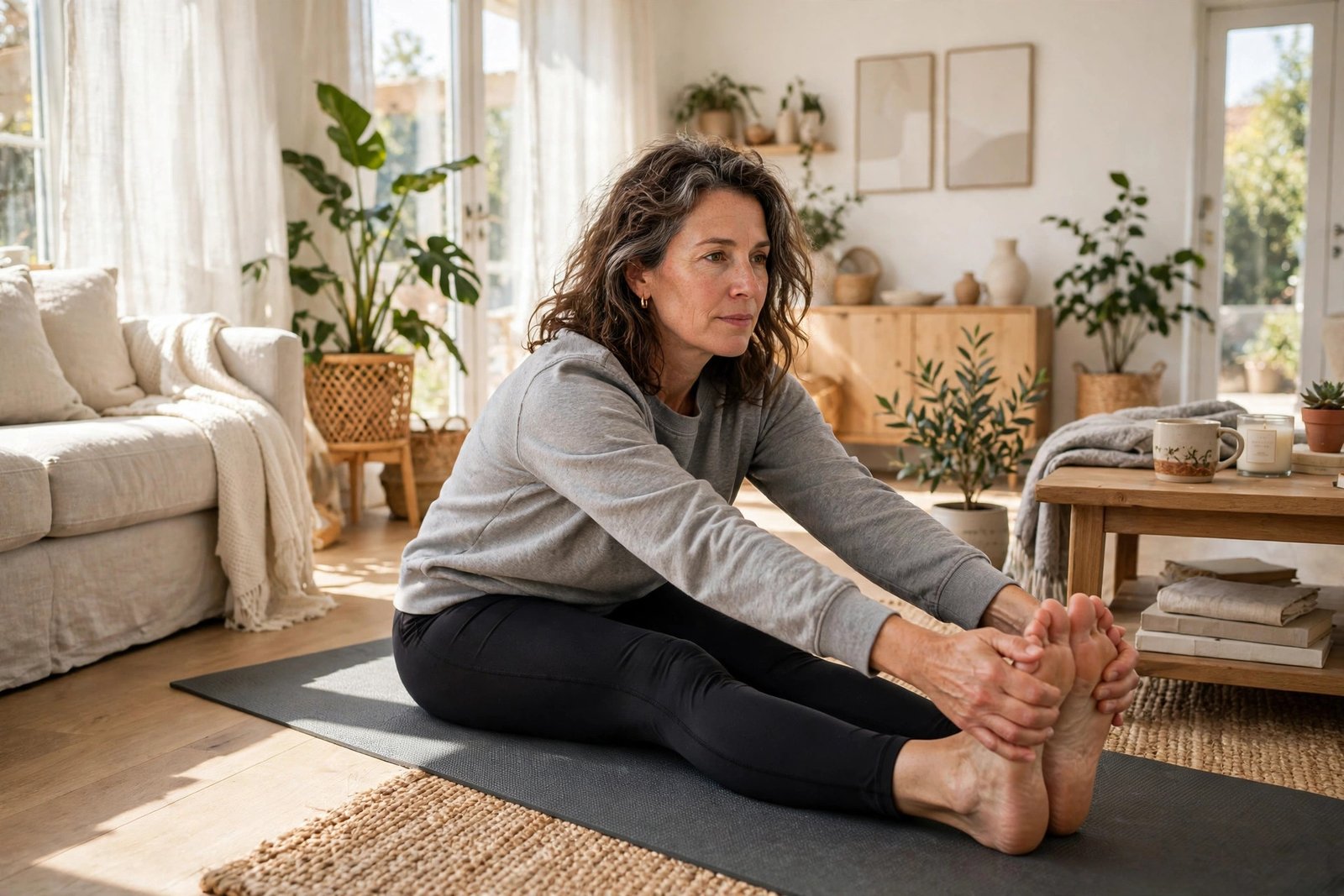
Next, stretch your hamstrings with a seated forward fold. Hold for 30 seconds and breathe deeply. After that, open your hip flexors with a half-kneeling lunge. Again, 30 seconds per side works well.
Then address your chest and shoulders in a doorway. Hold for 30 seconds while keeping your shoulders down. Finally, finish with a gentle neck stretch, 20 seconds per side.
Repeat any stretch that still feels tight. Remember the 60-second total rule from the ACSM. For example, two 30-second rounds equal the recommended total. As a result, you get full benefits without overdoing it.

Common Mistakes When Timing Your Stretches
Mistake number one is rushing through the routine. People often hold for five seconds and move on. However, that is too brief to create real change. Instead, count slowly or use a timer.
Mistake number two is bouncing during the stretch. Ballistic bouncing can trigger the stretch reflex. In addition, it raises the risk of small muscle strains. Therefore, always hold still and breathe steadily.
Mistake number three is stretching cold muscles aggressively. For instance, jumping straight into deep stretches first thing in the morning can backfire. Instead, warm up with a short walk or some gentle movement. Then your 30-second holds will be far more effective.
Mistake number four is holding your breath. Many beginners tense up without realizing it. However, deep breathing helps muscles release. So exhale slowly as you ease into each stretch.
Finally, mistake number five is stretching through sharp pain. Mild tension is normal and expected. On the other hand, sharp or stabbing pain is a warning sign. If you feel it, ease off immediately.
To build a well-rounded habit, explore our stretching exercises guide covering benefits, types, and simple routines. It pairs perfectly with the timing rules you learned here. Moreover, once you know how long should you hold a stretch, choosing the right moves becomes the fun part.
Your Quick-Reference Chart: How Long Should You Hold a Stretch?
If you love a simple cheat sheet, this chart is for you. It summarizes everything from this guide in one glance. Save it, screenshot it, or stick it on your fridge.
| Situation | Hold time | Rounds |
|---|---|---|
| General flexibility (under 60) | 15–30 seconds | 2–4 |
| Adults over 60 | 30–60 seconds | 2–4 |
| Post-workout cool-down | 20–30 seconds | 2–3 |
| Splits training | 30 seconds | 3–4 |
| Pre-workout warm-up | Dynamic moves only, no static holds | — |
Notice how the numbers stay small across every row. That is the whole point. You do not need heroic hold times to get flexible. Instead, you need the right dose, repeated often.
How Long Should You Hold a Stretch for Splits Training?
Splits training is a special case worth addressing. It demands more time and patience than general flexibility work. However, the same basic principles still apply.
For splits progress, hold each stretch for 30 seconds as your baseline. Then repeat for two to four rounds per muscle group. In addition, train the splits three to five days per week. Consistency matters more than any single long session.
Some advanced practitioners add longer holds over time. For example, they may work up to 60-second holds in the final stretch. But this comes after months of steady practice. Beginners who wonder how long should you hold a stretch for splits should start with the standard 30 seconds and never force extreme holds.
Our static stretching exercises guide includes several moves that support splits training. It explains proper form step by step. Furthermore, it shows you how to progress safely week by week.
Frequently Asked Questions
Still curious about the details? These quick answers cover the questions we hear most about how long should you hold a stretch.
Should I stretch every day?
Daily stretching is perfectly fine for most people. In fact, the ACSM says daily flexibility work is acceptable and beneficial. However, you should still listen to your body. If a muscle feels sore or irritated, give it a rest day.
Is it bad to hold a stretch for two minutes?
It is not dangerous for healthy people in most cases. However, it is usually unnecessary. Research shows little extra benefit beyond 60 seconds. Therefore, your time is better spent on more repetitions or more muscle groups.
How long should you hold a stretch when it feels very tight?
Tight muscles deserve patience, not force. Start with a gentle 20-second hold at low intensity. Then repeat two or three times with short rests between. In addition, breathe deeply to help the muscle release. Over days and weeks, the tightness will gradually fade.
Do I need to stretch both sides equally?
Yes, balanced stretching keeps your body symmetrical. For example, stretch the left hamstring as long as the right one. However, you can add one extra round to a tighter side. Just avoid creating big imbalances over time.
Can I count in my head instead of using a timer?
Counting works, but most people count too fast. A slow, steady count is surprisingly tricky under tension. Therefore, a phone timer is the more reliable option. In fact, many people find timed holds feel longer than expected at first.
Conclusion
So, how long should you hold a stretch? For most adults, 15 to 30 seconds per stretch is the research-backed answer. Repeat each stretch two to four times for about 60 seconds total. If you are over 60, extend those holds to 30 to 60 seconds.
The real secret is not a magic number, though. It is showing up regularly. A simple ten-minute routine done consistently will outperform an occasional marathon session. Moreover, pairing smart timing with good form keeps you safe.
Start today with just a few stretches. Time them honestly and breathe deeply. Finally, enjoy watching your flexibility improve week after week. For more science-backed guidance, the experts at Harvard Health and the researchers behind this NIH-published review on stretching are excellent next reads.
