


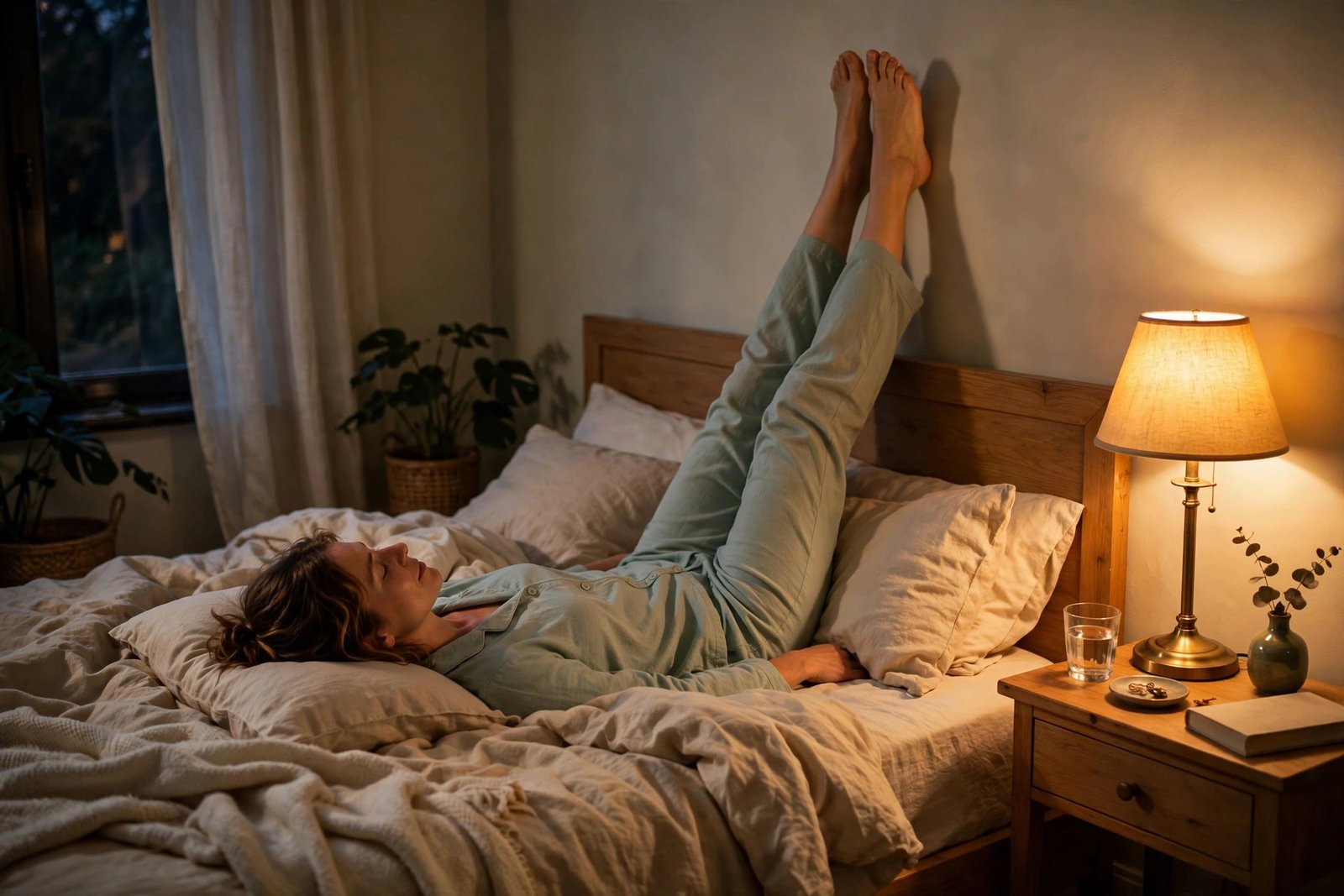
Tossing and turning is a rough way to end your day. These bedtime stretches for better sleep take only ten minutes. They help your body shift out of daytime stress and into deep, restful sleep.
Unlike a workout, this routine is not about pushing harder or sweating more. Instead, it is a gentle sleep ritual. It calms your nervous system, releases daytime tension, and tells your mind that it is safe to power down.
Why Bedtime Stretches for Better Sleep Actually Work
Your body has two basic modes: alert and at rest. During the day, stress keeps you in alert mode, with tense muscles and a racing mind. Gentle stretching helps flip the switch toward rest mode, which is exactly what you need before bed.
When you stretch slowly and breathe deeply, your heart rate eases down. In addition, your blood pressure drops slightly, and tight muscles begin to let go. As a result, your body starts producing the signals that make drowsiness feel natural instead of forced.
Many people carry the day’s tension in their neck, shoulders, and lower back. Therefore, sitting at a desk for hours can leave you stiff and wired at exactly the wrong time. Bedtime stretches for better sleep target those very spots, so you climb into bed feeling loose rather than locked up.
Research on sleep habits also supports a calm wind-down routine. The Sleep Foundation’s guide to sleep hygiene recommends relaxing activities before bed as a core part of sleeping well. Gentle stretching fits that advice perfectly, because it is quiet, screen-free, and soothing.
In short, you are not exercising at night. You are giving your body a clear, physical signal that the day is over.
How This Sleep Ritual Differs From an Evening Workout
This is an important distinction, so let us be clear. An evening workout builds fitness, raises your heart rate, and often leaves you energized. On the other hand, a sleep ritual does the opposite on purpose: it lowers your energy, slows your breathing, and prepares you for rest.
Motion Guided already has a full Evening Stretching Routine for Relaxation and Better Sleep if you want a slightly longer flexibility session. This article is narrower. It is a short, calming sequence built only around falling asleep faster and sleeping more soundly.
For example, you will not find lunges, planks, or anything that gets your blood pumping here. Every move stays close to the floor or the bed. Similarly, every hold is long and easy, with slow breathing doing most of the work.
If you stretched earlier in the evening for flexibility, you can still do this ritual later. Think of it as the final chapter of your day, not another workout.
Setting Up Your Bedroom for Better Sleep
In fact, your environment matters more than you might think. A calm room helps your brain connect your bed with sleep, which makes the whole ritual work better. First, dim the lights or switch to a warm bedside lamp about thirty minutes before bed.
Next, put your phone on silent and leave it face-down. Meanwhile, keep the room cool if you can, since a slightly cool room supports deeper sleep. In addition, a tidy bedside table and fresh air from a cracked window can make the space feel calmer.
You need almost no equipment for this routine. A yoga mat is nice but optional, because most of these stretches happen right on your bed. A pillow or two will help you get comfortable in a few positions.
Wear loose, comfortable sleepwear. Finally, give yourself ten unhurried minutes. Rushing through bedtime stretches for better sleep defeats the purpose, so treat this time as non-negotiable.
Your 10-Minute Bedtime Stretches for Better Sleep Routine
Do these six stretches in order, spending about ninety seconds on each. Move slowly between positions, and breathe deeply the entire time. There is no need to chase a deep stretch; a gentle pull is plenty.
1. Child’s Pose
Kneel on your mat or bed, then sit your hips back toward your heels. Fold forward and rest your forehead on the surface, with your arms reaching out in front of you. Let your whole back round and soften.
Breathe into your lower back and feel your ribs expand with each inhale. Stay here for about ninety seconds, and let your shoulders drop further with every exhale. This pose is one of the most calming stretches you can do, which makes it a perfect opener.

2. Supine Spinal Twist
Lie on your back and pull your right knee up toward your chest. Then guide that knee across your body to the left, keeping your right shoulder on the bed. Extend your right arm out to the side and turn your head gently to the right.
This twist wrings out tension along your spine and through your lower back. Hold for forty-five seconds, then switch sides. In addition, focus on keeping both shoulders heavy, since the stretch deepens on its own when you stop forcing it.

3. Legs Up the Wall
Scoot your hips close to a wall or your headboard, then swing your legs up so they rest vertically. If your hamstrings are tight, you can bend your knees slightly or move your hips a few inches away from the wall. Place your arms at your sides, palms facing up.
This restful inversion helps tired legs drain and signals your nervous system to calm down. Close your eyes and stay for two full minutes. Meanwhile, breathe slowly through your nose and feel your belly rise and fall.
4. Figure-Four Stretch
Lie on your back with both knees bent. Cross your right ankle over your left knee, then gently pull your left thigh toward you. You should feel a deep but comfortable stretch through your right hip and glute.
Tight hips can make it hard to find a comfortable sleep position. Therefore, releasing them now can help you settle faster once the lights go out. Hold for one minute per side, and keep your shoulders relaxed the whole time.
5. Seated Forward Fold
Sit on the edge of your bed with your feet flat on the floor. Hinge forward from your hips and let your upper body drape over your thighs. Your hands can rest on the floor or on your shins, wherever they reach without strain.
Let your head hang heavy and nod gently from side to side to release your neck. This fold calms the mind because the forward shape feels safe and enclosed. Stay for ninety seconds, breathing slowly.
6. Reclined Neck Release
Lie back on your pillow and let your head rest fully. Slowly tilt your right ear toward your right shoulder until you feel a gentle stretch along the left side of your neck. Hold for thirty seconds, then repeat on the other side.
Next, tuck your chin slightly and press the back of your head into the pillow for five seconds, then release. This simple move eases the tech-neck tension that builds up from phones and laptops. As a result, your shoulders drop away from your ears and your whole upper body softens.
That is the full sequence. If you want to understand the stretching principles behind these moves, our guide to static stretching exercises explains hold times and form in more detail.
Finish With Two Minutes of Slow Breathing
Breathing is the secret ingredient that turns stretching into a true sleep ritual. After your last stretch, sit or lie comfortably and close your eyes. Breathe in through your nose for four slow counts, then breathe out through your mouth for six slow counts.
The longer exhale is the key. It directly tells your nervous system to relax, and within a minute most people feel their eyelids grow heavy. Continue for about two minutes, or until you feel genuinely drowsy.

If your mind keeps racing, give it a simple job. For instance, count each exhale silently from ten down to one, then start over. This keeps your thoughts anchored instead of spiraling into tomorrow’s to-do list.
Making Bedtime Stretches for Better Sleep a Nightly Habit
A ritual only works if you actually do it, so make it easy to repeat. First, tie it to something you already do every night, like brushing your teeth. This habit-stacking trick means you never have to remember; the cue does the remembering for you.
Second, keep the bar low on busy nights. Even three minutes of child’s pose and slow breathing is better than skipping entirely. Indeed, consistency matters far more than perfection, and a short version still sends the sleep signal.
Third, track your sleep for a week or two. Many people notice they fall asleep faster within the first few nights. In fact, seeing that progress makes the habit stick, because your brain links the ritual with the reward.
The Healthline guide to sleeping better lists a relaxing bedtime ritual among its top evidence-backed tips. In addition, if you enjoy having a longer daytime routine too, our full body flexibility routine pairs nicely with this nightly wind-down.
Finally, be patient with yourself. New habits take a little time, but your future well-rested self will thank you.
Bedtime Stretches for Better Sleep: FAQ
How long before bed should I do bedtime stretches for better sleep?
Start about fifteen to thirty minutes before you want to fall asleep. This gives your body time to shift into rest mode. However, even five minutes right before lights-out is helpful if that is all you have.
Can bedtime stretches for better sleep replace a sleep aid?
Stretching is a healthy habit, but it is not a medical treatment. If you have chronic insomnia or a sleep disorder, talk to your doctor. That said, many people find a calming routine reduces their need to toss, turn, and reach for quick fixes.
Will stretching before bed make me too energized to sleep?
Not if you keep it gentle. Vigorous exercise close to bedtime can be stimulating, but slow, floor-based stretches with deep breathing do the opposite. The key is to move slowly and avoid anything that raises your heart rate.
Can I do this routine in bed?
Yes, absolutely. Five of the six stretches work perfectly on a mattress. Only child’s pose feels better on a firmer surface, and you can do it on the floor beside your bed before climbing in.
What if I am not flexible at all?
This routine was made for you. Every stretch has a gentle version, and you never need to force range of motion. In fact, less flexible people often feel the biggest relief, because they carry the most tension.
Conclusion: Fall Asleep Faster With Bedtime Stretches for Better Sleep
You do not need expensive gadgets or complicated programs to sleep better. Ten quiet minutes of bedtime stretches for better sleep can calm your body, quiet your mind, and make drifting off feel easy again.
Start tonight. Dim the lamp, move through the six stretches, and finish with slow breathing. As a result, tomorrow morning will feel noticeably better. Sweet dreams.
