


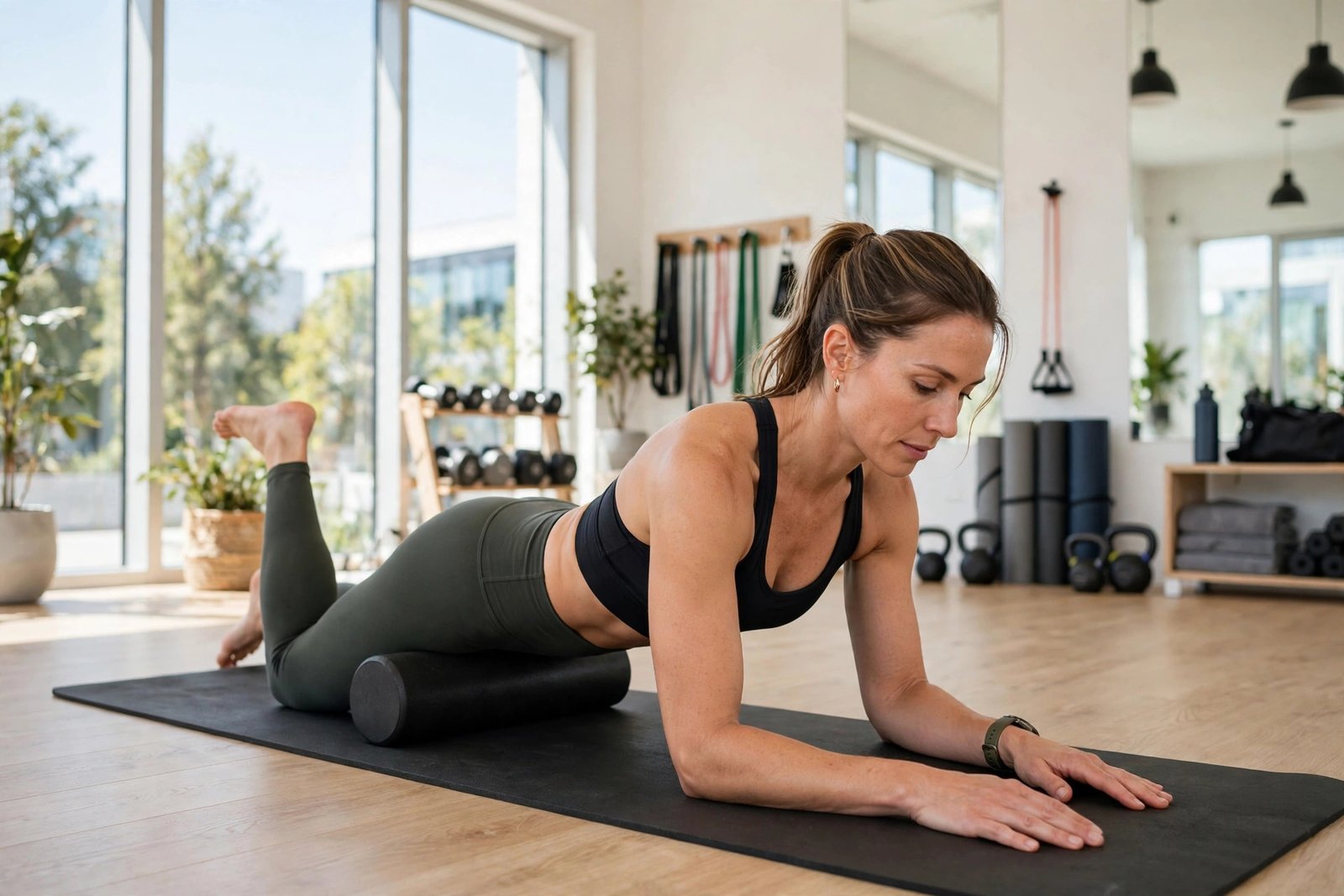
You have just finished a tough workout, and your legs feel heavy and sore. You reach for either your foam roller or your favorite stretch routine, but you are not sure which one will help more. The foam rolling vs stretching debate confuses a lot of people, so let us settle it in plain, simple terms.
Both tools are popular in gyms and home workout spaces. Fitness coaches recommend them, and your friends probably swear by one or the other. The truth is that they do different jobs, and understanding those jobs will help you pick the right one every time.
Here is the short version before we dig deeper. Reach for the foam roller when your muscles feel sore, tight, or knotted. Stretch when you want to improve your range of motion and flexibility. Of course, there is more nuance than that. Therefore, this foam rolling vs stretching guide walks you through exactly what each method does. You will learn how they compare and how to combine them for the best results.
Foam Rolling vs Stretching: What Each One Actually Does
Foam rolling and stretching may feel similar, but they work on your body in different ways. First, let us look at each method on its own. Understanding the mechanics will make the comparison much clearer.
What Foam Rolling Does
Foam rolling is also called self-myofascial release. You place your body weight on a firm foam cylinder and slowly roll over a muscle group. The pressure works on your muscles and the thin layer of tissue around them, called fascia.
This pressure does a few helpful things. For example, it can increase blood flow to the area you are rolling. In addition, it helps calm down tender spots, often called trigger points, that feel like small knots. As a result, many people feel looser and less sore right after a short rolling session.
Think of foam rolling as a deep-tissue massage you give yourself. It is especially good at easing that achy, bruised feeling you get a day or two after exercise. However, it is not really designed to lengthen your muscles permanently.
What Stretching Does
Stretching works in a simpler, more direct way. You take a muscle to its end range and hold it there, or you move it gently through a range of motion. Over time, this teaches your nervous system that the longer position is safe.
There are two main types worth knowing. Static stretching means holding one position for 20 to 60 seconds, like a standing quad stretch after a run. Dynamic stretching means moving through stretches, like leg swings before a workout. Both have their place, and both target flexibility more than soreness relief.
Stretching is your best tool when a muscle feels short or restricted. For instance, tight hamstrings that limit how far you can bend forward respond well to consistent stretching. Similarly, a stiff chest from desk work opens up nicely with regular doorway stretches.
Foam Rolling vs Stretching: The Short Answer (Roll for Soreness, Stretch for Range)
If you remember only one thing from this article, make it this simple rule. Foam rolling is your go-to for soreness, while stretching is your go-to for range of motion.
Sore after yesterday’s workout? Grab the roller. Feeling stiff in the mornings and want to move more freely? Stretch. Indeed, research supports this split. Studies on foam rolling show short-term relief from muscle soreness and tightness. Stretching research, on the other hand, consistently shows gains in flexibility and joint range of motion.
Of course, the two overlap. Foam rolling can give you a temporary boost in how far you can move, and gentle stretching can feel soothing on sore muscles. However, each one shines brightest at its own job. In the foam rolling vs stretching debate, your goal decides the winner. Therefore, matching the tool to your goal is the smartest move.

Foam Rolling vs Stretching: A Side-by-Side Comparison
Sometimes a simple table makes everything click. Here is how the two stack up across the things that matter most to you.
| Feature | Foam Rolling | Stretching |
|---|---|---|
| Main goal | Eases soreness and muscle tightness | Improves flexibility and range of motion |
| How it works | Pressure on muscles and fascia | Lengthening muscles at their end range |
| Best for soreness (DOMS) | Excellent | Good, if kept gentle |
| Best for flexibility | Temporary boost only | Excellent, long-term gains |
| Equipment needed | Foam roller | None (mat optional) |
| Time per muscle | 30 to 60 seconds of rolling | 20 to 60 seconds of holding |
| Before a workout | Good warm-up choice | Dynamic stretching only |
| After a workout | Great for recovery | Gentle static stretching works well |
| Learning curve | Slightly awkward at first | Easy to start |
| Risk level | Low, if you avoid bones and joints | Low, if you never force it |
Notice that neither one is the villain here. In contrast to what some heated gym debates suggest, you do not have to pick a side forever. Instead, think of them as two tools in the same recovery toolbox.
Foam Rolling vs Stretching: Which Is Better for Soreness?
When your muscles ache a day after a hard session, foam rolling usually wins. This delayed soreness, called DOMS, comes from tiny stress in your muscle fibers after unfamiliar or intense exercise. The pressure of the roller increases local blood flow, which may help your muscles feel better faster.
Research backs this up. For example, a meta-analysis of foam rolling studies found it can reduce muscle soreness and improve short-term recovery. Meanwhile, aggressive stretching on very sore muscles can actually irritate them more. Therefore, on your sorest days, roll first and keep any stretching light and gentle.
Here is a simple way to use the roller for soreness. First, place the roller under the sore muscle group. Second, roll slowly over the area for 30 to 60 seconds, pausing on tender spots. Finally, breathe deeply and let your body weight do the work instead of tensing up. If you want a full routine, our foam roller exercises guide walks you through each major muscle group step by step.

That said, gentle stretching still has a place on sore days. Light movement increases circulation too, and easy stretches can stop you from stiffening up. On the other hand, deep or aggressive stretching when you are very sore is not a good idea. Consequently, keep stretches short and pain-free until the soreness fades.
Foam Rolling vs Stretching: Which Builds More Flexibility?
When your goal is to move better and reach further, stretching is the clear winner. Foam rolling can give you a quick, temporary feeling of looseness. However, it does not create the lasting length changes that stretching does.
Stretching works by gradually teaching your muscles and nervous system to accept longer positions. For instance, someone who stretches their hamstrings three times a week for a month will usually see real, measurable progress. In addition, regular stretching improves how your joints move, which carries over into daily life, sports, and workouts.
The science here is well established. A major review of stretching research concluded that consistent stretching is one of the most reliable ways to increase range of motion. Foam rolling studies, in contrast, show that its flexibility effects fade within hours. As a result, if touching your toes or deepening your squat is the goal, stretching should be your main focus.
Foam rolling can still support your flexibility work. Many people find that a quick roll before stretching helps them ease into deeper positions more comfortably. Similarly, rolling after a stretching session can soothe any mild tenderness. For a solid foundation, check out our static stretching exercises guide to build a routine that actually sticks.
Foam Rolling vs Stretching: Can You Combine Both?
Yes, and honestly, this is where the magic happens. You do not have to choose just one side in the foam rolling vs stretching debate. In fact, using both together often works better than using either one alone.
The best order is simple: roll first, then stretch. Foam rolling first calms down tight, tender muscles and improves blood flow. After that, your muscles are more willing to relax into a stretch. Consequently, many people find they can stretch deeper and more comfortably after a short rolling session.
Here is a simple 10-minute combo routine you can try tonight. First, roll your quads, hamstrings, and upper back for about one minute each. Second, do gentle static stretches for those same areas, holding each for 30 seconds. Finally, finish with a few deep breaths in a relaxed position, like child’s pose. Indeed, this little sequence covers both soreness and flexibility in one go.

Timing matters too. Before a workout, pair foam rolling with dynamic stretching for a great warm-up. After a workout, roll the muscles you worked hardest, then finish with gentle static stretches. Meanwhile, on rest days, a longer combo session is a wonderful way to recover. Our beginner stretching guide is a perfect companion if you are just building the habit.
Foam Rolling vs Stretching: A Quick Decision Guide
Still unsure in the moment? Use this foam rolling vs stretching cheat sheet. It covers the most common situations and tells you exactly what to reach for.
- Sore the day after leg day: foam roll first, then stretch gently.
- Morning stiffness and want to move freely: stretch, with dynamic moves to wake up.
- Tight hamstrings limiting your movement: stretch consistently over weeks.
- Knotty, tender spots in your back or calves: foam roll those areas directly.
- Warming up before a workout: foam roll briefly, then do dynamic stretches.
- Cooling down after a workout: foam roll the worked muscles, then gentle static stretches.
- Desk-worker neck and shoulder tension: foam roll the upper back, then stretch the chest and neck.
- Working toward the splits or deeper flexibility: stretch as the main practice, roll to support recovery.
Notice the pattern. Soreness and knots point to the roller, while range-of-motion goals point to stretching. When in doubt, however, doing both in the roll-then-stretch order rarely steers you wrong.
Safety Tips for Both Methods
Both foam rolling and stretching are safe for most people, but a few ground rules keep them that way. First, never roll directly over bones, joints, or your lower back. The roller is for muscles, so keep it on soft tissue like your quads, calves, glutes, and upper back.
Second, avoid sharp pain with either method. Mild discomfort is normal, especially on the roller, but sharp or shooting pain is a clear stop signal. In addition, go slowly. Rushing through rolling or bouncing in stretches increases your injury risk for no extra benefit.
Third, skip aggressive work on injured areas. If you have a strain, sprain, or unexplained pain, rest and see a professional instead of trying to roll or stretch it away. Finally, stay consistent rather than intense. A little bit most days beats one painful marathon session. Indeed, gentle and regular always wins in the long run.
Frequently Asked Questions About Foam Rolling vs Stretching
Is foam rolling better than stretching?
Neither is better in every situation. Foam rolling is better for easing muscle soreness and tightness, while stretching is better for building lasting flexibility. Therefore, the smarter question is which one matches your goal today.
Should I foam roll or stretch first?
Foam roll first, then stretch. Rolling first increases blood flow and calms tender muscles, which makes stretching feel easier and more effective afterward. For example, try one minute of rolling per muscle group before your stretching routine.
Can foam rolling replace stretching?
No, not fully. Foam rolling gives temporary relief and a short-term looseness, but it does not replace the lasting flexibility gains from stretching. In contrast, stretching alone may leave sore muscles feeling under-recovered. Consequently, most people benefit from both.
Does foam rolling actually help with flexibility?
It helps temporarily. Studies show foam rolling can increase range of motion for a short window, usually a few hours. However, for long-term flexibility improvements, consistent stretching is still the proven method.
Is it okay to foam roll every day?
Yes, for most people daily foam rolling is fine. Keep sessions short, around 5 to 10 minutes, and stay on muscle tissue only. In addition, listen to your body: if an area feels bruised or irritated, give it a rest day.
Which one should beginners start with?
Start with stretching, since it needs no equipment and is easy to learn. Then add a basic foam roller once you are comfortable. Indeed, beginners often get the most value from simple static stretches done consistently three to four times per week.
Conclusion
The foam rolling vs stretching question does not have one winner, and that is actually good news. It means you have two simple, proven tools instead of one. Roll when your muscles feel sore, tight, or knotted. Stretch when you want to move more freely and build real, lasting flexibility.
Even better, you can use both together. A few minutes of rolling followed by gentle stretching covers recovery and flexibility in one short session. Moreover, this combo fits easily into a busy schedule: ten minutes in the evening is enough to feel a real difference.
Start small and stay consistent. Pick the tool that matches how your body feels today, and trust the simple rule: roll for soreness, stretch for range. So the next time the foam rolling vs stretching question pops up, you will know exactly what to do. Your muscles will thank you for it.
