


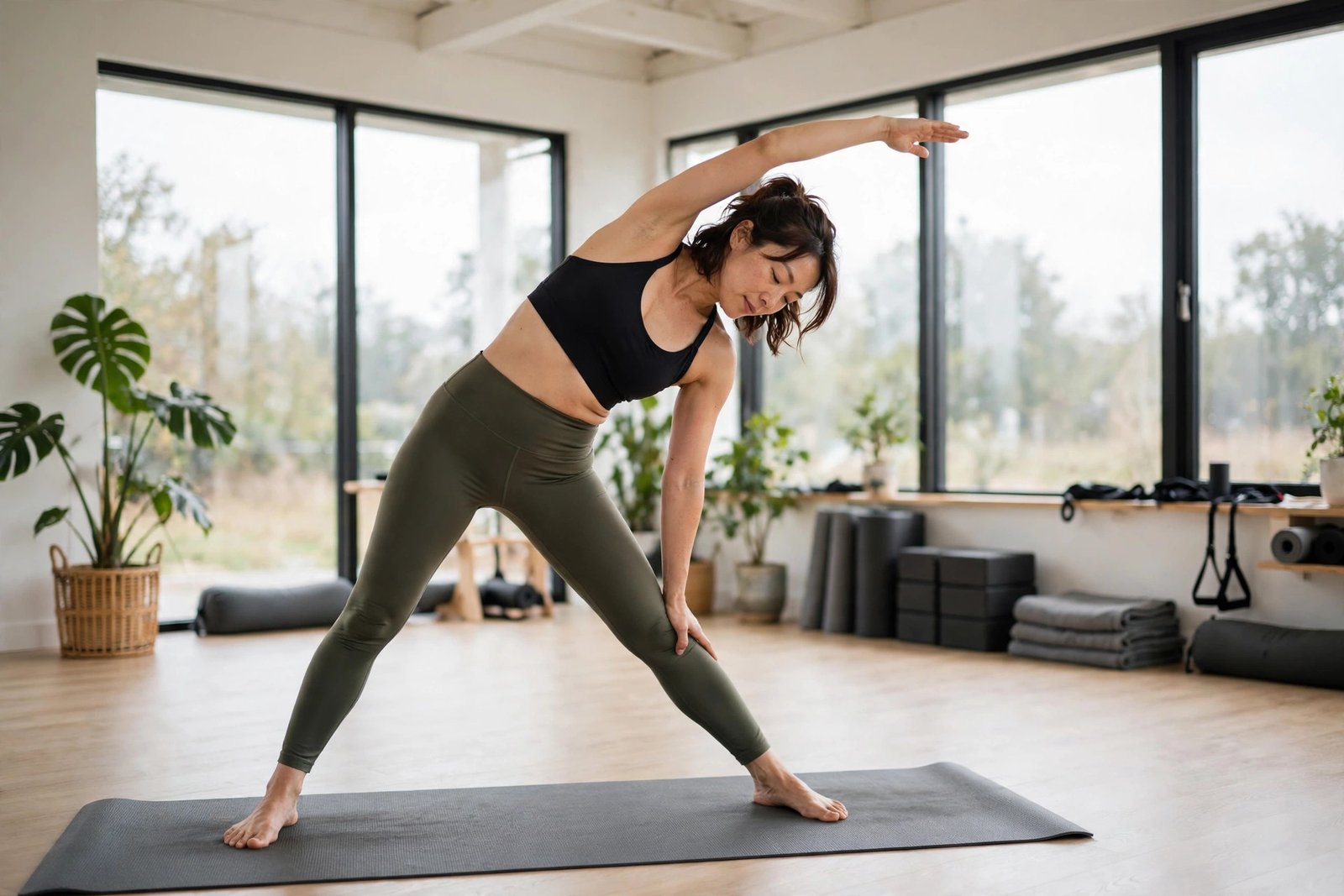
If you have ever searched for yoga vs stretching for flexibility, you are in good company. It is one of the most common questions in the movement world. For instance, people want to know which one truly makes the body looser, lighter, and easier to move.
Here is the short answer: both work, and both work well. However, they work in very different ways. Stretching, for example, is simple and targeted. Yoga, on the other hand, is broader and blends movement, strength, and breath.
Therefore, this guide settles the yoga vs stretching for flexibility question with honesty, not hype. You will get a clear side-by-side table. In addition, you will get a simple way to choose the right one for you and a sample week that combines both.
What Stretching Really Is
Stretching means lengthening a muscle on purpose and holding it there. For example, touching your toes to stretch your hamstrings is classic static stretching. In fact, it is simple, direct, and focused on one area at a time.
There are a few main types. Static stretching holds one position for 20 to 60 seconds. Dynamic stretching moves a joint through its range with control, like leg swings. However, both types suit different moments in your day.
In fact, most people stretch at home with no equipment at all. In addition, a routine can take as little as five minutes. Therefore, it is one of the easiest habits to start and keep.
According to Harvard Health, regular stretching keeps muscles flexible, strong, and healthy. Without it, muscles tighten and weaken over time. As a result, simple daily movements become harder than they should be.
If you are brand new, start with our stretching exercises for beginners guide. It walks you through safe, simple moves for the whole body.
What Yoga Really Is
Yoga is a full practice, not just a set of stretches. It links poses together with steady breathing and calm focus. Each pose, called an asana, asks your muscles to stretch, hold, and balance at the same time.
There are many styles of yoga. Gentle Hatha and restorative yoga move slowly and suit beginners. Meanwhile, faster styles like Vinyasa and Ashtanga build heat, strength, and sweat.
Unlike plain stretching, yoga always trains more than flexibility. In addition, it builds balance, body awareness, and core strength along the way. Meanwhile, the breathing practice lowers stress in a way that plain stretching rarely matches.
A typical yoga session runs 20 to 60 minutes. Some people practice at home with a video. Meanwhile, others join a class for guidance. Both paths work well for building flexibility over time.
Harvard Health notes that yoga brings benefits beyond the mat, including better strength, posture, and stress control. Indeed, researchers continue to find new reasons to recommend it. For flexibility, it is one of the most complete practices available.
Yoga vs Stretching for Flexibility: The Honest Side-by-Side Table
Now let’s look at the yoga vs stretching for flexibility question head to head. This table breaks down each one across the things that actually matter to you.
| What to Compare | Stretching | Yoga |
|---|---|---|
| Main goal | Lengthen specific tight muscles | Whole-body mobility, strength, and calm |
| Time per session | 5 to 15 minutes | 20 to 60 minutes |
| Strength benefit | Very little | Moderate, especially core and legs |
| Balance benefit | Almost none | Strong benefit from standing poses |
| Equipment needed | None, or just a strap | Mat, blocks optional |
| Learning curve | Very easy to start | Easy styles exist, but form takes practice |
| Type of flexibility | Mostly passive, one muscle at a time | Mix of active and passive, whole body |
| Stress relief | Mild and relaxing | Strong, thanks to breathwork |
| Best for beginners | Yes, very safe and simple | Yes, with gentle classes |
| Injury risk | Low, unless you bounce or force it | Low, but higher with advanced poses |
| Cost to start | Free | Free with videos, or paid classes |
What the Yoga vs Stretching for Flexibility Table Tells Us
First, notice that neither side is empty. Stretching wins on simplicity, speed, and ease of starting. Yoga wins on breadth, strength, and stress relief.
Second, look at the type of flexibility each builds. Stretching gives you passive flexibility in one muscle. Yoga gives you active flexibility across the whole body. Both are useful, and they are not the same thing.
In short, the table settles the yoga vs stretching for flexibility debate by showing there is no single winner. There is only the right tool for your life right now.
How Stretching Builds Flexibility
Stretching works through a simple process. When you hold a muscle in a lengthened position, your nervous system slowly relaxes its guard. As a result, the muscle allows a little more range each time you repeat the stretch.
In fact, this process is called increasing your stretch tolerance. It is not just about longer muscle fibers. Indeed, much of the gain comes from your brain learning that the position is safe.
Consistency matters more than intensity. Stretching for ten minutes a day beats one brutal hour a week. Therefore, short daily sessions are the smartest way to see real change.

Stretching also shines for targeted problems. For example, tight hip flexors from desk work respond well to a daily couch stretch. Similarly, stiff calves from running loosen up with simple wall stretches.
The main limit is scope. Stretching rarely builds strength or balance. It calms you a little, but it will not replace a workout. In other words, it is a great tool, not a complete system.
Our static stretching exercises guide covers the safest holds for every major muscle group. It is a perfect next step if targeted stretching sounds like your style.
How Yoga Builds Flexibility
Yoga builds flexibility in a layered way. Poses ask you to lengthen muscles while they are also working. Indeed, this active style builds something plain stretching cannot. For example, Warrior II stretches the inner thighs while the legs stay strong and active.
This active stretching builds something plain stretching cannot. It builds strength at the end of your range of motion. As a result, your new flexibility is usable and stable, not just floppy.
Breath is the secret ingredient. Slow, deep breathing tells your nervous system to let go. Consequently, poses often deepen on their own as you relax into them.

Yoga also moves the whole body in one session. Hips, spine, shoulders, and hamstrings all get attention. Therefore, it is ideal if many areas feel stiff, not just one.
The trade-off is time and learning. A full yoga session takes longer than a quick stretch. In addition, good form takes a few weeks to learn. For this reason, beginners do best with gentle classes or slow videos.
Yoga vs Stretching for Flexibility: Which One Should You Choose?
Now for the honest part. The right answer to yoga vs stretching for flexibility depends on who you are and what your days look like. Let’s walk through the most common cases.
Choose Stretching If You…
First, pick stretching if you want the fastest path to looser muscles. It fits into the smallest cracks of your day. In addition, it asks for zero equipment and zero learning curve.
For instance, stretching is ideal for desk workers with tight hips. It is also perfect before and after workouts as a warm-up and cool-down. Busy parents, students, and night owls can all fit in ten quiet minutes.
Choose stretching if one area bothers you most. For example, runners with tight calves or lifters with stiff shoulders get faster relief from targeted holds. Similarly, seniors with joint concerns often prefer its gentle, seated options.
Our daily flexibility routine takes just five to ten minutes. It is a great anchor habit if stretching is your pick.
Choose Yoga If You…
Pick yoga if you want flexibility plus more. It delivers strength, balance, posture, and stress relief in one session. As a result, you get more return on the time you spend.
Yoga, in contrast, suits people who feel stiff all over rather than in one spot. It is also wonderful if stress keeps you tense, since the breathing practice melts tension from the inside out. In contrast to stretching alone, it feels like a complete workout.
Choose yoga if you like structure and guidance. A class or a video gives you a clear path to follow. Beginners do well with gentle Hatha or slow flow styles.
The Honest Truth: You Don’t Have to Pick Just One
However, here is what most experts quietly believe. The best answer to yoga vs stretching for flexibility is not either/or. It is both, used for what each does best.

For example, yoga is your weekly practice that builds whole-body mobility. Stretching is your daily tool for quick relief and maintenance. Together, they cover everything.
For example, a short morning stretch can keep your desk-worker hips happy. Meanwhile, two evening yoga sessions a week can transform your overall movement. This combo is simple, and it actually lasts.
A Sample Week of Yoga vs Stretching for Flexibility: Combine Both
Ready to put the yoga vs stretching for flexibility debate into practice? This sample week gives you the best of both worlds. It takes about two hours total across seven days.
| Day | What to Do | Time |
|---|---|---|
| Monday | Gentle yoga flow, full body, slow pace | 25 min |
| Tuesday | Morning stretch: hips and hamstrings | 10 min |
| Wednesday | Rest or light walk; optional neck and shoulder stretch | 5 min |
| Thursday | Gentle yoga flow, focus on hips and spine | 25 min |
| Friday | Evening stretch: full body, slow holds | 15 min |
| Saturday | Longer yoga session or beginner class | 35 min |
| Sunday | Rest; five minutes of deep breathing and gentle twists | 5 min |
First, notice the rhythm: yoga three times, stretching three times, rest woven in. This balance keeps you consistent without burning out. In addition, every session is short enough to fit real life.
Second, adjust freely. If a day feels heavy, swap yoga for a ten-minute stretch. If you feel great, add a few extra poses. The plan serves you, not the other way around.
Finally, give it four weeks before you judge. Flexibility gains are slow and steady. However, most people feel noticeably looser within the first two weeks.
Frequently Asked Questions
Is yoga better than stretching for flexibility?
Indeed, it depends on what you mean by better. Yoga builds broader, whole-body flexibility with strength and balance included. Stretching gives faster, targeted relief for one tight area. In the yoga vs stretching for flexibility question, the winner is the one you will actually do.
Can I do yoga and stretching on the same day?
Yes, absolutely. For example, many people do a short stretch in the morning and yoga in the evening. Just keep both gentle and skip anything that causes pain. On rest days, light stretching alone is plenty.
How long does it take to see flexibility results?
Most people feel looser within two weeks of consistent practice. Visible changes, like touching your toes, often take four to eight weeks. The key is steady repetition, not pushing hard in a single session.
Do I need equipment for either one?
Not really. Stretching needs nothing at all. Yoga is best on a mat, but a carpet or towel works to start. Blocks and straps are helpful extras, not requirements.
Which is safer for total beginners?
Both are safe if you start gently. Stretching has the simplest learning curve. For yoga, choose beginner or gentle classes and skip advanced poses. Listen to your body and never force a position.
Will yoga or stretching help my back pain?
In fact, yes, especially for stiffness from sitting. Gentle movement keeps the spine mobile and the supporting muscles supple. However, sharp or lasting pain deserves a doctor’s visit before you start.
Conclusion
In short, the yoga vs stretching for flexibility debate has no villain and no hero. Stretching is quick, simple, and perfect for daily maintenance. Yoga is deeper, broader, and builds strength along with mobility.
Therefore, the smartest move is to stop choosing and start combining. Use stretching for your busy days and tight spots. Use yoga for your deeper sessions and whole-body days.
Finally, pick one small step today. Do a five-minute stretch or a short yoga video. Then repeat it tomorrow. Indeed, small steps done often are how flexibility is really built.
