


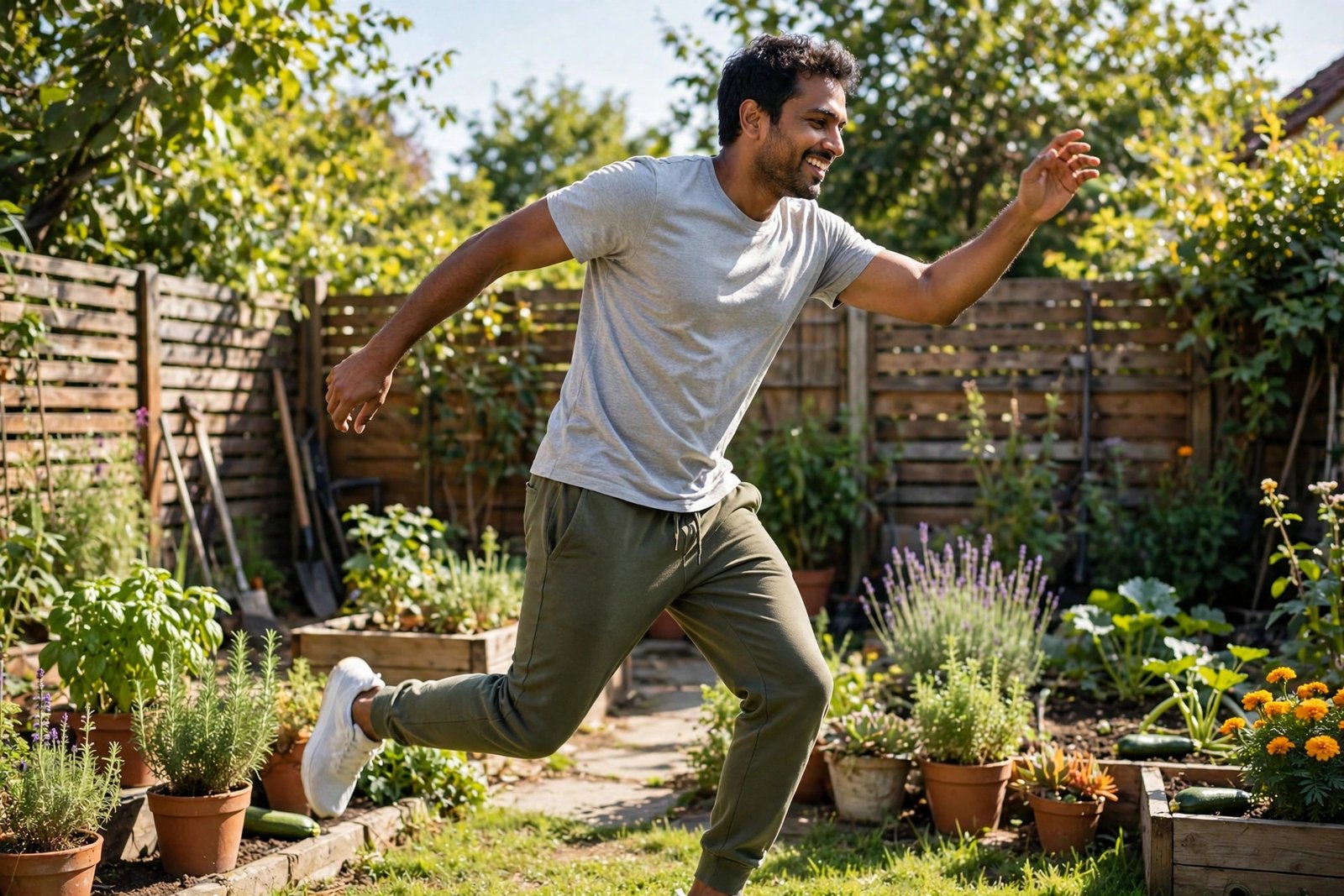
You do not need an intense workout to be an active person. What your body craves most is simple, regular movement — the kind woven through your whole day. Daily movement exercises are the foundation everything else is built on, and they are far more powerful than most people realize.
Research keeps confirming it: people who move a little every day enjoy better energy, mood, sleep, and long-term health than those who sit all week and cram exercise into one weekend session. In fact, a Healthline report on walking research found that regular daily walking is linked with meaningfully longer life expectancy. In addition, these daily movement exercises work best when you do them slowly and with full attention.
In addition, this guide gives you a practical library of daily movement exercises, a simple 20-minute template, and clever ways to fit movement into even the busiest schedule. Also, no gym, no gear, no excuses — just you, moving a little more, every day.
Why Daily Movement Beats Occasional Workouts
In fact, your body adapts to what you do most, not what you do hardest. Eight hours of sitting followed by one heroic workout still leaves most of the day sedentary. But frequent, gentle movement keeps blood flowing, joints lubricated, and metabolism humming around the clock. Then, add these daily movement exercises to your weekly schedule and your joints will thank you.
Scientists call everyday activity “NEAT” — non-exercise activity thermogenesis. In addition, it includes walking, fidgeting, cleaning, gardening, and taking stairs. NEAT can burn hundreds of extra calories daily and is strongly linked with healthier weight and better metabolic markers. In fact, the beauty of these daily movement exercises is that you can do them anywhere, anytime.
In fact, there is a mental angle too. Daily movers consistently report better mood and sharper focus. Movement breaks interrupt the stress spiral of desk work, and even five minutes of walking can reset a sluggish afternoon. Also, start with five minutes of these daily movement exercises and build up as you get stronger.
The NHS exercise guidance highlights that regular movement supports heart health, bone strength, and mental wellbeing — and that the benefits start with surprisingly modest amounts. In addition, daily movement exercises compound quietly — small efforts lead to remarkable results.
What Counts as a Daily Movement Exercise?
Forget the all-or-nothing mindset. A daily movement exercise is any intentional bout of physical activity you do most days: a walk, a set of squats, ten minutes of stretching, dancing while dinner cooks. Intensity matters less than regularity. As a result, people who do daily movement exercises often report better energy within weeks.
In fact, the best daily movements share three traits: they use large muscle groups, they are easy to start, and they feel good enough to repeat. Walking, bodyweight basics, and mobility flows all qualify. Punishing workouts you dread do not — sustainability beats intensity. Moreover, daily movement exercises are the easiest habit to keep, since they ask so little of you.
Think in terms of a movement diet. Just as you would not eat one giant meal a week, do not save all your activity for Saturday. Small daily servings keep every system in your body nourished. In fact, research consistently shows that daily movement exercises support both body and mind.
12 Simple Daily Movement Exercises
Mix and match these to build your own routine. Each takes one to three minutes, and together they cover cardio, strength, and mobility. Finally, remember that daily movement exercises work best when you enjoy them.

1. Brisk Walking
The king of daily movement. Then, aim for a pace where you can talk but feel slightly breathless. Even ten minutes counts — and it is the easiest habit to stack onto an existing routine, like a lunch break or phone call. Consequently, your energy stays steadier through the afternoon.
2. Bodyweight Squats
Stand with feet shoulder-width apart, sit your hips back and down, then stand tall. Do two sets of ten. Squats keep your legs strong for stairs, chairs, and everything in between. For walking-specific leg benefits, see our walking guide. Similarly, your sleep often improves once you move more during the day.
3. Counter Push-Ups
Hands on a kitchen counter, body in a straight line, bend your elbows and press back up. Easier than floor push-ups but excellent for chest, shoulders, and arms. Work up to three sets of twelve.
4. Standing Marches
Also, march in place, lifting knees to hip height, swinging your arms. One minute of marching elevates your heart rate and loosens the hips. Perfect during TV commercials or kettle boils.
5. Arm Circles and Overhead Reaches
Big slow arm circles — ten forward, ten back — followed by interlaced-finger overhead reaches. Desk workers: this undoes hours of hunching in under two minutes.
6. Glute Bridges
Then, lie on your back, knees bent, feet flat. Also, squeeze your glutes and lift your hips until your body forms a straight line from shoulders to knees. Two sets of twelve wakes up the posterior chain that sitting puts to sleep.
7. Step-Ups
Also, use a sturdy step or the bottom stair. Then, step up, stand tall, step down, alternate legs. Ten per leg builds single-leg strength and balance that transfers directly to real life.
8. Calf Raises
Rise onto your toes, pause, lower slowly. Two sets of fifteen strengthens the lower legs and improves ankle stability. Do them while brushing your teeth to make the habit automatic.
9. Bird Dog
On all fours, extend your right arm and left leg simultaneously, hold two seconds, switch. Ten per side builds core stability and coordination without a single crunch.
10. Side-Lying Leg Lifts
Also, lie on your side and lift the top leg slowly, keeping it in line with your body. Twelve per side strengthens the hip stabilizers that protect your knees and back.
11. Gentle Spinal Twists
Seated or lying, rotate your torso gently each way and hold for 20 seconds. In fact, your spine craves rotation — it gets almost none from sitting and walking straight ahead.
12. Playful Movement
Dance to one song. Garden for ten minutes. Play tag with your kids. “Exercise” that feels like play is the kind you will still be doing in ten years — and it counts every bit as much.
The 20-Minute Daily Movement Exercises Template
Here is a complete session using the exercises above. Also, do it once daily, at whatever time suits you.

Minutes 0–5: Warm up and mobilize. March in place (2 min), arm circles and reaches (2 min), gentle spinal twists (1 min). Get warm and find your rhythm.
Minutes 5–15: Strength circuit. Bodyweight squats (10), counter push-ups (10), glute bridges (12), step-ups (8 per leg), calf raises (15). Rest 30 seconds between moves. Repeat the circuit once.
Minutes 15–20: Walk and wind down. Finish with a brisk five-minute walk — around the block, up and down stairs, or in place. End with bird dogs (5 per side) as a calming finisher.
As this becomes easy, add a second strength round or extend the walk. The template grows with you. Additionally, for a deeper dive into movement fundamentals, explore our movement training basics guide.
Movement Snacks: Fitting Daily Movement Exercises Into a Busy Day
No twenty-minute block? Split it up. Movement snacks — one-to-three-minute bursts scattered through the day — deliver remarkably similar benefits to one continuous session.

Try these: squats while the coffee brews, calf raises while brushing teeth, a one-minute march between meetings, counter push-ups before lunch, a short walk after dinner. Five snacks equal a full session without ever “working out.”
Habit stacking is the secret. Attach each snack to something you already do daily, and the routine runs on autopilot within two weeks. Also, pair this approach with our daily mobility routine for joints that stay happy too.
Track streaks, not perfection. Mark an X on the calendar each day you move. After a week of X’s, you will protect the streak — and the streak will protect your health.
Frequently Asked Questions
How much daily movement do I actually need?
Guidelines suggest 150 minutes of moderate activity weekly — about 20 minutes a day — plus muscle-strengthening twice weekly. But any amount beats none; even ten daily minutes produces measurable benefits.
Is walking enough as a daily exercise?
Walking is a fantastic base, and for many people it is enough to see major health gains. Adding two weekly bodyweight strength sessions covers the muscle and bone benefits walking alone misses.
What if I can only do five minutes a day?
Do the five minutes. Research shows even brief daily movement improves mood and energy. Five consistent minutes beats an ambitious plan you abandon by Friday.
Should I do the same exercises every day?
Mostly yes, with light variation. Daily consistency matters more than variety, but rotate emphasis — e.g., extra glute work one day, extra upper body the next — to keep things balanced.
Can daily movement replace gym workouts?
For general health, often yes. For specific goals like building significant muscle or training for an event, targeted workouts still help. In fact, many people thrive on daily movement plus two focused strength days.
What is the best time of day to do these?
Whenever you will actually do them. Morning movers get an energy head start; lunch movers break up sitting; evening movers unwind. Consistency of timing builds the habit fastest.
How do I stay motivated long-term?
Also, make it enjoyable and easy: pair movement with music or podcasts, keep sessions short, track streaks, and choose exercises you do not dread. Motivation follows action — start small and let momentum build.
What should I do on days when I’m sore or tired?
Then, move gently anyway, just dial it back. A slow ten-minute walk or some easy mobility work often eases soreness faster than complete rest, because light activity boosts blood flow to recovering muscles. Save the strength circuit for when you feel fresh again. In fact, the rule is simple: never skip entirely, but always match the intensity to how your body feels. In fact, a tired-day walk still protects your streak and keeps the habit alive, which matters more than any single hard session.
How can I get my kids or partner involved?
Also, turn movement into shared time rather than solo exercise. Evening walks, weekend hikes, living-room dance breaks, or a friendly plank challenge all count. And accountability partners make habits stick far better than willpower alone. Kids especially love “exercise” disguised as play: animal walks, Simon-says stretches, or scavenger-hunt walks around the neighborhood. When movement becomes family culture instead of a chore, nobody has to rely on motivation.
Conclusion
Daily movement exercises are not about transforming yourself in thirty days. In addition, they are about the quiet compound interest of showing up for your body, a little bit, every single day. Walks, squats, stretches, play — it all counts, and it all adds up.
Also, start today with just one movement snack. Then another tomorrow. A year from now, you will not remember the individual sessions — but your energy, your joints. In fact, your mood will tell the story of every one of them.
