


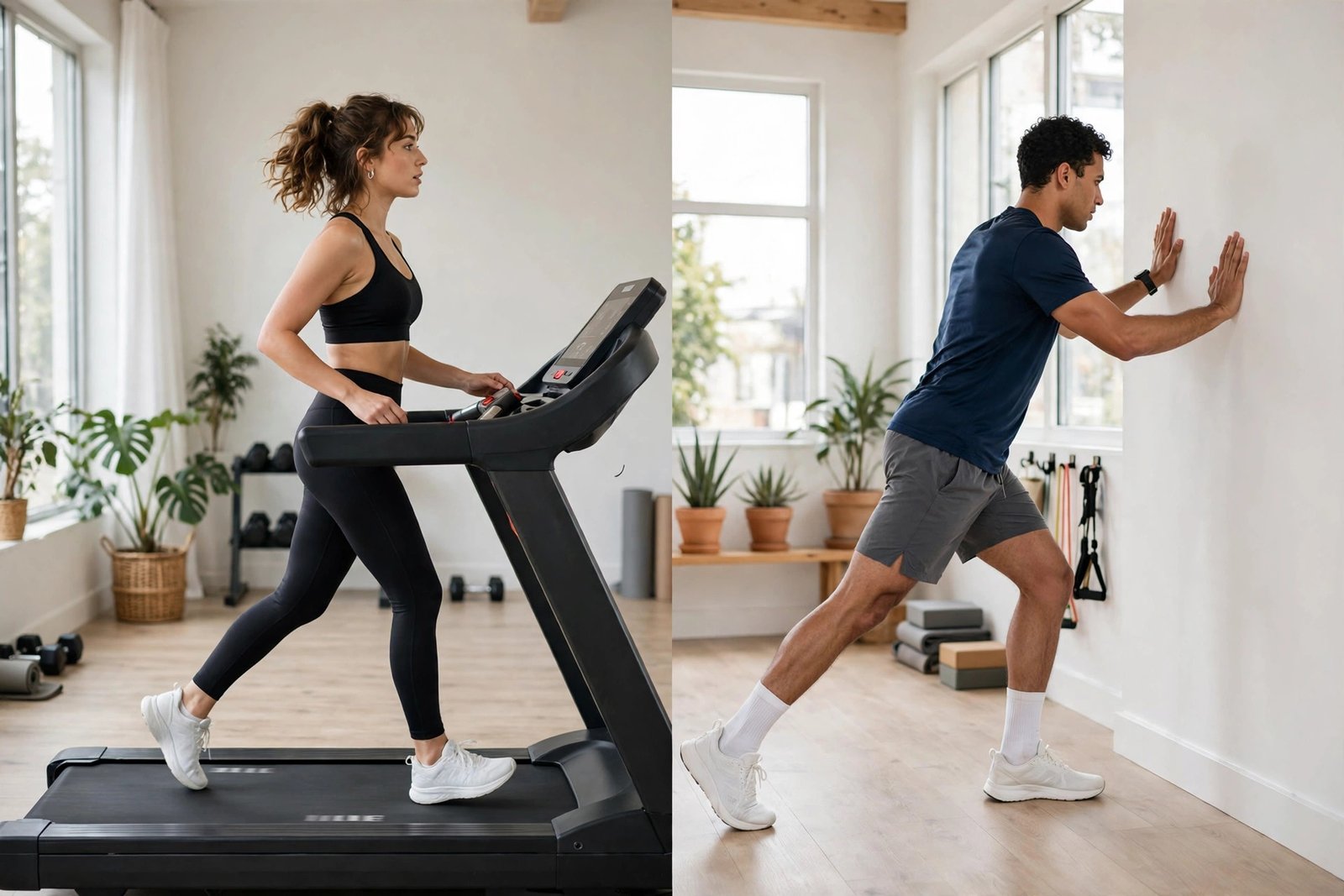
If you have been wondering about walking vs stretching for flexibility, you are asking a smart question. Many people assume they must pick one or the other. In fact, walking and stretching do different jobs in your body, and both matter.
Therefore, the best approach is not to crown a single winner. Instead, you can combine both for far better results. In this guide, you will learn exactly how each one works, and you will get a simple 30-minute routine that puts them together.
Walking vs Stretching for Flexibility: The Short Answer
So what is the verdict on walking vs stretching for flexibility? The short answer is simple: do both. Walking improves your mobility and warms up your whole body. Stretching, on the other hand, targets tight muscles directly and extends your range of motion.
Think of walking as the engine and stretching as the fine-tuning. One keeps you moving through the day, and the other keeps you supple. Together, they cover everything your body needs to feel loose and free.
This matters most if you sit for long hours, feel stiff in the morning, or are just starting out. Both activities are low impact and beginner friendly. Moreover, neither one requires a gym membership or fancy equipment.
What Walking Does for Your Flexibility
Walking is one of the most natural movements your body can do. It moves your hips, knees, and ankles through a gentle, repeated range of motion. As a result, your joints stay lubricated and your leg muscles stay active.
It also counts as real exercise. According to Harvard Health, walking supports heart health and overall fitness in addition to keeping you mobile (source). In other words, every walk is doing double duty for your body.
Walking warms up the whole body
When you walk, blood flow increases to your legs, hips, and core. This warmth makes your muscles more elastic and easier to move. In addition, your breathing deepens, which helps your entire body relax.
For example, a brisk ten-minute walk can loosen stiff hips after a long workday. It is also a gentle way to undo hours of sitting at a desk. Moreover, it needs no warm-up of its own, since walking is a warm-up.
If you enjoy learning what walking does for your legs, you will love pairing it with stretching. The two habits reinforce each other beautifully.
Where walking falls short
However, walking alone will not fix truly tight muscles. It moves your joints through their normal range, but rarely beyond it. Therefore, a tight hamstring can stay tight no matter how many miles you walk.
In addition, walking does very little for your upper body. Your shoulders, chest, and neck barely move during a normal walk. Consequently, desk-related tightness in the neck and shoulders needs a more targeted approach.
What Stretching Does for Your Flexibility
Stretching works in a completely different way. It holds your muscles in a lengthened position for twenty to thirty seconds. Consequently, your muscle fibers learn to relax at a longer length over time.
Harvard Health notes that stretching keeps muscles flexible and healthy, which is exactly what your joints need to move freely (source). Without it, muscles can shorten and tighten, and that limits how far your joints can go.
Stretching targets tight spots directly
Unlike walking, stretching lets you aim at one muscle group at a time. For instance, a standing quad stretch isolates the front of your thigh. As a result, you can address specific tightness exactly where it lives.
In fact, a regular stretching habit gradually improves your range of motion. It also helps your muscles recover after activity and eases everyday stiffness. If you are new to this, start with simple stretches for beginners before trying anything advanced.
Where stretching falls short
Stretching alone, however, does not raise your heart rate much. It will not build the leg endurance and stamina that walking gives you. Moreover, stretching cold muscles can feel uncomfortable and is less effective.
That is why most experts suggest warming up first. A warm muscle stretches more easily and safely. Therefore, stretching works best when it follows some gentle movement, like a short walk.
Walking vs Stretching for Flexibility: Side-by-Side Comparison
To make the differences crystal clear, here is a simple breakdown. Notice how each activity shines in different areas.
| Feature | Walking | Stretching |
|---|---|---|
| Main benefit | Mobility and circulation | Muscle length and range of motion |
| Best for | Stiff joints, daily movement | Tight muscles, specific problem areas |
| Time needed | 15 to 30 minutes | 5 to 15 minutes |
| Equipment | Comfortable shoes | None, or a mat for comfort |
| Heart health | Strong benefit | Minimal benefit |
| Muscle lengthening | Minimal | Strong benefit |
| Joint mobility | Good | Good |
| Upper body | Very little effect | Excellent, if you include it |
| How often | Most days | Three to five days per week |
As you can see, the debate of walking vs stretching for flexibility is not really a contest. Each one wins in different categories. That is exactly why combining them gives you the best of both worlds.

Who Benefits Most From Doing Both
If you sit at a desk all day, this combination is made for you. Walking breaks up long hours of sitting, while stretching opens the tight hips and chest that chairs create. That is why the whole walking vs stretching for flexibility question has such a simple answer for desk workers: you need both.
Older adults benefit enormously as well. Walking maintains leg strength, balance, and independence. Meanwhile, gentle stretching keeps joints comfortable and preserves the range of motion needed for everyday tasks.
Beginners, in fact, are the ideal audience for this pairing. Both activities are low impact and easy to learn. Moreover, starting with just ten minutes a day builds a habit that grows naturally over time.
Why Combining Them Works So Well
When you walk first, your muscles become warm and pliable. Then your stretches go deeper and feel much easier. As a result, you get more benefit from every single stretch.
This is the real lesson of walking vs stretching for flexibility: the two activities complete each other. Walking prepares the body, and stretching refines it. Similarly, a good stretch session makes your next walk feel smoother.
Stretching after a walk also helps your body cool down gradually. It prevents the stiffness that can creep in after exercise. In addition, the pairing turns a plain walk into a complete mobility session.
Walking vs Stretching for Flexibility: A 30-Minute Combined Routine
Here is a simple routine that puts walking vs stretching for flexibility into practice. It takes only thirty minutes, and you can do it in the morning or after work. All you need is a pair of comfortable shoes and a little space.
Minutes 1 to 10: Warm-up walk
Start with an easy walk to wake up your body. Walk at a comfortable pace for the first five minutes. Then pick up the speed slightly for the next five.
Also, swing your arms naturally as you walk. This gentle motion opens your chest and shoulders. In addition, it raises your body temperature and prepares you for the stretches ahead.
Minutes 11 to 22: Full-body stretch circuit
Now that you are warm, move through these five stretches. Hold each one for thirty seconds per side. Breathe deeply, and never force a position.
- Calf stretch against a wall: place your hands on a wall, step one foot back, and press the heel down. You should feel a gentle pull along the back of your lower leg.
- Standing quad stretch: hold a wall for balance, bend one knee, and gently pull your foot toward your glute. This opens the front of the thigh.
- Hip flexor lunge stretch: step into a lunge position and sink your hips forward slightly. This is a lifesaver for anyone who sits all day.
- Standing hamstring stretch: place one heel on a low step, keep the leg straight, and hinge forward at the hips. You will feel it along the back of the thigh.
- Chest opener in a doorway: place your forearms on each side of a doorway and lean forward gently. This reverses the hunched posture of desk work.

First, take your time with each stretch. If one side feels tighter, give it a little extra attention. However, stop immediately if you feel any sharp pain.
Want a ready-made plan for the stretching part? Try adding this daily stretching routine to your walks. It is designed to fit easily into everyday life.
Minutes 23 to 30: Cool-down walk
Finish with a slow, easy walk. Let your heart rate come down gradually. This final walk helps your muscles recover and locks in the benefits of the stretches.
In addition, a calm cool-down walk is wonderful for your mood. You will finish feeling loose, relaxed, and energized. Indeed, many people say this part becomes their favorite moment of the day.
How Often Should You Do This Routine?
Aim for this combined session three to five times per week. On the other days, a short walk alone is perfectly fine. Consistency matters far more than intensity here.
In fact, fifteen minutes of walking plus a few stretches beats a long session you keep skipping. Therefore, shape the routine around your real life. A small habit you keep will always win over a big one you drop.
Also, track your progress in a simple way. Notice how your hips feel when you stand up after a week of the routine. Finally, compare that feeling after a month. Small improvements like these are the clearest sign that your body is changing for the better.
On busy days, you can also split it up. Take a ten-minute walk at lunch and do five minutes of stretching in the evening. The benefits add up either way.

Walking vs Stretching for Flexibility: Frequently Asked Questions
Should beginners start with walking or stretching?
Start with walking. It is easier, safer, and builds a movement habit quickly. Then add short stretching sessions once walking feels comfortable and natural.
Can walking replace stretching completely?
Not completely. Walking improves general mobility, but it will not lengthen truly tight muscles. Therefore, add at least a few targeted stretches to your week.
Is it better to stretch before or after walking?
After is usually better, or in the middle of your session. Warm muscles respond to stretching much more effectively. However, a few gentle leg swings before a walk are also fine.
How long until I notice better flexibility?
Most people feel looser within two to three weeks. Visible changes in range of motion often take four to six weeks. In addition, daily consistency speeds up your results.
Do I need any equipment for this routine?
No special equipment is needed. Comfortable shoes and a wall or doorway are enough. Optionally, a yoga mat can make floor stretches more comfortable.
Can I do the routine every day?
Yes, you certainly can. However, listen to your body and take an easier day whenever you feel sore. On lighter days, a gentle walk alone is plenty.
What if I only have fifteen minutes?
Then do a shorter version. Walk briskly for eight minutes, then stretch your calves, quads, and chest for the rest. Even a short session beats skipping it entirely.
Conclusion
So, walking vs stretching for flexibility, what is the final answer? It is clear: you do not have to choose between them. Walking warms you up and keeps you mobile, while stretching targets tightness and extends your range of motion.
Start with the thirty-minute routine in this guide. Do it a few times each week, and be patient with your body. Your future self will thank you for every step and every stretch.
