


If your hamstrings feel like tight guitar strings every time you bend over, you are not alone. In fact, the hamstrings are some of the most chronically tight muscles in the human body, especially if you sit for most of the day. In fact, the good news is that a few minutes of targeted hamstring flexibility exercises can make a remarkable difference in how you move and feel.
In addition, this guide walks you through 12 of the most effective hamstring flexibility exercises, from gentle beginner moves to deeper stretches for stubborn tightness. As a result, you will learn exactly how to do each one, how long to hold it, and how to put them together into a simple routine. No gym membership required — most of these can be done in your living room.
Whether your goal is touching your toes, easing low back ache, or simply moving with more freedom, looser hamstrings help with all of it. Let us get started. In addition, these hamstring flexibility exercises work best when you do them slowly and with full attention.
Why Your Hamstrings Get So Tight
In fact, your hamstrings run down the back of each thigh, from your sitting bones to just below your knees. In addition, they bend your knees and help extend your hips when you walk, run, or stand up. Because they cross two joints, they are worked hard — and they tighten up easily. Also, add these hamstring flexibility exercises to your weekly schedule and your joints will thank you.
Sitting is the biggest culprit. When you sit, your hamstrings stay in a shortened position for hours. Over time, your nervous system starts treating that shortened length as normal. In fact, the result is that familiar pulling sensation when you try to bend forward. In fact, the beauty of these hamstring flexibility exercises is that you can do them anywhere, anytime.
Training habits matter too. Runners, cyclists, and lifters often build strong hamstrings without ever lengthening them. Strength without flexibility creates muscles that are powerful but stiff. In fact, that stiffness can pull your pelvis out of alignment and contribute to low back discomfort. Then, start with five minutes of these hamstring flexibility exercises and build up as you get stronger.
Age plays a role as well. Connective tissue naturally loses some elasticity over the years, which is why flexibility work becomes more important — not less — as you get older. In fact, the encouraging part is that hamstrings respond well to consistent stretching at any age. Consistency beats intensity with these hamstring flexibility exercises every single time.
What Better Hamstring Flexibility Exercises Do for You
Looser hamstrings change how your whole body moves. When these muscles lengthen properly, your pelvis can tilt into a healthier position. In fact, that takes pressure off your lower back and lets you stand taller with less effort. In addition, these hamstring flexibility exercises are gentle enough for daily practice.
Everyday movements get easier. Bending to pick something up, climbing stairs, getting in and out of a car — all of these demand hamstring length. People are often surprised how much smoother daily life feels after a few weeks of consistent work. In addition, these hamstring flexibility exercises work best when you do them slowly and with full attention.
If you exercise, flexible hamstrings are a performance upgrade. Runners gain stride length, lifters can hinge with a flatter back, and anyone playing sports gets a bigger margin of safety. Research on stretching consistently links it with better range of motion and more comfortable movement, as Healthline’s overview of stretching benefits explains.
There is also a recovery angle. Gentle hamstring work after leg day increases blood flow and eases next-day soreness. For instance, think of it as maintenance for the muscles that carry you through life.
The 12 Best Hamstring Flexibility Exercises
Here are twelve moves that cover every angle: standing, seated, lying down, dynamic, and static. You do not need to do all twelve every time. Pick four to six that feel right for your body and rotate through the rest during the week.

1. Standing Hamstring Stretch (Heel on a Bench)
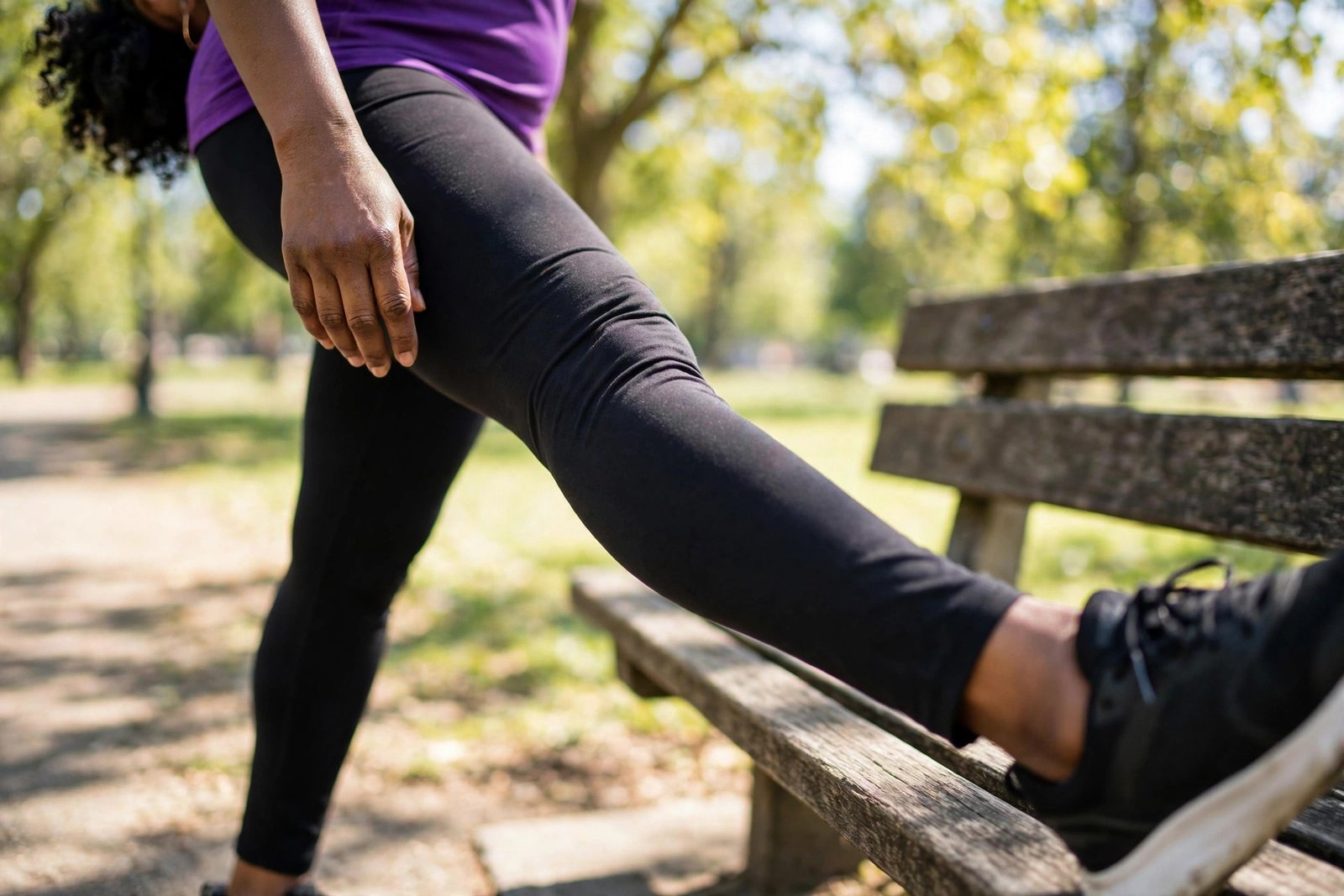
In fact, this is the classic runner’s stretch, and it remains one of the best. Also, stand facing a low bench, sturdy chair, or step. Rest one heel on it with your leg straight but your knee soft — never locked.
Then, hinge forward at your hips with a flat back until you feel a gentle pull behind your thigh. Hold for 30 seconds, breathing slowly. Switch legs and repeat. Also, keep your hips square and resist the urge to round your lower back.
2. Seated Forward Fold
Also, sit on the floor with both legs extended in front of you. Sit tall first, then fold forward from your hips, reaching toward your feet. In addition, it does not matter how far you reach — the stretch behind your thighs is what counts.
Hold for 30 to 60 seconds. If your back rounds excessively, sit on a folded towel or cushion to tilt your pelvis forward slightly. Breathe into the stretch rather than forcing it deeper.
3. Lying Hamstring Stretch With a Strap
Also, lie on your back with one leg extended on the floor. Loop a towel, belt, or yoga strap around the arch of the other foot and gently straighten that leg toward the ceiling. Also, keep your lower back pressed into the floor.
This version is wonderful because your back is fully supported, so your hamstrings do all the work. Hold 30 seconds per leg. Gradually draw the leg a little closer over several sessions — not all in one day.
4. Half Split Stretch
In fact, the half split is a kneeling hamstring stretch that targets one leg deeply. From a low lunge, shift your hips back and straighten your front leg, flexing the foot. Fold your torso over the extended leg with a long spine.
You should also feel a strong but comfortable pull behind the thigh. Hold 30 seconds per side. Additionally, for a full breakdown of the form, see our half split hamstring stretch guide.
5. Standing Toe Touch (Soft Knees)
Also, stand with feet hip-width apart and slowly roll down, bending at the hips. Then, let your knees bend as much as needed — this is about the hamstrings, not about touching the floor. Hang for 20 to 30 seconds and let gravity do the work.
Gently sway side to side to reach slightly different fibers. Also, roll back up slowly, stacking one vertebra at a time. In fact, this is a great anywhere, anytime stretch.
6. Dynamic Leg Swings
Not all hamstring work should be static. Also, stand sideways to a wall for balance and swing one leg forward and back like a pendulum. Then, start small and let the range grow naturally over 15 to 20 swings per leg.
Leg swings are ideal before workouts because they warm the tissue with movement rather than holding it still. Also, keep your torso upright and your core braced. Indeed, this is one of the best dynamic hamstring flexibility exercises for pre-run or pre-lift warm-ups.
7. Walking Hamstring Scoops
Then, take a step forward and, keeping that front leg straight, hinge and “scoop” your hands toward your toes as you walk. Alternate legs with each step. Cover about 10 steps per leg.
This moving stretch is a favorite among coaches because it combines balance, coordination, and lengthening in one drill. Also, keep the movement smooth rather than bouncy.
8. Inchworm Walkout
Stand tall, then fold forward and walk your hands out to a plank position. Pause, then walk your feet toward your hands with straight legs as far as you comfortably can. Also, walk your hands back and stand up. Indeed, that is one rep — do six to eight.
The inchworm lengthens the entire back line of your body, hamstrings included, while also waking up your shoulders and core. Also, move slowly and own every inch of the walkout.
9. Kneeling Hamstring Stretch
Kneel on one knee with the other foot planted in front, then shift your hips back as you straighten the front leg. Moreover, this gives you a deep, controlled stretch with excellent stability.
Hold 30 seconds per side. Because you are kneeling, it is easy to control the intensity — shift back a little for more stretch, or ease forward to back off. Perfect for beginners who feel wobbly standing.
10. Wide-Leg Standing Forward Fold
Then, stand with feet wide apart, toes slightly turned out. Fold forward from the hips and let your head hang. As a result, you will feel this in the hamstrings and inner thighs at the same time.
Then, hold for 30 to 45 seconds, gently swaying or holding opposite elbows. This is a two-for-one stretch that also decompresses the spine after a long day of sitting.
11. Lying Wall Hamstring Stretch
Also, lie on your back with your hips close to a wall and both legs extended up it. Slowly let your legs fall open into a wide V. Gravity provides a gentle, sustained hamstring and adductor stretch.
Stay here for one to two minutes, breathing deeply. In addition, this restorative version is ideal for evenings or rest days when you want flexibility work that feels like recovery, not effort.
12. Foam Roller Hamstring Release
Then, sit with a foam roller under your thighs and your hands behind you for support. Slowly roll from just above the knee to just below the sitting bone. When you find a tender spot, pause on it for 20 seconds.
Rolling does not lengthen muscle the way stretching does, but it calms overactive tissue so your stretches work better. Also, spend one to two minutes per leg before your stretching session for the best results.
How to Build Your Own Hamstring Routine
You do not need all twelve exercises every day. In fact, a smart routine uses four to six moves and takes about ten minutes. Here is a simple template you can follow three to five times per week.

Warm up first (2 minutes). Start with leg swings and walking scoops to bring blood to the area. Cold muscles do not stretch as willingly, so never skip this step.
Main stretches (6 minutes). Pick three static holds — for example, the standing heel stretch, the seated forward fold, and the lying strap stretch. Then, hold each for 30 seconds per leg, breathing slowly throughout.
Finish gently (2 minutes). End with the wall stretch or the standing toe touch hang. Finishing with something relaxing teaches your nervous system that lengthening is safe, which speeds up progress.
Track your progress with a simple test: the standing toe touch. Note how far you reach in week one, then retest every two weeks. Small, steady gains beat aggressive stretching every time. If you are new to all of this, our beginner’s stretching guide is a great companion read.
Mistakes That Keep Hamstrings Tight
In fact, the most common mistake is stretching aggressively. Yanking into a deep stretch triggers a protective reflex that makes the muscle tighten further. You should also feel a gentle pull — never sharp pain. Ease is the fast lane here.

Skipping consistency is the second trap. One long session a month does almost nothing; ten minutes three times a week transforms things. Flexibility is a use-it-or-lose-it quality.
Many people also forget to breathe. Holding your breath while stretching keeps tension high. Slow exhales signal your nervous system to relax, which literally lets the muscle lengthen further. The NHS flexibility guidance similarly emphasizes gentle, regular stretching over forceful efforts.
Finally, do not ignore strength. Muscles that are both long and strong stay flexible far longer than muscles that are only stretched. In fact, a few bodyweight hinges or glute bridges each week protect your new range of motion.
Frequently Asked Questions
How often should I do hamstring flexibility exercises?
Three to five times per week is the sweet spot for most people. Daily gentle work is fine too, as long as you keep the intensity moderate. Consistency matters far more than any single session’s length.
How long does it take to loosen tight hamstrings?
In fact, most people notice easier movement within two to three weeks of regular work. Bigger changes, like touching your toes comfortably, typically take six to twelve weeks. Genetics, age, and starting point all affect the timeline.
Should I stretch my hamstrings before or after a workout?
Also, do dynamic moves like leg swings before training and save the long static holds for after. Static stretching a cold muscle is less effective and can temporarily reduce power output.
Why do my hamstrings feel tight even though I stretch?
Constant tightness despite stretching often means the issue is protective tension, not short muscles. Weak glutes, anterior pelvic tilt, or even nerve tension can masquerade as hamstring tightness. If stretching never helps, consider seeing a physical therapist.
Is it bad to stretch hamstrings every day?
Not if you keep it gentle. Light daily stretching is safe and effective. Just avoid aggressive deep stretching two days in a row on the same muscles — they need a little recovery like any tissue you train.
Can tight hamstrings cause back pain?
They can contribute to it. Tight hamstrings tilt the pelvis backward, which flattens the lower back’s natural curve and increases strain. Loosening them often eases that nagging low back ache, though back pain has many causes.
What is the single best hamstring stretch?
If you only pick one, choose the lying strap stretch. In addition, it isolates the hamstrings completely, protects your back, and lets you control the intensity precisely. Additionally, for a broader foundation, explore our full flexibility exercises library.
Conclusion
In fact, your hamstrings do not have to feel like steel cables forever. With a handful of well-chosen hamstring flexibility exercises and a few consistent minutes each week, you can trade that familiar tightness for legs that move freely and a back that thanks you.
Also, start with four or five moves from this list, keep the effort gentle, and retest your toe touch in two weeks. Small progress compounds. In fact, your future self — bending, lifting, and moving with ease — is built one stretch at a time.
