


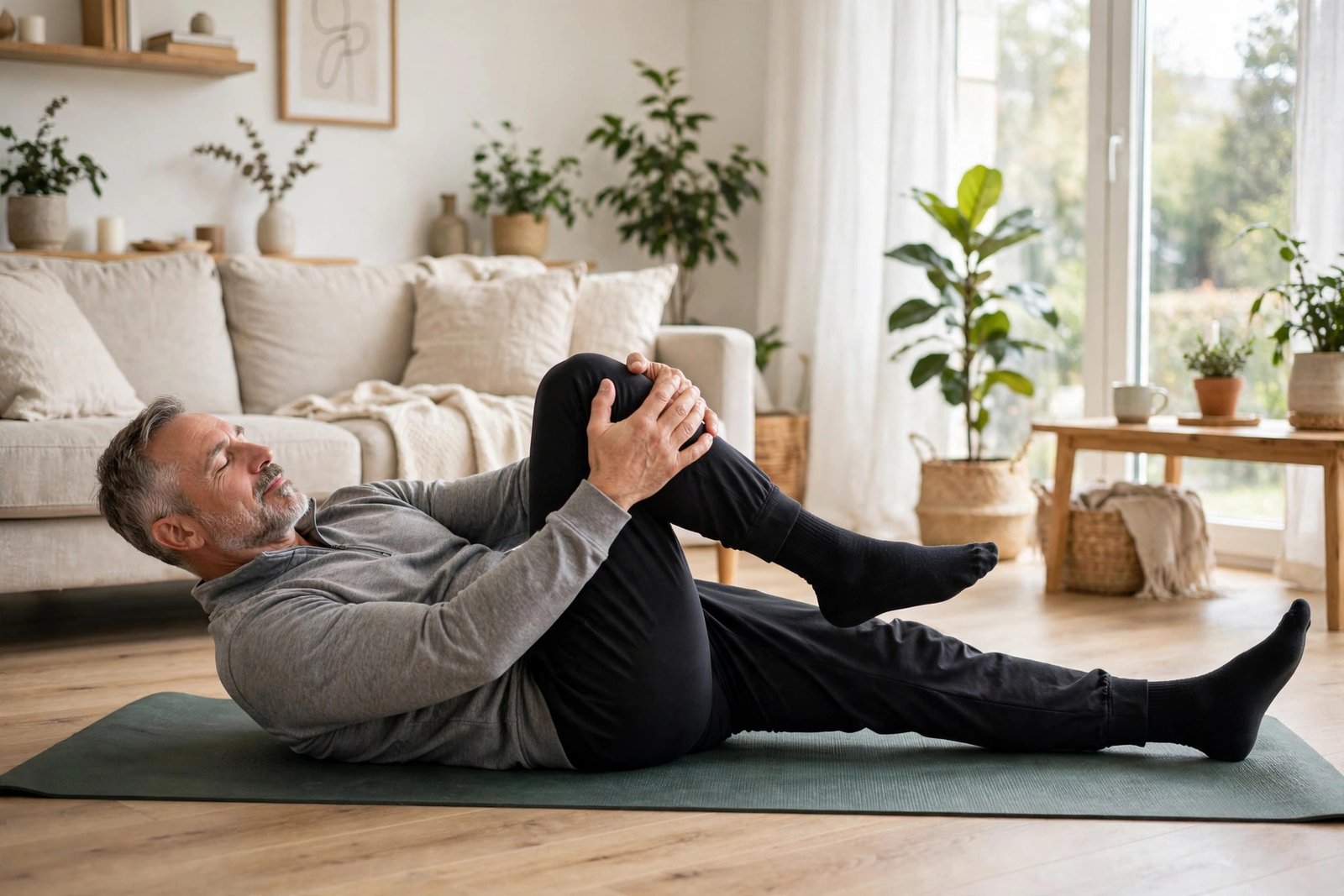
If a sharp, burning ache is running from your lower back down through your buttock and into your leg, you are not alone. Finding gentle stretches for sciatica pain relief is one of the most common reasons people start a home stretching habit.
Before we go any further, please treat this guide as friendly information, not medical advice. Therefore, check with your doctor or a physical therapist before trying these movements, especially if your pain is new or severe. Also, never stretch through sharp pain. In fact, a good stretch should feel like a mild, pleasant pull and never like a stab, shock, or electric jolt.
What Sciatica Pain Really Is (and Why It Travels Down Your Leg)
Your sciatic nerve is the longest nerve in your body. It starts in your lower back, threads through your hips and buttocks, and then branches down each leg to your feet.
When something presses on or irritates this nerve, the result is sciatica. For example, a bulging disc, a tight piriformis muscle deep in the buttock, or simple spinal stiffness can all play a role. As a result, you may feel burning, tingling, numbness, or weakness along one leg.
Here is the encouraging part. Most mild cases improve with gentle movement and time, and prolonged bed rest often makes things worse. Indeed, health experts widely agree that staying lightly active beats sitting still for sciatica recovery. For instance, Harvard Health’s guide to sciatica home remedies recommends gentle activity and self-care as a first step for most people.
That said, stretching is a helper, not a cure. Consequently, think of this routine as a calm daily practice that supports your recovery rather than a quick fix. Moreover, patience matters just as much as the stretches themselves.
The Golden Rules: How to Do Stretches for Sciatica Pain Relief Safely
Safety comes first with sciatica, so please read these rules before you begin. They are simple, and they protect you while you build a helpful habit.
First, stop if it hurts. A mild pulling sensation is fine. However, sharp, shooting, or electric pain means you should ease out of the stretch right away. Similarly, if numbness or tingling increases during a stretch, that stretch is not right for you today.
Second, move slowly and breathe. Ease into each position over several seconds, then hold for 20 to 30 seconds while breathing deeply. Meanwhile, keep your jaw, shoulders, and hands relaxed. In addition, never bounce or force your body deeper.
Third, start small. One gentle round of the routine is plenty on day one. After that, you can gradually add a second round over the coming weeks. In fact, consistency beats intensity every single time with nerve-related pain.
Finally, warm up first. A two-minute walk around your home gets blood flowing and makes every stretch feel easier. On the other hand, stretching cold, stiff muscles first thing in the morning can feel harsh, so a brief warm-up truly helps.
7 Gentle Stretches for Sciatica Pain Relief You Can Do at Home
This routine needs no equipment and fits into a small living room. These stretches for sciatica pain relief are arranged in a gentle order, moving from your back to your hips to your legs. Also, keep water nearby and take short rests whenever you like.
1. Reclined Knee-to-Chest Stretch
This is the friendliest starting point in the whole routine. Lie on your back on a mat or carpet with both knees bent and feet flat. Among all stretches for sciatica pain relief, this simple hug is the one beginners trust most.
Slowly hug one knee toward your chest with both hands, keeping your lower back relaxed on the floor. Hold for 20 to 30 seconds while breathing deeply, then lower the foot and switch sides. For example, if your right leg is the painful one, start with the left to learn the motion pain-free first.
Do two rounds per side. In addition, keep your head resting on a small pillow if your neck feels strained. This stretch gently releases the lower back, which is often where sciatic irritation begins.
2. Supine Figure-Four (Piriformis) Stretch
The piriformis is a small muscle deep in your buttock that sits very close to the sciatic nerve. Therefore, when it tightens up, it can mimic or worsen sciatica symptoms. This lying-down version keeps the stretch safe and controlled.
Stay on your back and cross your right ankle over your left knee, making a figure-four shape. Then gently pull your left thigh toward your chest until you feel a mild stretch deep in your right buttock. Hold for 20 to 30 seconds, then switch sides.
If this position feels too intense, try a gentler hip opener instead. The elevated pigeon stretch supports your body and eases you into the same area. As one of the kindest stretches for sciatica pain relief, the figure-four deserves a regular spot in your week.

3. Seated Spinal Twist
Sit on the floor with both legs extended in front of you. Bend your right knee and place your right foot flat on the floor outside your left knee.
Place your left elbow on the outside of your right knee and turn your chest gently to the right. Hold for 20 to 30 seconds, breathing into the twist, then repeat on the other side. Meanwhile, sit tall rather than rounding your back.
Keep this twist mild and easy. In contrast to deep yoga twists you may have seen online, this version uses almost no force. Consequently, it is one of the safest seated stretches for sciatica pain relief you can try at home.
4. Standing Hamstring Stretch With a Chair
Tight hamstrings can tug on your pelvis and add pressure around the lower back. This standing version uses a sturdy chair, so your balance stays secure the whole time.
Face the chair and rest one heel on the seat with your leg mostly straight and toes pointing up. Hinge forward slightly at your hips while keeping your back flat until you feel a gentle pull behind your thigh. Hold for 20 to 30 seconds per leg.
Do not round your back or force your chest toward your knee. For a deeper hamstring practice on good days, you can explore our half split hamstring stretch guide. It breaks down safe form step by step. However, skip it on flare-up days and stick with this chair version, since the simplest stretches for sciatica pain relief are the safest ones.

5. Child’s Pose
Kneel on the floor and sit your hips back toward your heels, then walk your hands forward and rest your forehead on the mat. Let your whole back round softly like a shell.
Breathe deeply into your lower back for 30 to 45 seconds. Indeed, this is often the most soothing position in the routine, so linger here if it feels good. Many people rank it among their favorite stretches for sciatica pain relief. Additionally, you can widen your knees to make more room for your torso.
If your knees complain, place a folded blanket behind them or rest your forehead on a cushion. In fact, comfort props turn this stretch from tolerable into genuinely relaxing.
6. Prone Press-Up
Lie face down with your hands flat under your shoulders, just like the bottom of a push-up. Slowly straighten your arms to lift your chest while keeping your hips heavy on the floor.
Hold the top for five to ten seconds, then lower down and rest. Repeat five to eight times. For some people, this gentle back extension eases leg symptoms noticeably. For instance, many physical therapists include this exact movement in their recommended stretches for sciatica pain relief.
Only lift as high as feels comfortable. If pressing up increases your leg pain, skip this one for now. Similarly, keep your buttocks relaxed rather than squeezing them hard.
7. Cat-Cow Flow
Finish with this soothing spinal wave. Start on all fours with your hands under your shoulders and knees under your hips.
As you inhale, drop your belly and lift your head and tailbone for cow pose. As you exhale, round your back and tuck your chin for cat pose. Flow slowly between the two for one full minute, matching each movement to your breath.
This gentle motion warms the whole spine and often leaves the lower back feeling looser. Moreover, it is a lovely way to check in with your body. As a closing move, it rounds out your set of stretches for sciatica pain relief beautifully.
How to Build Your Daily 10-Minute Routine of Stretches for Sciatica Pain Relief
Doing the full set once takes about ten minutes. That small daily window is enough, because gentle repetition matters far more than one long weekend session.
First, pick your time. Morning sessions loosen overnight stiffness, while evening sessions help you unwind. Therefore, choose whichever slot you will actually keep. In addition, link the routine to an existing habit, like right after your morning coffee or before brushing your teeth at night.
Second, follow the order above. The sequence moves from back to hips to legs on purpose, so each stretch prepares you for the next. As a result, the routine feels smoother than jumping between random moves.
Third, track how you feel. After two weeks, most people notice small wins: sitting feels easier, or the ache fades faster in the morning. Consequently, a simple one-line note in your phone each day can keep you motivated. Staying consistent with your stretches for sciatica pain relief matters far more than doing them perfectly. For extra ideas to keep your hips happy between sessions, browse our hip mobility exercises for stiff hips and better daily movement.

Common Mistakes That Make Sciatica Worse
Good intentions can backfire when a nerve is irritated. Watch out for these common traps so your stretches for sciatica pain relief help instead of hurt.
Stretching aggressively. Pushing into deep, intense stretches can inflame an already sensitive nerve. In contrast, the mild, easy version of each move is the one that actually helps. So always choose the gentler option.
Bouncing or jerking. Ballistic stretching jars the tissues around the nerve. Instead, move slowly and hold still. Similarly, avoid fast twisting motions of the lower back.
Sitting all day, then doing one big session. Long hours in a chair keep the hip flexors short and the glutes sleepy. Therefore, stand up and walk for a minute or two every hour. Meanwhile, your ten-minute routine works best as a complement to an active day, not a rescue mission after a sedentary one.
Ignoring strength. Stretching eases tension, but weak glutes and core muscles let the problem return. As a result, once your pain settles, consider adding simple glute bridges or bird-dogs a few times a week. Your physical therapist can show you the safest starting point.
Red Flags: When to Stop and See a Professional
Most sciatica improves with gentle care, but some symptoms need prompt medical attention. Stop stretching and contact your doctor right away if you notice any of the following.
Seek urgent care for loss of bladder or bowel control, numbness in the saddle area between your legs, or rapidly worsening leg weakness. In addition, get checked promptly if your pain followed a fall, accident, or injury. Similarly, seek care if it comes with fever, unexplained weight loss, or pain that keeps getting worse despite rest.
For a clear overview of sciatica symptoms and when to seek help, the NHS sciatica guide is a trustworthy place to start. Moreover, a physical therapist can assess your specific situation and tailor these stretches to your body, which is always the safest path forward.
Please remember: this article cannot diagnose your condition. Indeed, only a qualified professional who examines you can do that. So pause your stretches for sciatica pain relief and seek guidance if anything feels wrong. Use this routine as a gentle support tool, not a substitute for proper care.
FAQs About Stretches for Sciatica Pain Relief
How Long Do Stretches for Sciatica Pain Relief Take to Work?
Many people feel a little looser after the very first session. However, lasting improvement usually takes two to four weeks of daily practice. Therefore, give the routine a fair trial before judging it. In addition, keep your expectations gentle: the goal is gradual easing, not overnight transformation.
Can I Do These Stretches Every Day?
Yes, these stretches for sciatica pain relief are designed for daily use. Because every move is gentle and low-force, your body can handle it once a day. On the other hand, if you feel sore the next morning, take a rest day or do only the easiest two or three moves.
What Should I Do if a Stretch Increases My Leg Pain?
Stop that stretch immediately and do not push through it. Increased leg pain, new numbness, or electric sensations are your body’s clear stop signals. Instead, try the remaining moves that feel fine, and mention the problematic one to your doctor or physical therapist.
Is Walking Helpful Alongside Stretching?
Absolutely. Short, easy walks are one of the best companions to your stretches for sciatica pain relief. For example, a ten-minute stroll after your routine keeps blood flowing and prevents stiffness from creeping back. Moreover, walking is free, needs no equipment, and suits almost every fitness level.
Conclusion
Sciatica pain can make even simple days feel long, but a calm daily habit can genuinely help. These seven gentle stretches for sciatica pain relief take just ten minutes and need no equipment. They also respect the golden rule of nerve pain: never force, always listen.
Start with one easy round today, then build slowly over the coming weeks. In addition, stay lightly active through the day, stand up often, and keep your expectations kind. As a result, small daily wins can add up to real, lasting comfort.
And if anything feels wrong, pause and talk to a professional. Your body is giving you information, so honor it. Here is to easier mornings, looser hips, and a back that lets you enjoy your day.
This article is for general information only and is not medical advice. Please consult your doctor or a physical therapist before beginning any new stretching routine, especially if you have severe, worsening, or unexplained symptoms.
