


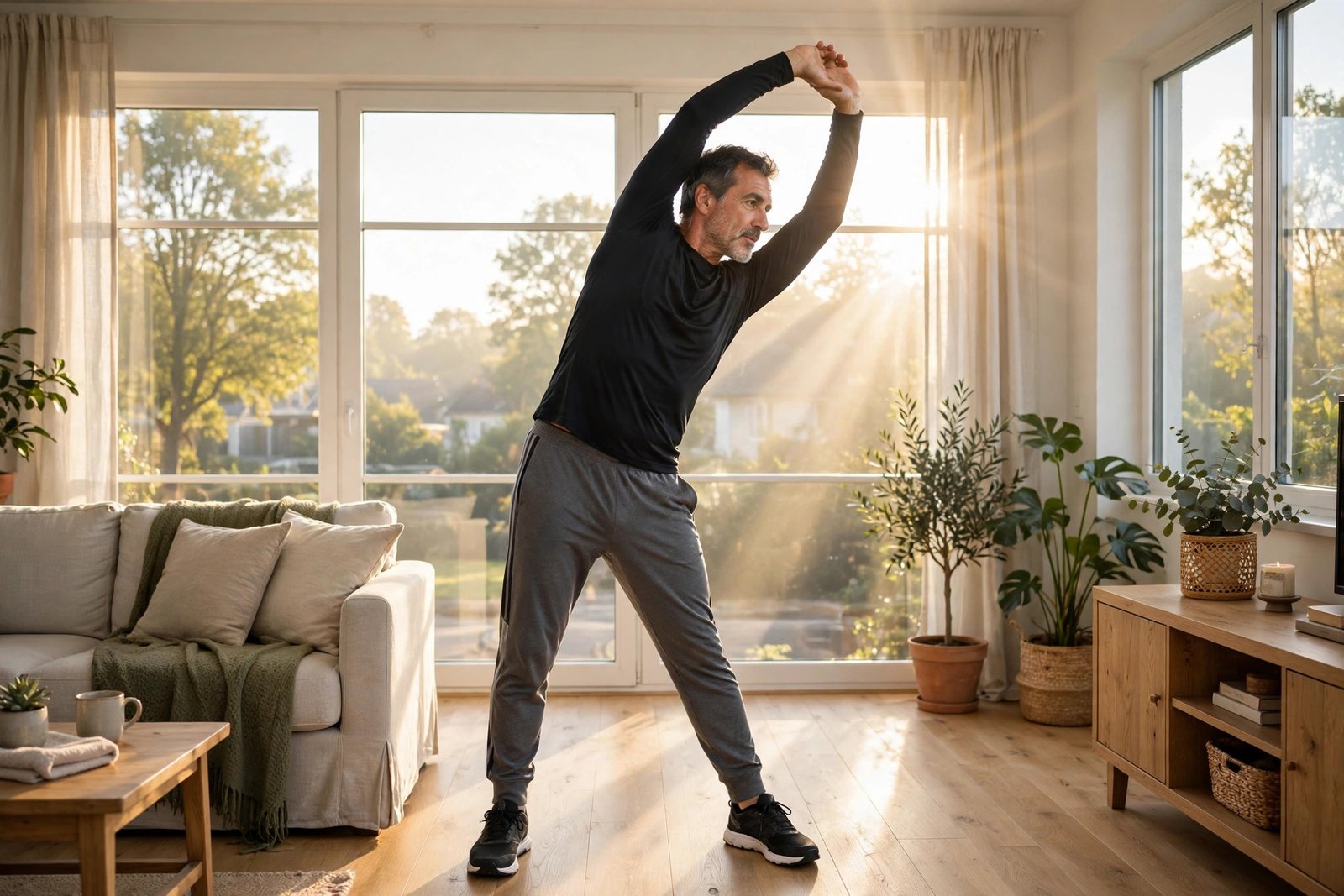
If you’ve ever searched for the best time of day to stretch, you’re definitely not alone. It is one of the most common questions beginners ask, right after how often they should stretch. The honest answer is both simpler and more encouraging than most people expect. There is no single magic hour that works for everybody. However, there is almost certainly a best time for you, and it depends on your goals, your schedule, and how your body feels each day.
In this guide, we’ll walk you through the real pros and cons of morning versus evening stretching. You’ll also learn when to stretch around workouts, and how to match your timing to goals like better sleep, looser hips, or a more energized morning. By the end, you’ll know exactly when to roll out your mat. So let’s find your perfect stretching window.
The Best Time of Day to Stretch Depends on Your Goal
The reason experts disagree on timing is that stretching isn’t just one thing. A quick morning wake-up stretch and a deep evening flexibility session are almost different activities. Therefore, the smarter question isn’t “when should I stretch?” but “what do I want stretching to do for me?”
For example, if your mornings feel stiff and slow, a gentle stretch can wake your body up and get you moving with ease. On the other hand, if you spend your days tense and wired, an evening session can help you unwind and let go. In fact, both options offer real benefits. The trick is matching the timing to the outcome you want most.
Morning Stretching: A Bright Start to Your Day
Morning stretching has a devoted fan club, and for good reason. After a night of sleep, your joints can feel stiff and your muscles a little shortened. A gentle stretch helps increase blood flow, loosen things up, and tell your brain that the day has begun. As a result, many people feel more alert and mobile after just five minutes.
However, one caution applies. Your body is colder first thing in the morning, so keep your early stretches gentle and patient. This is not the time to force deep splits or crank on stiff joints. Instead, move slowly through comfortable ranges of motion and let your body warm up naturally. For early risers who want to feel energized before work, the best time of day to stretch is right after waking.
What a Great Morning Session Looks Like
A simple morning routine can be as short as five to ten minutes. First, start with neck rolls and shoulder circles to wake up your upper body. Then add a standing side bend, a gentle forward fold, and a few cat-cow stretches on the floor. Finally, finish with three deep breaths and you’re ready for the day.
If you’d like a ready-made plan to follow, our morning stretching routine gives you a simple 5-to-10-minute plan you can do at home. In addition, it’s beginner-friendly and needs no equipment at all.

Evening Stretching: Unwind and Recover
Evening stretching is the favorite of anyone who carries the day’s tension in their shoulders and hips. After hours of sitting, standing, or training, your muscles are warm and pliable. Consequently, many people find they can stretch a little deeper in the evening without forcing anything at all.
In addition, a slow stretching session acts as a powerful signal to your nervous system. It tells your body that the busy part of the day is over. For instance, combining gentle stretches with slow breathing has helped many of our readers fall asleep faster and wake up feeling fresher. That’s why night owls often find the best time of day to stretch is in the calm hour after dinner.
What a Great Evening Session Looks Like
Evening sessions work best when they’re calm and unhurried. Dim the lights, put your phone aside, and spend ten to fifteen minutes on floor stretches. Child’s pose, supine twists, and legs-up-the-wall are wonderful choices. Meanwhile, focus on long, slow exhales to deepen the sense of relaxation.
If better sleep is your main goal, our evening stretching routine is designed specifically for relaxation and deeper rest. Moreover, it’s gentle enough to do every single night.

Best Time of Day to Stretch by Goal
Now let’s get specific. The best time of day to stretch changes with your goal, so use this quick guide to pick your ideal window.
- Shake off morning stiffness: Stretch in the morning. It loosens overnight stiffness and boosts alertness for the day ahead.
- Improve long-term flexibility: Stretch in the evening, or split your sessions. Warm muscles allow deeper, safer range-of-motion work.
- Sleep better: Stretch 30 to 60 minutes before bed. Gentle movement calms the nervous system and eases you toward rest.
- Recover after a workout: Stretch right after training. Your muscles are at their warmest, which makes the cooldown more effective.
- Break up a desk day: Stretch in short midday sessions. Even two minutes combats the stiffness that builds up from sitting.
Similarly, you don’t have to pick just one slot. If you have two goals, you can split your stretching across the day. For example, do five minutes in the morning for stiffness and ten minutes at night for flexibility. Indeed, consistency beats perfect timing every time.
What About Stretching Around Workouts?
Stretching timing around exercise deserves its own mention. The old advice was to do long static stretches before a workout. However, current thinking has shifted that view. Dynamic movements — like leg swings and arm circles — prepare you better before training, while static holds fit best afterward.
Therefore, if you exercise regularly, let your workout create its own stretching window. Do a mobility warm-up before you train, and save the long, relaxing holds for after. Harvard Health also highlights how regular stretching supports mobility and injury prevention, which makes post-workout stretching a smart habit. You can read their overview on the importance of stretching here.
What If You Can Only Stretch Once a Day?
Life is busy, and most people realistically stretch once a day — or even less. So when should that one session happen? The honest answer is that the best time of day to stretch is whenever you’ll actually do it. A midday stretch you repeat daily beats a “perfect” morning session you skip three times a week.
In contrast, if both morning and evening fit your schedule equally well, lean toward evening. Your body is warmer, your range of motion is naturally greater, and the session doubles as a wind-down ritual. On the other hand, if you’re a morning person who fades at night, own the morning slot without any guilt.
So What Is the Best Time of Day to Stretch?
Let’s settle it with a simple decision framework. First, ask yourself what you want most: energy, flexibility, recovery, or sleep. Second, look at your real schedule — not your ideal one. Third, pick the window where stretching feels pleasant rather than like another chore.
Finally, remember that the best routine is the one you repeat. Ten minutes a day at a “good enough” time will transform your mobility far more than a perfect plan you abandon after a week. For a simple everyday plan, our daily stretching routine gives you a straightforward guide for everyday comfort. As a result, you’ll build a habit that actually lasts.

Frequently Asked Questions
Is morning or evening the best time of day to stretch?
Both work, and the winner depends on your goal. Morning stretching is better for shaking off stiffness and starting the day energized. Evening stretching is better for deep flexibility work and relaxation. If you must choose one, pick the time you’ll stick with most consistently.
Should you stretch before bed?
Yes, gentle stretching before bed is a wonderful habit. Slow stretches paired with deep breathing can lower stress and prepare your body for sleep. For example, legs-up-the-wall and supine twists are reader favorites. The Sleep Foundation also notes that gentle evening stretching can support better sleep quality — you can read their take on stretching before bed here.
Is it bad to stretch first thing in the morning?
No, but keep it gentle. Your muscles are cooler after sleep, so aggressive deep stretching first thing can feel uncomfortable. Instead, use smooth, easy movements and gradually build your range. Indeed, a soft morning flow is one of the healthiest ways to start the day.
How long should each stretching session be?
Five to fifteen minutes is plenty for most people. Beginners often do best with short daily sessions rather than one long weekly stretch. As a result, you’ll build the habit faster and your body will adapt more smoothly.
Can I stretch twice a day?
Absolutely. Many people do a short morning session for stiffness and a longer evening session for flexibility. Just keep the total effort moderate and listen to your body. Moreover, splitting sessions can make the whole habit easier to keep.
Conclusion: The Best Time of Day to Stretch Is the One You’ll Keep
Here’s the bottom line: the best time of day to stretch is the time that fits your life. Morning sessions wake you up, evening sessions help you unwind, and both build lasting flexibility when done consistently. Therefore, stop hunting for the perfect hour and start with the hour you actually have.
Pick one window this week — morning, midday, or evening — and commit to ten minutes a day. In addition, keep your sessions gentle and enjoyable so you look forward to them. Your body will thank you, one stretch at a time.
