

If you have ever held a deep stretch for thirty seconds and still felt stiff afterward, active isolated stretching might change the way you think about flexibility. This method uses short two-second holds repeated about ten times, and it works with your body’s natural reflexes instead of fighting them. As a result, many people find it gentler, safer, and easier to stick with than traditional stretching.
In this guide, you will learn exactly what this method is, why the two-second rule matters, and how it compares to static and dynamic stretching. You will also get a simple beginner routine you can do at home in about fifteen minutes. In addition, you only need a towel or strap to get started.
What Is Active Isolated Stretching?
Active isolated stretching is a stretching method where you actively contract one muscle to stretch its opposite. For example, you tighten your quadriceps to stretch your hamstrings. The stretch itself is held for only two seconds, then released. This short cycle is repeated roughly ten times per muscle group.
The method was developed in the 1980s by kinesiologist Aaron Mattes. He noticed that long, forced stretches often triggered the body’s protective reflexes. In contrast, very short holds slipped under that protective radar. Consequently, muscles could lengthen without the body resisting.
The word “active” refers to the effort you put in. You are not passively hanging in a stretch. Instead, you use your own muscles to create the movement. This makes active isolated stretching a form of active participation rather than passive waiting.
“Isolated” means you target one muscle or joint at a time. You do not stretch everything at once. Therefore, each muscle gets focused attention. For instance, you might isolate the calves first, then move to the hamstrings, then the hip flexors.
Unlike many popular methods, this one is gentle by design. There is no bouncing, no forcing, and no pain. In fact, the golden rule is simple: stretch only to the point of mild tension, never pain. Moreover, the routine feels more like a flowing exercise than a static hold.
How Active Isolated Stretching Works: The 2-Second Rule
To understand active isolated stretching, you need to know about the myotatic reflex. This is your body’s protective stretch reflex. When a muscle is stretched hard or held too long, the reflex kicks in and makes the muscle contract. In short, your body fights back.
This reflex usually activates after about two to three seconds of stretching. However, the Mattes method ends the stretch before that happens. You hold for two seconds, release, and repeat. As a result, the muscle never gets the signal to tense up.
Think of it like knocking gently on a door instead of kicking it. A gentle approach gets a friendly response. Similarly, a short gentle stretch gets a cooperative muscle. On the other hand, an aggressive long hold triggers resistance.
Each repetition also increases blood flow to the area. In addition, the repeated contractions help clear metabolic waste from the muscles. Over ten reps, the range of motion gradually improves. Indeed, many people notice a difference after just one session.
Breathing matters too. You should exhale as you move into the stretch. Then inhale as you release. This rhythm keeps you relaxed. Furthermore, it prevents the breath-holding that often causes unnecessary tension.
Additionally, you can read a clinical overview of stretching methods in the Physiopedia stretching guide.

Active Isolated Stretching vs Static and Dynamic Stretching
Most people know static stretching. You hold one position for twenty to sixty seconds. It is simple and widely taught. However, research suggests that long static holds before exercise can temporarily reduce power. That is why many coaches now save static work for after workouts.
Dynamic stretching uses controlled movements through a range of motion. Leg swings and arm circles are classic examples. This type is excellent before a workout. Nevertheless, it can be too intense for very stiff or injured people. In contrast, active isolated stretching sits comfortably in the middle.
Here is how the three compare in everyday terms. Static stretching is like holding a door open. Dynamic stretching is like swinging it back and forth. Active isolated stretching is like tapping it open again and again. Each method has its place. In fact, you can learn about the basics of each style in our overview of stretching exercises and their types.
If you are new to flexibility work, active isolated stretching is often the friendliest starting point. It is gentler than dynamic work. Also, it avoids the long holds that make static stretching uncomfortable for some people. Moreover, it doubles as a light warm-up because you are actively moving.
For a deeper look at the traditional approach, see our guide to static stretching exercises. Understanding both methods helps you choose the right one for the right moment. In addition, many people combine them in a weekly routine.
Benefits of Active Isolated Stretching
The most obvious benefit is improved flexibility. The repeated short holds gradually train muscles to allow more range of motion. Over weeks, everyday movements feel easier. Consequently, tasks like bending, reaching, and climbing stairs become more comfortable.
Another major benefit is injury prevention. Tight muscles are more prone to strains. By improving flexibility gently, you reduce that risk. In addition, the method strengthens the opposing muscles at the same time. This creates better balance around each joint.
People with chronic stiffness often prefer this method. For example, desk workers with tight hip flexors find the short holds manageable. Similarly, older adults appreciate the gentle approach. There is no getting stuck in an uncomfortable position.
Circulation improves with every repetition. Each contraction pushes blood through the muscle. Then each release lets fresh blood flow in. As a result, muscles feel warmer and looser. Indeed, this pumping effect is one reason the method works so well as a warm-up.
Recovery can also improve. After exercise, muscles are often tight and tired. Gentle isolated stretches may help them return to normal length. Moreover, the light activity feels better than sitting still. In fact, many athletes use this method during cool-downs.
Finally, there is a mental benefit. The rhythmic two-second pattern is calming. You focus on counting and breathing. Therefore, the routine can feel almost meditative. It is a peaceful way to end a busy day.

A Simple Beginner Active Isolated Stretching Routine
Now let’s put it all together. This beginner active isolated stretching routine takes about fifteen minutes. You will need a towel, belt, or yoga strap. Wear comfortable clothes and find a clear space on the floor.
The Ground Rules
First, every stretch follows the same pattern: two-second hold, release, repeat ten times. Contract the opposing muscle to create the stretch. For instance, tighten your shin muscles to stretch your calves.
Second, never force the movement. Stretch only to mild tension. If you feel pain, you have gone too far. In addition, keep the movements smooth. There should be no jerking or bouncing.
Third, breathe steadily. Exhale as you stretch, inhale as you release. Finally, rest briefly between muscle groups. You can also sip water if you like. The whole session should feel pleasant, not exhausting.
1. Supine Hamstring Stretch
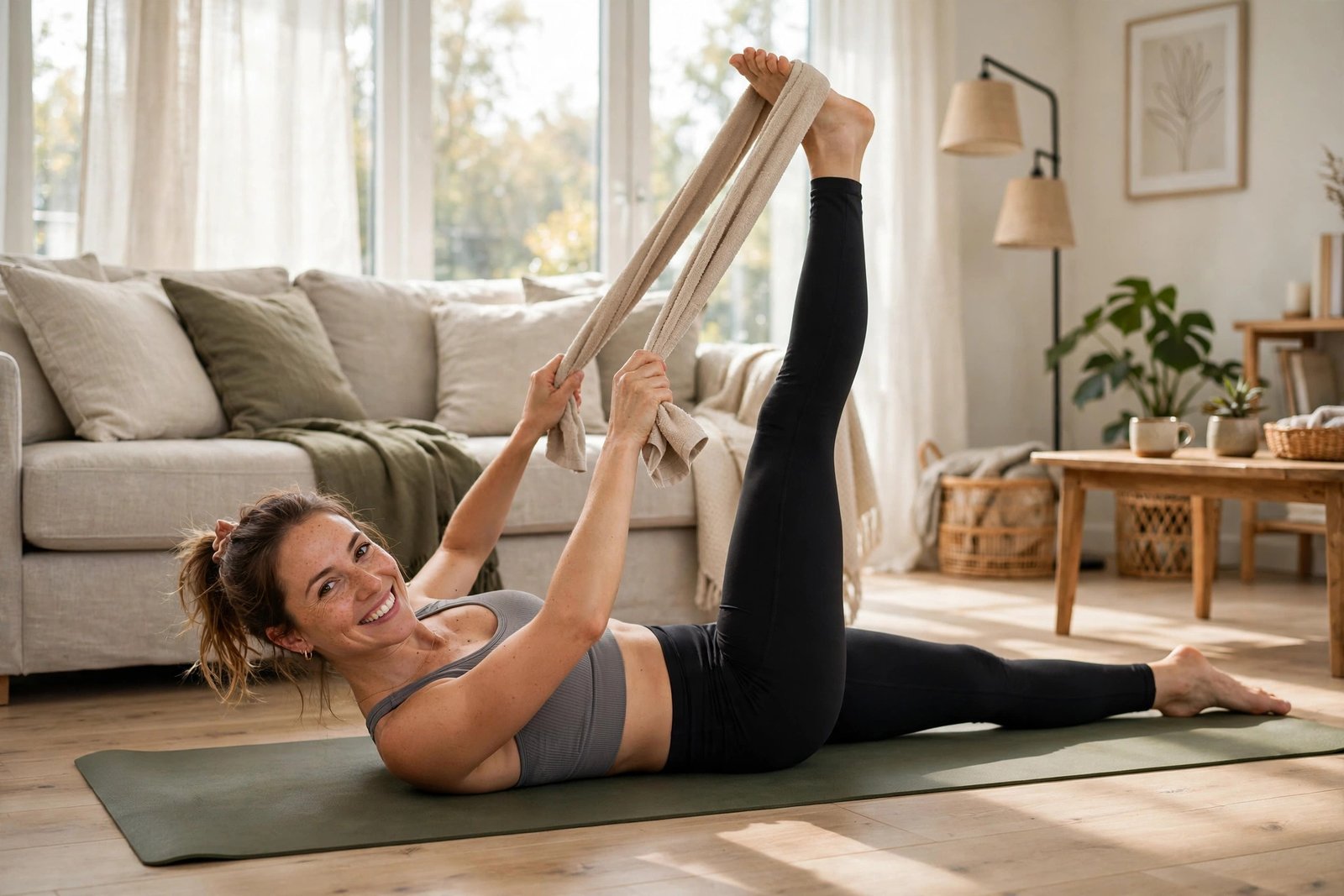
Lie on your back with both knees bent. Loop a towel around the ball of your right foot. Then straighten that leg toward the ceiling while actively pressing through your heel.
Hold for two seconds at the point of mild tension. Lower the leg back down. Repeat ten times, then switch legs. In addition, keep your lower back pressed gently into the floor.
2. Standing Quadriceps Stretch
Stand near a wall or chair for balance. Bend your right knee and hold your ankle behind you. Gently squeeze your glute to increase the stretch on the front of the thigh.
Hold for two seconds, then release the foot to the floor. Repeat ten times per leg. As a result, your hip flexors and quads will feel noticeably looser.
3. Seated Calf Stretch
Sit with your legs straight in front of you. Loop the towel around the ball of your right foot. Pull your toes gently toward your shin by contracting your shin muscles.
Hold for two seconds, then relax. Repeat ten times per leg. This one is excellent for people who sit at a desk all day. Moreover, it helps prevent that stiff morning feeling in the feet.
4. Chest Opener
Stand tall and clasp your hands behind your back. Squeeze your shoulder blades together and gently lift your hands. This actively opens the chest and front of the shoulders.
Hold for two seconds, then release. Repeat ten times. In contrast to slouching at a desk, this move resets your posture. Indeed, it is a favorite among office workers.
5. Seated Spinal Twist
Sit tall with your legs extended. Bend your right knee and place the foot outside your left thigh. Place your left elbow outside the right knee and gently rotate your torso right.
Hold for two seconds, then unwind. Repeat ten times per side. Keep your spine long throughout. Additionally, move only as far as feels comfortable.
6. Neck Side Stretch
Sit or stand with good posture. Tilt your right ear toward your right shoulder. Gently press your left shoulder down to increase the stretch along the left side of the neck.
Hold for two seconds, then return to center. Repeat ten times per side. Use very light pressure here. The neck is sensitive, so less is more.
Common Mistakes in Active Isolated Stretching
The biggest mistake is holding too long. People are used to thirty-second stretches. However, the entire method depends on the two-second limit. Going longer triggers the protective reflex. Therefore, keep a mental count or use a timer at first.
Another common error is stretching through pain. Mild tension is the target. Pain is a warning sign. In fact, pain causes muscles to guard and tighten. If something hurts, back off immediately.
Many beginners also forget the “active” part. They let the towel do all the work. However, you should consciously contract the opposing muscle. For example, tighten the front of your thigh when stretching the hamstring. This active effort is what makes the method effective.
Rushing is another problem. Ten quick sloppy reps are worse than ten careful ones. Take your time between reps. In addition, focus on form over speed. Quality always beats quantity here.
Finally, people often hold their breath. Breath-holding creates tension throughout the body. As a result, the stretch becomes less effective. Keep breathing steadily: exhale into the stretch, inhale on the release.

FAQ About Active Isolated Stretching
Is active isolated stretching better than static stretching?
Neither is universally better. Active isolated stretching is gentler and often feels more comfortable, especially for beginners. Static stretching is simpler and works well after workouts. In fact, many people use both. For guidance on timing, read our article on stretching before a workout.
How often should I do active isolated stretching?
Daily practice gives the best results. The routine is gentle enough for every day. Moreover, each session only takes about fifteen minutes. Consistency matters more than intensity. Even five minutes a day will help over time.
Can active isolated stretching help with back pain?
It may help if tight muscles contribute to the pain. Gentle stretches for the hips, hamstrings, and chest can reduce strain on the back. However, back pain has many causes. Therefore, see a doctor or physical therapist if pain persists. They can rule out serious issues first.
Do I need special equipment?
No. A towel, belt, or old t-shirt works as a strap. That is the beauty of this method. In addition, most stretches use only your body weight. As you progress, a yoga strap can be a nice upgrade. It is optional, not required.
Is active isolated stretching safe for seniors?
Generally, yes. The short gentle holds are well suited to older adults. There is no deep or forced positioning. However, anyone with joint replacements, osteoporosis, or balance issues should check with their doctor first. Moreover, resources like MedlinePlus exercise and fitness offer trustworthy guidance on starting new routines safely. In fact, that advice applies to any new exercise routine.
How long until I see results?
Many people feel looser after the first session. Noticeable flexibility gains usually take two to four weeks of regular practice. Therefore, be patient. Flexibility improves gradually, and the gentle approach rewards consistency over intensity.
Conclusion
Active isolated stretching proves that stretching does not have to be long or painful to work. Two-second holds, ten repetitions, and active muscle engagement are the whole formula. It is simple, gentle, and backed by a clear understanding of how your body responds to stretching.
Start with the beginner routine in this guide. Practice it a few times per week, or even daily. Over time, you will likely notice easier movement and less stiffness. In addition, you will build a stretching habit that actually lasts because it feels good.
Flexibility is a journey, not a race. Be kind to your body, respect the two-second rule, and enjoy the process. Furthermore, every session builds on the last. Your future self will thank you for starting today.
