


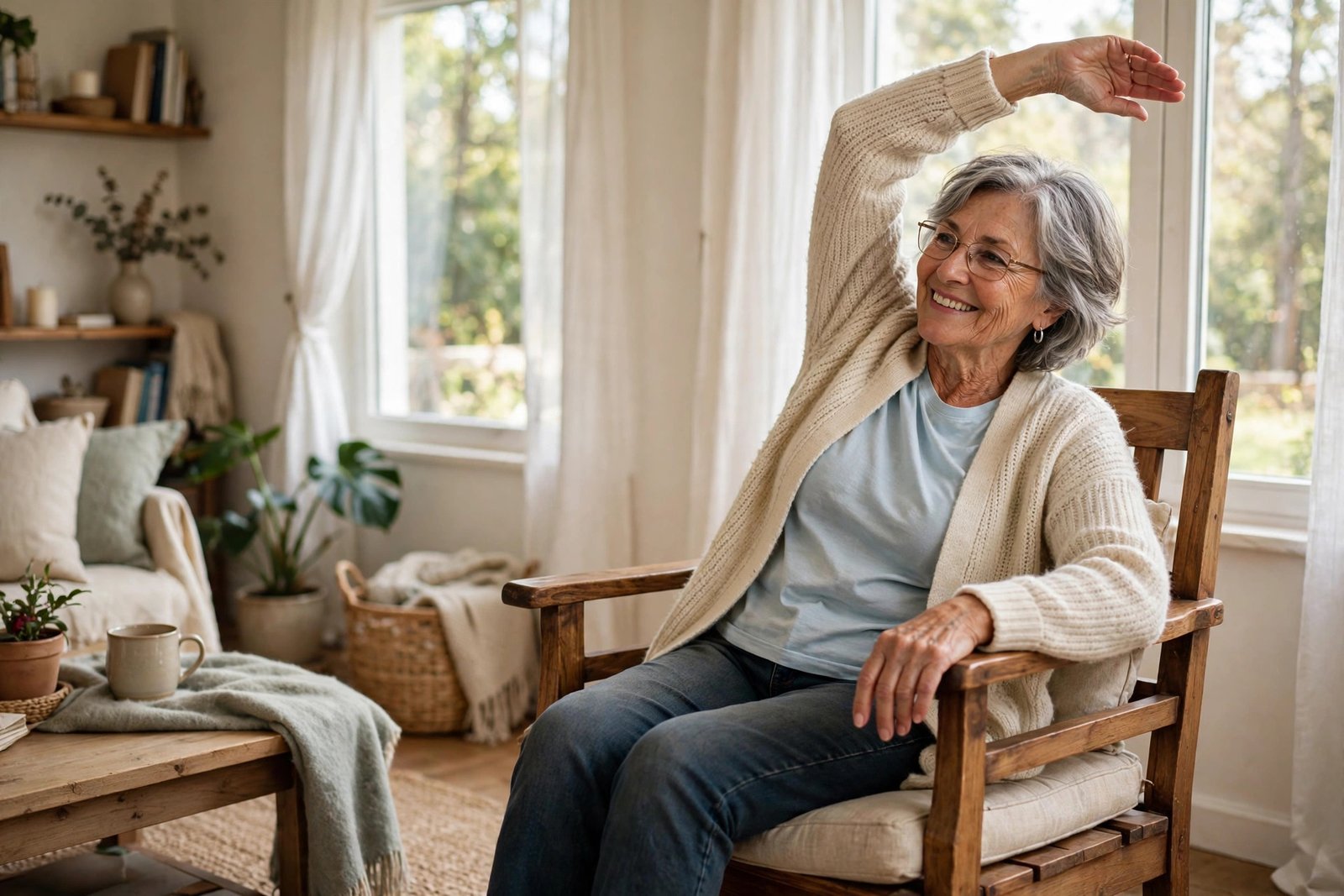
If getting up and down from the floor feels too hard these days, you are not alone. These chair flexibility exercises for seniors let you stretch your neck, shoulders, spine, hips, and ankles while you stay comfortably seated. That one simple change can turn daily stretching from a struggle into a habit you enjoy.
You only need a sturdy chair and about ten quiet minutes. In addition, every move below is gentle and easy to modify for stiff joints. As a result, you can ease morning stiffness, move more freely, and feel steadier on your feet.
Why Seated Stretching Works So Well After 60
As we age, our muscles and tendons naturally lose some elasticity. However, gentle and regular stretching helps preserve your range of motion at any age. In fact, Harvard Health notes that stretching keeps muscles flexible, strong, and healthy.
The chair removes the biggest barrier of all: the fear of falling. When you are seated, balance worries disappear completely. Therefore, you can relax into each stretch and focus on deep breathing instead.
That is exactly why chair flexibility exercises for seniors work so well for beginners. The chair removes every excuse and every risk. Consequently, a short routine fits easily into a morning coffee break or an evening television hour.
Short daily sessions also beat one long weekly session every time. In addition, consistency matters far more than intensity for lasting flexibility. For a broader look at the basics, see our complete guide to flexibility exercises.
On days when you feel steady and energetic, you might also enjoy our flexibility exercises without equipment. For now, though, the chair is your safest training partner.
Chair Flexibility Exercises for Seniors: The 10-Minute Seated Routine
The chair flexibility exercises for seniors below move from your neck down to your ankles. First, sit tall near the front of a sturdy chair with both feet flat on the floor. Finally, remember to move slowly and never push into pain.

1. Seated Neck Rolls
Tension gathers in the neck from reading, driving, and looking at screens. Slow neck rolls release it safely and gently. For example, try them first thing in the morning to start the day loose.
- Sit tall and drop your chin gently toward your chest.
- Slowly roll your right ear toward your right shoulder.
- Hold for fifteen seconds while you breathe deeply.
- Roll back through center, then repeat on the left side.
- Complete two slow rounds on each side.
In addition, keep your shoulders relaxed and away from your ears throughout.
2. Shoulder Rolls and Seated Chest Opener
Rounded shoulders are common after years of desk work and driving. These moves open the chest and loosen stiff shoulder joints. As a result, your posture improves and reaching overhead feels easier.
- Roll both shoulders up, back, and down in slow circles.
- Repeat five times, then reverse the direction.
- Next, interlace your fingers behind your back.
- Gently lift your hands and open your chest for twenty seconds.
However, skip the chest opener if your shoulders feel pinchy. The rolls alone still do plenty of good.
3. Seated Cat-Cow for the Spine
Your spine loves gentle movement in both directions. This seated version of cat-cow keeps your back supple and happy. In fact, many people feel lower-back relief after just a few slow rounds.
- Place your hands on your knees and sit tall.
- Inhale as you arch your back and lift your chest.
- Exhale as you round your back and tuck your chin.
- Flow between the two shapes for one full minute.
4. Seated Spinal Twist
Twisting keeps the small muscles along your spine mobile and healthy. This gentle version is safe because the chair supports you fully. For instance, it eases the stiffness that builds up during long car rides.
- Sit tall and place your right hand on your left knee.
- Hold the back of the chair with your left hand.
- Turn your chest slowly to the left and look over your shoulder.
- Hold for twenty seconds while breathing deeply, then switch sides.

5. Seated Figure-Four Hip Opener
Tight hips make walking and climbing stairs harder than they should be. This stretch targets the deep outer-hip muscles safely. Moreover, it eases the achy tightness that builds up from sitting all day.
- Cross your right ankle over your left knee.
- Keep your right foot flexed to protect the knee joint.
- Sit tall, then lean forward slightly until you feel a stretch.
- Hold for thirty seconds, then switch legs.
6. Seated Hamstring Stretch
Tight hamstrings tug on the lower back and shorten your stride. Stretching them while seated is both safe and effective. As a result, walking feels smoother and bending feels easier.
- Scoot toward the front of the chair.
- Extend your right leg with the heel resting on the floor.
- Keep a soft bend in the knee, never locked straight.
- Hinge forward from your hips until you feel a gentle pull.
- Hold for thirty seconds, then switch legs.
Indeed, this single stretch can make a noticeable difference in how your back feels.
7. Seated March for Hip Flexors
Hip flexors tighten from sitting and weaken with age. Marching in place wakes them up gently and safely. In addition, it boosts circulation to finish the active part of your routine.
- Sit tall and hold the sides of the chair lightly.
- Lift your right knee a few inches off the seat.
- Lower it slowly, then lift the left knee.
- Continue alternating for one full minute.
8. Ankle Circles and Toe Taps
Flexible ankles help you balance and walk with confidence. These simple moves keep the ankle joint mobile and strong. Finally, they make a lovely, gentle finish before you stand up.
- Extend your right leg slightly and circle your toes slowly.
- Draw ten circles clockwise, then ten counterclockwise.
- Switch feet and repeat the circles.
- Finish with twenty gentle toe taps on the floor.
These eight chair flexibility exercises for seniors take about ten minutes once you know them. Take three slow, deep breaths when you finish. Indeed, you have just stretched every major joint from neck to ankles, and that is something to feel genuinely good about.
How Chair Flexibility Exercises for Seniors Support Balance and Independence
Flexibility is about far more than touching your toes. It means reaching a high shelf, turning to check traffic, and rising from a car with ease. Therefore, every stretch above supports the movements of real daily life.

Supple ankles and hips also protect your balance. For example, mobile ankles allow the tiny adjustments that prevent stumbles. In fact, staying active is one of the best ways older adults can maintain strength and balance.
There is a confidence effect as well. When your body moves freely, you worry less about falling. Consequently, you stay more active, and staying active keeps you flexible. That is the quiet power of chair flexibility exercises for seniors: small daily efforts that protect your independence.
Staying Safe While You Stretch
These moves are gentle, but a few simple precautions keep them safe. First, choose a sturdy chair without wheels and place it on a rug if possible. In addition, wear non-slip shoes or stretch barefoot for better grip.
Stretch only to the point of mild tension, never pain. However, if you feel anything sharp or shooting, stop right away. Similarly, skip any move that does not feel right and try it again another day.
The American Heart Association includes flexibility exercise as part of a balanced fitness plan for healthy aging. If you have arthritis, a joint replacement, or a heart condition, check with your doctor first. Indeed, that quick conversation gives you full confidence to stretch safely.
FAQs About Chair Flexibility Exercises for Seniors
Here are clear answers to the questions we hear most about chair flexibility exercises for seniors.
How often should I do chair flexibility exercises for seniors?
Aim for daily practice, or at least five days each week. In addition, even one quick round through the routine counts. As a result, short daily sessions will beat one long weekly session every time.
Can chair stretches replace walking or other exercise?
They work best alongside walking, not instead of it. For example, pair this routine with a short daily walk or our morning flexibility routine. In fact, people who stretch regularly often find walking feels easier too.
I have arthritis. Are these stretches safe for me?
Gentle seated stretching is widely recommended for arthritic joints. However, move only through comfortable ranges and never force a stiff joint. In addition, a warm room makes the whole session more pleasant. When in doubt, ask your doctor first.
What kind of chair works best?
A sturdy dining chair or armchair without wheels is ideal. For instance, place it against a wall or on a rug so it cannot slide. Meanwhile, avoid office chairs that swivel or roll away.
How soon will I notice results?
Many people feel looser after the very first week. However, lasting flexibility gains usually take four to six weeks of regular practice. Therefore, stay patient and celebrate the small wins along the way.
Conclusion
You do not need a gym, special equipment, or perfect balance to stay flexible. These chair flexibility exercises for seniors prove that ten gentle minutes a day can keep your whole body moving well. Moreover, the chair makes every single stretch safe and approachable.
Start today with just the first three moves if the full routine feels like a lot. In addition, add one new stretch each week until you complete all eight. Finally, notice how much easier everyday movements feel, and enjoy every bit of that freedom.
