


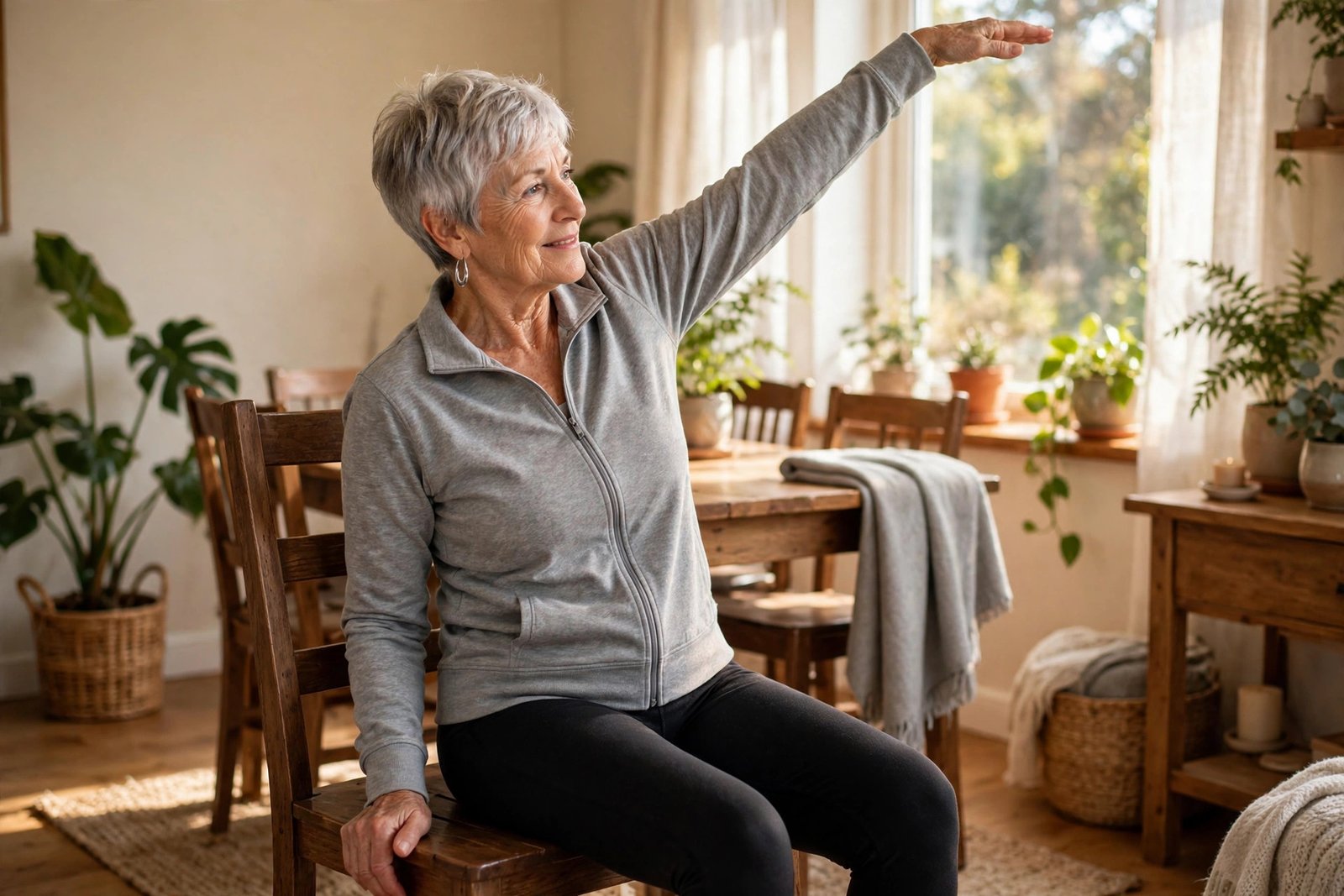
Staying mobile after 60 does not require a gym membership or painful workouts. These flexibility exercises for seniors over 60 are gentle, chair-supported, and built for real bodies. In addition, every movement protects your balance while easing stiff joints.
First, know that some stiffness with age is completely normal. As a result, bending, reaching, and turning can feel harder than they used to. However, gentle daily stretching can restore much of that lost ease. In fact, many older adults feel a real difference within just two weeks.
Why flexibility exercises for seniors over 60 matter so much
After 60, muscles and tendons slowly lose their natural elasticity. Consequently, stiffness builds up, especially first thing in the morning. On the other hand, consistent gentle movement keeps joints lubricated and posture upright. Indeed, the National Institute on Aging lists flexibility work as a core part of healthy aging.
Moreover, flexibility makes daily life easier and safer. For example, reaching a high shelf or turning to check a blind spot becomes smoother. As a result, you move through your day with more confidence. Similarly, looser muscles mean fewer aches after simple chores.
There is another benefit that people often overlook. Indeed, flexible ankles, hips, and shoulders support steadier balance. Therefore, you lower your risk of stumbles and falls. In short, flexibility is not about touching your toes; it is about staying independent.
Safety first: rules that keep every stretch comfortable
Before you begin, set up a safe space. First, use a sturdy chair without wheels on a non-slip surface. In addition, wear flat supportive shoes or go barefoot on a rug. Finally, keep water nearby and clear the area of clutter.
Never stretch into sharp or sudden pain. Instead, move slowly until you feel only a gentle pull. However, stop right away if you feel pain, dizziness, or numbness. Additionally, breathe deeply and steadily, and never hold your breath.
If you have arthritis, osteoporosis, or joint replacements, check with your doctor first. Similarly, anyone with balance worries should keep the chair within reach for every move. Indeed, a cautious start builds lasting confidence. For more fundamentals, see our guide to stretching exercises for beginners.
The 15-minute routine: how to do flexibility exercises for seniors over 60 safely
This full-body routine takes about 15 minutes and needs only a sturdy chair. First, aim to do it once a day at a regular time. In addition, hold each stretch for 20 to 30 seconds. Finally, repeat every move two or three times on each side.

Seated flexibility exercises for seniors over 60: neck and shoulders
Sit tall with both feet flat on the floor. First, slowly tilt your right ear toward your right shoulder and hold gently. Then repeat on the left side. In addition, roll both shoulders forward five times, then backward five times.
Next, bring one arm across your chest and cradle it with the other hand. For example, this eases the shoulder tightness that driving and desk work create. As a result, your upper back should feel noticeably looser. Finally, clasp your hands and press your palms forward to open the mid-back.

Standing flexibility exercises for seniors over 60: legs and hips
Stand behind your chair and rest both hands lightly on the backrest. First, step one foot back and press that heel into the floor for a calf stretch. Then switch sides. In addition, keep the front knee soft and your chest lifted.
Next, while still holding the chair, march gently in place five times per leg. For example, lift each knee only as high as feels comfortable. As a result, your hip flexors wake up without strain. Indeed, this move also trains balance in a very safe way.
Finally, step sideways three steps to the right, then three to the left. In addition, keep your steps small and controlled. Consequently, your outer hips and thighs gain mobility. However, if any move feels unsteady, stay seated and march in the chair instead.
Chair-supported flexibility exercises for seniors over 60: back and spine
Sit on the front half of your chair with feet flat and wide. First, arch your back slowly and look slightly upward. Then round your spine and tuck your chin toward your chest. In addition, repeat this gentle wave five times at an easy pace.
Next, place your hands on your knees and twist slowly to the right. For example, look over your right shoulder while keeping your hips still. Then repeat on the left. As a result, your waist and lower back gain useful mobility. Meanwhile, keep breathing slow and even throughout.

Gentle flexibility moves for wrists, ankles, and feet
Small joints matter too, so do not skip them. First, extend one arm and gently pull the fingers back with the other hand. Then flip the hand and press the fingers downward. In addition, repeat on the other hand for balanced mobility.
Next, while seated, lift one foot and draw slow circles with your ankle. For example, five circles each way loosens stiff ankle joints. Then switch feet. As a result, walking feels steadier and more springy. Finally, spread your toes wide and hold for five seconds.
Common mistakes to avoid as you start
Many beginners stretch the wrong way without realizing it. First, never bounce during a stretch, since bouncing can strain older muscles. In addition, avoid forcing any position that causes pain. Instead, aim for mild tension that eases as you hold.
Another common mistake is rushing through the routine. For example, holding each stretch for only five seconds limits the benefit. Therefore, count slowly to 25 for every hold. Meanwhile, keep your movements smooth and controlled.
Finally, some people skip any warm-up at all. However, cold muscles stretch less easily and complain more. Indeed, two minutes of gentle marching in place prepares your body well. As a result, every stretch afterward feels easier.
Breathe well: the quiet partner of every stretch
Breathing deeply makes every stretch more effective. First, inhale slowly through your nose as you prepare to move. Then exhale gently through your mouth as you ease into the stretch. In addition, relaxed breathing lowers tension in the very muscles you are stretching.
On the other hand, holding your breath creates stiffness and raises blood pressure. Therefore, keep a slow, steady rhythm from start to finish. Indeed, calm breathing also turns this routine into a pleasant daily ritual.
Building a habit that actually sticks
Consistency matters far more than intensity. First, anchor this routine to something you already do, like morning coffee. In addition, leave your chair in its spot so starting takes no effort. Meanwhile, mark each day on a calendar for a small sense of progress.
On tired days, do a shorter version instead of skipping. For example, just the seated neck and shoulder moves still count. Indeed, five gentle minutes beats zero minutes every time. Similarly, pairing the routine with TV time makes an evening stretching routine feel effortless.
Over weeks, small wins add up in noticeable ways. Consequently, stairs may feel easier and mornings less stiff. In addition, you can add variety with our daily stretching routine for more gentle options.
What to expect in your first month
Progress with stretching is usually quiet but steady. First, expect the biggest change in how your mornings feel. In addition, moves that felt stiff on day one often feel easy by week three.
Meanwhile, keep your expectations kind and realistic. For example, you will not regain teenage flexibility, and that is perfectly fine. As a result of steady practice, however, daily tasks like bending and turning become noticeably easier.
Finally, celebrate the small wins along the way. Indeed, touching your knees more comfortably is real progress. Consequently, staying motivated feels natural when you notice these changes.
FAQ: common questions about flexibility exercises for seniors over 60
Here are answers to the questions older adults ask most often. In addition, these tips help you adjust the routine to your own body.
How often should I do flexibility exercises for seniors over 60?
Once a day is the sweet spot for most people. However, even three or four times a week brings real benefits. Indeed, short and regular beats long and occasional every time.
What if I have arthritis in my knees or hips?
Gentle stretching is usually safe and helpful for arthritis. First, warm up with a short walk or a warm shower. Then move only through comfortable ranges. However, always follow your doctor’s specific advice.
Can these stretches improve my balance?
Yes, they certainly can. For example, stronger ankles and looser hips make recovery from a stumble easier. In addition, the chair-supported moves train steadiness safely. As a result, many people feel more confident on their feet.
Should I stretch before or after walking?
Both work well for different reasons. First, do gentle marching or ankle circles before a walk. Then do the longer holds after your walk, when muscles are warm. In addition, post-walk stretching often feels more comfortable.
Do I need any special equipment?
No special gear is needed at all. Indeed, a sturdy chair is the only real requirement. However, a resistance band or towel can add options later. For now, your body weight and a chair are plenty.
Is it ever too late to start?
It is never too late. In fact, research shows that adults in their 70s, 80s, and beyond can still gain flexibility. Therefore, start gently today and build slowly. Indeed, your future self will thank you.
Conclusion: small stretches, lasting independence
Flexibility exercises for seniors over 60 are one of the simplest gifts you can give your body. First, they ease stiffness and protect your joints. In addition, they support steadier balance and safer daily movement. Finally, they help you keep doing the things you love.
Start with today’s 15-minute routine and repeat it tomorrow. However, remember that gentle and consistent always wins. For guidance on staying steady on your feet, the National Institute on Aging also covers falls and fall prevention. Indeed, every small stretch is a vote for your independence.
