


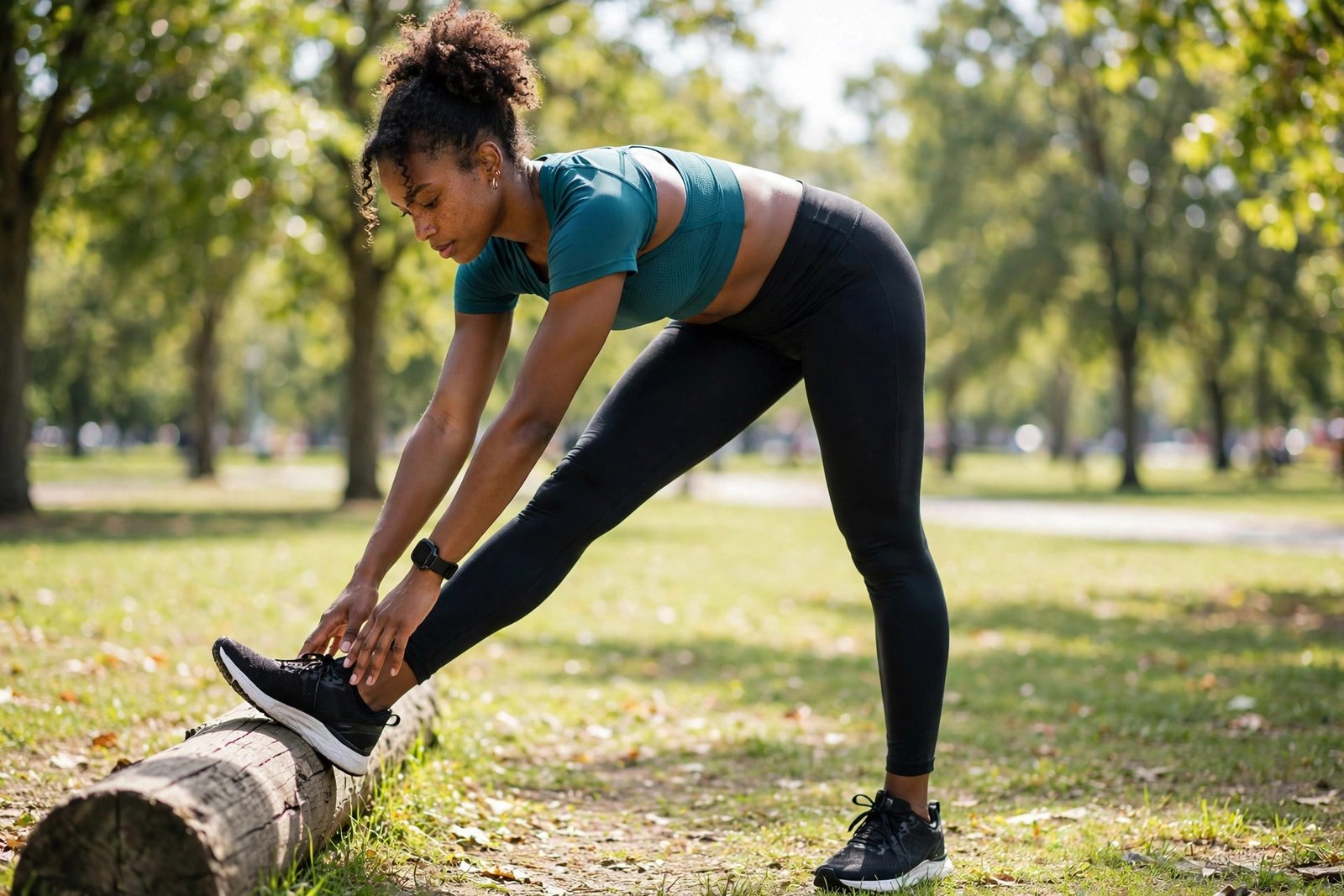
You don’t need an hour, a yoga mat, or a gym membership to become more flexible. In addition, this short flexibility routine asks for just seven minutes and a little floor space.
In fact, a short flexibility routine is one of the simplest ways to fight the stiffness that comes from sitting, scrolling, and rushing through the day. Done regularly, it keeps your joints happy and your body moving the way it should.
In addition, this guide gives you a complete 7-minute routine you can do anywhere — your living room, office, or hotel room. No equipment. No complicated poses. Just simple stretches that target the areas that get tight the fastest. Stay consistent with this short flexibility routine and the results will compound week after week.
Why a Short Flexibility Routine Actually Works
There’s a myth that stretching only counts if you do it for 30 minutes or more. That’s simply not true. Brief, consistent sessions beat long, occasional ones almost every time. In fact, the real magic of a short flexibility routine shows up after two to three weeks of steady practice.
For instance, think of it like brushing your teeth. Two minutes twice a day keeps your mouth healthy. Seven minutes of stretching most days keeps your body moving freely. Consistency matters far more than duration. Even on busy days, a shorter version of this short flexibility routine beats skipping it entirely.
A short session done daily delivers real benefits:
- Loosens tight hips, hamstrings, and shoulders from sitting
- Improves blood flow and warms up stiff joints
- Reduces everyday aches in the neck and lower back
- Makes daily movements — bending, reaching, walking — feel easier
- Lowers stress through slow, deliberate breathing
What Seven Minutes Can Actually Change
You won’t become a contortionist in a week, and that’s fine. What you will notice is practical stuff: getting out of bed feels easier, your shoulders stop creeping toward your ears, and bending down to tie your shoes stops being an event. Most people feel the benefits of a short flexibility routine within the first ten days.
In fact, the key is that flexibility responds to frequency. In fact, your muscles and connective tissue adapt to what you ask of them regularly. A short daily signal — “hey, we need to bend here” — works better than one big monthly stretching session. Then, make this short flexibility routine a non-negotiable part of your day, like brushing your teeth.
If you ever want to build on this habit, our daily flexibility routine goes a little deeper. But start here. Seven minutes is enough to change how your body feels. In fact, a short flexibility routine done regularly will change how your whole body feels.
There’s also a motivation factor. Long routines feel like a project, and projects get postponed. In fact, a seven-minute routine feels almost too easy to skip. And that’s exactly why it survives busy weeks, travel days, and low-energy evenings when a longer workout would never happen. Stay consistent with this short flexibility routine and the results will compound week after week.
The 7-Minute Short Flexibility Routine
In addition, this routine hits the spots that tighten up fastest during a normal day: neck, shoulders, chest, hips, hamstrings, and glutes. Also, hold each stretch for about 45–60 seconds (30 seconds per side where noted), moving slowly and breathing deeply. The real magic of a short flexibility routine shows up after two to three weeks of steady practice.
Wear comfortable clothes and find a spot with a little space. In fact, a wall or sturdy chair nearby helps with balance if you need it.
1. Neck and Shoulder Rolls (0:00–1:00)
Start standing or sitting tall. Drop your chin toward your chest, then slowly roll your head to the right, back, and left in a smooth circle. Spend 30 seconds circling each direction.
Also, keep the movement slow and gentle — never crank your neck. In addition, this wakes up the muscles that stiffen from looking at screens all day. Let your shoulders hang loose while you roll, and take slow breaths throughout.
2. Standing Chest Opener (1:00–2:00)
Clasp your hands behind your back and straighten your arms. Lift your hands slightly while opening your chest and squeezing your shoulder blades together. Also, hold for 30 seconds, release, and repeat once more.
In addition, this reverses the hunched posture of desk work. Breathe into your chest and let the stretch deepen with each exhale. If clasping your hands is uncomfortable, hold a towel between them instead.
3. Half-Kneeling Hip Flexor Stretch (2:00–3:30)
Also, step into a half-kneeling position with your right knee on the floor and your left foot flat in front of you. Also, tuck your tailbone slightly and shift your hips forward until you feel a stretch in the front of your right hip. Hold 40 seconds, then switch sides.
Tight hip flexors are the classic side effect of sitting. Also, keep your torso upright — don’t lean forward. Squeezing the glute on the kneeling side deepens the stretch without any extra effort.
4. Standing Hamstring Stretch (3:30–4:30)
Then, place your right heel on a low step or chair in front of you with your leg straight. Also, hinge forward at the hips with a flat back until you feel a gentle pull behind your thigh. Hold 30 seconds per side.
Also don’t round your back just to reach lower. A flat back and a mild stretch beats a deep bend with bad form. Tight hamstrings pull on the lower back, so this one pays off fast.
5. Figure-Four Glute Stretch (4:30–5:30)
Also, lie on your back with your knees bent. Cross your right ankle over your left knee, then pull your left thigh toward your chest until you feel a stretch in your right glute. Hold 30 seconds per side.
In fact, your glutes and deep hip muscles work hard all day, even when you’re just sitting. If lying down isn’t an option, do this seated in a chair — same cross-legged position, then lean forward gently.
6. Cat-Cow Spinal Waves (5:30–6:30)
Get on all fours with your hands under your shoulders and your knees under your hips. Also, inhale as you drop your belly and lift your chest; exhale as you round your back like a cat. Flow slowly for one full minute.
In addition, this mobilizes the whole spine and feels amazing after hours of sitting still. Also, move with your breath — slow in, slow out — and let each wave get a little bigger than the last.
7. Standing Forward Fold and Reset (6:30–7:00)
Also, stand with your feet hip-width apart, bend your knees slightly, and fold forward, letting your head and arms hang heavy. Sway gently side to side for 30 seconds and let gravity do the work.
Finally, finish with one slow roll up to standing, stacking your spine vertebra by vertebra. Also, take one deep breath in and out. Done — seven minutes, whole body, no sweat.
How to Fit This Into a Busy Day

In fact, the biggest obstacle to flexibility isn’t your body — it’s your schedule. In fact, the fix is to attach your routine to something you already do every day, so it stops feeling like a chore.
Try these time slots and pick the one that fits your life:
- Morning: do it right after you brush your teeth to shake off overnight stiffness.
- Lunch break: a midday stretch breaks up sitting and recharges your focus for the afternoon.
- TV time: stretch during the opening credits or while dinner heats up.
- Before bed: a gentle round helps you unwind and sleep more deeply.
You don’t have to do all seven minutes at once, either. Split it into two mini-sessions — neck and chest in the morning, hips and legs at night. If mornings are your window, our morning flexibility routine pairs perfectly with this one.
Habit stacking is the secret. Link your stretches to an existing habit. Coffee brewing, a work call ending, the dog’s evening walk — and the routine runs on autopilot.
Ground Rules for Short Stretch Sessions

Short sessions work best when you follow a few simple rules. These also keep you safe and make every minute count:
- Never force it. Stretch to mild tension, never sharp pain. Muscles relax when they feel safe.
- Breathe slowly. Deep breaths tell your nervous system to let go. Exhale as you ease deeper into each stretch.
- Do both sides. Always stretch left and right equally to stay balanced and avoid creating new tight spots.
- Start gently when cold. Muscles stretch better when warm. After a walk or a warm shower is ideal; if you’re cold, ease in slowly.
- Skip the bouncing. Bouncing can trigger a reflex that tightens the muscle — the exact opposite of what you want.
If you have an injury or a medical condition, check with your doctor before starting. Stretching is gentle, but it’s still worth getting the green light first.
The American Council on Exercise highlights that regular flexibility training supports joint health, better posture, and easier everyday movement. And you don’t need long sessions to earn those benefits.
Common Mistakes That Waste Your Seven Minutes

Seven minutes is precious, so don’t waste it. Here are the mistakes that make short routines far less effective:
- Only stretching what hurts. Pain in one spot often comes from tightness somewhere else. Stick to the full routine instead of chasing symptoms.
- Holding your breath. This tenses everything up. If you catch yourself holding your breath, you’re pushing too hard — back off a little.
- Rushing through. Speed kills the benefit. Move slowly and give each stretch its full time.
- Stretching cold aggressively. If you just woke up, ease in gently for the first minute before going deeper.
- Skipping days. One missed day is fine. A missed week resets your progress. Aim for most days, not perfect days.
Want more variety once the habit sticks? Our guide to flexibility exercises for beginners adds simple new stretches you can swap into this routine.
The good news? Even an imperfect session beats no session. Just keep showing up.
One more tip: track your streaks, not your flexibility. Put a simple checkmark on your calendar for every day you complete the routine. Watching the chain of checkmarks grow is surprisingly motivating, and after a few weeks, the habit starts to run itself.
Frequently Asked Questions
Is 7 minutes of stretching really enough?
Yes — for general flexibility and daily comfort. Short, consistent sessions maintain and gradually improve your range of motion. Healthline’s own quick stretching guide shows how much you can cover in just a few minutes. If you’re training for something specific, like the splits, you’ll eventually want longer sessions — but for everyday movement, seven minutes is a solid foundation.
What’s the best time of day to do a short flexibility routine?
Whenever you’ll actually do it. Morning sessions fight overnight stiffness, midday sessions break up long hours of sitting, and evening sessions help you relax before sleep. Pick the slot that fits your life and protect it like an appointment.
Should I do this routine every day?
Daily is ideal, but four to five days a week still brings real results. Flexibility fades faster than strength, so frequency matters more than length. Even on rest days, a two-minute neck-and-shoulder reset keeps the habit alive.
Can I do this before a workout?
In addition, this routine uses static stretches, which are best saved for after exercise or as a standalone session. Before a workout, choose dynamic movements instead — leg swings, arm circles, and bodyweight squats wake up your muscles without dulling their power.
I’m extremely stiff. Will this work for me?
Absolutely — stiff beginners often feel the biggest difference the fastest. Also, start gently, use props like chairs and walls for support, and never compare yourself to anyone else. In fact, your only competition is yesterday’s stiffness, and you’ll beat it quickly.
Do I need to warm up first?
Additionally, for a gentle routine like this one, no formal warm-up is needed. Just start with the easiest stretches and let the first minute serve as your warm-up. If your muscles feel very cold, march in place for 30 seconds first.
How long until I notice results?
Most people feel looser after the very first session. Visible flexibility gains — touching your toes more easily, sitting more comfortably, less morning stiffness — typically show up within two to four weeks of consistent practice. In fact, the trick is simply not quitting in week one.
Conclusion
You don’t need more time — you need a routine that fits the time you have. Seven minutes a day is enough to loosen tight hips, open stiff shoulders, and make everyday movement feel easier.
Start today. Not Monday, not “when things calm down” — today. Also, do the routine once, notice how good it feels, and do it again tomorrow. Small daily wins build lasting flexibility.
Your future self — the one who bends, reaches, and moves without thinking twice — will thank you for the seven minutes you spent today.
