


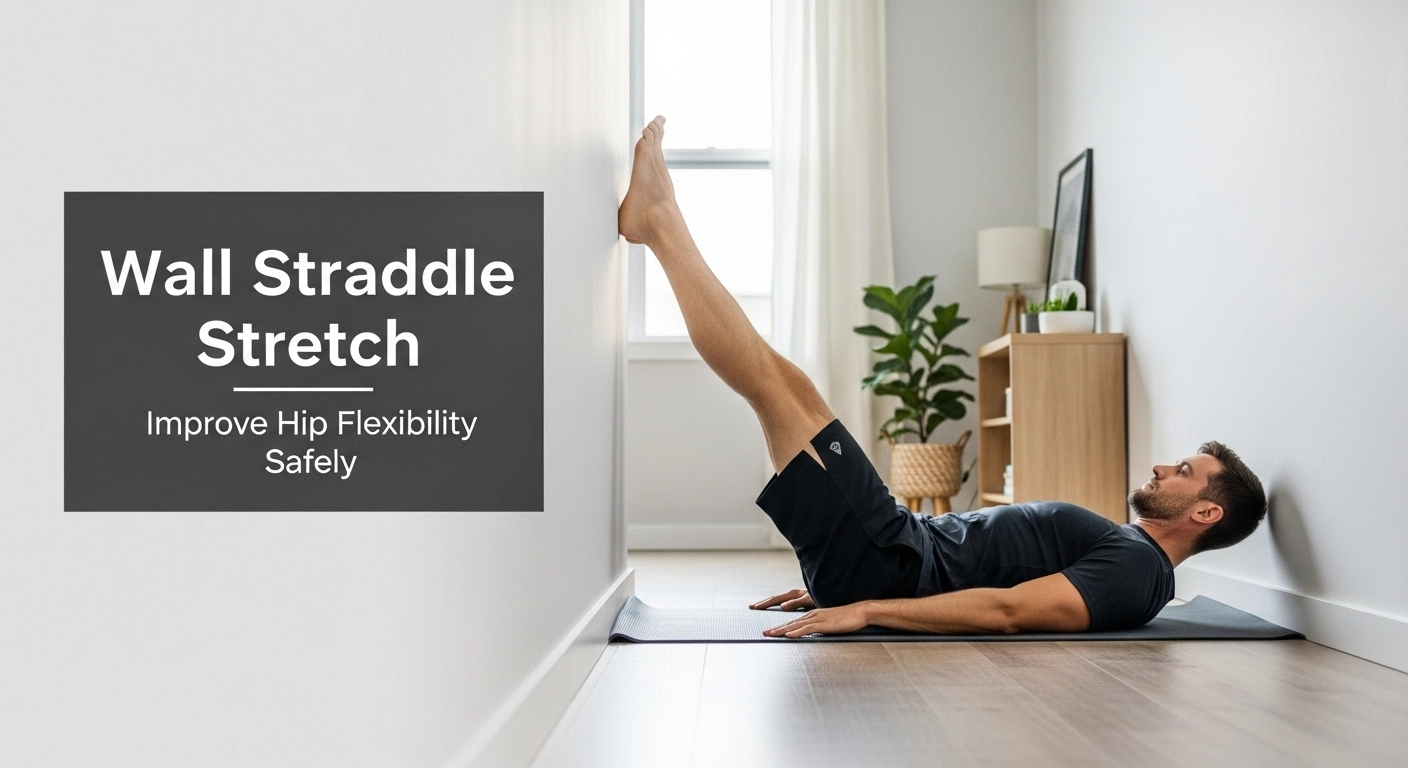
If you have ever tried to sit in a wide straddle and felt a strong pull in your inner thighs, you know how frustrating tight hips can be. Many beginners push too hard and end up sore the next day. Dancers often feel stuck in their side splits progress. People who sit all day notice stiffness that does not go away easily. The common mistake is forcing flexibility instead of building it safely.
Over the years, I have found that the wall straddle stretch is one of the safest starting points for improving inner thigh flexibility. By lying on your back and using gravity, you reduce pressure on your lower back and avoid aggressive pushing. This makes it easier to relax into the stretch and stay consistent. When done correctly, this simple movement can support real progress without unnecessary strain.
Table of Contents
Jump to a sectionUse the links below to jump to the section you need.
- Who Is the Wall Straddle Stretch Best For?
- What Is the Wall Straddle Stretch?
- Muscles Worked in the Wall Straddle Stretch
- Wall Straddle Stretch Benefits
- How to Do the Wall Straddle Stretch
- How to Breathe During the Wall Straddle Stretch
- Recommended Warm-Up Before the Wall Straddle Stretch
- Wall Straddle Stretch for Side Splits
- Wall Straddle Stretch for Tight Hips From Sitting
- Wall Straddle Stretch Variations
- Who Should Avoid the Wall Straddle Stretch
- Common Mistakes in the Wall Straddle Stretch
- Yoga Name and Variation
- Frequently Asked Questions
- Conclusion
Who This Guide Is For
- Beginners with tight inner thighs
- Dancers and cheerleaders training for side splits
- Yoga students improving wide-leg poses
- Office workers with stiff hips from long sitting
Key Takeaways
- The wall straddle stretch opens the inner thighs and hips.
- It is a passive stretch, so gravity does most of the work.
- It can support side splits progress over time.
- It can feel easier on the back than a seated straddle.
- Slow breathing helps you relax and get better results.
Who Is the Wall Straddle Stretch Best For?
The wall straddle stretch works well for:
- Beginners with tight inner thighs
- Dancers and cheerleaders training for side splits
- Yoga students improving wide-leg poses
- Office workers with stiff hips from long sitting
Because it is a passive stretch, gravity helps you relax into the movement. You do not need advanced flexibility to begin.
What Is the Wall Straddle Stretch?

The wall straddle stretch is a passive stretch. Gravity gently pulls your legs apart while your muscles stay relaxed.
Since you are lying down, your lower back and knees often feel less pressure than in a seated straddle stretch. Many beginners find this version easier to manage.
Muscles Worked in the Wall Straddle Stretch
The wall straddle stretch mainly targets:
- Inner thighs (adductors)
- Hamstrings
- Groin muscles
- Hip joint structures
It improves passive flexibility. Full side splits also require active strength in the hips and glutes, so strength work should support your stretching routine.
Wall Straddle Stretch Benefits
Key benefits include:
- Improved inner thigh flexibility
- Better hip mobility
- Support for side splits training
- Possible reduction in mild leg swelling due to elevation
- Relaxation through controlled breathing
For people who sit long hours, this stretch can reduce hip stiffness and groin tightness.
Important
Stop if you feel sharp pain in the groin, hamstrings, or hip. Do not force your legs wider. If you have a recent groin strain, hamstring tear, hip labrum injury, severe lower back pain, or active sciatica symptoms, speak with a qualified professional before doing this stretch.
How to Do the Wall Straddle Stretch

- Sit sideways next to a wall.
- Lie on your back as you swing your legs up the wall.
- Move your hips close to the wall.
- Slowly let your legs slide open into a straddle.
- Keep your legs relaxed. Avoid forcing them wider.
Hold for 30 to 60 seconds.
To exit safely, bend your knees first. Bring your legs together. Then roll onto your side before sitting up.
How to Breathe During the Wall Straddle Stretch
- Inhale through your nose for 4 seconds.
- Exhale slowly for 6 seconds.
- Let your legs relax more on each exhale.
Slow breathing helps your nervous system calm down. When the body feels safe, muscles release more easily.
Recommended Warm-Up Before the Wall Straddle Stretch
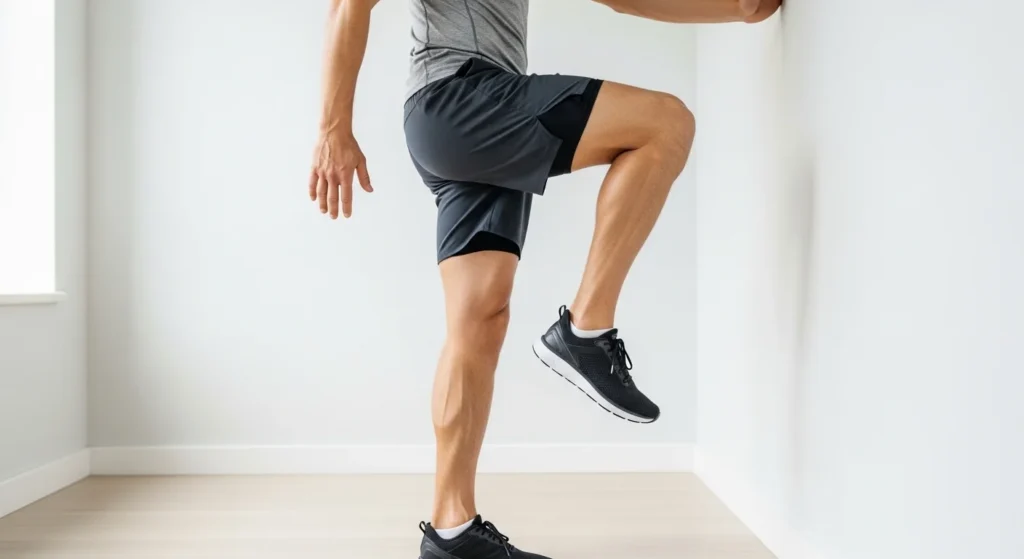
Before stretching, warm up with:
- 10 to 15 leg swings per side
- 10 hip circles each direction
- 10 bodyweight squats
- 8 to 10 forward lunges
A short warm-up reduces strain and improves stretch quality.
Wall Straddle Stretch for Side Splits
Many dancers use the wall straddle stretch to improve side splits. It increases passive range in the inner thighs. For full splits progress, combine it with strength exercises for the hips and glutes.
Track your progress by marking how wide your heels reach on the wall, taking a photo every few weeks, and noting how close your legs move toward the floor. Steady practice leads to steady results.
Wall Straddle Stretch for Tight Hips From Sitting
If you sit most of the day, your hips may feel locked and stiff. The wall straddle stretch gently opens the hips without loading the spine. Many people notice improved comfort when they practice it for a few minutes after work.
Wall Straddle Stretch Variations
Easier Version

Move your hips slightly away from the wall and bend your knees a little.
Harder Version
Gently place your hands on your inner thighs and apply light pressure without forcing.
Never push into sharp pain.
Quick Comparison
Who Should Avoid the Wall Straddle Stretch
Avoid or modify this stretch if you have a recent groin strain, hamstring tear, hip labrum injury, severe lower back pain, or active sciatica symptoms. Stop immediately if you feel sharp pain.
Common Mistakes in the Wall Straddle Stretch

Forcing your legs too wide, holding your breath, locking your knees, and skipping your warm-up are common errors. Move slowly and stay controlled.
Yoga Name and Variation
In yoga, this stretch is a variation of Upavistha Konasana, also known as Wide-Angle Seated Forward Fold. The wall version supports the body and allows gravity to assist hip opening.
Sample Weekly Routine
Use this plan if your goal is better hip flexibility and steadier side splits progress.
- Day 1: Warm-up + wall straddle (2–3 holds)
- Day 2: Light hip strength (glutes and hips) + short stretch
- Day 3: Warm-up + wall straddle + easy mobility
- Day 4: Rest or a gentle walk
- Day 5: Warm-up + wall straddle (2–3 holds)
Keep it easy. If you feel sore, reduce the hold time or take an extra rest day.
Frequently Asked Questions
Is the wall straddle stretch safe for beginners?
Yes, if you move slowly and do not force your legs wider. A light stretch feeling is normal. Sharp pain is not.
How long should I hold the wall straddle stretch?
Hold it for 30 to 60 seconds. Repeat 2 to 3 times, 3 to 5 days per week.
Does the wall straddle stretch help side splits?
Yes. It improves passive inner thigh flexibility, which supports side splits progress over time.
Why does the wall straddle stretch hurt my groin?
Your inner thighs may be tight or you may be pushing too far. Move your hips away from the wall or bend your knees slightly.
Conclusion
In my experience, flexibility improves when you stop chasing quick results and start focusing on safe, steady practice. The wall straddle stretch may look simple, yet it provides consistent results when done with proper breathing and control. I have seen beginners gain their first noticeable improvements with this method, and I have seen trained athletes use it to maintain range without overloading their joints. If you stay patient, warm up properly, and combine passive stretching with strength work, this stretch can become a reliable part of your long-term flexibility routine.
