


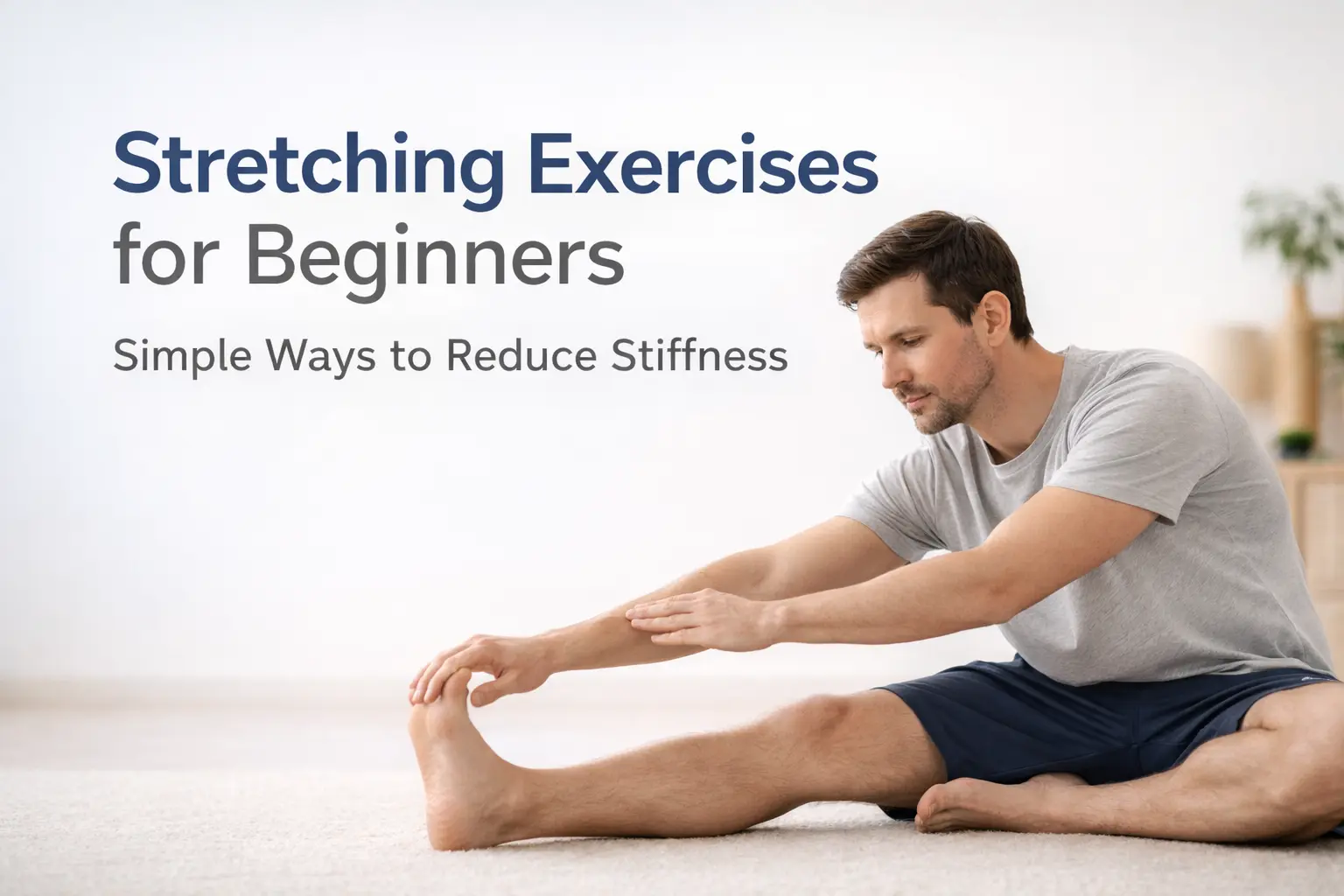
When I first started paying attention to stretching, it was because my body felt tight all the time. Sitting for long hours made my hips stiff. My lower back felt sore after normal days. Even simple movements like bending or walking felt harder than they should. Like many beginners, I thought stretching was something extra, so I skipped it.
What I learned later is this. Most beginners are not lazy or unfit. Their muscles stay tight from long periods of sitting and limited movement. Stretching exercises for beginners help release that tightness. They make daily movement feel easier and safer. You do not need long sessions or complex routines. You just need simple stretches done the right way.

Table of Contents
Jump to a sectionUse the links below to jump to the section you need.
- What Are Stretching Exercises
- Benefits of Stretching for Beginners
- Types of Stretching for Beginners
- Dynamic vs Static Stretching for Beginners
- When Should Beginners Stretch
- Why Warming Up Before Stretching Matters
- Best Stretching Exercises for Beginners
- Posture and Form Tips for Beginners
- Simple Stretching Routines for Beginners
- Common Stretching Mistakes Beginners Make
- Which Stretches Are Safe to Do Every Day
- How Often Should Beginners Stretch
- How Long Until Results Appear
- Important Safety Note for Beginners
- Frequently Asked Questions
- Conclusion
Who This Guide Is For
- Beginners who are new to stretching
- People who feel stiff from sitting for long hours
- Office workers and desk users
- Anyone restarting movement after a break
Key Takeaways
- Stretching reduces stiffness and supports easier daily movement.
- Beginners should stretch gently and move slowly.
- Dynamic stretches work best before activity.
- Static stretches work best after activity or during rest.
- Five to ten minutes a day is enough to start.
What Are Stretching Exercises
Stretching exercises are movements that gently lengthen muscles. They help muscles relax and support better joint movement. Beginners often feel tight in the legs, hips, back, neck, and shoulders.
Stretching supports daily activities like walking, bending, and sitting. It is especially helpful for people who spend many hours at a desk.
Benefits of Stretching for Beginners
Stretching offers real benefits that beginners notice quickly:
- Reduces muscle tightness
- Improves flexibility
- Helps joints move freely
- Supports better posture
- Lowers injury risk
- Helps muscles recover
Regular stretching also helps reduce stiffness caused by long periods of sitting.
Types of Stretching for Beginners

There are different types of stretching. Beginners do not need advanced methods. These basic types are enough to see results.
Dynamic Stretching
Dynamic stretching uses slow movement while the body stays active.
This type works best before activity. It prepares muscles for movement and improves blood flow.
Examples include:
- Arm circles
- Leg swings
- Walking lunges
Static Stretching
Static stretching means holding a stretch in one position.
This type works best after activity or during rest. It helps muscles relax and recover.
Hold each stretch for 20 to 30 seconds. Breathe normally.
PNF Stretching
PNF stretching combines stretching with light muscle effort. Beginners do not need this type to make progress.
If used, keep pressure light and stop if discomfort appears.
Dynamic vs Static Stretching for Beginners
Dynamic stretching works best before workouts or physical activity. It warms the body and prepares muscles to move.
Static stretching works best after workouts or during rest. It helps muscles relax and improves flexibility.
Before activity, choose dynamic stretching.
After activity or during rest, choose static stretching.
Dynamic vs Static Stretching
When Should Beginners Stretch
Stretching works best at the right time.
- Stretch before workouts to prepare the body
- Stretch after workouts to help recovery
- Stretch during short breaks if you sit often
Short sessions work well. Five to ten minutes is enough for beginners.
Why Warming Up Before Stretching Matters
Stretching cold muscles can increase strain.
Before stretching, move lightly for two to five minutes. Walking, marching in place, or gentle arm swings help warm the body.
Warm muscles stretch more easily and safely.

Best Stretching Exercises for Beginners
These stretching exercises for beginners are simple and safe for most people.
Standing Calf Stretch

Stand facing a wall. Step one foot back. Press the heel down. Keep the back leg straight.
Hold for 20 to 30 seconds. Switch sides.
Hamstring Stretch (Standing or Seated)
Stand tall or sit on the floor. Extend one leg forward. Bend slightly at the hips.
Keep the back straight. Switch legs after holding.
Quad Stretch
Stand on one leg. Bend the other knee and bring the foot toward your body.
Keep knees close together. Avoid arching the back.
Hip Flexor Stretch
Kneel on one knee with the other foot forward. Shift hips forward slightly.
This stretch helps people who sit for long hours.
Inner Thigh Stretch
Stand with feet wide. Shift weight to one side while keeping the other leg straight.
Move slowly and switch sides.
Chest Stretch
Stand tall and clasp hands behind your back. Lift arms gently and open the chest.
This stretch supports posture.
Shoulder Stretch
Bring one arm across the chest. Use the other arm to pull it closer.
Keep shoulders relaxed. Switch arms.
Neck Stretch
Tilt your head slowly to one side. Keep shoulders down.
Avoid quick or forceful movement.
Lower Back Stretch
Lie on your back and pull knees toward the chest.
Hold gently and breathe slowly.
Thoracic Spine Stretch
Kneel on the floor. Sit back on your heels. Reach arms forward and lower the chest.
This stretch helps the upper back.
Posture and Form Tips for Beginners
Good form helps stretching feel better and safer.
- Keep the spine tall
- Do not lock knees
- Relax shoulders
- Move slowly
- Stop if sharp pain appears
Stretching should feel calm and controlled.

Simple Stretching Routines for Beginners
5-Minute Morning Stretch
- Neck stretch
- Shoulder rolls
- Hamstring stretch
- Hip flexor stretch
- Calf stretch
10-Minute Post-Workout Stretch
- Quad stretch
- Hamstring stretch
- Hip flexor stretch
- Chest stretch
- Lower back stretch
Office Stretch Break for Beginners
- Neck stretch
- Chest stretch
- Seated hamstring stretch
- Shoulder stretch
This routine helps reduce stiffness from sitting.
Common Stretching Mistakes Beginners Make
Avoid these common mistakes:
- Stretching cold muscles
- Bouncing during stretches
- Holding your breath
- Stretching through pain
Slow and controlled movement is safer.
Which Stretches Are Safe to Do Every Day
Some stretching exercises for beginners are safe daily:
- Neck stretches
- Shoulder stretches
- Hamstring stretches
- Hip flexor stretches
Deeper hip and lower back stretches work best after activity.
How Often Should Beginners Stretch
Beginners can stretch most days of the week.
Stretch daily for flexibility.
Stretch after workouts for recovery.
Stretch during short breaks if you sit often.
How Long Until Results Appear
Many beginners feel less stiff within two weeks. Flexibility often improves after four to six weeks.
Small, steady habits lead to results.

Important Safety Note for Beginners
Important
Stretching should not cause pain. Stop if you feel sharp pain, dizziness, tingling, or numbness. Avoid forcing any stretch. If you have injuries or joint problems, stretch with extra care.
Stretching should never feel painful.
Stop if you feel sharp pain, dizziness, tingling, or numbness. If you have joint problems or past injuries, stretch with care.
Frequently Asked Questions
Should stretching hurt?
No. Stretching should feel gentle.
Can beginners stretch every day?
Yes. Light stretching is safe when done correctly.
Is stretching enough without exercise?
Stretching helps movement, but regular activity also matters.
Conclusion
After years of practicing and helping beginners start safely, one thing stays consistent. Stretching works best when it stays simple and regular. You do not need to push into pain or force your body. Gentle stretching done often brings real change.
Stretching exercises for beginners are about comfort and daily movement, not fast results. When stretches stay short and controlled, stiffness reduces and the body feels more relaxed. Over time, stretching becomes a habit that supports easier movement in everyday life.
