


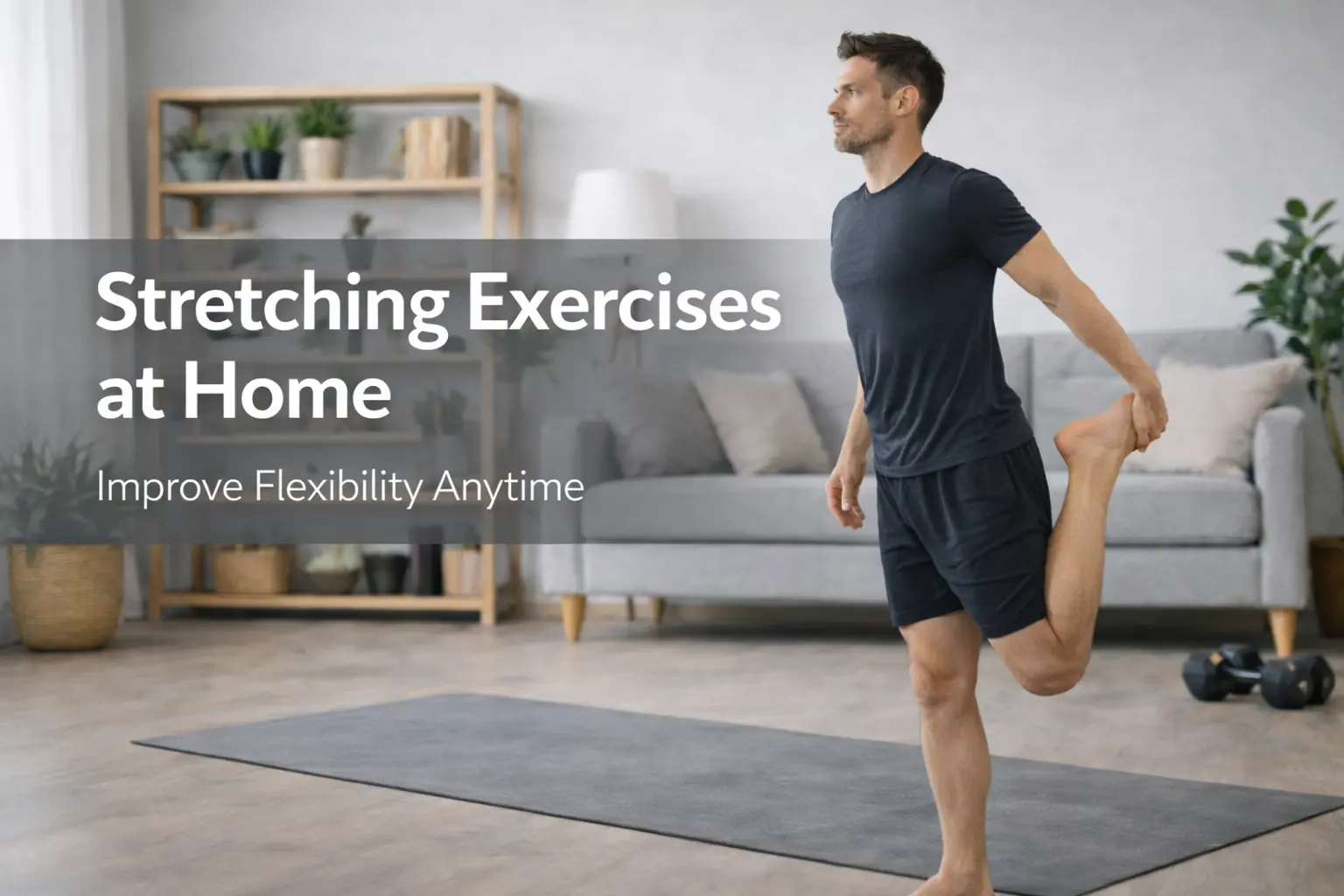
After sitting for long hours each day, the body starts giving signals. A stiff neck in the morning. Tight hips after work. A lower back that feels uncomfortable when standing up. I dealt with this myself during long workdays where movement was limited and sitting became normal.
Gym workouts felt like too much. I did not want pressure or complex plans. I only wanted my body to feel comfortable again. That is when I started doing stretching exercises at home. Just a few minutes each day made a real difference. Stiffness reduced. Movement felt easier. Over time, I learned that stretching works best when it is simple, safe, and done often. This guide is written from that experience and for people who want relief without stress.
Table of Contents
Jump to a sectionUse the links below to jump to the section you need.
- Why You Should Do Stretching Exercises at Home Regularly
- Flexibility vs. Mobility
- What Kind of Stretching Should You Do at Home
- When Is the Best Time to Stretch at Home
- Why Stretching Is Important for Daily Life
- How Often Should You Stretch at Home
- Quick Tips for Safe Home Stretching
- Stretching Exercises at Home for Different Needs
- The 12 Best Stretching Exercises You Can Do at Home
- The Best Static Stretching Exercises for Flexibility and Mobility
- Six Simple Exercises for a Daily Stretching Routine
- Stretching Exercises at Home Before Bed
- Simple Breathing Tips During Stretching
- How Long Does It Take to See Results
- Frequently Asked Questions
- Conclusion
Who This Guide Is For
- People who sit for long hours and feel stiff.
- Beginners who want safe and easy stretching exercises at home.
- Adults who feel tight hips, a stiff back, or sore shoulders.
- Anyone who wants short routines that fit into daily life.
Key Takeaways
- Stretching exercises at home work best when you do them often.
- Even 5 to 10 minutes a day can reduce stiffness from sitting.
- Stretch slowly and stop if you feel sharp pain.
- Static stretches work well after activity and in the evening.
- Pick a routine you can repeat. Consistency matters most.
Why You Should Do Stretching Exercises at Home Regularly

Stretching at home fits into any daily routine. You can do it in the morning, during breaks, or before bed.
Stretching exercises at home help people who:
- Sit for long hours
- Feel tight in the neck or back
- Want gentle movement
- Prefer simple home routines
Regular stretching can:
- Improve flexibility
- Reduce muscle tightness
- Support posture
- Make daily movement easier
- Reduce stiffness over time
Small daily sessions bring steady results.
Flexibility vs. Mobility
Flexibility means how far a muscle can stretch.
Mobility means how well a joint moves.
People who sit a lot often lose both. Stretching helps flexibility. Gentle movement helps mobility. Together, they support easier movement during daily tasks.
You do not need complex routines. Simple stretches done often work well.

What Kind of Stretching Should You Do at Home
For stretching exercises at home, static stretching works well. This means holding one position for a short time.
Static stretching is helpful:
- After daily activity
- After long sitting hours
- In the evening
Light movement stretching works better before activity. This helps prepare the body without strain.
When Is the Best Time to Stretch at Home
You can stretch at any time. Choose what fits your day.
Morning: helps reduce stiffness after sleep
Midday: useful for people who sit for long hours
Evening: helps the body relax before rest
Any time is better than no time. Consistency matters most.
Why Stretching Is Important for Daily Life
Daily stretching prevents stiffness from building up. This is important for people who sit often or repeat the same movements.
Muscles become tight because of:
- Long sitting
- Poor posture
- Limited movement
Stretching helps muscles return to a relaxed state. This supports comfort during walking, sitting, and sleep.
Even five minutes a day helps.
How Often Should You Stretch at Home
Most people can stretch every day.
If daily feels hard, aim for three to four days per week. Hold each stretch for 15 to 30 seconds. Breathe slowly and stay relaxed.
Stretching should feel gentle. Stop if you feel pain.
Important
Stretching should feel gentle. You should feel mild tension, not pain.
- Move slowly and do not bounce.
- Stop if you feel sharp pain, tingling, or numbness.
- If you have an injury, get advice before starting a new routine.
Quick Tips for Safe Home Stretching
Safety matters, especially for beginners.
- Move slowly into each stretch
- Do not bounce
- Breathe calmly
- Stretch both sides evenly
- Stop if pain feels sharp
Stretching should feel mild and controlled.
Common Stretching Mistakes
- Stretching too fast instead of moving slowly.
- Bouncing during a stretch.
- Holding your breath.
- Forcing range of motion to look flexible.
- Skipping one side or rushing through the routine.
Stretching Exercises at Home for Different Needs
A simple diagram or image can help show correct body position during each stretch.

For Office and Desk Workers
Focus on areas that tighten from sitting:
- Neck and shoulders
- Upper back
- Hip flexors
For Beginners
Start with easy movements:
- Full body reach stretch
- Seated hamstring stretch
- Chest stretch
- Calf stretch
For Adults With Daily Stiffness
Support comfort with:
- Lower back stretch
- Spinal twist
- Hip stretch
- Gentle quad stretch
The 12 Best Stretching Exercises You Can Do at Home

Neck and Shoulder Stretches
- Side of Neck Stretch
- Back of Neck Stretch
- Front of Neck Stretch
- Shoulder and Rotator Cuff Stretch
Back and Spine Stretches
- Side of Spine Stretch
- Hamstring and Lower Back Stretch
- Lying Spinal Twist
Lower Body Stretches
- Thigh and Quadriceps Stretch
- Hip Flexor Stretch
- Calf Stretch
Full Body Stretch
- Full Body Reach Stretch
Chest Stretch
- Doorway Chest Stretch
These stretches are beginner friendly and need no equipment.
The Best Static Stretching Exercises for Flexibility and Mobility
These stretches support full-body comfort:
- Forward Fold
- Figure Four Stretch
- Triceps Stretch
- Standing Quad Stretch
- Seated Neck Release
- Reclined Spinal Twist
- Knee to Chest Stretch
- Happy Baby
Hold each stretch and keep breathing steady.
Six Simple Exercises for a Daily Stretching Routine
This routine suits busy schedules and beginners:
- Seated Hamstring Stretch
- Quadriceps Stretch
- Calf Stretch
- Chest and Shoulder Stretch
- Mid to Upper Back Stretch
- Spinal Twist
This routine takes about ten minutes.
How Much Time Do You Need to Stretch
Quick Routine Options
- 5 minutes: neck, shoulders, upper back
- 10 minutes: add hips, legs, and calves
- 15 minutes: full body routine
Short routines are easier to maintain and still effective.
Stretching Exercises at Home Before Bed

Gentle stretching at night helps reduce body tension.
Good bedtime stretches include:
- Spinal twist
- Knee to chest stretch
- Neck release
Slow movement and calm breathing help the body relax.
Simple Breathing Tips During Stretching
Breathing helps muscles relax.
- Breathe in through your nose
- Breathe out slowly
- Do not hold your breath
- Stay calm and steady
This supports better stretching results.
How Long Does It Take to See Results
Some people feel easier movement within one to two weeks. Flexibility improves with regular practice.
Short daily sessions work better than long sessions done rarely.
Frequently Asked Questions
Can beginners do stretching exercises at home?
Yes. Start with easy stretches. Move slowly and breathe calmly.
Is it safe to stretch every day?
Yes, if you stretch gently and do not force movement. Stop if pain feels sharp.
Can stretching help back stiffness from sitting?
Gentle daily stretching often helps reduce tightness from long sitting.
Should I stretch before sleep?
Light stretching before bed can help the body relax. Keep movements slow and calm.
Conclusion
From personal practice and helping others start simple routines, one thing stays true. Stretching exercises at home work best when they fit into daily life. You do not need long sessions or perfect form. You need patience and consistency. Even a few minutes a day can reduce stiffness and improve how your body feels. Start small. Keep it simple. Over time, these small habits support better movement and comfort every day.
