


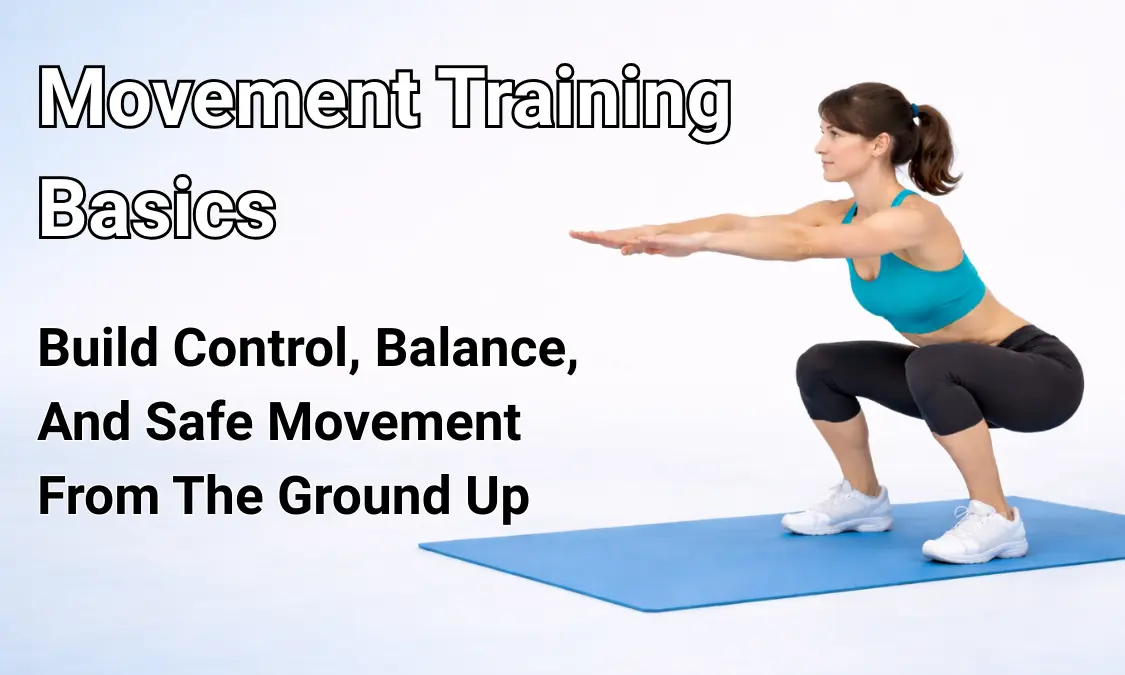
Most people do not search for movement training basics because they want to train harder. They search because something feels off. Their back feels tight after sitting all day. Their hips feel stiff when standing up. Simple actions like squatting or reaching feel uncomfortable. Many people train at the gym and still feel weak or unstable. Others avoid training because they fear getting hurt or do not know where to start.
I have seen this problem many times. The issue is rarely effort. It is missing basics. The body gets loaded before it learns how to move. When people start learning basic movement patterns, posture improves, balance feels steadier, and daily movement becomes easier. Pain and stiffness often reduce with regular practice. Movement training basics help rebuild the foundation most people never had.

Table of Contents
Jump to a sectionUse the links below to jump to the section you need.
- Who Is Movement Training For?
- Basic Movement Patterns: A Background
- What Are Basic Movement Patterns?
- How Are Basic Movement Patterns Classified?
- Challenges of Learning Movement Flows
- Movement Training for Beginners: Where to Learn the Moves?
- Influences
- A List of Popular Moves for Movement Training for Beginners
- Movement Flows Movement List
- What Are Some Examples of Basic Movement Patterns?
- Movement Training Tips for Beginners
- How Often Should Beginners Practice Movement Training?
- Strength Training and Movement Training Basics
- Squat
- Hinge
- Push
- Pull
- Frequently Asked Questions
- Conclusion
Who This Guide Is For
- Beginners who want a safe start
- Desk workers who feel stiff from sitting
- Adults 40+ who want better balance and joint comfort
- Recreational athletes who want cleaner movement
- People who train at home and avoid gyms
- Coaches who need clear basics to teach
Key Takeaways
- Movement training basics focus on control before load or speed.
- Most training comes from a few patterns: squat, hinge, push, pull, rotation, and stability.
- Short sessions done often work better than long sessions done rarely.
- Good form matters more than hard effort.
- Train at home with bodyweight if you want a simple start.
- If pain shows up, scale the move or stop.
Who Is Movement Training For?
Movement training basics work for many people. If you feel stiff, unsteady, or unsure where to start, this approach helps you move with more control and confidence.
Basic Movement Patterns: A Background
All exercises come from a small number of movement patterns. These patterns are natural. They appear in daily life, sports, and gym training.
Many workout plans focus on muscles alone. Movement training basics focus on how the whole body works together. This makes movement feel smoother, safer, and more controlled.
What Are Basic Movement Patterns?
Basic movement patterns are simple body actions. They form the base of movement training basics.

These patterns include:
- Squatting
- Hip bending
- Pushing
- Pulling
- Rotating
- Resisting movement
Training these patterns builds body control and movement skill.
How Are Basic Movement Patterns Classified?
Movement patterns are grouped by how the body creates or resists force.
Some patterns create movement, like squats and pushes. Others prevent movement, like resisting rotation or bending. Both are important for joint safety and control.
This balance helps the body stay stable during daily tasks and exercise.
Challenges of Learning Movement Flows
Many beginners feel unsure at first. Movement training looks different from machine-based workouts.
Some people try advanced moves too early. This often leads to poor control. Starting with simple patterns builds confidence over time.
Movement Training for Beginners: Where to Learn the Moves?
Beginners should start with bodyweight drills. Simple movements work best.
Practicing slowly improves control. Mirrors or short videos can help with feedback. This approach works well at home and for people who avoid gyms.

Influences
Movement training takes ideas from many areas, including sports training, bodyweight work, and controlled mobility.
The goal stays simple. Move with control.
A List of Popular Moves for Movement Training for Beginners
Common beginner movements include:
- Bodyweight squat
- Hip hinge drill
- Bear crawl
- Forward lunge
- Plank hold
These movements support movement training basics without equipment.

Movement Flows Movement List
Movement flows link several movements into one smooth sequence. They improve coordination, breathing, and balance.
Beginner flows often include crawling, squatting, reaching, and gentle rotation.
What Are Some Examples of Basic Movement Patterns?
Movement patterns at a glance
Clear examples include:
- Squat: sitting and standing
- Hinge: bending at the hips with a stable spine
- Push: moving weight away
- Pull: bringing weight closer
- Rotation: turning the torso
- Anti-movement: resisting bending or twisting
These patterns appear in daily tasks like lifting, reaching, and carrying.

Movement Training Tips for Beginners
Important
You should feel muscles working, not sharp pain. If a joint hurts, stop and scale the move. Move slower if you lose balance or control. If you have a health condition, get guidance from a qualified professional.
Start with short sessions. Ten to fifteen minutes is enough.
Helpful tips include:
- Move slowly
- Train all patterns evenly
- Stop when form breaks
- Focus on control, not speed
These tips help beginners and older adults train safely.
How Often Should Beginners Practice Movement Training?
Beginners can practice movement training two to four times per week.
Focus on quality. Rest days allow the body to adapt.
Strength Training and Movement Training Basics
Strength training and movement training use the same patterns.
Movement training basics teach control first. Strength training adds load later. When movement improves, strength training feels safer and more effective.

Squat
The squat supports daily sitting and standing. It trains the hips, knees, and ankles.
Controlled squats help posture and balance.
Hinge
The hinge teaches safe lifting mechanics. The hips move while the spine stays stable.
This pattern protects the lower back during daily lifting.
Push
Pushing movements build upper body control. They support daily tasks like pushing doors or objects.
Wall and floor pushes work well for beginners.
Pull
Pulling movements balance pushing actions. They support posture and shoulder health.
Rows and hanging drills train this pattern.
Frequently Asked Questions
How long should a session be?
Ten to twenty minutes works well for beginners.
Do I need equipment?
No. Bodyweight is enough.
Can movement training replace strength training?
It builds the base. Strength training can follow later.
How soon will progress show?
Better control often appears within weeks.
Conclusion
Over time, one lesson stands out clearly. When people learn movement training basics first, everything else improves. Daily tasks feel easier. Training feels safer. Fear of injury drops. I have seen people reduce discomfort by improving simple patterns like hinging, squatting, and core control, without extreme workouts or special tools. Movement training basics are a foundation, not a shortcut. When the body learns how to move well, strength and fitness follow in a natural way. Starting with movement creates results that last.
