


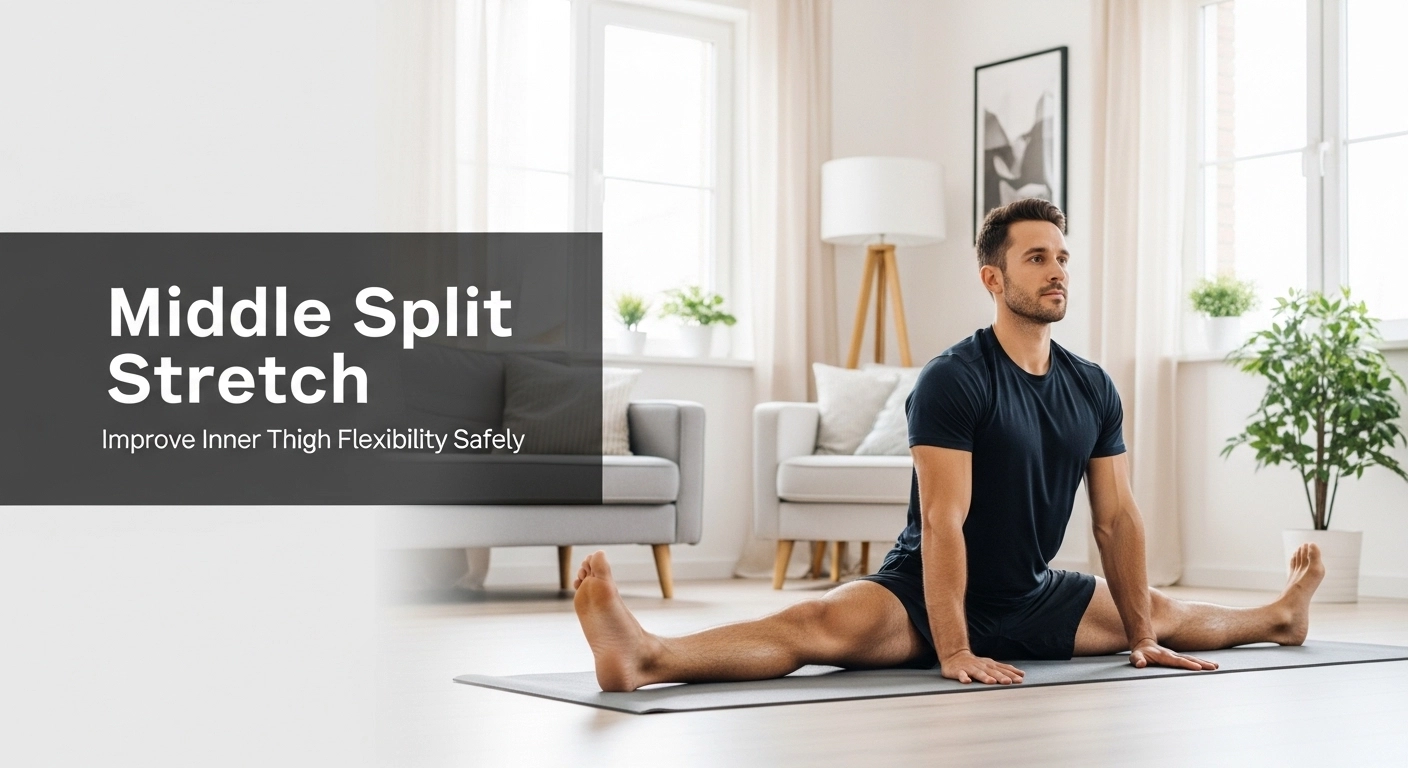
If you have tried the middle split stretch, you likely know the frustration. You warm up. You slide your legs wider. Then everything stops. Your hips feel tight. Your inner thighs burn. You start to wonder if this feeling means progress or if your body is just not built for it. Many people push harder, feel pain, and give up. Others stretch for months and see no real change.
From experience, this struggle is very common. Most people are not failing. They are simply stretching the wrong way. The middle split stretch needs patience, control, and a clear method. Forcing the stretch builds tension and fear. Practicing it with control builds comfort and progress. This guide is written to help you stretch safely, understand your body signals, and improve step by step.
Table of Contents
Jump to a sectionUse the links below to jump to the section you need.
- What Is a Middle Split Stretch?
- Middle Split vs Straddle Stretch
- Why the Middle Split Feels Difficult
- Warm Up Before a Middle Split Stretch
- Middle Split Stretch Exercises
- Suggested Stretch Order for Better Results
- Using Props for Support
- Active Support for the Middle Split Stretch
- Using Gentle Muscle Engagement During Stretches
- Breathing During the Middle Split Stretch
- How Often to Do the Middle Split Stretch
- Common Middle Split Stretch Mistakes
- Beginner Tips for the Middle Split Stretch
- Body Signals During the Middle Split Stretch
- How Long Does It Take to Get a Middle Split?
- Can Everyone Do a Middle Split Stretch?
- Benefits of the Middle Split Stretch
- What to Do After Your Stretch Session
- Frequently Asked Questions
- Conclusion
Who This Guide Is For
- You feel tight in your hips or inner thighs.
- You are new to the middle split stretch.
- You stretch at home without a trainer.
- You want safe progress without pain.
- You feel stuck and need a clear plan.
Key Takeaways
- Warm up before every middle split stretch session.
- Use props to stay stable and protect your hips.
- Stretch 3 to 5 days per week, and rest 1 to 2 days.
- Stop if pain is sharp or in the joints.
- Control and breathing matter more than forcing depth.
What Is a Middle Split Stretch?
A middle split stretch is when your legs move out to the sides while your hips face forward. As your legs open wider, your body lowers closer to the floor. The stretch is felt mainly in the inner thighs and hips.
This stretch is common in:
- Dance
- Gymnastics
- Martial arts
- General flexibility training
Many people also practice it at home. With the right approach, anyone can improve it.

Middle Split vs Straddle Stretch
Many people confuse the middle split with the straddle stretch. They are related, but they are different.
In a straddle stretch, you sit on the floor with your legs open wide. Your hips stay on the ground.
In a middle split stretch, your legs open wider and your hips lower closer to the floor. Your body may stay upright or lean forward.
The straddle stretch is often used to prepare the body. The middle split needs more hip control and support.

Middle Split vs Straddle (Quick Compare)
If you are new, start with the straddle stretch first.
Why the Middle Split Feels Difficult
The middle split stretch is not only about flexibility.
It depends on:
- Inner thigh muscles
- Hip muscles
- Hamstrings
- Joint movement and control
Tight hips are common. Weak support muscles can also limit progress. Some people improve faster. Others need more time. Both are normal.
Warm Up Before a Middle Split Stretch
Never stretch cold muscles. This is one of the main causes of strain.
A warm-up prepares your hips and legs.

Simple Warm-Up Ideas
- Walk or march in place for 3 minutes
- Gentle side leg swings
- Slow hip circles
How to Know Your Warm-Up Is Enough
Your warm-up is working if:
- Your legs feel loose
- Movement feels smoother
- You feel light heat in the hips
If your body still feels stiff, continue warming up.
Important
Stop if you feel sharp pain, joint pain, numbness, or tingling. Stretching should feel controlled, not painful. Move slowly and warm up before every session. If pain keeps coming back, take a break and get help from a qualified professional.
Middle Split Stretch Exercises
These stretches are commonly used to improve the middle split stretch.

Side Lunge Stretch
Stand with your feet wide. Shift weight to one side while keeping the other leg straight. Keep your chest up and hips facing forward.
Hold: 20 to 60 seconds
Rounds: 1 to 3 per side
Frog Stretch
Kneel on the floor. Move your knees wide and turn your feet out. Lower your hips slowly until you feel a stretch in the inner thighs.
Use pillows or blocks if needed.
Hold: 30 to 60 seconds
Rest between holds.
Horse Stance Hold
Stand wide. Bend your knees and lower your hips while keeping your back tall. This stretch also builds strength.
Hold: 20 to 45 seconds
Repeat after resting.
Seated Straddle (Pancake) Stretch
Sit on the floor with legs wide. Keep your back straight and lean forward slowly.
Do not pull yourself down.
Hold: 30 to 60 seconds
Slow breathing helps.
Suggested Stretch Order for Better Results
Stretch order helps the body relax.
A simple flow:
- Side lunge stretch
- Frog stretch
- Horse stance hold
- Seated straddle stretch
This order moves from lighter stretches to deeper ones.
Using Props for Support
Props make stretching safer and more controlled.

You can use:
- Yoga blocks
- Pillows
- Folded towels
- A chair or wall for balance
Place support under your hips, thighs, or hands. Props reduce pressure and help you keep good form. As flexibility improves, reduce support slowly.
Active Support for the Middle Split Stretch
Flexibility without control can feel unstable. Active support helps your body feel safe.
Helpful drills include:
- Small leg lifts in a wide seated position
- Slow standing side leg raises
These build strength and balance.
Using Gentle Muscle Engagement During Stretches
Some stretches work better with light muscle effort.
How to do it:
- Gently press your legs into the floor for 5 seconds
- Relax and lower slightly
- Repeat once or twice
This should feel controlled, not painful.
Breathing During the Middle Split Stretch
Breathing affects how deep and comfortable the stretch feels.

Use slow breathing:
- Inhale through your nose
- Exhale slowly through your mouth
Exhale as you settle deeper. Never hold your breath. Calm breathing helps release tension and improves focus.
How Often to Do the Middle Split Stretch
Consistency matters more than effort.
For most people:
- Stretch 3 to 5 days per week
- Rest 1 to 2 days
Simple Weekly Example
- Session length: 10 to 20 minutes
- Stretch days: 3 to 5
- Rest days: 1 to 2
Rest allows progress to continue.
Common Middle Split Stretch Mistakes
These mistakes often slow progress:
- Skipping warm-ups
- Forcing depth
- Bouncing in the stretch
- Twisting the hips
- Stretching every day without rest
Fixing these alone often brings improvement back.
Beginner Tips for the Middle Split Stretch
If you are new:
- Do not aim for the floor
- Use props often
- Focus on control, not depth
Depth improves with time.
Body Signals During the Middle Split Stretch
You should feel:
- Stretch in the inner thighs
- Mild tension
Stop if you feel:
- Sharp pain
- Joint pain
- Strong pulling near the knees or hips
Reset and reduce depth if needed.
How Long Does It Take to Get a Middle Split?
Time varies based on:
- Starting flexibility
- Practice habits
- Body structure
Some people notice change in weeks. Others take months. Steady work matters most.
Can Everyone Do a Middle Split Stretch?
Most people can improve their middle split stretch. A full floor split may not happen for everyone. Hip shape plays a role.
Progress is about comfort and control, not depth.
Benefits of the Middle Split Stretch
Benefits include:
- Better hip movement
- Improved posture
- Less lower-body tension
- Better control in sports and dance
You gain benefits even without a full split.
What to Do After Your Stretch Session
After stretching:
- Walk lightly for 1 to 2 minutes
- Shake out your legs
- Drink water
This helps your body recover.
Frequently Asked Questions
How long does it take to get a middle split?
It depends on your body, your starting point, and how consistent you are. Some people see change in weeks. Others need months.
Can everyone do a middle split stretch?
Most people can improve a lot. A full floor split may not happen for everyone because hip shape can play a role. Progress is about comfort and control.
Can I stretch at home without a trainer?
Yes. Warm up first, move slowly, and use props like pillows or blocks for support. Stop if you feel sharp pain or joint pain.
Can I stretch every day?
Light stretching can be fine. Deep sessions need rest days. A good plan for most people is 3 to 5 days per week with 1 to 2 rest days.
Conclusion
After years of working with the middle split stretch, one thing is clear. Progress does not come from pushing harder. It comes from patience, good form, and steady practice. Many beginners make the same mistakes, skipping warm-ups, chasing depth, and ignoring rest. Real results appear when you slow down and focus on control instead of forcing the floor. The middle split stretch is a skill, not a test of pain. If you warm up well, use support when needed, and respect rest days, your body will adapt. Small progress adds up over time, and that is how lasting flexibility is built.
