


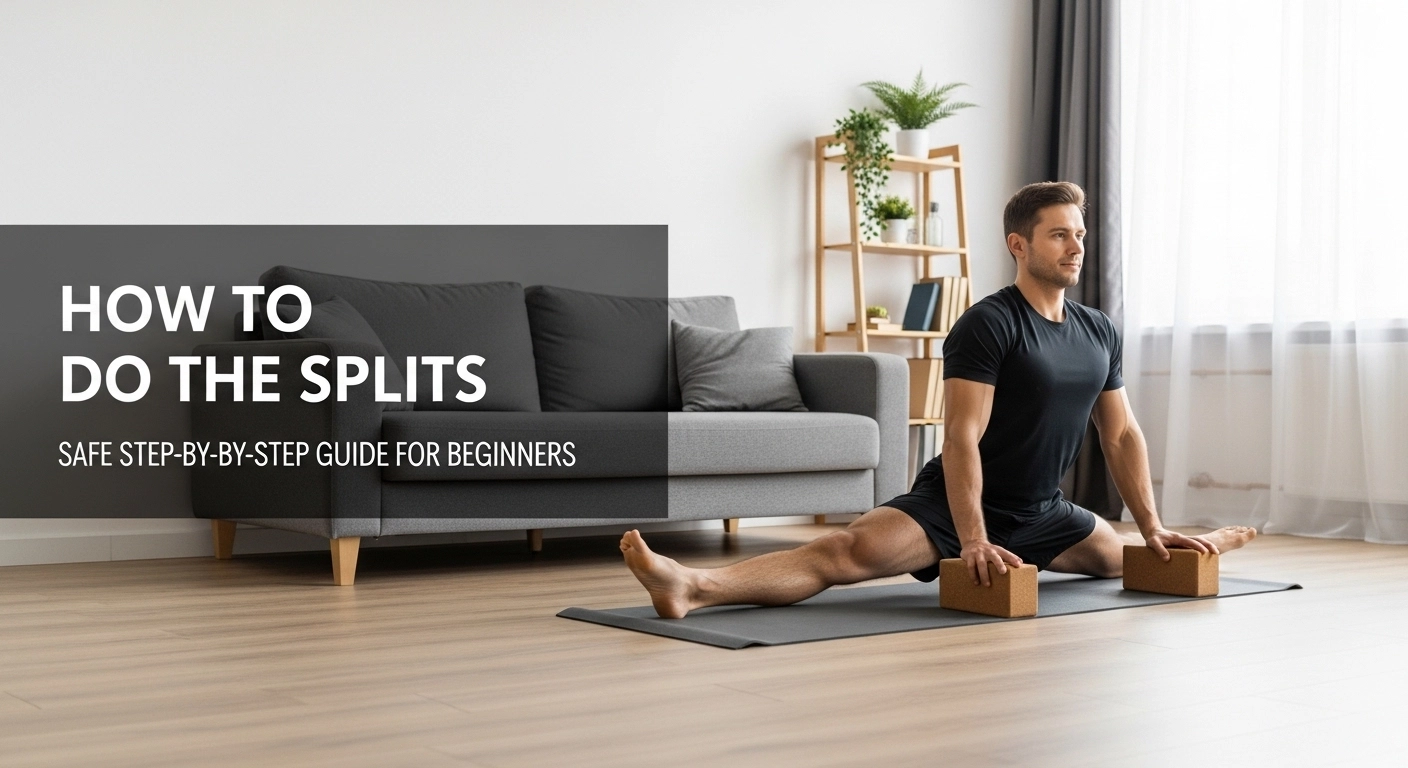
If you have ever tried to do the splits and felt stuck halfway, you are not alone. I remember sliding my legs down, feeling tight in my hips, and stopping because I was not sure if the pain was normal. One side always felt tighter. Some days I made progress, and other days I felt like I was moving backward. Like many people, I thought the splits were only possible for dancers or very flexible people.
Over time, I learned that learning how to do the splits is not about forcing your body or stretching harder. It is about understanding your limits, warming up correctly, and training with patience and control. Most people struggle because they rush or follow unsafe advice. In this guide, I share the same safe principles used by flexibility coaches to help beginners improve flexibility without injury.
Table of Contents
Jump to a sectionUse the links below to jump to the section you need.
- What Are the Splits?
- Before You Start: Important Safety Tips
- How to Warm Up for the Splits
- How to Do the Front Splits Step by Step
- Active Flexibility
- How to Do the Middle Splits Safely
- How Often Should You Practice the Splits?
- How Long Does It Take to Do the Splits?
- Common Problems and Simple Fixes
- Frequently Asked Questions
- Conclusion
Key Takeaways
- Learning how to do the splits takes time and patience.
- Warm up before stretching every time.
- Use active flexibility and control, not force.
- Front splits are usually easier for beginners than middle splits.
- Consistency matters more than speed.
Who This Guide Is For
- Beginners who want to learn how to do the splits safely
- Adults who feel stiff and want better flexibility
- People stretching at home without a coach or gym
- Anyone worried about pain or injury while stretching
What Are the Splits?

The splits are a flexibility position where your legs move far apart.
There are two main types of splits:
- Front splits: one leg in front and one leg behind
- Middle splits: both legs open to the sides
Beginners usually start with front splits.
They are easier to control and safer to learn first.
Before You Start: Important Safety Tips
Safety matters when learning how to do the splits.
Follow these rules:
- Never stretch cold muscles
- Move slowly and with control
- Breathe deeply during every stretch
- Stop if you feel sharp or stabbing pain
A stretch should feel strong but manageable.
Pain in joints is not normal.
Stretch Sensation Guide (Pain vs Normal)
Use this quick guide so you know what is okay and what is not.
How to Warm Up for the Splits

A warm-up prepares your body and reduces injury risk.
Spend 5 to 10 minutes warming up.
Good warm-up options include:
- Light walking or jogging
- Jumping jacks
- Leg swings
- Hip circles
After warming up, your muscles stretch more easily.
Muscles Used in the Splits
Understanding the muscles helps you stretch better.
The main muscles involved are:
- Hamstrings
- Hip flexors
- Quadriceps
- Inner thighs
If one area feels tight, that is normal.
Most people have one side tighter than the other.
How to Do the Front Splits Step by Step

Move slowly and stay relaxed.
Use blocks or cushions if needed.
Step 1: Low Lunge
Step one foot forward into a lunge.
Keep your chest tall.
Hold for 30 seconds.
Step 2: Half Split
Shift your hips back.
Straighten the front leg.
Keep your back flat.
Hold for 30 seconds.
Step 3: Hip Flexor Stretch
Lower the back knee to the floor.
Gently squeeze your glutes.
This protects your lower back.
Hold for 30 seconds.
Step 4: Sliding Into the Front Split
Slowly slide the front foot forward.
Lower your hips with control.
Keep hips as square as possible.
Do not force your body to the floor.
Active Flexibility: Why Stretching Alone Is Not Enough

Many people stretch but do not see progress.
This is where active flexibility helps.
Active flexibility means using your muscles while stretching.
It builds strength and control at the end range.
This helps because:
- Your body feels safer in the position
- Progress lasts longer
- Injury risk is lower
Simple Active Flexibility Drills
- In a half split, lift the front leg slightly
- Hold for 5 seconds
- Relax and repeat 3 to 5 times
You can also gently press your legs into the floor.
Then relax deeper into the stretch.
How to Do the Middle Splits Safely

Many people search how to do the splits and mean middle splits.
Middle splits focus on the inner thighs.
They usually take longer to achieve.
Beginner Middle Split Stretches
- Wide squat (sumo squat)
Sit low and gently press knees outward. - Seated straddle stretch
Sit tall and lean forward slowly.
Hold each stretch for 20 to 40 seconds.
Never force your legs wider.
Important Safety Note
If you feel sharp groin pain, stop.
Middle splits need patience.
How Often Should You Practice the Splits?
Consistency matters more than intensity.
For beginners:
- Stretch 3 to 5 times per week
- Hold each stretch 20 to 40 seconds
- Stretch both sides evenly
Some people stretch daily.
Rest days help recovery.
Sample Weekly Split Practice
- Day 1: Front split stretches + active flexibility drills
- Day 2: Rest or light mobility
- Day 3: Middle split stretches
- Day 4: Rest
- Day 5: Front split work + control drills
Keep sessions short and controlled. Stop if you feel sharp pain.
How Long Does It Take to Do the Splits?
This depends on:
- Your age
- Your starting flexibility
- Past activity level
- Consistency
Some people see changes in weeks.
For others, it takes months.
This is normal.
Splits Progress Timeline (Typical Milestones)
This is a simple timeline so you know what progress can look like.
Note: Progress varies based on age, consistency, and body structure.
There is no deadline.
Why You Might Feel Stuck
Many beginners feel frustrated.
Common reasons include:
- Stretching without muscle control
- Skipping warm-ups
- Forcing depth too early
- Training uneven sides
Progress comes from small, steady steps.
Common Problems and Simple Fixes
Hips Not Square
Use blocks and reduce depth.
Focus on alignment first.
Pain Behind the Knee
This often comes from hamstrings.
Bend the knee slightly.
Hip Pinching
Stop and back off.
Never push through joint pain.
When You Should Not Practice the Splits
Do not practice if:
- Pain feels sharp or electric
- You have a recent injury
- Your body feels worse after stretching
Mild soreness is normal.
Pain is not.
How to Track Your Progress
Progress is more than touching the floor.
Better signs include:
- Better control
- Less tension
- Better balance
You can track progress by:
- Measuring hip distance from the floor
- Timing how long you hold stretches
- Comparing progress weekly
Small changes matter.
Can Adults Learn How to Do the Splits?
Yes.
Many adults improve flexibility safely.
However, hip structure is different for everyone.
Your goal should be progress, not perfection.
Final Tips for Learning How to Do the Splits
- Warm up every time
- Stretch slowly
- Use active flexibility
- Focus on form
- Be patient
Learning how to do the splits is a long-term goal.
Consistency brings results.
Important
This guide is for general flexibility training. If you have a medical condition or injury, talk to a qualified professional before stretching.
Frequently Asked Questions
How long does it take to do the splits?
It depends on your starting flexibility, consistency, and body structure. Many people notice progress in a few weeks, but full splits often take months.
Is it safe to practice the splits every day?
Light practice can be done daily if it feels good and stays pain-free. Deeper sessions usually work better 3 to 5 times per week with rest days.
Should stretching for splits hurt?
You may feel strong tension, but you should not feel sharp, stabbing, or pinching pain. Stop and choose an easier stretch if it hurts.
Why is one side tighter than the other?
This is very common. Most people have a stronger or more flexible side. Train both sides evenly and give extra attention to the tighter side.
Can adults learn how to do the splits?
Yes. Many adults improve flexibility with consistent training. Progress may be slower than for kids, but safe practice still works.
What is the best way to get better splits faster?
Warm up first, practice consistently, and add active flexibility drills. Avoid forcing depth. Control and patience usually bring faster long-term results.
Conclusion
Learning how to do the splits is a slow and personal process. From experience, the biggest improvements come when you stop chasing the floor and start focusing on control, consistency, and how your body feels. I have learned that pain is not a sign of progress, but good preparation and patience are. If you follow the steps in this guide, stretch with care, and give your body time to adapt, your flexibility will improve. Whether you reach a full split or not, moving with less tension and more confidence is real progress, and that is what truly matters.
