


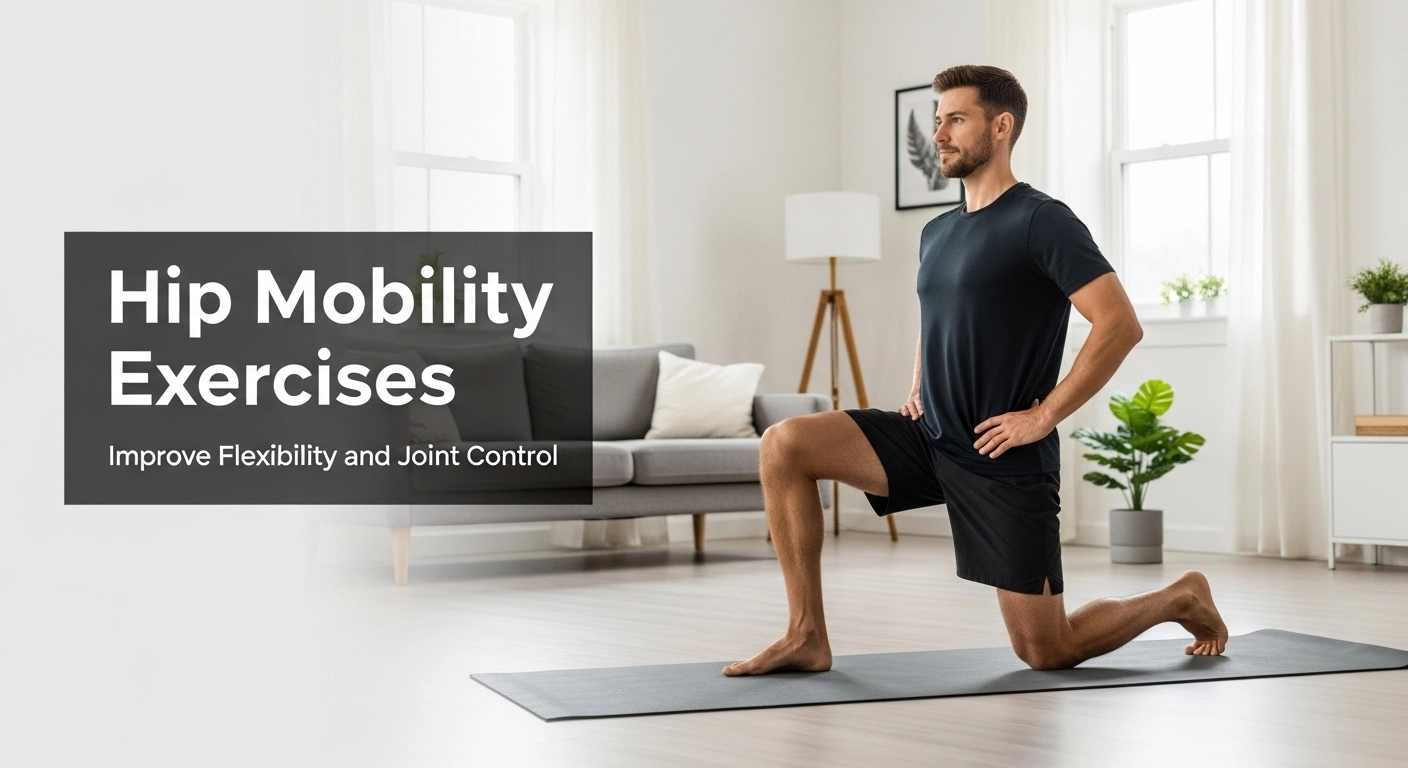

If you sit for long hours or feel stiff when you stand up, your hips may be the reason. Many people notice tight hips during walking, squatting, or even tying their shoes. Over time, this stiffness can also show up as lower back or knee discomfort. These problems often start slowly, which is why they are easy to ignore.
From both personal practice and working with people who struggle with tight hips, I have seen the same pattern again and again. Stretching alone rarely solves the problem. The real issue is limited hip mobility and poor control through movement. Hip mobility exercises focus on how the hips move, not how far they stretch. This guide shares safe, practical exercises based on real-world experience and proven movement principles.
Table of Contents
Jump to a sectionUse the links below to jump to the section you need.
- What Is Hip Mobility?
- Why Your Hips Feel Tight
- Hip Injury Risks From Poor Hip Mobility
- Hip Mobility Exercises and Stretches
- Best Hip Mobility Exercises
- Hip Internal Rotation and Why It Matters
- How Often Should You Do Hip Mobility Exercises?
- Example 5-Minute Hip Mobility Routine
- Frequently Asked Questions
- Conclusion
Who This Guide Is For
- People who sit most of the day and feel stiff hips
- Beginners who want simple hip mobility exercises
- Runners and gym-goers who want better movement
- Older adults who want gentle, controlled motion
What Is Hip Mobility?

Hip mobility is the ability to move your hip joint through its full range of motion with control.
It is different from flexibility.
Flexibility is passive stretching.
Mobility includes strength and control through that range.
Because of this, hip mobility exercises help you move better, not just stretch more.

Mobility vs Stretching vs Strength
These three work best together. Mobility is about control, not forcing range.
Key Takeaways
- Hip mobility exercises improve controlled movement, not just flexibility.
- Sitting for long hours is a common reason hips feel tight or stiff.
- Short, consistent routines work better than long sessions.
- Move slowly and stay in a pain-free range.
- Stop if you feel sharp or pinching pain.
Why Your Hips Feel Tight
Many people feel hip stiffness even if they stretch.

Common reasons include:
- Sitting for long hours
- Limited daily movement
- Weak glutes and hip muscles
- Poor movement habits
As a result, the hips lose motion and control over time.
What Muscles Should You Be Targeting?
Hip mobility exercises work several muscles together.
The main muscles include:
- Hip flexors
- Glutes
- Adductors (inner thighs)
- Abductors (outer hips)
- Hamstrings
When these muscles work as a group, your hips move more smoothly.
Hip Injury Risks From Poor Hip Mobility
Poor hip mobility can affect how your body moves.
Over time, it may contribute to:
- Lower back pain
- Knee discomfort
- Hip pain
- Poor posture
- Limited squat depth
For this reason, hip mobility exercises are often used for injury prevention.
Hip Mobility Exercises and Stretches

These hip mobility exercises improve motion and control.
Move slowly and stay within a pain-free range.
Walking Toe Touch
Improves hip flexion and hamstring mobility.
Step forward.
Reach toward your toes.
Switch sides with control.
Standing Hip Flexor Stretch
Targets tight hip flexors.
Step one foot back.
Squeeze your glutes.
Feel the stretch in the front of the hip.
Kneeling Hip Flexor Stretch
A deeper version of the hip flexor stretch.
Kneel on one knee.
Keep your chest tall.
Shift forward gently.
Knee to Chest (Lying)
Improves hip flexion.
Lie on your back.
Pull one knee toward your chest.
Switch sides slowly.
Butterfly Stretch
Opens the inner hips.
Sit tall.
Bring your feet together.
Let your knees relax downward.
Straight Leg Raise
Builds hip control.
Lie on your back.
Lift one straight leg.
Lower it with control.
Side Lying Hip Abduction
Strengthens the outer hip.
Lie on your side.
Lift the top leg slowly.
Keep your hips stacked.
Bridge
Activates the glutes.
Lie on your back.
Push through your heels.
Lift your hips and squeeze your glutes.
Best Hip Mobility Exercises
Some hip mobility exercises offer the most benefit with simple movements.
These exercises work well for most people:
- Hip circles
- Bridges
- Clamshells
- Knee-to-chest stretch
- Butterfly stretch
They are easy to perform and safe when done with control.
Warm-Up Exercises
Warm-up exercises prepare the hips for movement.
Frankenstein Walk
Improves dynamic hip mobility.
Walk forward.
Kick one leg straight up.
Reach with the opposite hand.
Hip Circles
Increase joint motion.
Stand tall.
Circle one knee slowly.
Change directions.
Exercises With Bands
Bands add control to hip mobility exercises.
Sidestep Exercise
Strengthens the outer hips.
Place a band around your legs.
Step sideways with control.
Clamshell Exercise
Activates the glutes.
Lie on your side.
Open and close your knees slowly.
Exercises With Weights
Loaded exercises improve active hip mobility.
Lateral Step-Up
Builds hip stability.
Step onto a box from the side.
Push through your heel.
Single-Leg Romanian Deadlift
Improves hip hinge control.
Hold a weight.
Hinge at the hips.
Keep your back flat.
Exercises for Desk Workers
Sitting for long hours can reduce hip mobility.
Hip circles, bridges, and knee-to-chest stretches work well during breaks.
Short routines during the day help reduce stiffness.
Exercises for Seniors
Hip mobility exercises should feel safe and controlled.
Hip Marching
Improves balance and hip flexion.
Stand tall.
Lift one knee at a time.
Floor Hip Flexors
Improves gentle hip motion.
Lie on your back.
Slide one knee toward your chest.
Exercises for Those With Arthritis
Slow and controlled movements are best.
Butterfly Pose
Gently opens the hips.
Sit tall.
Breathe slowly.
Knee-to-Chest Pose
Helps reduce tension.
Lie on your back.
Pull both knees in gently.
Move slowly and stop if pain increases.
Exercises for Runners
Runners need strong and mobile hips.
Donkey Kicks
Activates the glutes.
Start on all fours.
Kick one leg back with control.
Side Leg Raises
Build lateral hip strength.
Lie on your side.
Lift your top leg slowly.
Who Should Be Careful
Hip mobility exercises should feel controlled and pain-free. Be careful if any of the issues below apply.
- Sharp, pinching, or worsening hip pain
- Recent hip surgery or a current injury
- Numbness, tingling, or pain that travels down the leg
- Hip catching, locking, or severe pain with movement
If pain is severe or ongoing, consult a qualified healthcare professional.
Exercises for Relieving Hip Pain
These exercises focus on comfort and control.
Single-Leg Bridge
Strengthens one hip at a time.
Lift one foot off the floor.
Bridge with control.
Figure Four
Targets the glutes.
Cross one ankle over the knee.
Pull the leg in gently.
Hip mobility exercises may help reduce discomfort, but they are not a replacement for medical care.
Worst Exercises for Hip Pain
Some movements may worsen pain.
Avoid:
- Deep squats if you lack control or feel pain
- Fast twisting movements
- Stretching into sharp or pinching pain
Stop any exercise that increases discomfort.
Hip Internal Rotation and Why It Matters

Hip internal rotation is the ability of the thigh to rotate inward.
Limited internal rotation is common in people who sit often.
It can affect squatting, running, and walking.
Exercises like hip circles, side-lying leg raises, and controlled bridges support this motion.
Stay within a comfortable range.
How Often Should You Do Hip Mobility Exercises?
Most people can do hip mobility exercises 3 to 5 times per week.
Light routines may be done daily.
Consistency matters more than intensity.
Many people notice better movement within a few weeks.
Example 5-Minute Hip Mobility Routine

This short routine is simple and effective.
- Hip circles – 30 seconds per side
- Bridges – 10 repetitions
- Butterfly stretch – 30 seconds
- Knee-to-chest stretch – 30 seconds per side
Move slowly and breathe during each exercise.
Save This Routine
Bookmark this page and repeat the 5-minute routine daily. You can also download a printable version to keep or share.
⬇ Download Printable RoutineHip Mobility and Performance

Good hip mobility supports better movement during exercise.
It may help improve squat depth, running form, and balance.
Strong and mobile hips allow better movement control.
Consistency Is Key: Creating a Routine
Hip mobility exercises work best when done regularly.
Aim for:
- Short daily sessions
- Controlled movements
- Pain-free ranges
As a result, hips often feel looser and stronger over time.
Frequently Asked Questions
How often should I do hip mobility exercises?
Most people can do hip mobility exercises 3 to 5 times per week. Light routines can be done daily if they feel good and stay pain-free.
Should I do hip mobility before or after a workout?
You can do light hip mobility before a workout as a warm-up. Longer holds and stretching often feel better after training or later in the day.
How long does it take to improve hip mobility?
Many people notice small changes within a few weeks. Bigger changes often take longer and depend on consistency, sleep, stress, and daily activity.
Is it normal to feel tightness during hip mobility work?
Mild tightness is common, especially at first. Sharp, pinching, or worsening pain is not normal. Stop and choose a gentler option if needed.
Can hip mobility exercises help lower back pain?
They may help if tight or weak hips are part of the problem. Better hip movement can reduce stress on the lower back. If pain is severe or ongoing, get medical advice.
What are the best hip mobility exercises for beginners?
Hip circles, bridges, clamshells, knee-to-chest, and butterfly stretch are great beginner options. Start slow and stay in a comfortable range.
Conclusion
Hip mobility exercises are most effective when they are done with control and consistency. In my experience, people see better results from short, regular sessions rather than long or aggressive stretching. Better hip mobility can support smoother walking, easier sitting, and improved movement during exercise. These exercises are not meant to cause pain or replace medical care, but when done correctly, they can support long-term movement and daily comfort. Start slow, stay consistent, and focus on quality movement.
