


Tight hamstrings show up in everyday moments. You feel it when bending to tie your shoes, getting up from a chair, or trying to start a workout. Many people think this tight feeling is normal, but over time it can lead to stiffness, poor movement, and even fear of stretching.
The half split stretch is one of the most useful ways to fix this problem because it is simple and controlled. You stay close to the ground, so it feels stable. You can adjust the depth easily, which makes it helpful for beginners, active people, and anyone who sits most of the day. Instead of forcing flexibility, it teaches the body to open gradually.
Table of Contents
Jump to a sectionUse the links below to jump to the section you need.
- Introduction
- What Is the Half Split Stretch
- Other Names for the Half Split Stretch
- Muscles Worked
- Benefits of the Half Split Stretch
- Benefits for Different People
- How to Do the Half Split Stretch Step by Step
- Proper Form and Alignment Cues
- What You Should Feel
- What You Should Not Feel
- How Long to Hold the Half Split Stretch
- How Often Should You Do It
- When to Use This Stretch
- Modifications for Tight Hamstrings
- Variations as You Improve
- Preparatory Stretches Before Half Split
- Follow-Up Stretches After Half Split
- Where the Half Split Stretch Fits in a Routine
- Alternative Stretches
- When to Avoid the Half Split Stretch
- Common Mistakes to Avoid
- Frequently Asked Questions
- Conclusion
Who This Guide Is For
Key Takeaways
- The half split stretch targets tight hamstrings in a controlled way.
- It is easy to adjust, so beginners can use it safely.
- It fits after sitting, after workouts, or in mobility sessions.
- Good form matters more than going deeper.
- Consistency builds flexibility over time.
What Is the Half Split Stretch

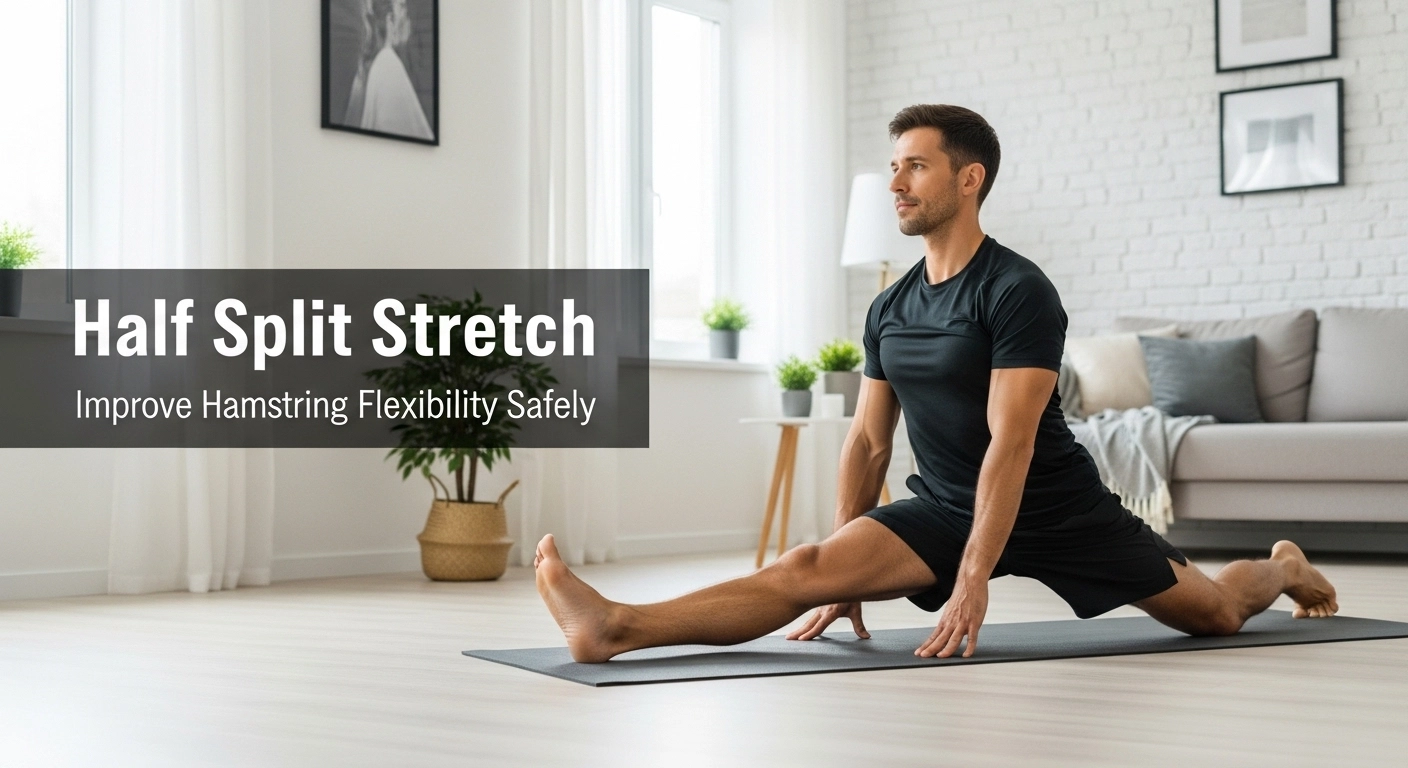
The half split stretch is done with one leg forward and one knee on the floor.
- The front leg straightens
- The hips move backward
- The spine stays long
This creates a stretch along the back of the front leg while keeping the body supported.
Other Names for the Half Split Stretch
In yoga, this stretch is called Ardha Hanumanasana.
- Ardha means half
- Hanumanasana refers to the full splits pose
You may also see these names:
- Half splits pose
- Half front split
They all describe the same movement.
Muscles Worked
This stretch focuses on key lower-body muscles.
Primary muscles
- Hamstrings
- Calves
Supporting muscles
- Hips
- Glutes
- Core muscles that help you stay balanced
Tight hamstrings are often the biggest limit to comfortable movement. This stretch helps lengthen them safely.
Benefits of the Half Split Stretch
Regular practice can:
- Improve hamstring flexibility
- Reduce leg stiffness from sitting
- Support better hip movement
- Help posture feel more natural
- Prepare the body for deeper stretches
- Help muscles recover after activity
With time, walking, bending, and exercising feel smoother.
Benefits for Different People
For beginners
- Safe place to start flexibility work
- Easy to control depth
For active adults and runners
- Helps after workouts
- Keeps legs from feeling tight
For desk workers
- Counters long hours of sitting
- Can be done at home without equipment
For yoga practitioners
- Builds the base needed before full splits
How to Do the Half Split Stretch Step by Step

- Start in a kneeling position.
- Step one foot forward.
- Slowly shift your hips backward.
- Straighten the front leg without locking the knee.
- Keep your chest lifted and spine long.
- Place hands on the floor or blocks.
- Breathe steadily while holding the stretch.
- Switch sides.
Move slowly and stay in control.
Quick Form Checklist
- Hips move back, not down.
- Spine stays long.
- Front knee stays soft, not locked.
- Breathing stays steady.
- Depth increases slowly over time.
Proper Form and Alignment Cues
Good form keeps the stretch safe.
- Keep hips level
- Do not force the knee straight
- Pull toes gently toward you
- Lengthen the spine before leaning forward
You should feel a steady stretch, not pain.
Important
Move slowly and stay in a pain-free range. Stretching should feel like tension, not strain. If you feel sharp pain, stop and reset. Warm muscles respond better than cold muscles, so do a short warm-up before holding a deeper stretch.
What You Should Feel
- Stretch along the back of the leg
- Mild tension in the calf
- Calm breathing
What You Should Not Feel
Stop if you notice:
- Sharp pain
- Tingling or numbness
- Strong pressure in the knee or back
Pain means you have gone too far.
How Long to Hold the Half Split Stretch
Hold for 20 to 40 seconds.
Repeat 2 to 3 times per leg.
As flexibility improves, you may hold slightly longer without forcing.
How Often Should You Do It
Practice the half split stretch 3 to 5 times per week.
Consistency matters more than intensity.
Suggested Weekly Practice Plan
When to Use This Stretch
This stretch works best:
- After a warm-up
- After leg workouts
- During mobility sessions
- After long sitting periods
Avoid deep stretching on cold muscles.
Modifications for Tight Hamstrings

If the stretch feels too strong:
- Bend the front knee slightly
- Use blocks under your hands
- Keep hips higher
- Place padding under the back knee
These changes make it beginner-friendly.
Variations as You Improve
As your flexibility increases, you can try:
- A deeper hip hinge
- Longer hold times
- Smooth transitions from a low lunge
Only go deeper if your form stays steady.
Preparatory Stretches Before Half Split

Warm up for 3 to 5 minutes first.
Good options include:
- Gentle lunges
- Hip flexor stretch
- Light hamstring movements
This prepares the muscles.
Follow-Up Stretches After Half Split
Afterward, add relaxed movements such as:
- Seated forward fold
- Child’s pose
- Gentle spinal twist
These help the body settle.
Where the Half Split Stretch Fits in a Routine

This stretch works well in:
- Cool-down sessions
- Flexibility routines
- Short movement breaks during the day
It is not just for yoga. It fits general mobility training.
Alternative Stretches
If this feels too strong, try:
- Seated hamstring stretch
- Supine hamstring stretch
- Standing stretch with bent knees
These build flexibility gradually.
When to Avoid the Half Split Stretch
Avoid if you have:
- A recent hamstring injury
- Knee pain
- Serious lower back issues
Seek guidance if unsure.
Common Mistakes to Avoid
- Rounding the back
- Forcing depth too quickly
- Locking the knee
- Holding your breath
Slow movement gives better results.
Frequently Asked Questions
Can beginners do the half split stretch?
Yes. Use blocks or bend the front knee slightly. Move slowly and stay comfortable.
Is it better before or after exercise?
A light version works before activity. A deeper version fits after exercise when muscles are warm.
Can I do this every day?
Yes, if you keep it gentle and you do not feel pain.
Does this help with full splits?
Yes. It builds hamstring and hip flexibility that supports deeper flexibility work.
How long until I notice change?
Many people feel small changes within a few weeks if they practice consistently and avoid forcing depth.
Conclusion
Flexibility improves through steady practice, not by pushing too hard. The half split stretch works because it allows the body to lengthen in a controlled way while staying supported. Many people notice less stiffness, easier movement, and better comfort during daily activities when they practice it regularly. By focusing on good form, calm breathing, and consistency, this stretch becomes a reliable part of maintaining healthy movement over time.
