


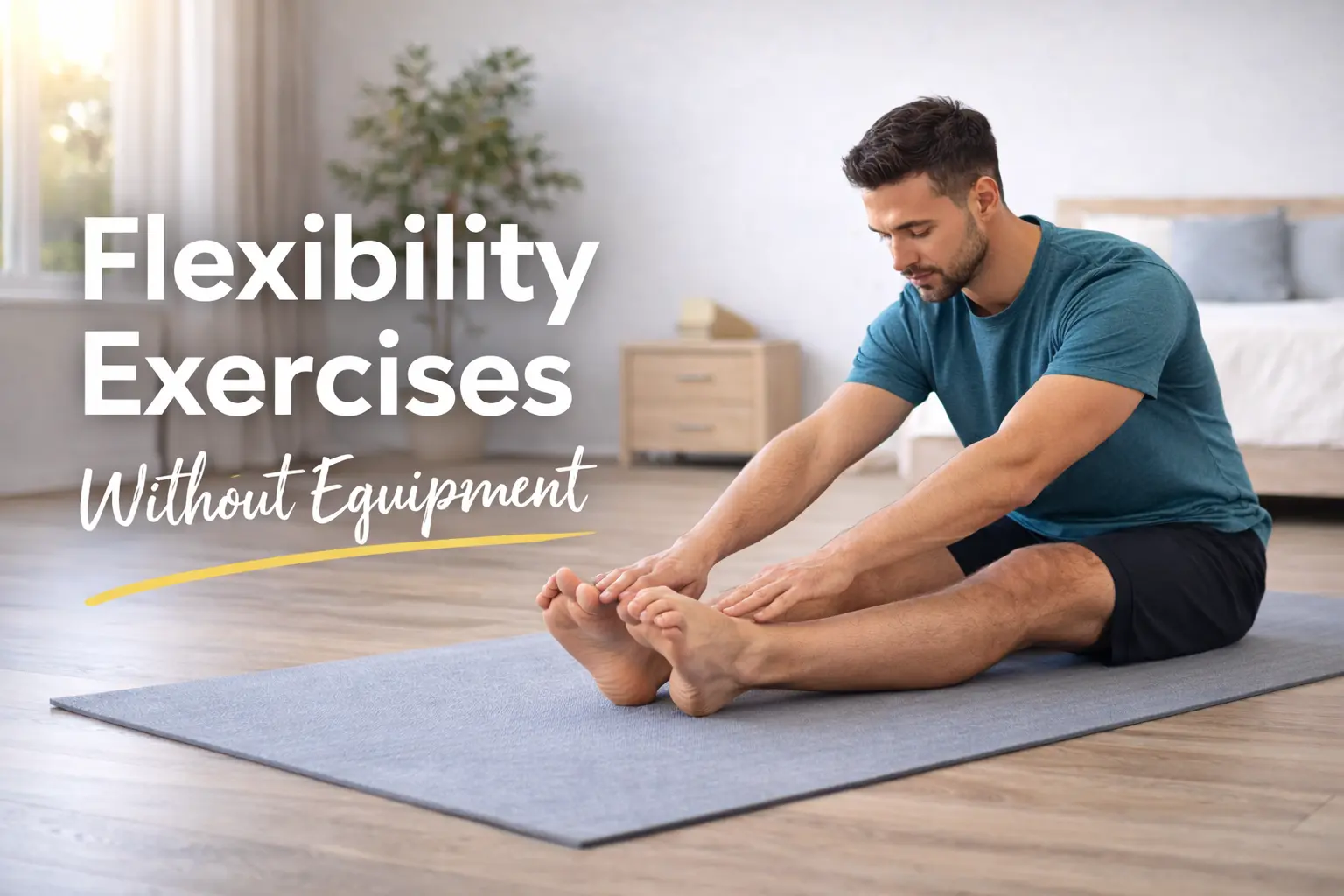
Do your hips feel tight when you stand up after sitting for hours? Does your lower back feel stiff at the end of the day? Many people notice these signs but ignore them. Over time, tight muscles make simple movements harder. Bending, reaching, and even walking can feel uncomfortable.
In my experience working with beginners and everyday office workers, most flexibility problems do not come from lack of effort. They come from long sitting hours and skipping simple mobility work. The good news is that flexibility exercises without equipment can improve range of motion and reduce stiffness when done consistently. You do not need advanced poses or a gym. You need clear guidance and steady practice.
Table of Contents
Jump to a sectionUse the links below to jump to the section you need.
- Why Is Flexibility Important?
- Flexibility vs Mobility
- Dynamic Flexibility Exercises Without Equipment
- Static Flexibility Exercises Without Equipment
- Flexibility Exercises Without Equipment for Beginners
- Flexibility Exercises Without Equipment for Tight Hips
- Flexibility Exercises Without Equipment for Lower Back Relief
- Flexibility Exercises Without Equipment for Seniors
- Flexibility Exercises Without Equipment for Home Workouts
- 5-Minute Flexibility Routine for Busy People
- Common Stretching Mistakes to Avoid
- Frequently Asked Questions
- Conclusion
Who This Guide Is For
- Beginners who feel stiff and do not know where to start
- Office workers with tight hips or a tight lower back from sitting
- People who want flexibility exercises without equipment at home
- Adults over 50 who want gentle mobility and safer stretches
- Anyone who wants a quick routine that fits a busy day
Key Takeaways
- Flexibility exercises without equipment can reduce stiffness and improve range of motion
- Dynamic moves are best before workouts or in the morning
- Static stretches work well after activity or before bed
- Five to ten minutes a day can make a real difference
- Most people feel improvement in a few weeks with consistency
Why Is Flexibility Important?

Flexibility helps your muscles move through a full range of motion. When muscles are tight, daily activities feel harder.
You may notice:
- Stiff hips
- Tight hamstrings
- Lower back discomfort
- Shoulder tension
Stretching regularly can improve posture and reduce muscle stiffness.
The Risks of Limited Flexibility
Poor flexibility can lead to:
- Muscle tightness
- Lower back pain
- Poor posture
- Reduced joint mobility
- Higher injury risk
Tight hips and hamstrings often affect the lower back. Stiff shoulders can limit arm movement.
The Benefits of Improved Flexibility
Better flexibility can:
- Improve posture
- Support joint health
- Increase blood flow
- Reduce muscle tension
- Improve overall movement
Health experts recommend regular stretching to maintain healthy range of motion.
Flexibility vs Mobility
Flexibility means how far a muscle can stretch.
Mobility means how well a joint moves with control.
You need both. Flexible muscles support better joint movement. Strong joints reduce injury risk.
Flexibility vs Mobility (Quick Comparison)
Dynamic stretches improve mobility. Static stretches improve flexibility.
Dynamic Flexibility Exercises Without Equipment
These are great before workouts or in the morning.
Leg Swings
Improve hip mobility and warm up hamstrings.
Do 10 to 15 swings per leg.

Arm Circles
Loosen shoulders and increase blood flow.
Circle forward and backward for 15 seconds each.
Torso Twists
Support spinal mobility.
Do 15 slow controlled twists.
Hip Circles
Reduce hip stiffness from sitting.
Do 10 circles each direction.
These movements are especially helpful for people who sit most of the day.
Static Flexibility Exercises Without Equipment
Static stretching involves holding a position. These stretches help lengthen muscles and improve flexibility over time.
Standing Hamstring Stretch
Hold 20 to 30 seconds per side.
Helps reduce lower back tension.

Cat-Cow Stretch
Repeat for 8 to 10 breaths.
Improves spinal movement.
Seated Forward Bend
Hold 20 to 30 seconds.
Supports hamstring and lower back flexibility.
Butterfly Stretch
Hold 20 to 30 seconds.
Opens tight hips.

Child’s Pose
Hold 30 seconds.
Relaxes the back and shoulders.
Lower Back Hamstring Stretch
Hold 20 seconds per side.
Improves range of motion.
Seated Hamstring Stretch
Hold and switch sides.
Improves leg flexibility.
Quad Stretch
Hold 20 seconds per side.
Loosens front thigh muscles.
Hip Stretch (Lunge)
Hold 20 to 30 seconds.
Targets hip flexors.
Piriformis and Hip Stretch
Hold 20 seconds.
Helps reduce hip and lower back tightness.
Flexibility Exercises Without Equipment for Beginners
If you are new, keep it simple.
- Stretch 3 times per week
- Hold for 15 to 20 seconds at first
- Focus on breathing slowly
- Avoid pushing into pain
After 3 to 4 weeks, increase hold time to 30 seconds.
Consistency matters more than intensity.
Flexibility Exercises Without Equipment for Tight Hips
Sitting for long hours can cause hip stiffness.
Focus on:
- Hip Circles
- Butterfly Stretch
- Hip Stretch
- Piriformis Stretch
Do these daily if you sit more than 6 hours per day.
Flexibility Exercises Without Equipment for Lower Back Relief
If your lower back feels tight, try:
- Cat-Cow
- Child’s Pose
- Lower Back Hamstring Stretch
- Seated Forward Bend
Move slowly. Breathe deeply. Gentle stretching can reduce muscle tension.
Important
- Start with light movement before deeper stretches
- You should feel mild tension, not sharp pain
- Move slowly and keep breathing
- If you have an injury or medical condition, check with a health professional first
Flexibility Exercises Without Equipment for Seniors

If you are over 50, keep movements gentle.
- Move slowly
- Use a chair for balance if needed
- Avoid deep or forced stretches
- Focus on smooth breathing
Gentle stretching supports joint health and daily mobility.
Flexibility Exercises Without Equipment for Home Workouts
If you already train at home, use dynamic stretches before workouts.
Use static stretches after workouts for recovery.
This supports better performance and reduces injury risk.
5-Minute Flexibility Routine for Busy People

Short on time? Try this:
- Leg Swings – 1 minute
- Cat-Cow – 1 minute
- Standing Hamstring Stretch – 30 seconds per side
- Butterfly Stretch – 30 seconds
- Child’s Pose – 1 minute
This short routine improves flexibility without equipment.
Common Stretching Mistakes to Avoid
Avoid these mistakes during flexibility exercises without equipment:
- Stretching cold muscles
- Bouncing
- Forcing range of motion
- Holding your breath
- Ignoring sharp pain
You should feel mild tension, not pain.
Frequently Asked Questions
How often should I do flexibility exercises without equipment?
At least 3 times per week. Daily is better for faster results.
How long should I hold each stretch?
20 to 30 seconds is recommended for most adults.
Can stretching reduce back pain?
Gentle stretching can reduce muscle tension that contributes to back discomfort.
How long does it take to improve flexibility?
Many people notice changes within 3 to 4 weeks with regular practice.
Conclusion
From years of guiding people through basic stretching routines, I have seen that small daily actions lead to real progress. Beginners improve when they stay consistent. Office workers reduce hip and back tightness when they stretch regularly. Even five to ten minutes a day can improve movement and comfort. Flexibility exercises without equipment work because they remove barriers. You can do them anywhere. If you start today and stay consistent for a few weeks, you will likely notice better mobility, less stiffness, and smoother movement in daily life.
