


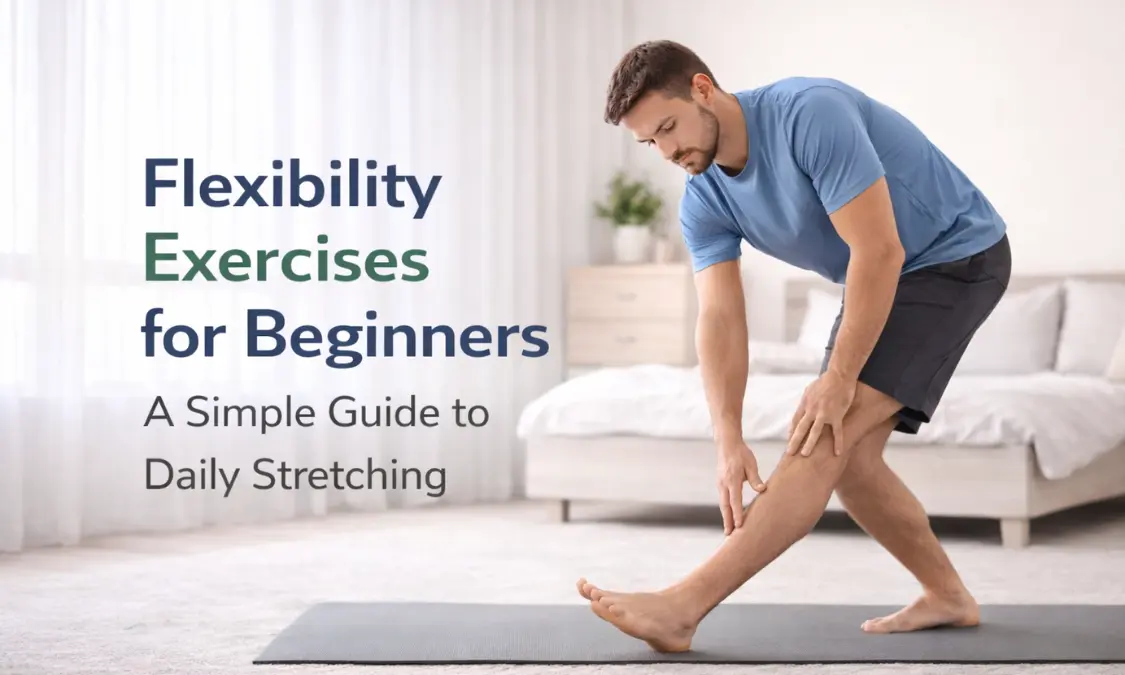
If you sit a lot, your body feels it. Standing up feels stiff. Your lower back feels tight. Your hips do not move the way they used to. Many beginners think this is just part of getting older or being inactive, so they ignore it until movement feels uncomfortable every day.

From real experience, most beginners are not weak. They are simply tight and unsure where to start. Many worry that stretching will hurt or make things worse. I have seen this fear many times. Flexibility exercises for beginners are meant to be gentle and safe. When done the right way, even a few minutes a day can reduce stiffness and help the body move better in daily life.
Table of Contents
Jump to a sectionUse the links below to jump to the section you need.
- The Benefits of Stretching for Beginners
- How Do You Start Stretching?
- How Can a Beginner Get Flexible?
- Flexibility for Beginners: Key Principles to Know
- The Different Types of Stretching, Explained
- When Is the Best Time to Stretch?
- Common Stretching Mistakes Beginners Make
- How Long Should Beginners Hold Each Stretch?
- How to Breathe During Flexibility Exercises
- Flexibility Exercises for Beginners
- Additional Flexibility Exercises for Beginners
- A Simple Daily Stretching Routine for Beginners
- Signs Your Flexibility Is Improving
- Safety Tips for Flexibility Exercises
- How Often Should Beginners Stretch?
- Frequently Asked Questions
- Conclusion
Who this guide is for
- Beginners with little or no stretching experience
- People who feel stiff from sitting for long hours
- Adults returning to movement after a break
- Anyone who wants simple flexibility exercises at home
- People who worry about stretching the wrong way
Key Takeaways
- Stretch gently. Do not stretch into pain.
- Warm up first, even if it is just a short walk in place.
- Hold each stretch 15 to 30 seconds and breathe slowly.
- Short sessions done often work better than long sessions once in a while.
- Progress should feel calm and steady, not forced.
The Benefits of Stretching for Beginners
Stretching supports how the body feels and moves during daily activities. It helps muscles relax and joints move more freely.

Regular flexibility exercises for beginners can:
- Reduce stiffness from long sitting
- Help joints move more easily
- Support better posture
- Make bending and reaching feel easier
- Help the body relax after a long day
For beginners, the goal is not extreme stretching. The goal is to feel better during normal movement.
How Do You Start Stretching?
Beginners should start slowly. Stretching should feel gentle and controlled. Mild tension is normal. Pain is not.

Short sessions work best. Five to ten minutes is enough in the beginning. Focus on calm movement and steady breathing.
Always warm up first. Walk in place for two to three minutes. Move your arms and shoulders gently. Your body should feel warm, not tired.
How Can a Beginner Get Flexible?
Many beginners worry about doing things wrong. That is normal.
Flexibility improves with steady and gentle practice. You do not need long sessions. You do not need to push into pain.
Simple rules help:
- Stretch after light movement
- Move slowly and with control
- Breathe calmly
- Stop if something hurts
Consistency matters more than how deep you stretch.
Flexibility for Beginners: Key Principles to Know
These principles help beginners stay safe and make progress.
- Warm your body before stretching
- Stretch until you feel light tension only
- Hold stretches steady
- Breathe slowly and stay relaxed
- Stop if you feel sharp pain
Comfort always matters more than depth.
The Different Types of Stretching, Explained
Beginners mainly use two types of stretching.

Static Stretching
Static stretching means holding a stretch in one position. This works best after walking, light exercise, or before bed. Warm muscles stretch more easily.
Dynamic Stretching
Dynamic stretching uses slow and controlled movement. This type works best before activity. It prepares the body for motion without force.
Using both types supports safe flexibility improvement.
When Is the Best Time to Stretch?
Stretch after walking or light activity. Stretch during breaks from long sitting. Stretch before bed to help the body relax.
Avoid deep stretching when muscles feel cold. Always warm up first.
Common Stretching Mistakes Beginners Make
Many beginners stretch too hard or too fast.
Avoid these mistakes:
- Pushing into pain
- Rushing movements
- Holding your breath
- Skipping warm-ups
Slow and gentle movement works best.
How Long Should Beginners Hold Each Stretch?
Timing should stay simple.
- Hold each stretch for 15 to 30 seconds
- Repeat 1 to 3 times per side
- Rest briefly between stretches
Move slowly and stay controlled.
Beginner stretch timing (simple guide)
Tip: Stretching should feel like light tension, not pain.
How to Breathe During Flexibility Exercises
Breathing helps the body relax.
- Breathe in through your nose
- Breathe out slowly through your mouth
- Exhale while holding the stretch
Do not hold your breath during stretches.
Flexibility Exercises for Beginners
These flexibility exercises focus on areas that often feel tight from sitting. Move slowly and breathe.

Neck Stretch
Tilt your head to one side. Hold for 15 seconds. Switch sides. You should feel a gentle pull.
Shoulder Stretch
Bring one arm across your chest. Support it with the other arm. Hold for 15 to 20 seconds.
Chest Opener
Clasp hands behind your back. Lift arms slightly. Open your chest and breathe.
Standing Hamstring Stretch
Place one heel forward. Bend the back knee slightly. Lean forward gently.
Hip Flexor Stretch
Step one foot forward. Lower hips slightly. Keep your chest upright.
Seated Lower Back Stretch
Sit on a chair or floor. Bend forward slowly. Relax your neck and shoulders.
You should never feel pain during these stretches.
Additional Flexibility Exercises for Beginners
These stretches help areas affected by long sitting.
- Calf stretch
- Quad stretch
- Inner thigh stretch
- Full body stretch
All of these can be done at home without equipment.
A Simple Daily Stretching Routine for Beginners
This routine takes 5 to 10 minutes.

- Neck stretch
- Shoulder stretch
- Cat-cow stretch
- Standing hamstring stretch
- Hip flexor stretch
Hold each stretch for 20 to 30 seconds. Breathe calmly.
This routine works well in the morning, during breaks, or before bed.
Signs Your Flexibility Is Improving
Flexibility improves slowly. This is normal.
Common signs of progress include:
- Less stiffness after waking up
- Easier bending and reaching
- Better posture while sitting
- Less tightness after long sitting
Increase stretch time only when movements feel easy.
Safety Tips for Flexibility Exercises
Important
Stretching should feel gentle. Stop if pain increases. If you have an injury, long-term pain, or a health condition, it is smart to talk to a health professional before starting.
Stretching should always feel safe.
- Stop if pain increases
- Do not force tight muscles
- Reduce effort if soreness lasts more than one day
- If you have injuries or long-term pain, talk to a health professional before starting
Safety always comes first.
How Often Should Beginners Stretch?
Beginners can stretch three to five times a week. Gentle stretching can also be done daily.
Five to ten minutes is enough. Short and consistent sessions work best.
Frequently Asked Questions
How long does it take to become flexible?
Most beginners notice changes within three to four weeks if they stay consistent.
Can beginners stretch every day?
Yes. Gentle daily stretching is safe for most people.
Is stretching safe for lower back pain?
Gentle stretching is usually safe. Stop if pain increases.
What is the difference between flexibility and mobility?
Flexibility is how far muscles stretch. Mobility is how joints move during motion.
Should beginners stretch in the morning or evening?
Both can work. Morning stretching helps loosen stiffness. Evening stretching can help your body relax.
Conclusion
From experience, flexibility improves when things stay simple and consistent. I have seen beginners move from stiff and uncomfortable to feeling relaxed and mobile by stretching gently and often. No forcing. No rushing. Progress happens when you listen to your body and respect its limits. Flexibility exercises for beginners are not about pushing pain or chasing perfection. They are about feeling better in daily movement, one small step at a time.
