


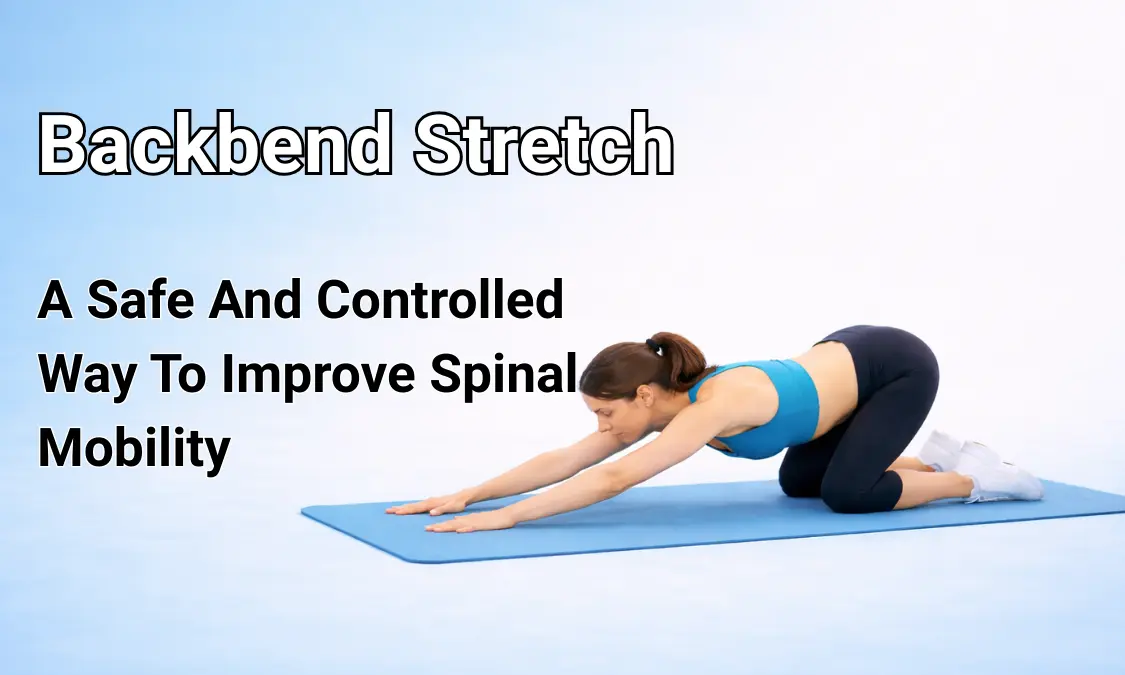
If you sit for long hours, your back often feels stiff by the end of the day. Your shoulders round forward. Your chest feels tight. Standing up after sitting can feel uncomfortable. Many people think their body is the problem, but in most cases, the real issue is lack of spinal movement.
I learned this from personal experience. When I first tried a backbend stretch, all the pressure went into my lower back. It felt unsafe, and I assumed backbends were only for flexible people. Over time, I realized the problem was not my body, but how I was approaching the stretch. Once I focused on warm-ups, control, breathing, and balance, backbend stretches became helpful instead of painful. This guide is written to help you avoid common mistakes and build safe, lasting progress.
Table of Contents
Jump to a sectionUse the links below to jump to the section you need.
- What Is a Backbend Stretch?
- Back Stretches Beyond Backbends
- Benefits of a Backbend Stretch
- Safety Tips Before You Start
- Where You Should Feel a Backbend Stretch
- Stretches to Help With Spinal Extension (Backbending)
- Stretches to Help With Spinal Flexion (Rounding the Back)
- Stretches to Help With Spinal Lateral Flexion (Side Bending)
- Stretches to Help With Spinal Rotation (Twisting)
- Daily Routine to Improve Spinal Mobility
- Why the Back Still Feels Tight
- Back Bend Exercises to Build Strength
- Bench Backbend Stretch
- Intense Backbend Stretch
- Breathing During a Backbend Stretch
- Warm-Up and Cool-Down
- Contraindications and When to Avoid Backbend Stretches
- Common Mistakes to Avoid
- Simple Weekly Plan
- Frequently Asked Questions
- Conclusion
Who This Guide Is For
- People with stiff backs from long sitting
- Beginners learning backbend stretch safely
- Desk workers with rounded shoulders and tight chest
- Yoga or gym users who want safer progress
Key Takeaways
- Backbend stretch is about control, not extreme depth.
- Warm up before you do deeper backbend work.
- You should feel opening in the chest and upper back, not pressure in the lower back.
- Slow, steady practice beats forcing.
- Balance backbends with rounding, side bends, and twists.
What Is a Backbend Stretch?

A backbend stretch is a movement where the spine bends backward. This is known as spinal extension. During this movement, the chest opens, the shoulders move back, and the hips extend.
A backbend stretch works both the front and back of the body. It stretches the chest, shoulders, hips, and spine while asking the back muscles to control the motion. This is different from general back stretches, which usually round the spine. Both are important, but they serve different purposes.
Back Stretches Beyond Backbends
The spine does not move in only one direction. Healthy movement includes:
- extension (backbending)
- flexion (rounding)
- side bending
- rotation
Backbend stretch focuses mainly on extension, but only training backbends can create imbalance. For safe progress, the spine also needs movement in all directions, along with shoulder mobility, hip flexibility, and light core support.
Benefits of a Backbend Stretch
A regular backbend stretch supports daily movement and posture.
It helps open the chest and shoulders, which is useful for people who sit or use screens often. It improves spinal mobility, making everyday movements feel easier. Chest opening also supports breathing by giving the lungs more space. Over time, backbend stretching improves body awareness and reduces poor movement habits.
Safety Tips Before You Start
A backbend stretch should feel controlled and calm, never sharp or forced.
Keep these points in mind:
- warm up before stretching
- move slowly
- engage the core lightly
- stop before discomfort
If you feel unsure, choose supported versions. Depth is never more important than control.
Important
This guide is for general education. If you have a spinal condition, recent injury, sharp pain, numbness, or dizziness, stop and get help from a qualified professional before doing backbend stretches.
Where You Should Feel a Backbend Stretch
A backbend stretch should feel open and spread out.
You should feel it mainly in:
- the chest
- the front of the shoulders
- the upper and middle spine
You should not feel strong pressure in:
- the lower back
- the neck
- the joints
If all the bend goes into the lower back, reduce depth and focus on spreading the movement across the spine.

Quick form check
Stretches to Help With Spinal Extension (Backbending)
These movements prepare the body for safe backbend stretching.
Back Extensions

Lie face down and lift the chest slowly while keeping the hips on the floor.
Cobra Push Ups
Press into the hands and lift the chest with control. Move in and out of the position slowly.
Supported Upper Back Stretch
Place a block or pillow under the upper back and allow the chest to open while breathing calmly.
Stretches to Help With Spinal Flexion (Rounding the Back)
Flexion balances backbends and reduces tension.
Narrow Cat / Cow
Move slowly between rounding and arching the spine.
Zombie Roll Ups
Roll down and up through the spine one section at a time.
Stretches to Help With Spinal Lateral Flexion (Side Bending)
Side bending keeps the spine even and controlled.
Seated Overhead Reach
Sit tall, lift one arm, and lean gently to the side.
Seated Overhead Reaches (Active)
Add light tension in the arms while staying upright.
Stretches to Help With Spinal Rotation (Twisting)
Rotation supports joint health.
Seated Twist
Rotate from the upper back while keeping the hips stable.
Wall Lunge Twist
Step into a lunge and rotate the torso slowly.
Daily Routine to Improve Spinal Mobility
This routine works well for beginners, desk workers, and recovery-focused users.
- Prone Extension
- Wag Tail
- Quadruped Sidebend
- Quadruped Torso Rotation
- Half Pancake
- A-Frame to Squat
Ten minutes per day is enough. Slow movement works better than forcing.
Why the Back Still Feels Tight
Tightness is not always caused by short muscles. Often, the nervous system limits movement when it feels unsafe. Fast or forced stretching increases resistance. Slow, controlled movement builds trust and allows range to improve.
Back Bend Exercises to Build Strength
Strength supports safe backbend stretching.
Prone Shoulder Flexion Lift Off
Builds upper back control.
Loaded Couch Stretch
Improves hip extension.
Standing Arch Progression
Practices controlled backbending while standing.
Foot Elevated Bridge Progression
Builds glutes and spinal support.
Bench Thoracic Spine Extension
Targets the upper spine safely.
Bench Backbend Stretch

The bench backbend stretch is one of the safest deep options.
Place the elbows or hands on a bench, sit the hips back, and drop the chest gently while breathing slowly for 30–60 seconds. This targets the chest, shoulders, and upper spine.
Intense Backbend Stretch
Advanced backbend stretches require preparation and control. These movements often include clear steps, variations, preparatory poses, and follow-up poses. Only attempt them after building strength, mobility, and confidence.
Breathing During a Backbend Stretch

Breathing affects how safe a backbend feels.
- inhale as the chest lifts
- exhale while holding
- breathe slowly through the nose
- never hold the breath
Warm-Up and Cool-Down
Warm-Up (5 Minutes)
- shoulder circles
- arm swings
- cat/cow
- hip flexor stretch
- gentle torso twists
Cool-Down (5 Minutes)
- child’s pose
- knees to chest
- seated forward fold
- gentle spinal twists
Contraindications and When to Avoid Backbend Stretches
Avoid or modify backbends if you have:
- recent spinal injury or surgery
- sharp or worsening pain
- severe sciatica
- osteoporosis
- dizziness during extension
Stop immediately if pain or numbness appears.
Common Mistakes to Avoid
- bending only from the lower back
- skipping warm-ups
- forcing depth
- holding the breath
- lacking core support
Simple Weekly Plan
Practice 3–5 days per week.
Beginner:
- cat/cow
- prone extension
- bench backbend
- side bends
- twists
Intermediate:
- add bridge progressions
- standing arch work
Advanced:
- deep bench work
- controlled holds
Frequently Asked Questions
Is backbend stretch good for posture?
Yes. It opens the chest and helps the back work better, which supports posture.
How often should I do backbend stretches?
Three to five times per week works well for most people.
Can backbends help lower back pain?
Sometimes. It depends on the person. Keep it gentle, use support, and focus on control. Stop if pain increases.
How long does it take to improve?
Many people notice changes within four to eight weeks with regular practice.
Conclusion
From experience, the biggest lesson with backbend stretch is that progress comes from patience, not force. Most people struggle because they rush into deep positions without preparing their body. The spine responds best to slow breathing, controlled movement, and steady practice. When backbend stretch becomes a simple habit instead of a performance goal, it supports posture, reduces stiffness, and builds confidence in everyday movement.
