


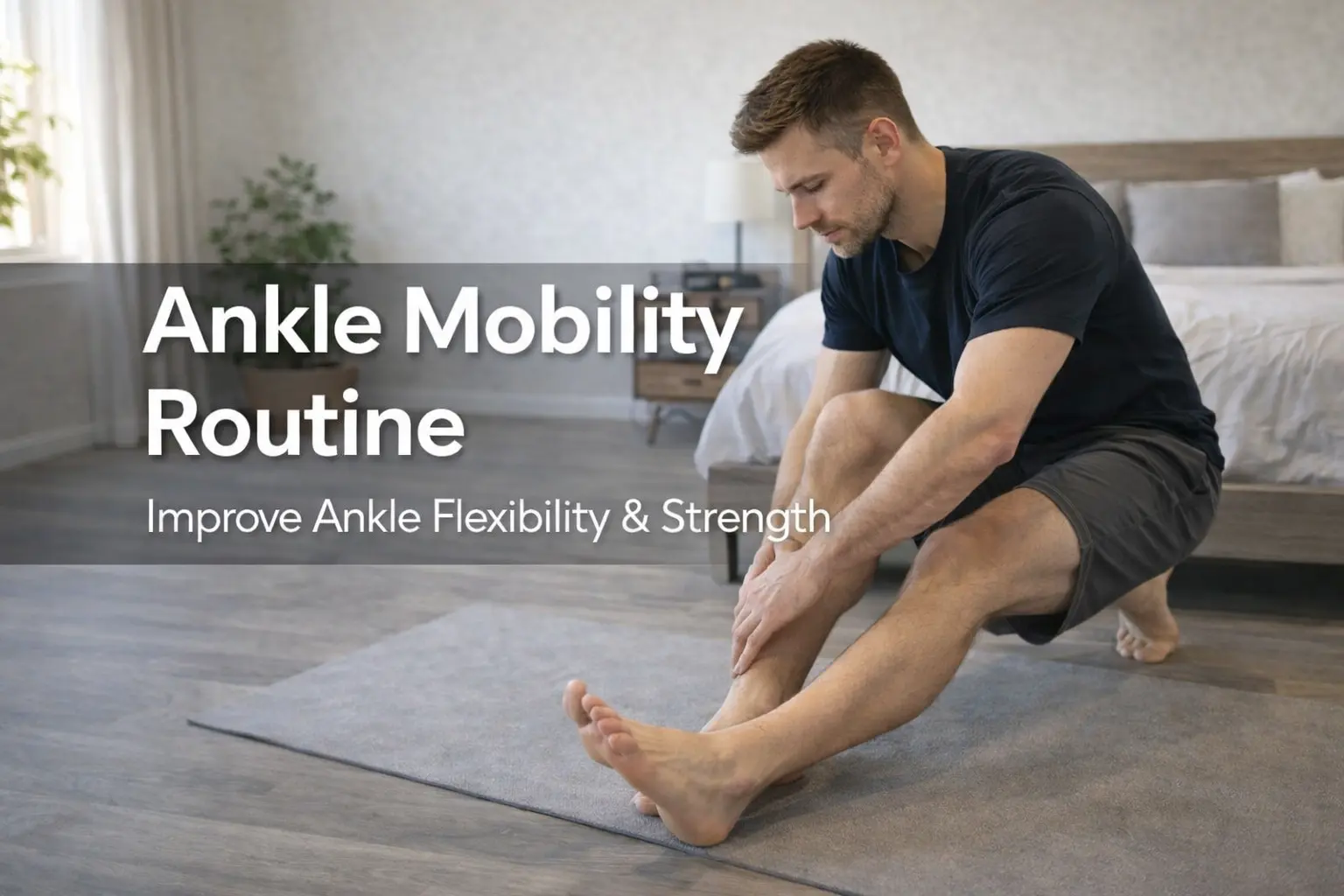
Have you ever tried to squat and felt your heels lift off the floor? Or noticed your ankles feel stiff after sitting for hours? Maybe running feels tight in your calves, or lunges feel unstable. These are common signs of limited ankle mobility. Most people blame their hips or knees, but the problem often starts at the ankle.
I have seen this again and again while working with active adults, beginners, and people recovering from mild ankle sprains. When ankle mobility improves, squat depth gets better, balance becomes steady, and knee stress often decreases. The good news is that ankle mobility can improve with simple, structured work. This guide will show you how to test your range of motion and follow a safe ankle mobility routine that supports both performance and daily movement.
Table of Contents
Jump to a sectionUse the links below to jump to the section you need.
- What Is Ankle Mobility?
- Why Ankle Mobility Matters for Squats, Running, and Daily Life
- Ankle Mobility Test (Check Before You Start)
- What Restricts Ankle Mobility?
- Complete Ankle Mobility Routine
- Daily 10-Minute Ankle Mobility Routine (Simple Version)
- Pre-Workout Ankle Mobility Routine (For Leg Day or Running)
- Post-Workout Recovery Routine
- Beginner, Intermediate, Advanced Levels
- Ankle Mobility After a Mild Sprain
- Ankle Mobility for People Who Sit All Day
- Footwear and Ankle Mobility
- Common Mistakes
- When to Stop and Seek Help
- Frequently Asked Questions
- Conclusion
Who This Guide Is For
- You feel your heels lift during squats.
- Your ankles feel stiff after sitting for hours.
- Running makes your calves feel tight.
- Lunges feel shaky or unstable.
- You had a mild ankle sprain before and still feel stiff.
- You want a simple routine you can follow at home.
Key Takeaways
- Stiff ankles can limit squat depth and make your heels lift.
- The knee-to-wall test helps you track progress each week.
- Mobility work sticks better when you also train strength and balance.
- Small daily sessions can reduce stiffness from long hours of sitting.
- Most people see changes in 2–4 weeks with consistent practice.
What Is Ankle Mobility?
Ankle mobility is your ankle’s ability to move through its full range of motion.
Your ankle should move:
- Up (dorsiflexion)
- Down (plantarflexion)
- Inward (inversion)
- Outward (eversion)
Good ankle mobility allows:
- Deep squats without heel lift
- Smooth running stride
- Better balance
- Less stress on knees
Limited ankle mobility often leads to knee pain, poor squat form, and stiffness during daily movement.

Why Ankle Mobility Matters for Squats, Running, and Daily Life
For gym-goers, limited ankle mobility makes it hard to:
- Squat below parallel
- Keep heels flat
- Maintain good posture
For runners, poor ankle mobility can:
- Shorten stride
- Increase calf tightness
- Add stress to knees
For desk workers, long hours of sitting can:
- Reduce ankle range of motion
- Make stairs feel stiff
- Affect balance
Improving ankle mobility supports both performance and daily movement.
Ankle Mobility Test (Check Before You Start)
Knee-to-Wall Test
- Stand facing a wall.
- Keep one heel flat.
- Bend your knee toward the wall.
If your heel lifts before your knee touches the wall, your ankle mobility may be limited.

Track the distance weekly. Small gains mean progress.
What Restricts Ankle Mobility?
Common causes include:
- Tight calves
- Stiff Achilles tendon
- Joint capsule stiffness
- Old ankle sprains
- Scar tissue
- Long periods of sitting
- Weak foot muscles
- Wearing stiff shoes daily
Sometimes the issue is muscle tightness.
Other times it is joint restriction.
Complete Ankle Mobility Routine
Do this ankle mobility routine 4–5 days per week.
Each session takes 10–15 minutes.
Perform 2–3 sets of each exercise.
Quick routine overview
Warm-Up Phase
Ankle Circles
- 10 circles each direction
Ankle Alphabet (Side-to-Side Control)
- Draw the alphabet with your toes
This prepares all ankle directions.
Mobility Phase
Calf Stretch Against the Wall
- Hold 20–30 seconds
Dorsiflexion Rock Backs
- 10–12 reps
Side-to-Side Ankle Tilts
- 10 reps each direction
These drills improve ankle range of motion.

Strength Phase
Heel Drops on a Step
- 8–10 reps
Toe Raises and Heel Lifts
- 10–12 reps
Strength supports long-term ankle mobility.

Stability Phase
Single Leg Balance
- 20–30 seconds each side
Balance reduces risk of future sprains.
Advanced Option (For Athletes)
Banded Ankle Distraction
- 8–10 slow reps
This is helpful if you struggle with squat depth.

Daily 10-Minute Ankle Mobility Routine (Simple Version)
If you want a fast plan:
- Ankle circles
- Calf stretch
- Dorsiflexion rock backs
- Heel drops
- Single leg balance
This works for beginners and desk workers.
Pre-Workout Ankle Mobility Routine (For Leg Day or Running)
Use before squats or runs:
- Ankle circles
- Rock backs
- Toe raises
- Banded ankle drill
Keep movements controlled and active.
This improves squat depth and reduces heel lift.
Post-Workout Recovery Routine
After training:
- Calf stretch
- Heel drops
- Plantar foot release with a ball
This reduces stiffness after workouts.
Beginner, Intermediate, Advanced Levels
Beginner
Focus on:
- Ankle circles
- Wall stretch
- Heel raises
Goal: Improve basic control.
Intermediate
Add:
- Toe raises
- Balance drills
- Deeper knee-to-wall work
Goal: Improve range and strength.
Advanced
Add:
- Banded distraction
- Forced dorsiflexion drills
Goal: Improve squat depth and performance.
Important
This ankle mobility routine is for general fitness use. Stop if you feel sharp pain, swelling, or joint locking. If you have a recent injury, a serious past injury, or ongoing pain, talk with a qualified health professional before doing advanced drills.
Ankle Mobility After a Mild Sprain
If you had a minor ankle sprain in the past:
- Start with balance drills
- Use slow, controlled mobility work
- Avoid aggressive stretching
Mobility and stability together reduce re-injury risk.
Ankle Mobility for People Who Sit All Day
If you sit for long hours:
- Do ankle circles every few hours
- Stretch calves once daily
- Use the 10-minute routine in the evening
Small daily work prevents stiffness buildup.
Footwear and Ankle Mobility
Very stiff shoes may limit natural ankle movement if worn daily.
If possible, choose shoes that allow normal ankle motion during daily activity.
Common Mistakes
Avoid:
- Forcing painful range
- Letting heels lift during drills
- Skipping strength work
- Doing mobility only once per week
Consistency builds lasting ankle mobility.
When to Stop and Seek Help
Stop if you notice:
- Sharp pain
- Swelling
- Joint locking
- Pain lasting more than 48 hours
Serious past injuries should be checked by a professional.
Frequently Asked Questions
Can ankle mobility improve squat depth?
Yes. Limited dorsiflexion often causes heel lift. Better ankle mobility can help you squat deeper with heels down.
Can ankle mobility reduce knee pain?
Limited ankle movement can add stress to the knees during squats, stairs, and running. Better ankle range may reduce that stress.
How often should I do an ankle mobility routine?
Most people do well with 4–5 days per week. If you sit a lot, short daily sessions can help reduce stiffness.
Can ankle mobility improve balance?
Yes. Mobility plus stability drills like single leg balance can improve ankle control and reduce the chance of rolling your ankle.
How long does it take to improve ankle mobility?
Many people notice changes in 2–4 weeks with consistent work. Track progress with the knee-to-wall test.
Is ankle mobility the same as flexibility?
No. Flexibility is muscle length. Mobility includes joint motion, strength, and control.
Conclusion
Ankle mobility may seem like a small part of the body, but it affects almost every lower body movement. Over time, I have seen many people struggle with squats, knee discomfort, and stiffness simply because their ankles were not moving well. Once we focused on steady mobility drills, strength work, and balance training, their movement improved and daily activities felt easier. The key is consistency and control, not forcing painful stretches. If you stay patient and follow this ankle mobility routine regularly, you can improve range of motion, support your knees, and move with more confidence.
