

Most of us stretch the way we snack: a little here, a little there, whenever there is a spare moment. In fact, that habit keeps things loose day to day, and there is nothing wrong with it. But every so often, your body asks for more — and a long flexibility routine delivers exactly that: a long, slow, full-length session where you stop rushing and give every major muscle group the attention it deserves.
In fact, a long flexibility routine is exactly that. Think 30 to 45 minutes of deliberate, sequenced stretching that moves you from a gentle warm-up through deep hip openers, hamstring work, spinal mobility, and a calm cooldown. It is also the weekend version of stretching: unhurried, thorough, and deeply satisfying. By the end, you feel taller, looser, and noticeably calmer.
In addition, this guide gives you a complete 40-minute session you can do at home with no equipment. As a result, you will get the full sequence with times and cues, pacing and breathing guidance, recovery tips for after the session, and answers to the questions people ask most. Put on something comfortable, find a quiet corner, and give your body the full session it has been waiting for. Stay consistent with this long flexibility routine and the results will compound week after week.
Why a Long Flexibility Session Works
Short daily stretches maintain your range of motion. A long session changes it. When you hold deep stretches for longer and revisit the same muscle groups across several exercises, your nervous system gradually accepts a new range as safe, which is where real flexibility gains come from. In fact, the real magic of a long flexibility routine shows up after two to three weeks of steady practice.
There is also a recovery angle. Long, slow stretching increases blood flow to the muscles you work, which helps clear the stale, heavy feeling that builds up after hard training weeks. Athletes have used extended flexibility sessions as active recovery for decades, and research summarized by sources like Healthline’s review of the benefits of stretching supports the connection between regular deep stretching, reduced muscle tension, and better overall movement quality. Even on busy days, a shorter version of this long flexibility routine beats skipping it entirely.
And then there is the mental side, which might be the best part. Forty minutes of slow breathing paired with gentle movement lowers stress in a way that five rushed minutes simply cannot. In fact, many people find that a long flexibility routine doubles as the most calming part of their week. No phone, no hurry, just you and your breath.
Before You Start: Set Yourself Up
A good long session starts before the first stretch. You need a warm space, because cold muscles resist deep work. If the room is chilly, wear an extra layer you can peel off later. In fact, a yoga mat or a thick carpet, a cushion or folded towel, and a water bottle are all you need. No fancy props, no equipment. Most people feel the benefits of a long flexibility routine within the first ten days.
Never start a long stretching session stone cold. Even though the routine below includes its own warm-up phase, arriving with warm joints makes everything safer and more productive. In fact, the NHS guidance on warming up before exercising recommends easing into movement gradually rather than forcing range on cold tissue. Good advice whether you are working out or working on flexibility.
Finally, set a timer or use a simple interval app, and decide up front that you will not cut the session short. The magic of a long routine is cumulative: the last ten minutes feel very different from the first ten. Trust the process and give it the full time.
The 40-Minute Long Flexibility Routine
In addition, this sequence is organized into five phases that flow from head to toe and back again, from gentle activation to deep holds to calming recovery. Follow the times loosely — they are a guide, not a rule. If an area feels especially tight, spend a little longer there and shorten a phase that already feels easy.
Phase 1 — Gentle Warm-Up (0:00 to 5:00)
Also, begin on all fours for one minute of slow cat-cow waves, moving the spine through flexion and extension with your breath. Then stand and march in place for a minute, lifting the knees high and swinging the arms. Finish with one minute of leg swings per leg — front to back, holding a wall for balance — and one minute of arm circles forward and back.
In fact, the goal is warmth, not depth. You should also feel your heart rate lift slightly and your joints feel a little more oiled. If you are pairing this routine with a full body flexibility routine from your week, you will notice the same warm-up principles at work here. They matter even more when deep holds are coming next.
Phase 2 — Hips and Glutes (5:00 to 15:00)
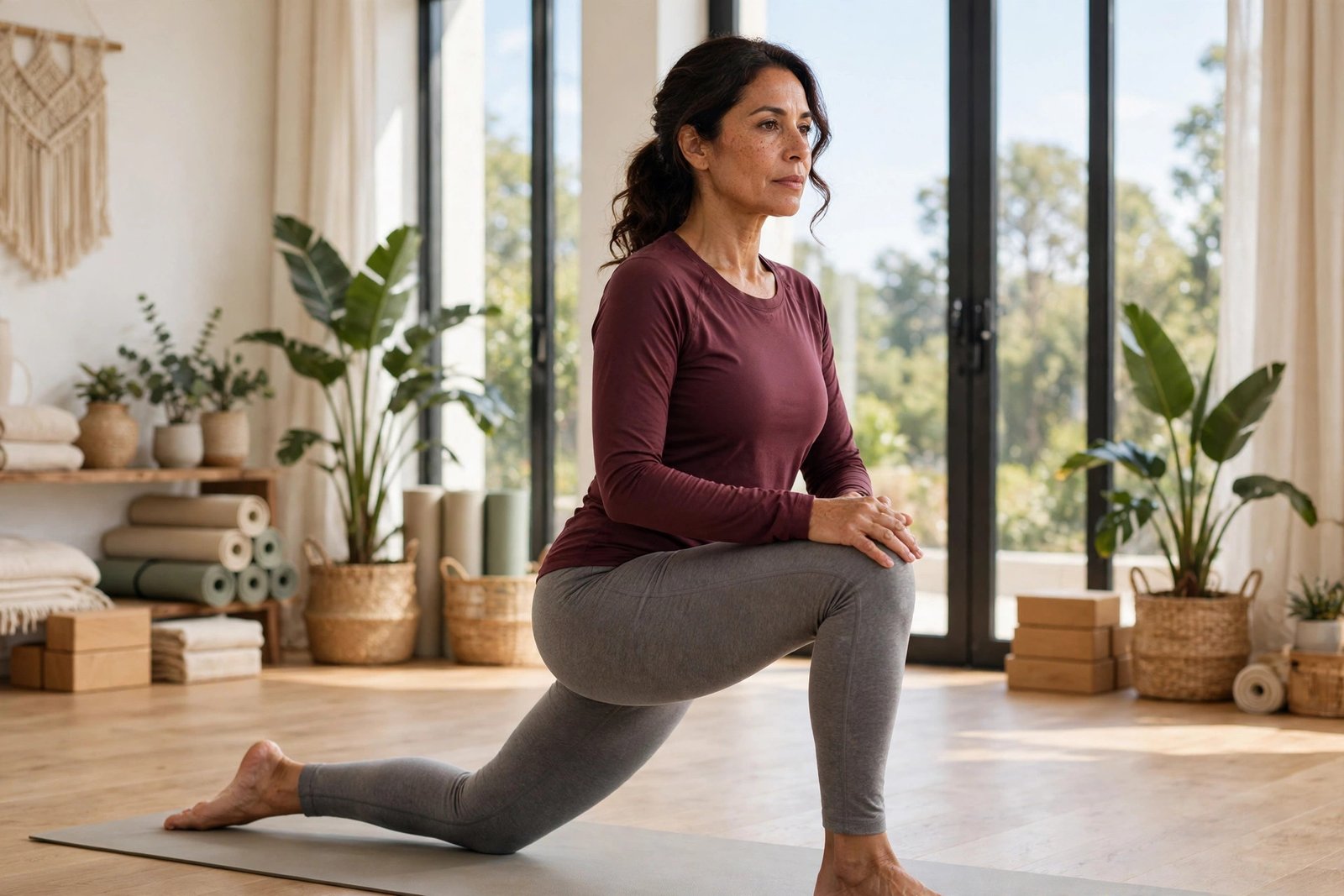
Hips get the biggest block of time because they hold the most tension. Also, start with two minutes of low lunge per side: step one foot forward, sink the back knee toward the floor, and gently tuck the pelvis to feel a deep stretch through the hip flexors of the back leg. Also, keep your breathing slow and even.

Then, move into pigeon pose for two minutes per side, keeping the front shin as parallel to the mat as your body allows and folding forward over the leg if that feels good. Then lie on your back for figure-four glute stretches, two minutes per side, pulling the uncrossed leg gently toward you. The hips respond beautifully to repeated, patient work — this phase is where the long format earns its reputation.
Phase 3 — Hamstrings and Calves (15:00 to 25:00)
Also, start standing with a wide-legged forward fold for two minutes, letting your head hang heavy and bending the knees as much as you need. Then sit for a seated forward fold: legs straight, hinge from the hips, and reach toward your feet. Hold for three minutes, deepening the fold a little with every few exhales. Indeed, this is one of the classic static stretching exercises for building lasting hamstring flexibility, and the long hold time is what makes it effective.

Finish this phase with one minute of calf stretching per leg against a wall, then one minute of kneeling shin stretches to balance the front of the lower leg. Tight calves quietly limit everything above them, so this minute is more valuable than it looks.
Phase 4 — Spine, Chest, and Shoulders (25:00 to 32:00)
Lie face down for two minutes of gentle cobra presses, lifting the chest while keeping the hips heavy on the mat. Follow with two minutes of child’s pose, arms extended, sinking the forehead toward the floor. In fact, the contrast between gentle extension and deep flexion resets the spine after the leg-heavy work.
Then stand for a two-minute doorway chest opener: place your forearms on either side of a doorframe and lean forward until you feel a broad stretch across the chest and front shoulders. End with one minute of thread-the-needle per side on the mat to unwind the mid-back. If you work at a desk, this phase will feel like it was designed for you.
Phase 5 — Deep Cooldown and Breathing (32:00 to 40:00)
In fact, the final phase is about downshifting. Lie on your back with your legs up the wall for three minutes, letting the blood flow change and the hamstrings release passively. Then spend two minutes in a supine spinal twist, one minute per side, keeping both shoulders grounded.

Finally, finish with three minutes of full-body breathing: lie flat, place one hand on your chest and one on your belly, and breathe slowly through the nose. Also, make each exhale longer than the inhale. Do not skip this part. In fact, the cooldown locks in the range you just earned and signals your nervous system that the work is done. This is what separates a long session from just “a lot of stretching.”
Pacing and Breathing Tips for Long Sessions
Pace is the whole game in a long flexibility routine. The most common mistake is treating minute 25 like minute 5 — pushing hard while the body is fatigued. Instead, think of the session in thirds: the first third builds warmth and range, the middle third is where you hold deep and explore your edges, and the final third is for easing off and breathing deeply.
In fact, your breath is the best pacing tool you own. In fact, a reliable rule: never hold your breath in a stretch, and never force a range that makes your breathing shallow or panicked. Breathe in through the nose, and use each long exhale to settle a fraction deeper. If a stretch feels sharp or pinchy rather than a broad, warm pull, back off immediately — that is a signal, not a challenge.
Another useful cue is the two-breath check. Settle into a stretch, take two full breaths, and ask: can I relax here? If yes, stay and explore. If no, adjust the position until the answer is yes. Over 40 minutes, this small discipline prevents the soreness and grumpiness that come from overcooking a few stretches and paying for it for days.
Recovery Tips for Long Stretching Days
In fact, a long session is a workout for your soft tissue, so treat recovery seriously. Hydrate well in the hours after, especially if you were sweating. Gentle movement later in the day — a walk, easy house chores — keeps the new range you earned instead of letting stiffness creep back in overnight.
Expect some mild soreness the next day, particularly in the hips and hamstrings if the long holds were new for you. Indeed, that is normal delayed-onset muscle soreness from unfamiliar ranges, and it usually fades within 24 to 48 hours. What is not normal is sharp joint pain or numbness — those are signs to rest and, if they persist, talk to a professional.
For scheduling, one long session per week works well alongside shorter daily work. In fact, many people pair a weekend long routine with a quick daily flexibility routine on busy days. The long session builds new range, and the short daily sessions keep it. Also, avoid doing two long sessions back to back; your connective tissue benefits from a rest day in between.
Frequently Asked Questions
How long should a long flexibility routine be?
Anything from 30 to 60 minutes counts as a long session. In fact, the 40-minute version in this guide hits the sweet spot: long enough for genuinely deep work in every major area, short enough to fit into a weekend morning or a free evening. If you are new to extended sessions, start with 30 minutes and add time over a few weeks.
How often should I do a long flexibility routine?
Once a week is plenty for most people, ideally on a rest day or a lighter training day. If you are working toward a specific goal like deeper splits or a full backbend, twice a week with at least two days between sessions can speed things up. More than that tends to give diminishing returns and can irritate tissues that are still adapting.
Can beginners do a 40-minute stretching session?
Yes, as long as you adjust the intensity. Beginners should spend the warm-up phase a little longer, choose gentler variations of each stretch, and avoid chasing deep positions. In fact, the length of the session is not the hard part — it is the depth. Keep everything comfortable, breathe, and let the time do the work instead of your ego.
Should I do a long flexibility routine before or after a workout?
After, or on a separate rest day. Long, deep static stretching right before strength or power training can temporarily reduce performance in the stretched muscles. Save the long session for post-workout recovery or its own dedicated day, and use a short dynamic warm-up before training instead.
Is it normal to feel sore after a long stretching session?
Mild muscle soreness, yes — especially in areas like the hips and hamstrings that received long holds. In addition, it feels similar to soreness after an easy workout and usually clears within a day or two. Sharp pain, joint pain, or tingling are not normal and mean you should ease off and rest.
What is the difference between a long flexibility routine and a short one?
Time, depth, and purpose. In fact, a short routine — ten to fifteen minutes — maintains mobility and shakes off daily stiffness. In fact, a long routine goes after lasting change: longer holds, more exercises per area, and a full-body sweep that a short session cannot fit in. They complement each other rather than compete.
Can I split the 40-minute routine into two shorter sessions?
You can also, but you lose some of the benefit. In fact, the cumulative relaxation effect — where your nervous system progressively accepts deeper range — works best in one continuous session. If 40 minutes is truly impossible, split it into an upper-body day and a lower-body day, but keep each half at least 20 minutes to preserve the deep-hold effect.
Conclusion
In fact, a long flexibility routine is one of the simplest high-return habits you can add to your week. Forty unhurried minutes, no equipment, and a sequence that covers everything from your hips to your shoulders. That is all it takes to feel genuinely different in your body by the time you roll up the mat.
Start this weekend. Follow the sequence as written, breathe through every hold, and notice how the second half of the session feels compared to the first. Then make it a weekly ritual. In fact, your body will thank you in ways that go well beyond touching your toes.
