


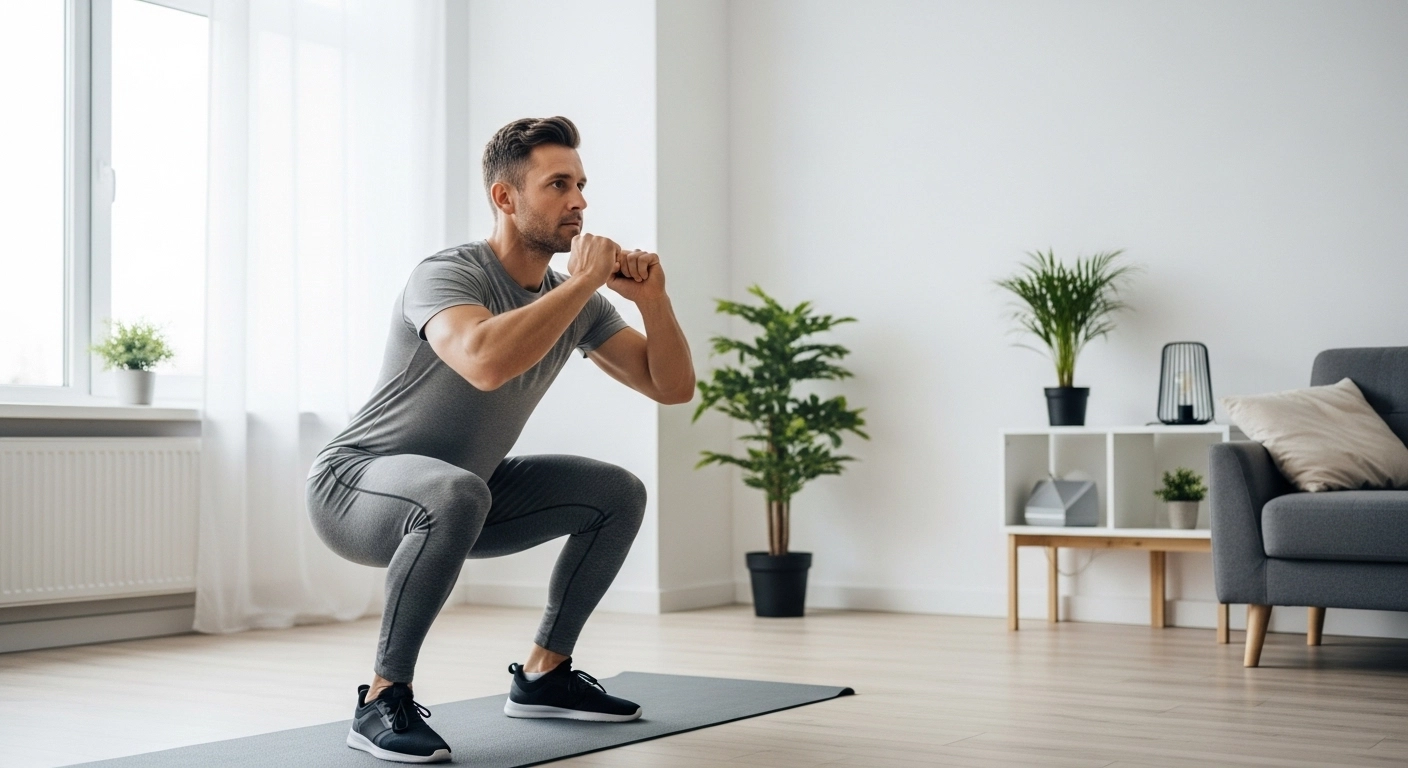
Most people want to stay fit, but daily life makes it difficult. Long working hours, low energy after work, and no access to a gym often stop people from exercising. Some also worry about weak bones, loss of strength, or gaining weight over time. Because of this, many people start workouts but quit within days since they feel too hard or confusing.
Weight bearing exercises at home solve this problem in a simple way. These are basic movements like squats, lunges, and walking that use your own body weight. You can do them in your living room without equipment. They are easy to start, safe for most people, and fit into even a busy routine. The goal is to help you build strength, support bone health, and stay active in a practical way that actually works in real life.
Table of Contents
Jump to a sectionUse the links below to jump to the section you need.
Who This Guide Is For
- Busy adults who need quick home workouts
- People focused on bone health and strength
- Beginners starting exercise for the first time
- Weight loss seekers wanting simple routines
- Strength seekers using bodyweight training
Key Takeaways
- Weight-bearing exercises improve bone strength
- You can do them at home without equipment
- Start slow and increase gradually
- Consistency matters more than intensity
- Simple routines give better long-term results
What are weight-bearing exercises?

Weight-bearing exercises are activities where your body works against gravity while standing.
Your feet stay on the ground while you move your body.
These exercises are useful for:
- Bone strength (bone health users)
- Weight loss (fat burning users)
- Strength building (fitness users)
- Daily activity fitness (busy people)
Examples include:
- Walking
- Squats
- Lunges
- Step-ups
Weight-bearing Exercises

Weight-bearing exercises are easy to add to your daily routine. You can do them at home without special tools.
They improve:
- Bone strength (older adults)
- Balance (beginners)
- Muscle power (strength seekers)
- Calorie burning (weight loss users)
They also help reduce the risk of injury.
Muscle-Strengthening Exercises
Muscle-strengthening exercises work together with weight-bearing exercises.
They help your body:
- Get stronger (fitness seekers)
- Move better (older adults)
- Stay stable (beginners)
Simple examples include:
- Push-ups
- Planks
- Squats
Weight-bearing exercises for osteoporosis
These exercises are helpful for people with weak bones or older adults. They support bone health and reduce risk of fractures.
Low-impact moves are safer:
- Walking
- Step-ups
- Light squats
High-impact exercises may not be safe for people with weak bones or joint pain. Start slow and choose safe movements.
Weight Bearing Exercises for Beginners

If you are new, start with simple movements. Go slow and focus on proper form.
Beginner exercises:
- Sit to stand from a chair
- March in place
- Heel raises
- Wall push-ups
Start with 5 to 10 reps. Rest when needed. Increase slowly as your body gets stronger.
Recommended exercises
Here are some simple weight-bearing exercises you can do at home:
- Squats
- Lunges
- Step-ups
- Push-ups
- Planks
These exercises use your body weight. They are easy to learn and very effective.
Weight-bearing exercises examples
Squat
Stand straight. Bend your knees and lower your body. Keep your back straight. Then stand up again.
Forward step ups
Use a step or stair. Step up with one foot, then bring the other foot up. Step down slowly.
Lunges
Step one foot forward. Bend both knees. Push back to the starting position.
Plank
Keep your body straight in one line. Hold your weight on your arms and toes.
Modified push-up
Keep your knees on the ground. Lower your body and push back up.
Simple Weight Bearing Workout at Home

You can follow this easy routine at home. It takes about 10 to 15 minutes.
This works for:
- Busy people (short time)
- Weight loss seekers (fat burn)
- Beginners (easy start)
Exercises:
- Squats – 10 reps
- Lunges – 10 reps
- Step-ups – 10 reps
- Push-ups – 10 reps
Repeat 2 to 3 times. Take short breaks between rounds.
Body-weight exercises
Body-weight exercises use your own weight as resistance. They are perfect for home workouts.
They help improve:
- Strength
- Balance
- Flexibility
Examples include squats, push-ups, and lunges.
Brisk walking

Brisk walking is one of the easiest weight-bearing exercises.
Walk at a faster pace than normal. This helps your heart and bones.
You can walk:
- Inside your home
- On stairs
- In small spaces
Other exercises
You can also try:
- Stair climbing
- Standing heel raises
- Light jogging
These exercises keep your body active and strong.
Non-weight-bearing resistance exercises
These exercises do not use your body weight against gravity.
Examples include:
- Seated exercises
- Resistance bands
- Swimming
They are useful but do not build bone strength as much as weight-bearing exercises.
| Type | Example | Bone Benefit | Best For |
|---|---|---|---|
| Weight-bearing | Squats, walking | High | Strength & bone health |
| Non-weight-bearing | Swimming | Low | Recovery & cardio |
Swimming
Swimming is not a weight-bearing exercise because your body is supported by water.
But it still helps your muscles and heart stay strong.
You can combine swimming with weight-bearing exercises for better results.
Progression Tips
As you get stronger, you can increase your effort.
- Start with 10 reps
- Move to 15 or 20 reps
- Add more rounds
- Try harder exercises like jump squats
Always increase slowly. Do not rush your progress.
Weight Bearing Exercises for Weight Loss and Strength
Weight-bearing exercises can help you burn calories and build strength.
For weight loss:
- Faster movement
- Less rest time
- More rounds
For strength:
- Slow controlled movements
- Higher difficulty
- More reps
Doing these exercises regularly will improve your overall fitness.
Safety tips for weight-bearing exercise and osteoporosis
Follow these safety tips:
- Start slowly
- Use proper form
- Avoid fast movements
- Stop if you feel pain
Always listen to your body.
Safety Note
If you have joint pain, osteoporosis, or any medical condition, start slowly. Avoid high-impact moves and stop if you feel pain or dizziness.
Safety
Stay safe while exercising at home.
- Warm up before you start
- Keep your space clear
- Wear proper shoes
- Stay hydrated
Common Mistakes to Avoid
- Doing exercises too fast
- Using poor posture
- Skipping warm-up
- Not resting enough
Focus on proper form to avoid injury.
Practical Tips for Daily Life
- Use stairs instead of lifts
- Do squats during short breaks
- Walk around your home while on calls
- Stay active throughout the day
These small steps help you stay consistent.
How long to see results
You may start to feel changes in a few weeks.
For stronger bones and muscles, it may take a few months.
Stay consistent for the best results.
Reversing osteoporosis
Exercise can help slow down bone loss. It can also improve bone strength over time.
Weight-bearing exercises are an important part of this process.
Frequently Asked Questions
Can I do weight-bearing exercises every day?
Yes, but give your body time to rest. You can alternate between light and hard days.
Do I need equipment?
No, most weight-bearing exercises use your body weight.
Are weight-bearing exercises good for weight loss?
Yes, they help burn calories and improve strength.
How much time should I spend?
Start with 10 to 15 minutes. You can increase as you get stronger.
Conclusion
Weight bearing exercises at home are one of the most practical ways to improve fitness without needing a gym or equipment. They help support stronger bones, better balance, and overall body strength. The biggest benefit is not complexity but consistency. Simple movements done regularly can lead to real improvement over time.
From practical experience in fitness content and structured workout planning, one clear pattern is always visible. People do better with simple routines they can actually follow every day. When exercises are easy to understand and fit into normal life, they are more likely to become a habit. That is what leads to long-term results. Start small, stay consistent, and slowly build your routine as your body adapts.
