


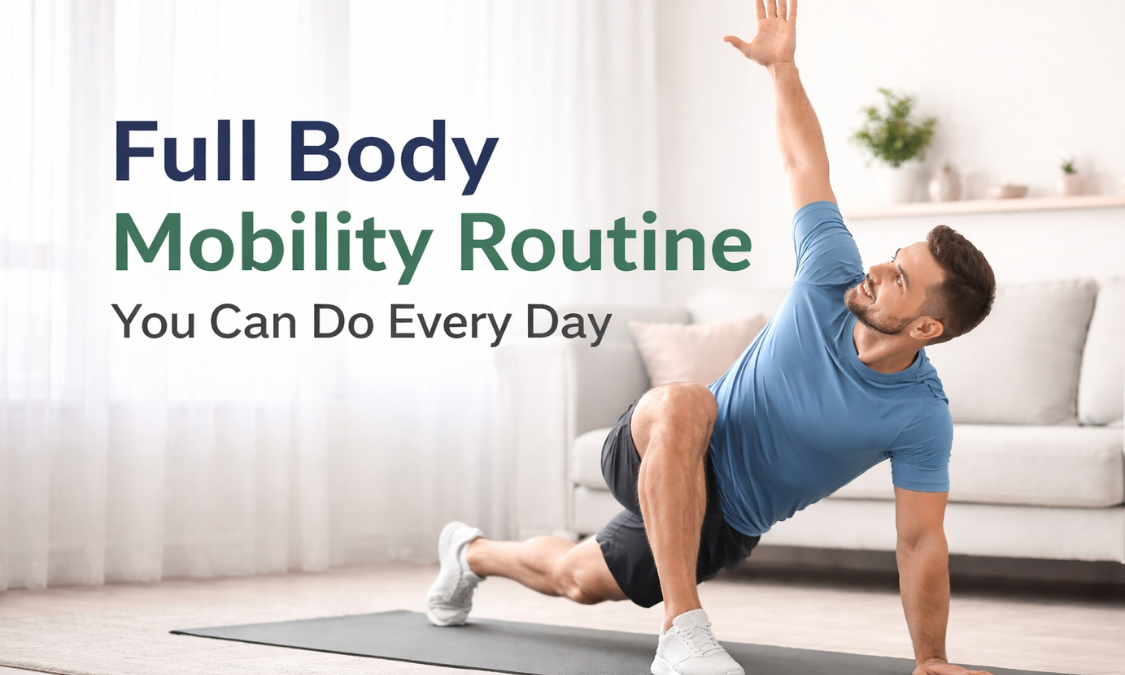
If you feel stiff when you stand up after sitting for a long time, you are not alone. Many people spend most of their day at a desk, in a car, or looking at a screen. Over time, hips tighten, the lower back feels sore, and shoulders lose their natural range of motion. Simple movements like bending, reaching, or turning can start to feel uncomfortable, even though there is no serious injury. These common issues are often improved with a full body mobility routine that helps the joints move the way they were designed to.

In many cases, the problem is not that the body is weak, but that it is not moving enough. The body is designed to move in different directions throughout the day. When those movements stop, joints become restricted and muscles forget how to work together. A full body mobility routine helps restore those natural patterns so your body can move with ease again, whether you work at a desk, exercise regularly, or want to stay active as you get older.
Table of Contents
Jump to a sectionUse the links below to jump to the section you need.
- Why Mobility Matters
- What Is a Mobility Workout?
- Mobility vs. Flexibility
- Benefits of a Full Body Mobility Routine
- When Should You Do This Routine?
- How Long a Full Body Mobility Routine Takes
- Why This Routine Follows This Order
- Warm-Up (5 Minutes)
- Full Body Mobility Routine Circuit (10 Minutes)
- Upper Body Mobility
- Core and Back Mobility
- Lower Body Mobility
- Cool-Down (5 Minutes)
- How This Routine Helps Different People
- How to Adjust This Routine for Your Level
- Common Mistakes to Avoid
- Simple Coaching Cues
- How Often Should You Do This Routine?
- Mobility Workout Alternatives
- How Long Until You Notice Results?
- How to Progress Over Time
- Frequently Asked Questions
- Conclusion
Who This Guide Is For
This routine is helpful for:
- People who sit most of the day and feel stiff afterward
- Beginners starting to take care of their movement
- Gym-goers who want to move better during workouts
- Adults who want to stay active and comfortable as they age
You do not need to be flexible or experienced to start.
Key Takeaways
- Mobility improves how your joints move, not just how muscles stretch.
- Sitting for long periods is one of the main causes of stiffness.
- Short daily sessions work better than long occasional workouts.
- Focus on slow, controlled movement instead of forcing range.
- Most people notice improvement within a few weeks of consistency.
Why Mobility Matters
Most people do not lose strength first. They lose movement.
Sitting for long hours, moving less, or training without caring for joint motion slowly builds stiffness. This can lead to tight hips, poor posture, and limited range when you try to move.
Good mobility helps you:
- Reduce joint stiffness
- Ease back, hip, and shoulder tightness
- Improve posture from sitting
- Move better during workouts
- Stay active as you age

Mobility is how well your joints move through their full range with control. When joints move well, the whole body works better.
What Is a Mobility Workout?
A mobility workout uses slow and controlled movements to improve how joints and muscles work together.
Stretching is passive. You hold a position.
Mobility is active. You move while staying in control.
Mobility training is often used in physical preparation programs because it improves joint control rather than just muscle length.
A full body mobility routine focuses on key areas that affect daily movement:
- Shoulders
- Spine
- Hips
- Knees
- Ankles
These joints guide how you sit, stand, walk, and lift.
Mobility vs. Flexibility
Flexibility is how far a muscle can stretch.
Mobility is how well a joint moves with strength and control.
You can be flexible but still feel stiff in real movement. Mobility trains your body to use that range, not just reach it.
Benefits of a Full Body Mobility Routine
Doing this routine often can help you:
- Feel less stiff after sitting
- Prepare joints before exercise
- Recover better after training
- Improve balance and coordination
- Move with less discomfort during the day
Many people notice changes within a few weeks of steady practice.
When Should You Do This Routine?
You can do this routine at different times:
- Before workouts to prepare your body
- After workouts to reduce tightness
- On rest days for recovery
- In the morning to loosen up after sleep
Consistency matters more than intensity.
How Long a Full Body Mobility Routine Takes
This full body mobility routine takes about 15 to 20 minutes.
If you are short on time, even 10 minutes helps. Short sessions done often bring better results than long sessions done rarely.
Why This Routine Follows This Order
The routine starts with gentle movement to prepare the joints.
Spine and hips come next because they control most motion.
Shoulders and ankles follow to support posture and balance.
The cool-down helps your body relax and absorb the work.
Important
Move within a comfortable range. You should feel gentle effort, not pain. If you have an existing injury or medical condition, adjust movements or consult a qualified professional before starting. Mobility work should feel controlled and smooth, never forced.
Warm-Up (5 Minutes)

The warm-up helps loosen joints after sitting or sleeping.
- Arm circles
- Cat–cow stretch
- Hip circles
- Easy squats
Move gently for 30 to 60 seconds each.
Full Body Mobility Routine Circuit (10 Minutes)

Move slowly. Breathe steady. Repeat twice.
Spiderman Lunge
Opens hips and spine. Helps undo desk posture.
World’s Greatest Stretch
Improves total body coordination.
Glute Bridge
Reactivates hips weakened by sitting.
Thoracic Rotation
Restores upper-back movement needed for reaching.
Upper Body Mobility
- Arm swings across chest
- Shoulder rolls
- Wall slides
These improve shoulder motion for daily tasks and training.
Core and Back Mobility
- Bird dog
- Seated torso twists
- Gentle spine flex and extend
These movements support posture and spinal control.
Lower Body Mobility

- Hip flexor lunges
- Deep squat hold
- Ankle circles
These improve walking, standing, and bending.
Cool-Down (5 Minutes)
Slow breathing.
Light stretching.
Gentle movement.
This helps the body settle and relax.
Routine Summary
How This Routine Helps Different People
If You Sit Most of the Day
It reopens hips and reduces stiffness from long hours at a desk.
If You Exercise Regularly
It improves movement quality and prepares joints for training.
If You Want to Stay Active as You Age
It supports balance, coordination, and daily comfort.
How to Adjust This Routine for Your Level
Beginners
- Use small ranges
- Move slowly
- Reduce reps
Active Individuals
- Hold end positions briefly
- Add one extra round
- Focus on smooth control
Want More Challenge
- Slow tempo
- Spend longer on tight areas
Common Mistakes to Avoid
- Moving too fast
- Forcing range
- Holding your breath
- Skipping stiff areas
Mild discomfort is normal. Sharp pain is not.
Simple Coaching Cues
- Breathe through each movement
- Keep posture tall
- Move with control
- Stop if pain feels sharp
Small changes add up over time.
How Often Should You Do This Routine?

You can do a full body mobility routine every day.
Attach it to an existing habit like morning coffee or after work.
Daily practice creates lasting improvement.
Mobility Workout Alternatives
You can also support mobility with:
- Yoga
- Pilates
- Swimming
- Light body control drills
These add variety while keeping joints active.
How Long Until You Notice Results?
Most people feel early changes in 2 to 3 weeks. Movement feels smoother and less tight.
Posture and comfort often improve within 4 to 6 weeks. Results depend on consistency, not intensity.
How to Progress Over Time
Track how your body feels during movement.
Over time you may:
- Increase range slowly
- Improve control
- Spend more time on tight joints
Progress comes from steady practice.
Frequently Asked Questions
Can I do a full body mobility routine every day?
Yes. Mobility work is safe to practice daily because it focuses on controlled movement rather than strain.
Is mobility the same as stretching?
No. Stretching improves muscle length. Mobility improves how joints move with control.
Do I need equipment?
No equipment is required. This routine uses bodyweight movements only.
What time of day is best?
Any time you can stay consistent. Many people prefer morning or before workouts.
How long should a mobility routine be?
Most routines last 10 to 25 minutes. Short routines still work when done often.
Conclusion
From experience, the biggest improvements in mobility do not come from long workouts or intense effort, but from small, consistent practice. People who spend a few minutes each day moving with control often notice less stiffness, better posture, and more comfort in daily life. The body responds well when it is given regular movement instead of occasional effort.
A full body mobility routine is one of the simplest ways to support long-term movement and joint health. It does not require special equipment or long sessions, only patience and consistency. When you treat mobility as a daily habit rather than a workout, your body adapts, movement becomes easier, and staying active feels natural over the years. Start with a few minutes today and build from there.
