


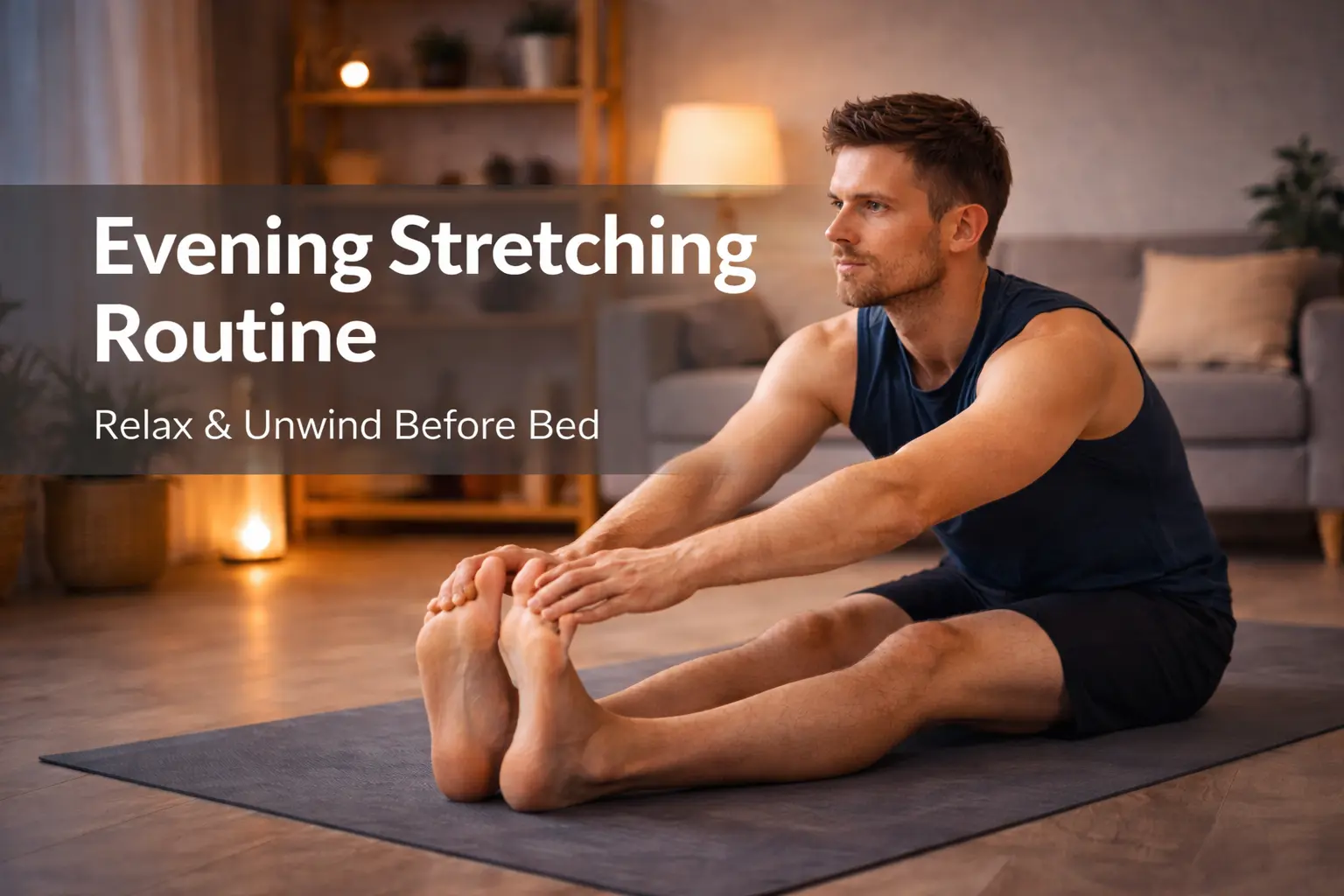
After a long day, many people notice the same feeling. The neck feels tight, the shoulders feel heavy, and the lower back feels stiff when finally sitting down. This often happens after hours of working on a computer, driving, or looking at a phone. The body stays in one position for too long, and muscles remain slightly tense throughout the day. By evening, people feel uncomfortable, yet they do not want to do an intense workout. They simply want a way to release the strain and feel at ease again.
From observing daily routines and how the body responds to gentle movement, it becomes clear that slow stretching in the evening helps muscles let go of that built-up tension. It creates a natural break between the stress of the day and the rest that should follow. An evening stretching routine is not about exercise or performance. It is about helping the body recover from everyday habits so it can relax and prepare for sleep.

Table of Contents
Jump to a sectionUse the links below to jump to the section you need.
- How Evening Stretching Helps Your Body Shift Into Rest Mode
- Why Evening Stretching Is Helpful After Sitting All Day
- When to Do Your Evening Stretching Routine
- How Long Your Evening Stretching Routine Should Be
- How to Do Evening Stretches Safely
- 5 Minute Evening Stretching Routine (For Busy Days)
- 10 Minute Evening Stretching Routine (Daily Use)
- 15 Minute Deep Relaxation Flow
- Common Mistakes to Avoid
- How to Make Evening Stretching a Daily Habit
- Who Should Modify These Stretches
- What You May Notice After a Few Weeks
- Frequently Asked Questions
- Conclusion
Who This Guide Is For
This guide is helpful for people who want to feel better at night without doing a workout.
- People who sit for long hours at work
- Anyone who feels stiff in the evening
- Those who want a simple way to unwind
- Beginners who want gentle stretching
- People building a calm night routine
You do not need flexibility or experience to start.
Key Takeaways
- Evening stretching helps release tension built during the day.
- It works best when done 30 to 60 minutes before bed.
- You only need 5 to 15 minutes to feel the benefits.
- Keep movements slow and gentle, not intense.
- Doing it often matters more than doing it long.
- This routine is for recovery, not exercise.
How Evening Stretching Helps Your Body Shift Into Rest Mode
Your body stays active even after your day ends. Work, screens, and movement keep your muscles and mind alert. If you go straight to bed, your muscles may still feel tight.
Slow stretching gives your body time to change pace. Your breathing becomes slower. Your muscles begin to relax. This creates a natural transition from work mode to rest mode.
Many health professionals suggest gentle nighttime stretching because it prepares the body for sleep in a calm way.
Why Evening Stretching Is Helpful After Sitting All Day
Long hours of sitting can shorten muscles and reduce movement in the hips and spine. This is why many people feel stiff in the evening.

An evening stretching routine helps to:
- Release tension built during desk work
- Improve movement after being still for hours
- Reduce neck and shoulder tightness from screens
- Help the body feel lighter before bed
- Support deeper and more comfortable sleep
This is not about fitness. It is about recovery from your daily routine.
When to Do Your Evening Stretching Routine

The best time to stretch is about 30 to 60 minutes before bed.
This gives your body time to fully relax before sleeping.
Avoid doing stretches immediately after intense activity. Let your body settle first.
Choose a quiet space. Dim the lights. Move slowly.
How Long Your Evening Stretching Routine Should Be
You do not need a long session to feel better.
- Five minutes helps release daily tension
- Ten minutes allows deeper relaxation
- Fifteen minutes supports full-body recovery
Consistency matters more than duration. Doing a short routine every evening is enough.
Pick the Routine That Fits Your Night
How to Do Evening Stretches Safely
Follow these simple rules:
- Move gently and slowly
- Hold each stretch for 20 to 30 seconds
- Never force your body into position
- Breathe steadily
- Focus on relaxation, not effort
Important
Move slowly and stay in a comfortable range. Stretching should never cause pain or sharp pulling. If you have an injury, recent surgery, or a medical condition, talk with a qualified professional before starting a new routine.
This routine should feel calming, not tiring.
5 Minute Evening Stretching Routine (For Busy Days)
This version is helpful for professionals who want a quick reset after work.

Neck Stretch
Gently tilt your head side to side to release screen tension.
Child’s Pose
Sit back and reach forward to relax the spine.
Cat-Cow Movement
Move slowly to loosen the back after sitting.
Knee to Chest Stretch
Release lower back tightness.
Slow Breathing
Take five deep breaths to finish.
This short routine helps you shift out of work mode.
10 Minute Evening Stretching Routine (Daily Use)
This is ideal for people who want a regular wellness habit.
Neck Stretch
Relieves upper body strain.
Chest Stretch
Opens the front of the body after computer work.
Child’s Pose
Lengthens the spine.
Supine Twist
Releases tension built from sitting.
Hamstring Stretch
Improves flexibility in the back of the legs.
90/90 Hip Stretch
Targets hips that stay tight from long sitting.
Calf Stretch
Encourages circulation.
Relaxed Breathing
Allows the body to settle.
15 Minute Deep Relaxation Flow

Use this when you want a slower, more complete wind-down.
- Gentle spinal movements
- Hip opening stretches
- Slow twists
- Light leg stretches
- Full body relaxation with breathing
Take your time. Let each movement feel smooth.
Common Mistakes to Avoid
Many people try to stretch too hard at night. This can make the body feel more alert instead of relaxed.
Avoid:
- Turning stretching into a workout
- Moving too quickly
- Forcing flexibility
- Holding your breath
- Rushing through movements
Evening stretching should help you unwind, not push your limits.
How to Make Evening Stretching a Daily Habit
This works best when it becomes part of your nightly routine.

Try these tips:
- Stretch at the same time each evening
- Do it after finishing work or dinner
- Keep the routine short and simple
- Treat it as personal recovery time
- Focus on how your body feels afterward
After a few weeks, this routine begins to feel natural.
Who Should Modify These Stretches
Adjust movements if needed:
- Keep stretches gentle if you feel joint discomfort
- Avoid pressure on injured areas
- Stop if something feels painful
- Seek advice if you have medical concerns
Stretching should always feel safe.
What You May Notice After a Few Weeks
With regular practice, many people notice:
- Less stiffness at night
- Easier movement in the morning
- Reduced tension from desk work
- A calmer feeling before sleep
- Better awareness of posture during the day
Small improvements build over time.
Frequently Asked Questions
Is it okay to stretch every evening?
Yes. Gentle stretching can be done daily because it focuses on comfort and relaxation, not strain.
Can evening stretching replace exercise?
No. This routine supports recovery and comfort. It does not replace regular physical activity.
What if I feel tight during stretching?
Move slower and reduce the range. Tightness is common, but pain is a stop sign.
How long before I notice results?
Many people feel some relief the same night. Steady practice over a few weeks often leads to better comfort and easier movement.
Conclusion
A consistent evening stretching routine is a simple yet effective way to care for your body after the demands of the day. It does not require special tools, long sessions, or advanced flexibility. What matters is moving gently and doing it regularly. People who follow this habit often notice less stiffness, easier movement, and a calmer transition into the night because the body responds well to slow, controlled release rather than force. By keeping the routine short and repeatable, you allow your muscles to recover and your mind to settle, making it easier to rest and wake up feeling more comfortable the next day.
