


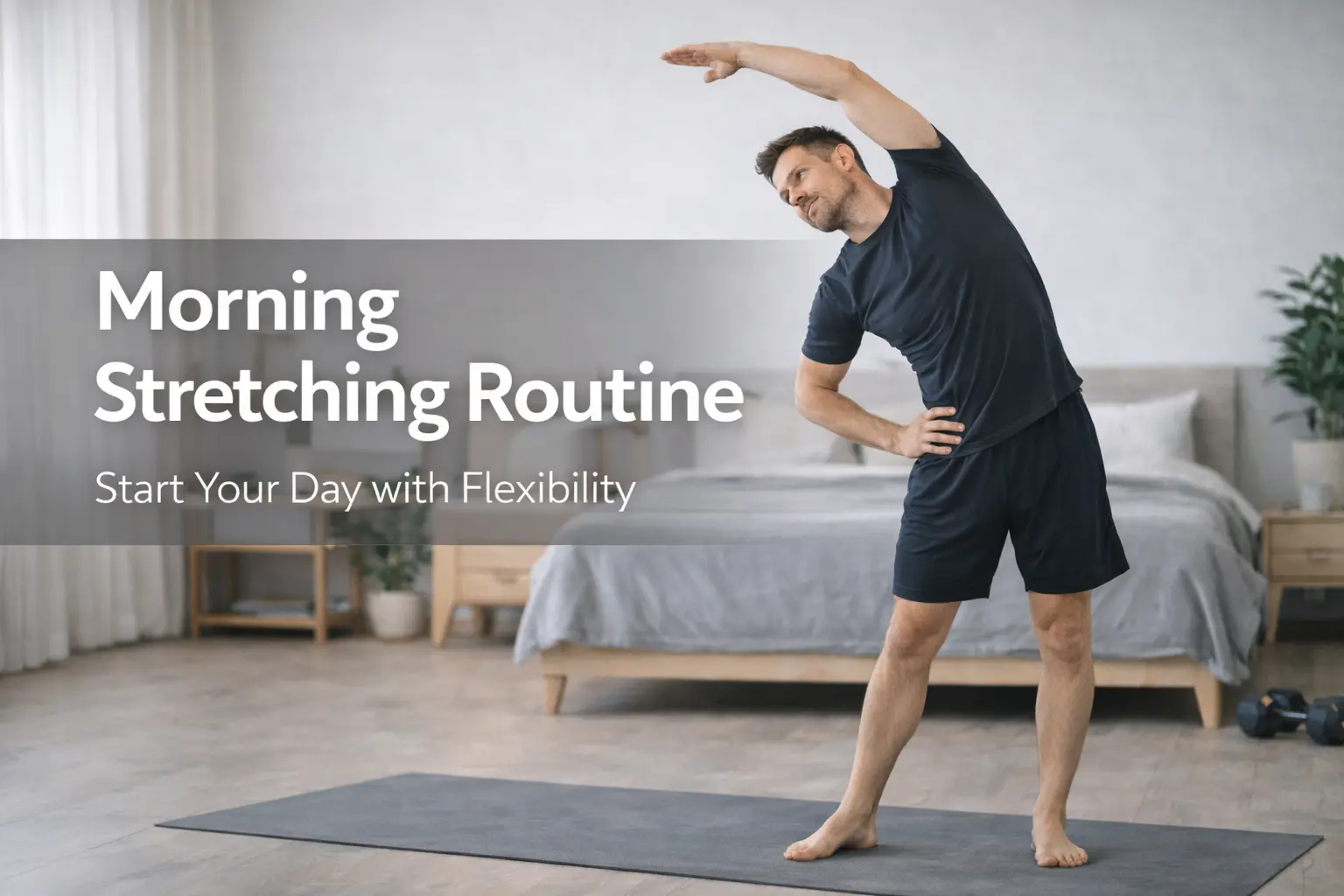
Do you wake up with a stiff back, tight hips, or a heavy neck? Many people feel slow and uncomfortable in the first minutes of the day. Getting out of bed feels harder than it should. If you sit for long hours or work at a desk, this stiffness often becomes worse.

I have worked with many desk workers and beginners who believed this morning tightness was normal. I have also experienced it during long periods of computer work. In most cases, the body simply has not moved enough after hours of rest. A short and consistent morning stretching routine can reduce stiffness, improve mobility, and help you start the day feeling ready instead of rushed.
Table of Contents
Jump to a sectionUse the links below to jump to the section you need.
- Why Your Body Feels Stiff in the Morning
- Who This Morning Stretching Routine Is For
- Benefits of Stretching in the Morning
- Dynamic vs Static Stretching in the Morning
- Before You Start: A Gentle Warm-Up Note
- 5-Minute Morning Stretch Routine for Busy Workers
- Morning Stretches to Add to Your Routine
- 10-Minute Morning Stretching Routine for Beginners
- Morning Stretch Routine for People Who Sit All Day
- Morning Stretch Routine for Mild Back Stiffness
- Tips for Success
- Why This Routine Works for Beginners Over 50
- When to See a Physical Therapist
- Frequently Asked Questions
- Conclusion
Who This Guide Is For
- Office workers and remote workers
- Beginners who are not flexible
- Adults over 40
- People with mild morning back stiffness
- Anyone building a simple daily habit
Key Takeaways
- A 5 to 10 minute morning stretching routine can reduce stiffness.
- Start with gentle movement, then hold stretches after your body feels warm.
- If you sit all day, focus on hips, hamstrings, and shoulders.
- Stretch slowly. Mild tension is fine. Sharp pain is not.
- Consistency matters more than long sessions.
Why Your Body Feels Stiff in the Morning
During sleep, your muscles stay in shortened positions. Your joints do not move for hours. Blood flow slows slightly. When you wake up, your lower back, hips, neck, and shoulders often feel tight.
If you sit 6 to 10 hours daily, hip flexors tighten and shoulders round forward. Over time, this makes mornings even harder.
Gentle stretching restores circulation and helps joints move smoothly again.
Who This Morning Stretching Routine Is For
This routine is ideal for:
- Office workers and remote workers
- Beginners who are not flexible
- Adults over 40
- People with mild morning back stiffness
- Anyone building a simple daily habit
It is gentle and safe for most healthy adults.
Important
Stop if you feel sharp pain, numbness, tingling, or weakness. Stretching should feel gentle. If symptoms last more than two weeks, speak with a licensed healthcare professional.
Benefits of Stretching in the Morning
Stretching in the morning prepares your body for movement.
It can help you:
- Reduce stiffness after sleep
- Improve blood flow
- Move joints more easily
- Support better posture
- Lower muscle tension
- Feel more awake
People who sit long hours often notice less tightness in the hips and lower back.
Dynamic vs Static Stretching in the Morning
There are two types of stretching.
Dynamic stretching uses slow movement. Examples include arm circles, cat-cow, and hip circles. This works best at the start of your routine because it warms the body gently.
Static stretching means holding a stretch for 20 to 30 seconds. Examples include hamstring or quad stretches. These work better after your body feels loose.
In the morning, begin with movement first. Then hold deeper stretches.
Before You Start: A Gentle Warm-Up Note
Your body is stiff after sleep. Move slowly at first.
Do not bounce.
Do not force any stretch.
Stop if you feel pain.
Start with light movement for one minute before deeper stretches.
Choose Your Routine
5-Minute Morning Stretch Routine for Busy Workers
If you are short on time, try this quick routine before work.
- Neck rolls – 20 seconds
- Shoulder rolls – 10 repetitions
- Cat-cow – 8 repetitions
- Standing side stretch – 20 seconds each side
- Hip flexor stretch – 20 seconds each side
- Calf stretch – 20 seconds each side
This routine targets common tight areas from sitting.
Morning Stretches to Add to Your Routine
These stretches focus on areas that feel stiff after sleep.
Lumbar Trunk Rotation
Lie on your back with knees bent. Let knees fall side to side. This helps the lower back.
Single Knee-to-Chest
Pull one knee toward your chest while lying down. This relaxes the hips and spine.
Piriformis (Figure 4) Stretch
Cross one ankle over the opposite knee and pull gently. This helps tight hips.
Supine Hamstring Stretch
Lift one leg while lying down. Hold behind the thigh. This reduces leg stiffness.
Cat-Cow
Move slowly between rounding and arching your back. This warms the spine.
Downward Dog
Lift hips back with knees soft. This stretches the back and legs.
Standing Quad Stretch
Pull one foot behind you. Helps the front of the thighs.
Standing Calf Stretch
Step one foot back and press heel down. Loosens lower legs.
10-Minute Morning Stretching Routine for Beginners
If you have more time, follow this plan:
- Neck rolls
- Shoulder rolls
- Standing side stretch
- Cat-cow
- Seated hamstring stretch
- Hip circles
- Downward dog
- Standing quad stretch
- Calf stretch
Move slowly. Breathe normally. This routine suits beginners and adults over 40.
Morning Stretch Routine for People Who Sit All Day
If you work at a desk, focus on:
- Hip flexor stretches
- Hamstring stretches
- Chest openers
- Shoulder mobility work
These muscles tighten most from sitting. Daily stretching reduces long-term stiffness.
Morning Stretch Routine for Mild Back Stiffness
If your lower back feels tight in the morning, focus on:
- Cat-cow
- Child’s pose
- Lumbar trunk rotation
- Hip flexor stretch
Avoid deep bending if pain increases.
If pain lasts more than two weeks, consult a healthcare professional.
Tips for Success
7-Day Morning Stretch Tracker
Check a box each day. Even 5 minutes counts.
Stretch at the same time each morning.
Keep it simple.
Wear comfortable clothing.
Focus on smooth breathing.
If you miss a day, continue the next morning. Consistency matters more than long sessions.
Why This Routine Works for Beginners Over 50
As people age, joints may feel stiffer. Gentle stretching supports mobility and posture.
This routine:
- Uses slow movements
- Avoids sharp positions
- Supports balance
- Encourages safe range of motion
Stay within a comfortable level.
When to See a Physical Therapist
Stretching should not cause pain.
Seek help if:
- Pain continues after stretching
- Movement feels very limited
- You have a past injury
- You feel numbness or weakness
A licensed professional can guide you safely.
Frequently Asked Questions
How long should a morning stretching routine be?
Three to ten minutes works for most people. Start small and stay consistent.
Should I stretch every morning?
Yes. Light daily stretching helps maintain mobility and reduces stiffness over time.
Can I stretch right after waking up?
Yes. Start with gentle movement first. Then hold stretches once your body feels warm.
Is stretching better than exercise in the morning?
Stretching helps you feel loose and ready. Exercise builds strength and fitness. Many people do stretching first, then exercise later.
Can stretching help mild lower back stiffness?
Yes, gentle moves like cat-cow and trunk rotation may help. Stop if pain increases and get medical advice if symptoms continue.
Conclusion
From experience, the most effective morning stretching routines are simple and consistent. I have seen office workers reduce lower back tightness and beginners improve flexibility with just five to ten minutes each morning. Long workouts are not required to feel better. Gentle stretches done daily help joints move more smoothly and support posture throughout the day. When stretches are performed slowly and within a comfortable range, they become a safe and practical habit. Stay consistent, listen to your body, and let steady daily movement support your long-term mobility and comfort.
