


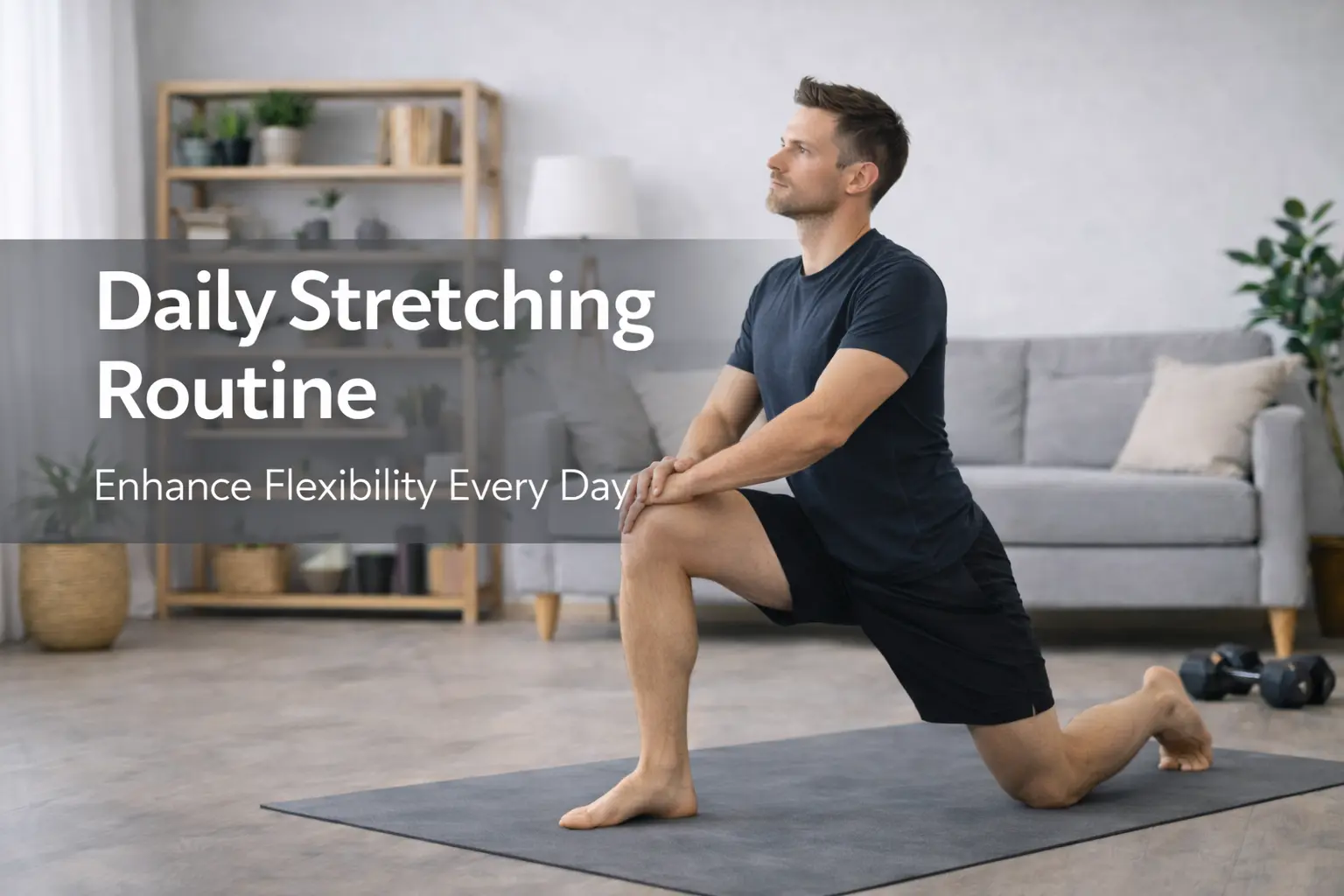
Most people do not notice the problem at first. It starts small. A stiff neck in the morning. Tight hips after sitting for hours. A lower back that feels tired by evening. Over time, these small issues become normal. I went through this myself during long workdays with very little movement.
What I learned, from personal experience and from watching others struggle with the same issues, is that the fix is not extreme workouts. Long sessions and hard training do not solve daily stiffness. What works better is a simple daily stretching routine. Short sessions done often help muscles stay loose and joints move with less effort. This guide is for people who want their body to feel easier to live in, not harder to manage.
Table of Contents
Jump to a sectionUse the links below to jump to the section you need.
- What Is a Daily Stretching Routine
- Who Can Follow This Daily Stretching Routine
- Benefits of a Daily Stretching Routine
- Types of Stretching You Should Know
- Should You Change Your Stretching Routine If You Work Out
- Recommended Order for a Daily Stretching Routine
- Full Body Daily Stretching Routine
- Sample Daily Stretching Routines by Time
- Daily Stretching Routine for Desk Workers
- Daily Stretching Routine for Beginners
- How Long Should a Daily Stretching Routine Be
- How to Make Daily Stretching a Habit
- Safety Tips for Daily Stretching
- Important Note Before You Start
- Frequently Asked Questions
- Conclusion
Who This Guide Is For
- Office workers and remote workers
- People who sit for long hours
- Beginners who are new to stretching
- Adults over 40 who feel stiff
- Active people who do not recover well
Key Takeaways
- A daily stretching routine helps reduce stiffness from sitting and daily stress.
- Short sessions (5 to 15 minutes) work well if you do them often.
- Gentle stretching feels like mild tension, not pain.
- Use dynamic stretching to warm up and static stretching to relax muscles.
- Consistency matters more than stretching deeply.
What Is a Daily Stretching Routine

A daily stretching routine is a group of stretches you do every day. These stretches help muscles relax and joints move more freely.
You can stretch in the morning, during work breaks, or in the evening. The most important part is consistency, not intensity.
Who Can Follow This Daily Stretching Routine
This routine is designed for everyday life.
It works well for:
- Office workers and remote workers
- People who sit for long hours
- Beginners who are new to stretching
- Adults over 40 who feel stiff
- Active people who do not recover well
You do not need flexibility or fitness experience. You can move slowly and adjust each stretch based on how your body feels.
Benefits of a Daily Stretching Routine
Stretching each day supports your body in steady ways.
It can help with:
- Less neck and back stiffness
- Easier joint movement
- Better posture during sitting and standing
- Reduced muscle tightness
- More relaxed movement through the day
Even short daily sessions can make a difference when done often.
Types of Stretching You Should Know

A balanced daily stretching routine includes two types of stretches.
Dynamic Stretching
Dynamic stretching uses slow, controlled movement.
Best used:
- In the morning
- Before light activity
Examples:
- Arm circles
- Hip swings
- Gentle torso twists
These help the body feel ready to move.
Static Stretching
Static stretching involves holding a position.
Best used:
- After activity
- In the evening
Examples:
- Hamstring stretch
- Chest opener stretch
- Calf stretch
Hold each stretch for about 15 to 30 seconds.
Should You Change Your Stretching Routine If You Work Out
Yes. Small adjustments help.
If you work out or play sports:
- Use dynamic stretches before activity
- Use static stretches after activity
If you do not work out often:
- Focus on full body stretches
- Stretch areas that feel tight from sitting
A daily stretching routine should support how you live, not fight it.
Recommended Order for a Daily Stretching Routine
Order matters for comfort and safety.
A simple order works best:
- Start with gentle full body movement
- Move to hips and legs
- End with slower holding stretches
This helps muscles warm up before deeper stretches.
Full Body Daily Stretching Routine

This routine takes about 10 to 15 minutes and works well for most people.
Lower Body Stretches
- Runner’s lunge
- Pigeon pose
- Seated hamstring stretch
- Butterfly stretch
These help hips and legs loosen after sitting.
Upper Body Stretches
- Chest opener stretch
- Across body arm stretch
- Shoulder blade stretch
- Neck stretch
These reduce tension from desk work and screen use.
Back and Core Stretches
- Cat cow stretch
- Downward dog
- Cobra stretch
- Seated trunk twist
These help the spine move with less stiffness.
Sample Daily Stretching Routines by Time

5-Minute Daily Stretching Routine
Best for busy schedules.
- Chest opener stretch
- Seated hamstring stretch
- Downward dog
- Neck and shoulder stretch
10-Minute Daily Stretching Routine
Good for daily comfort.
- Runner’s lunge
- Pigeon pose
- Butterfly stretch
- Downward dog
- Cobra stretch
15-Minute Daily Stretching Routine
Best for deeper focus.
- Runner’s lunge
- Iron cross stretch
- Frog stretch
- Pigeon pose
- Seated hamstring stretch
- Chest opener stretch
- Across body arm stretch
Daily Stretching Routine for Desk Workers

Long sitting tightens hips, shoulders, and the spine.
A desk-friendly routine should focus on:
- Chest opener stretch
- Across body arm stretch
- Seated hamstring stretch
- Cobra stretch
Stretch once during the workday and again in the evening if possible.
Daily Stretching Routine for Beginners
Beginners should keep things simple.
- Choose 4 to 6 stretches
- Hold each stretch for 15 to 20 seconds
- Stretch once per day
Comfort matters more than depth.
How Long Should a Daily Stretching Routine Be
You do not need long sessions.
- 5 minutes helps maintain movement
- 10 minutes improves flexibility
- 15 minutes supports deeper comfort
Routine Length Guide
Repeat each stretch one or two times. Breathe slowly.
How to Make Daily Stretching a Habit
Consistency matters more than effort.
Helpful tips:
- Stretch at the same time each day
- Pair stretching with an existing habit
- Keep routines short
- Skip guilt if you miss a day
A daily stretching routine should feel supportive, not strict.
Important
Stretching should feel gentle. If you feel sharp pain, stop. If you have long-term pain, joint issues, or a medical condition, talk to a qualified professional before starting a daily stretching routine.
Safety Tips for Daily Stretching
Stretching should feel gentle.
- Do not bounce
- Do not force a stretch
- Warm up with light movement
- Stop if sharp pain appears
Mild tension is normal. Pain is not.
Important Note Before You Start
If you have long-term pain, joint issues, or a medical condition, talk to a qualified professional before starting a daily stretching routine.
Frequently Asked Questions
Is it good to stretch every day?
Yes. Daily stretching supports joint movement and muscle comfort.
Can you stretch more than once a day?
Yes. Short sessions in the morning and evening work well.
Can stretching replace exercise?
No. Stretching supports movement but does not replace strength or cardio activity.
What happens if you stop stretching?
Muscles may tighten over time, especially with long sitting.
Conclusion
From experience, daily stretching works best when it feels realistic. I have seen people improve how they move simply by giving their body a few minutes each day. I have experienced it myself. When stretching became a daily habit instead of an occasional effort, stiffness reduced and movement felt smoother. The key is not how deep you stretch, but how often you show up. Start small, stay consistent, and pay attention to how your body responds. Over time, those small sessions add up and make daily life more comfortable.
