


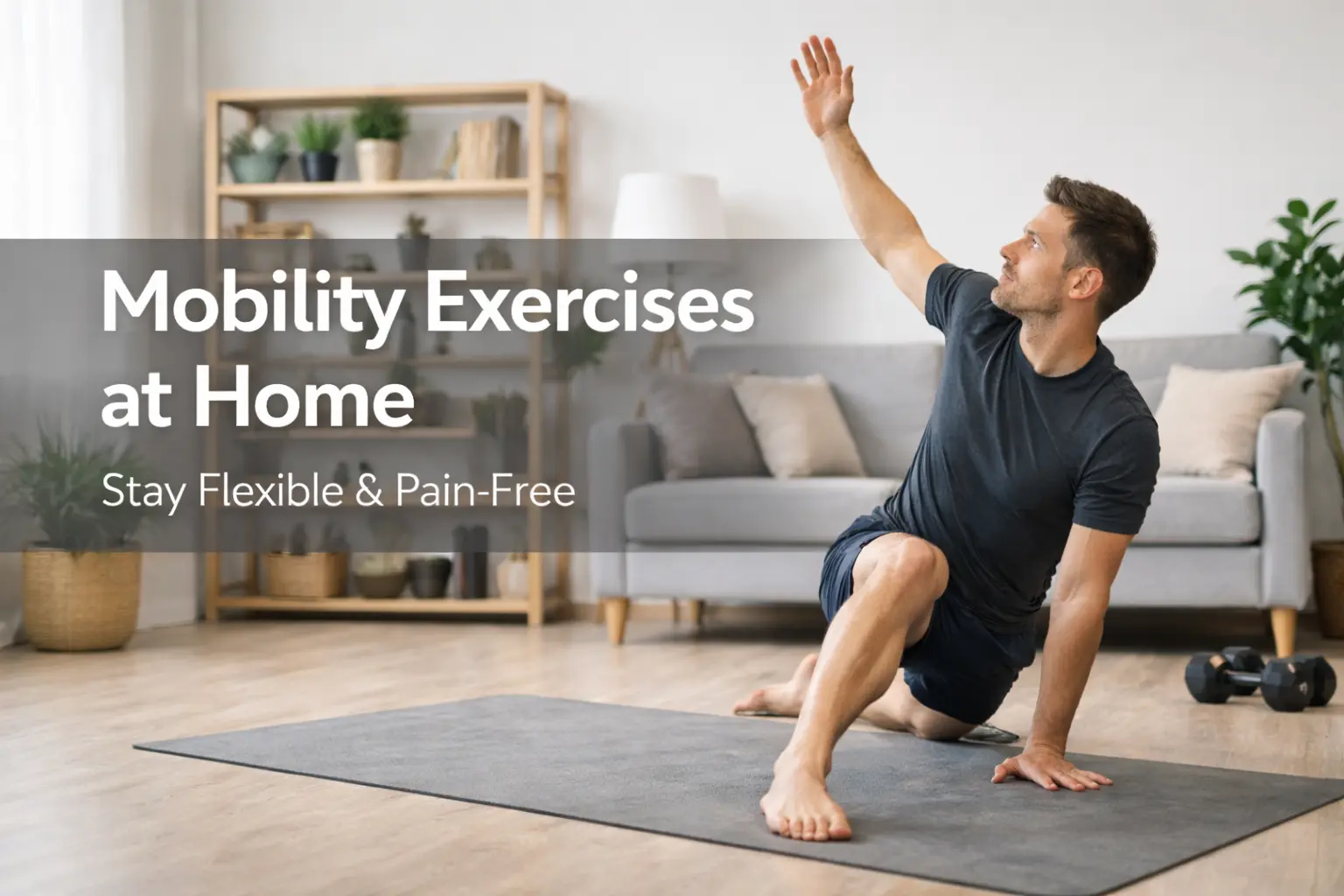
I used to wake up feeling stiff without any clear reason. My lower back felt tight. My hips felt locked. Simple things like bending down or tying my shoes took more effort than they should. I spent long hours sitting, working on a screen, and even though I exercised sometimes, the stiffness never fully went away. Stretching helped for a short time, but the tight feeling always returned.
Over time, I learned that my body did not need harder workouts. It needed better movement. That is when I started doing mobility exercises at home. Short, daily sessions helped my joints move more freely. Mornings felt easier. Sitting felt more comfortable. Normal daily movement stopped feeling like a struggle. If your body feels stiff, tight, or limited during everyday tasks, this guide is for you.
Table of Contents
Jump to a sectionUse the links below to jump to the section you need.
- Why Mobility Is Important
- What Causes Poor Mobility
- How Mobility Exercises Work With Therapy
- Mobility Exercises for Stiffness vs Pain
- 5 Limited Mobility Exercises You Can Perform at Home
- Full-Body Mobility Routine: Exercises to Try at Home
- Quick Guide: Mobility Exercises by Body Area
- Top Exercises to Improve Mobility and Reduce Discomfort at Home
- Simple 10-Minute Mobility Routine at Home
- How Mobility Fits With Stretching and Warm-Ups
- How Often Should You Do Mobility Exercises at Home
- Tips for Doing Mobility Exercises Safely at Home
- When to Seek Help
- Frequently Asked Questions
- Conclusion
Who This Guide Is For
- Desk workers who sit for long hours and feel tight in hips, neck, or back
- Beginners who want simple steps and safe movement
- Older adults who feel stiff and want gentle joint motion
- Active people who feel tight after workouts and want better range of motion
- Anyone who wants daily movement to feel easier
Key Takeaways
- Mobility is joint movement with control, not forcing a stretch.
- Most people get stiff from sitting and low daily movement.
- 5 to 10 minutes a day is enough if you stay consistent.
- Focus on tight areas first: hips, shoulders, ankles, and spine.
- Move slowly and stop if pain increases.
Why Mobility Is Important
Mobility is how well your joints move while muscles stay active. It affects how you walk, sit, bend, reach, and turn.
Good mobility helps you:
- Move with less stiffness
- Support posture during the day
- Reduce joint stress
- Feel more comfortable during daily tasks
When joints stop moving well, the body starts to compensate. Over time, this can lead to discomfort and limited motion. Daily mobility exercises at home help keep joints moving the way they should.

What Causes Poor Mobility
Poor mobility usually builds slowly.
Common causes include:
- Sitting for long hours
- Low daily movement
- Phone and laptop use
- Weak muscles around joints
- Past injuries
- Poor posture habits
Desk workers often notice tight hips, stiff necks, and lower back discomfort. Gentle daily mobility can help reverse these patterns.

How Mobility Exercises Work With Therapy
Mobility exercises are often used in physical therapy to restore safe joint movement. The focus is control, not force.
At home, the same idea applies. Move slowly. Stay within a comfortable range. Stop if discomfort increases.
Mobility exercises at home are meant to support daily movement, not push limits.
Mobility Exercises for Stiffness vs Pain
Mobility exercises at home help stiffness more than sharp pain. Stiffness feels tight or restricted. Pain feels sharp, burning, or worsening.
Mobility can help when:
- Joints feel tight after sitting
- Movement feels limited but not painful
- Stiffness improves after warming up
Mobility may not help when:
- Pain increases during movement
- Swelling is present
- Pain stays even at rest
If discomfort continues, stop the exercises and seek professional guidance.
5 Limited Mobility Exercises You Can Perform at Home
These exercises are gentle and work well for beginners, older adults, and people who want safe movement.

Neck Circles
Sit or stand tall. Move your head slowly in circles. Change direction.
Wrist and Ankle Rolls
Rotate wrists and ankles with control. Keep movements smooth.
Chair Lifts
Sit in a chair. Lift one knee at a time. Keep your back straight.
Leg Lifts
Hold a chair or wall. Lift one leg slowly. Lower it with control.
Spinal Twists
Sit upright. Rotate your upper body gently. Hold briefly and switch sides.
Full-Body Mobility Routine: Exercises to Try at Home
This routine works the whole body and fits daily use.

Lunges
Step forward and lower your body. Keep your chest upright.
Hip Circles
Stand tall. Move your hips in slow circles.
Cat-Cow
On hands and knees, round your back. Then arch it. Breathe steadily.
World’s Greatest Stretch
Step into a long lunge. Reach one arm upward and rotate your chest.
Downward Dog
Push hips back. Keep arms long. Press heels down gently.
Shoulder Rotations
Rotate shoulders forward and backward slowly.
Ankle Rocks
Stand and shift weight forward and back over your ankles.
Thread the Needle
From hands and knees, slide one arm under your body and rotate gently.
Quick Guide: Mobility Exercises by Body Area
If one area feels tight, start there.
Neck and shoulders
- Neck circles
- Shoulder rotations
- Arm crossovers
Lower back
- Cat-cow
- Pelvic tilts
- Child’s pose
Hips and knees
- Lunges
- Hip circles
- Leg swings
Ankles and feet
- Ankle circles
- Ankle rocks
- Calf raises
Top Exercises to Improve Mobility and Reduce Discomfort at Home
These movements are common in home plans and clinics.
- Ankle circles
- Seated hamstring stretch
- Shoulder blade squeezes
- Calf raises
- Pelvic tilts
- Wrist circles
- Leg swings
- Arm crossovers
- Standing quad stretch
- Child’s pose
Move slowly and stay controlled.
Simple 10-Minute Mobility Routine at Home
This routine works well for busy days.
- Neck circles – 30 seconds
- Shoulder rotations – 30 seconds
- Cat-cow – 1 minute
- Hip circles – 1 minute
- Lunges – 2 minutes
- Leg swings – 1 minute
- Ankle rocks – 1 minute
- Child’s pose – 2 minutes
You can repeat this once or twice daily.
10-minute routine (quick view)
How Mobility Fits With Stretching and Warm-Ups
Light movement prepares joints for mobility work. A short walk or arm swings help.
Mobility focuses on joint control. Stretching relaxes muscles.
Mobility works well before activity. Stretching works well after movement or before sleep.
Mobility vs stretching (quick compare)
How Often Should You Do Mobility Exercises at Home
Short daily sessions work best.
A simple approach:
- 5 to 10 minutes each day
- Focus on tight areas
- Move slowly
Small daily sessions matter more than long workouts.

Tips for Doing Mobility Exercises Safely at Home
Keep these points in mind:
- Warm up with light movement
- Avoid sharp pain
- Breathe steadily
- Use a chair or wall for balance
Mobility should feel calm and controlled.
Important
These mobility exercises at home should feel smooth and controlled. Stop if you feel sharp pain, tingling, numbness, or swelling. Work within a comfortable range. If a movement makes things worse, skip it and choose a gentler option.
When to Seek Help
Get guidance if:
- Discomfort does not improve
- Movement feels worse over time
- You feel sharp pain, tingling, or numbness
A trained professional can help guide safe movement.
Frequently Asked Questions
Can beginners do mobility exercises at home?
Yes. Start slow and keep movements simple. Stay within a comfortable range.
Do I need equipment?
No. Body weight is enough for most mobility exercises at home.
Is mobility the same as stretching?
No. Mobility focuses on joint movement with control. Stretching focuses more on lengthening muscles.
How long before results show?
Many people notice improvement within a few weeks when they stay consistent.
Conclusion
Mobility exercises at home work because they focus on how the body moves, not how hard you push. From personal experience and from working with people who sit for long hours or feel stiff during daily life, small daily movement makes a real difference. When joints move with control, everyday tasks feel easier and the body feels less tense.
You do not need long workouts or special tools. What matters is consistency and staying within a comfortable range. Start with a few minutes a day and build the habit. Over time, mobility becomes part of how you take care of your body.
