


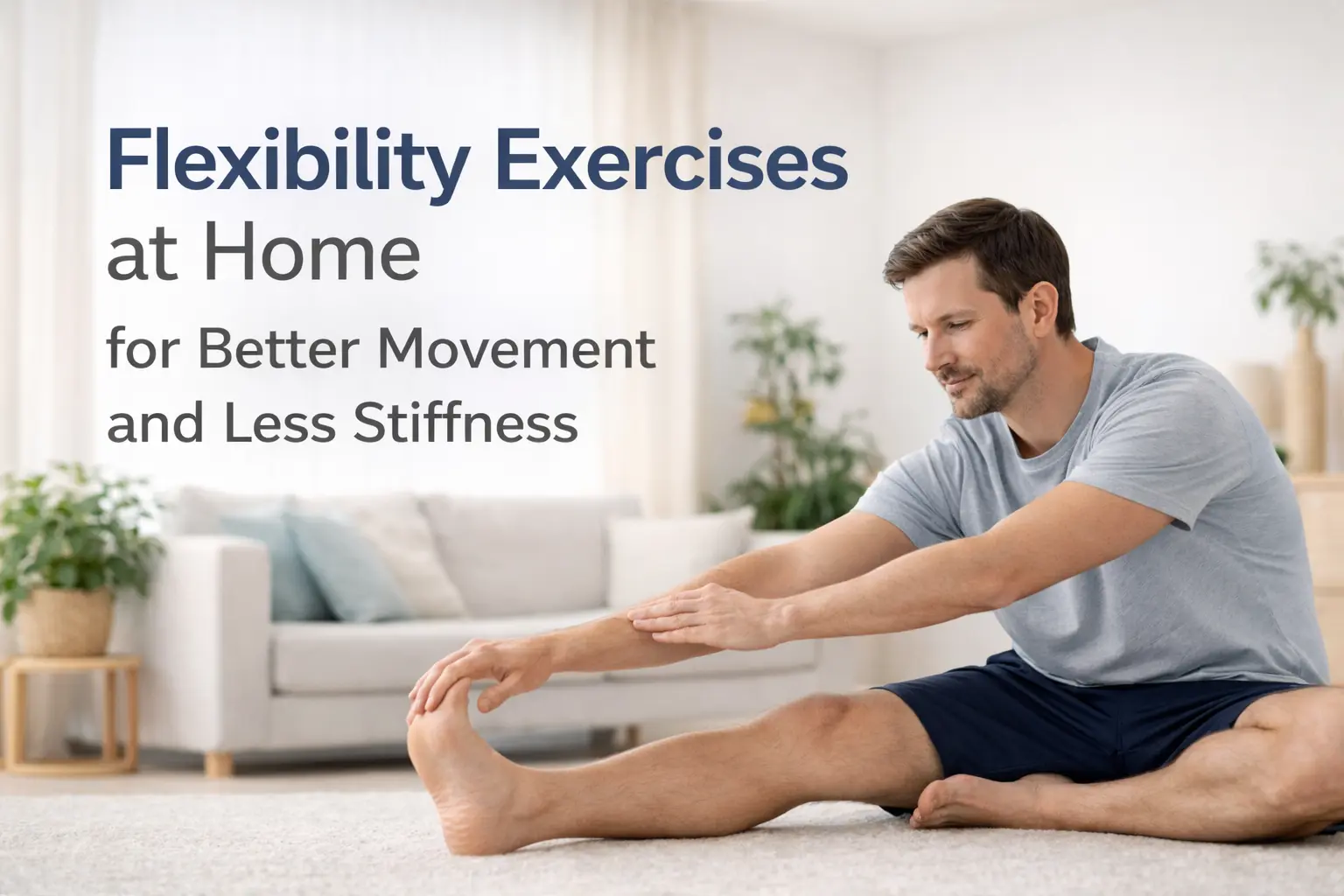
Many people feel stiff every day. The neck feels tight after waking up. The back feels sore after sitting for hours. Simple movements like bending, reaching, or standing take more effort than they should. Long hours of sitting, screen time, and low daily movement slowly build this stiffness, even in people who feel otherwise healthy.
I have been through this myself. Long sitting and busy days made my body feel heavy by evening. I was not trying to become an athlete. I only wanted my body to move without discomfort. I started doing flexibility exercises at home for a few minutes a day. Small, regular stretches made a real difference. Over time, stiffness reduced, movement felt easier, and daily tasks became more comfortable. This article shares that same simple approach.
Table of Contents
Jump to a sectionUse the links below to jump to the section you need.
Who this guide is for
- Busy adults who want a short routine at home
- Desk workers with neck, back, or hip tightness from sitting
- Beginners who want safe and simple stretching steps
- Older adults who want to stay mobile and move with comfort
Key Takeaways
- Short sessions work best. Even 10 minutes helps.
- Use dynamic stretching before activity, and static stretching after activity or before bed.
- Stretch until mild tension only. Stop if pain feels sharp.
- Desk workers should stretch neck, back, and hips often.
- Small progress signs matter. Easier movement means it is working.
Why Is Flexibility Important?

Flexibility helps your joints move freely.
It allows muscles to stretch and relax.
When your body moves with ease, daily tasks feel lighter.
Walking, bending, reaching, and sitting feel smoother.
For desk workers, flexibility reduces stiffness from long sitting.
For beginners, it helps the body adapt safely.
For seniors, it supports balance and daily movement.
The Risks of Limited Flexibility
Limited flexibility often causes tight muscles.
This can lead to neck pain, back pain, and hip discomfort.
Sitting for long periods makes muscles shorter and stiff.
Without stretching, movement can feel harder over time.
This is common for desk workers and people with low activity levels.
The Benefits of Improved Flexibility
Regular flexibility exercises at home can:
- Improve daily movement
- Reduce muscle tightness
- Support posture and balance
- Help the body feel more relaxed
Many people notice less tension after short stretching sessions.
Static Stretching vs Dynamic Stretching

There are two main types of stretching.
Both are useful at home.
Dynamic stretching uses slow movement.
It works best before activity or in the morning to prepare the body.
Static stretching means holding a stretch still.
It works best after daily activity or before bed.
Using both helps support flexibility safely.
Flexibility Exercises

These flexibility exercises at home are gentle and effective.
They suit beginners, desk workers, and older adults.
Standing Hamstring Stretch

This stretch targets the back of the legs.
It helps people who feel tight from long sitting.
How to do it
- Stand tall with feet hip-width apart
- Bend forward slowly from the hips
- Let hands reach toward legs or floor
- Hold for 20 to 30 seconds
Benefits
- Reduces leg tightness
- Supports easier walking and bending
Cat-Cow Stretch

This stretch supports spine movement and helps reduce back stiffness.
How to do it
- Start on hands and knees
- Inhale and arch your back gently
- Exhale and round your spine
- Move slowly for 30 seconds
Benefits
- Improves spine movement
- Helps desk workers release back tension
Seated Forward Bend
This stretch works on the lower back and legs.
How to do it
- Sit on the floor with legs straight
- Reach forward gently toward feet
- Keep your back long
- Hold for 20 seconds
Benefits
- Eases lower back tension
- Supports flexibility for daily movement
Butterfly Stretch
This stretch focuses on the hips and inner thighs.
How to do it
- Sit on the floor
- Bring soles of feet together
- Let knees fall outward
- Hold for 20 to 30 seconds
Benefits
- Helps open tight hips
- Supports better leg movement
Child’s Pose
This is a gentle stretch for the full body.
How to do it
- Kneel on the floor
- Sit back on your heels
- Reach arms forward and lower chest
- Hold for 30 seconds
Benefits
- Relaxes the back
- Helps the body feel calm after a long day
Neck Rotation
This stretch helps reduce neck stiffness from screen use.
How to do it
- Sit or stand with your back straight
- Turn your head slowly to the right
- Hold for 5 seconds
- Return to center
- Repeat on the left side
- Do 5 rounds each side
Benefits
- Improves neck movement
- Reduces daily neck tension
Neck Stretch
This stretch targets the sides of the neck.
How to do it
- Sit or stand tall
- Tilt your head gently toward one shoulder
- Hold for 15 to 20 seconds
- Switch sides
Benefits
- Eases tight neck muscles
- Supports better posture
Calf Stretch
This stretch focuses on the lower legs.
How to do it
- Stand facing a wall
- Place one foot behind the other
- Keep back heel on the floor
- Lean forward slightly
- Hold for 20 to 30 seconds
- Switch legs
Benefits
- Supports ankle movement
- Reduces lower leg tightness
How Long Should a Flexibility Session Be?

Flexibility sessions do not need much time.
Quick session plan
- 10 minutes works for busy adults
- 15 to 20 minutes works for daily practice
- 5 to 8 exercises per session is enough
Hold each stretch for 15 to 30 seconds.
Breathe slowly between stretches.
Making Flexibility Exercises a Daily Habit
Short sessions work best.
Consistency matters more than length.
Stretch in the morning to loosen the body.
Stretch at night to relax before sleep.
Stretching after long sitting also helps.
Link stretching to habits you already have.
This makes it easier to stay consistent.
Safety Tips and Who Should Be Careful
Important
Stretching should feel like mild tension, not sharp pain. Move slowly and avoid bouncing. If you have a recent injury, strong joint pain, or balance issues, start very gently and stop if pain increases. If needed, speak with a health professional before starting.

Flexibility exercises at home are gentle for most people.
Follow these rules:
- Avoid bouncing
- Stretch only until mild tension
- Stop if pain feels sharp
- Breathe normally
If you have joint pain, a recent injury, or balance issues, move slowly.
If needed, speak with a health professional before starting.
How to Know Your Flexibility Is Improving
Progress signs are simple:
- Movement feels easier
- Daily tasks need less effort
- Muscle tightness reduces over time
Small changes mean the stretches are helping.
Frequently Asked Questions
How often should I do flexibility exercises at home?
Three to five days a week works well.
How long before I see results?
Many people notice changes in two to three weeks.
Is stretching every day safe?
Yes, if stretches stay gentle and controlled.
Do I need equipment?
No. A mat or towel is enough.
Conclusion
From personal experience and working with people who sit most of the day, one thing is clear. Consistency matters more than intensity. Short daily stretches often bring better results than long sessions done once in a while. Flexibility exercises at home work because they fit into real life. When stretching stays gentle and regular, movement becomes easier, stiffness reduces, and the body feels more comfortable during everyday tasks.
