


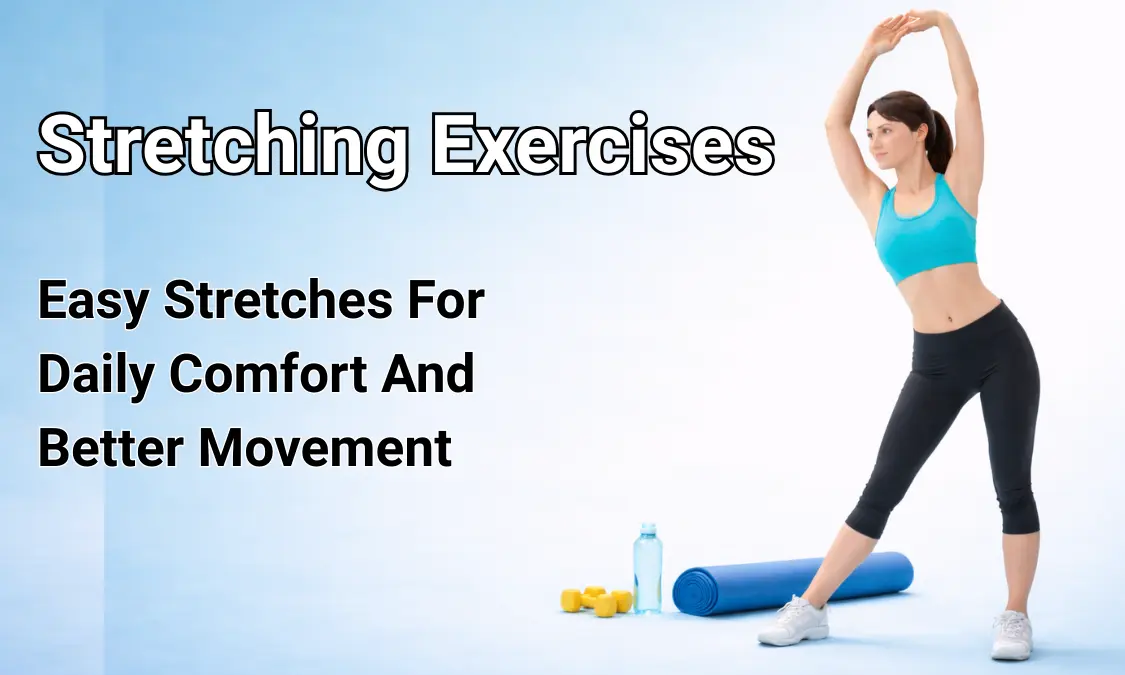
For a long time, I ignored how stiff my body felt. Long hours of sitting led to tight hips, a sore lower back, and a neck that felt heavy by the end of the day. I was not injured. I was just uncomfortable. Many people feel the same way but think it is normal or unavoidable.
Stretching exercises changed that slowly and clearly. A few minutes each day helped my body move with less effort. Over time, posture improved and daily aches reduced. I have seen the same results in people who sit all day, beginners starting fitness, and older adults trying to stay mobile. Stretching exercises do not need to be hard to work. They need to be consistent and safe.

Table of Contents
Jump to a sectionUse the links below to jump to the section you need.
- What Are Stretching Exercises
- Flexibility vs Mobility
- What Are the Different Types of Stretching
- When to Do Stretching Exercises
- How Often Should You Stretch
- Stretching Exercises for Beginners
- Dynamic Stretching Exercises
- Static Stretching Exercises
- Stretching Exercises by Body Part
- How Long Should You Hold a Stretch
- Simple Daily Stretching Routine
- Tips for Stretching
- Safety Tips for Stretching Exercises
- Considerations
- Frequently Asked Questions
- Conclusion
Who This Guide Is For
- People who sit for long hours and feel stiff in the back, hips, or neck
- Beginners who want to start stretching safely
- Older adults who want gentle movement and better mobility
- Active people who want to warm up and recover better
Key Takeaways
- Stretching exercises help reduce stiffness, improve flexibility, and support daily movement.
- Dynamic stretching works best before activity, while static stretching works best after.
- Most people benefit from just 5 to 10 minutes of stretching per day.
- Stretching should feel gentle. Sharp pain is a sign to stop.
- Office workers, beginners, and older adults can all stretch safely with simple routines.
What Are Stretching Exercises
Stretching exercises are movements that lengthen muscles. They help improve flexibility and make daily movement easier.
These exercises support posture, balance, and comfort. They are useful for people who sit a lot, those starting fitness, and those who want to stay mobile as they age.
Some stretches prepare the body for movement. Others help muscles relax after activity.
Flexibility vs Mobility
Flexibility describes how much a muscle can stretch.
Mobility describes how well a joint moves through its full range.
You can have flexible muscles but still feel stiff if joints do not move well. Stretching exercises help improve flexibility. Controlled movement and regular activity support mobility. Both are important for daily comfort and smooth movement.

What Are the Different Types of Stretching
Dynamic Stretching
Dynamic stretching uses slow and controlled movement. These stretching exercises are best before workouts or physical activity.
They help warm up muscles and joints and prepare the body to move.
Examples include leg swings, arm circles, and lunges.

Static Stretching
Static stretching means holding one position for a short time. These stretching exercises are best after activity or during rest days.
They help muscles relax and reduce tightness caused by sitting or exercise.

Dynamic vs Static Stretching
When to Do Stretching Exercises
Dynamic stretching exercises should be done before exercise. They help the body get ready for movement.
Static stretching exercises should be done after exercise or later in the day. Muscles stretch better when they are warm.
Avoid deep static stretching before intense workouts. Cold muscles do not stretch well.
How Often Should You Stretch
Stretching exercises can be done every day.
Beginners can start with two or three days per week. Five to ten minutes per session is enough.
People who exercise often should stretch after each workout. On rest days, light stretching still helps reduce stiffness.
Stretching Exercises for Beginners
If you are new to stretching exercises, start slow.
Use small movements. Focus on breathing. Do not force any stretch.
If a stretch feels too hard, reduce the movement or skip it. Progress happens over time.
Beginners do not need to stretch the whole body at once. A few basic stretches are enough.
Dynamic Stretching Exercises
Quick Safety Note
Stretching should feel gentle. Mild tension is normal. Sharp pain is not. Move slowly, breathe normally, and stop if something feels wrong.

Leg Swings
Stand tall and hold a wall or chair. Swing one leg forward and backward. Keep the motion smooth. Switch legs after 8 to 12 swings.
Arm Circles
Extend your arms to the sides. Make small circles. Slowly increase the size. Change direction after several seconds.
Lunge With Overhead Reach
Step forward into a lunge. Raise both arms overhead. Keep your chest open. Switch sides after a few breaths.
Inchworm
Stand upright. Bend forward and place your hands on the floor. Walk your hands forward into a plank. Walk them back and stand slowly.
World’s Greatest Stretch
Step into a deep lunge. Place one hand on the floor. Reach the other arm upward and rotate gently. Switch sides.
If this feels hard, shorten the movement or skip it.
Static Stretching Exercises
Lunge With Spinal Twist
Step into a lunge and rotate your upper body toward the front knee. Hold and breathe. Switch sides.
Forward Fold
Stand tall and bend forward at the hips. Let your arms and head relax. Keep knees slightly bent.
Piriformis Stretch
Lie on your back. Cross one ankle over the opposite knee. Pull the leg in gently.
Toes on Wall Calf Stretch
Place your toes against a wall with your heel on the floor. Lean forward slightly.
Triceps Stretch
Raise one arm overhead. Bend the elbow and reach down your back. Use the other hand for support.
Standing Quad Stretch
Stand on one leg. Pull the other foot toward your glutes. Keep your knees close.
Neck Stretch
Sit or stand upright. Tilt your head to one side. Hold briefly and switch.
Shoulder and Upper Arm Stretch
Bring one arm across your chest. Pull it closer using the opposite arm.
Chest Stretch
Clasp your hands behind your back. Lift your arms slightly and open your chest.
Ankle Stretch
Sit or stand and rotate your ankle in slow circles. Change direction.
Hamstring Stretch
Sit with one leg straight. Reach toward your foot while keeping your back straight.
Quadriceps Stretch
Lie on your side and pull the top foot toward your glutes. Keep hips steady.
Hip External Rotation
Sit tall and place one ankle over the opposite knee. Lean forward slightly.
Lower Back Stretch
Lie on your back and pull both knees toward your chest. Breathe slowly.
Stretching Exercises by Body Part
Some people look for stretching exercises based on where they feel tight.

Hamstrings
Standing hamstring stretch and seated forward stretch help reduce leg stiffness.
Hips
Hip flexor stretch and seated hip stretch support people who sit for long hours.
Lower Back
Knee-to-chest stretch and gentle seated back stretch support comfort and posture.
Shoulders and Arms
Cross-body shoulder stretch and triceps stretch help reduce upper body tension.
How Long Should You Hold a Stretch
For dynamic stretching exercises, move through each motion 8 to 12 times.
For static stretching exercises, hold each stretch for 20 to 60 seconds.
Repeat once or twice if the muscle feels tight.
Simple Daily Stretching Routine
This routine takes about five minutes and suits most people:

- Arm Circles
- Leg Swings
- Forward Fold
- Standing Quad Stretch
- Neck Stretch
This routine helps office workers, beginners, and older adults stay flexible.
Quick Start
If you are not sure where to begin, do the 5-minute routine once a day for 7 days. Keep it gentle. Track how your body feels when you wake up and after long sitting.
Tips for Stretching
Move slowly and stay in control.
Breathe normally during each stretch.
Do not bounce.
Stretching exercises should feel gentle, not forced.
Safety Tips for Stretching Exercises
Stretching exercises should never cause pain.
Mild tension is normal. Sharp pain is not.
Light movement before stretching helps warm muscles.
Stop if you feel dizzy or uncomfortable.
Considerations
People with joint pain, balance issues, or medical conditions should adjust stretches as needed.
Comfort matters more than depth.
Frequently Asked Questions
Should I stretch every day?
Yes. Daily stretching exercises are safe for most people.
Is stretching safe for older adults?
Yes. Gentle stretching exercises help mobility and balance.
Can stretching help with posture?
Yes. Stretching tight muscles in the chest, hips, and back supports better posture over time.
Can stretching help after sitting all day?
Yes. Stretching exercises reduce stiffness caused by long sitting.
Conclusion
From experience and long-term observation, stretching exercises help most when they stay simple and regular. You do not need long sessions or perfect form. Even five to ten minutes a day can reduce stiffness and improve how your body feels during normal movement. Stretching exercises support flexibility, comfort, and mobility at any age. When done with care and patience, they become a steady habit that helps the body move better over time.
