


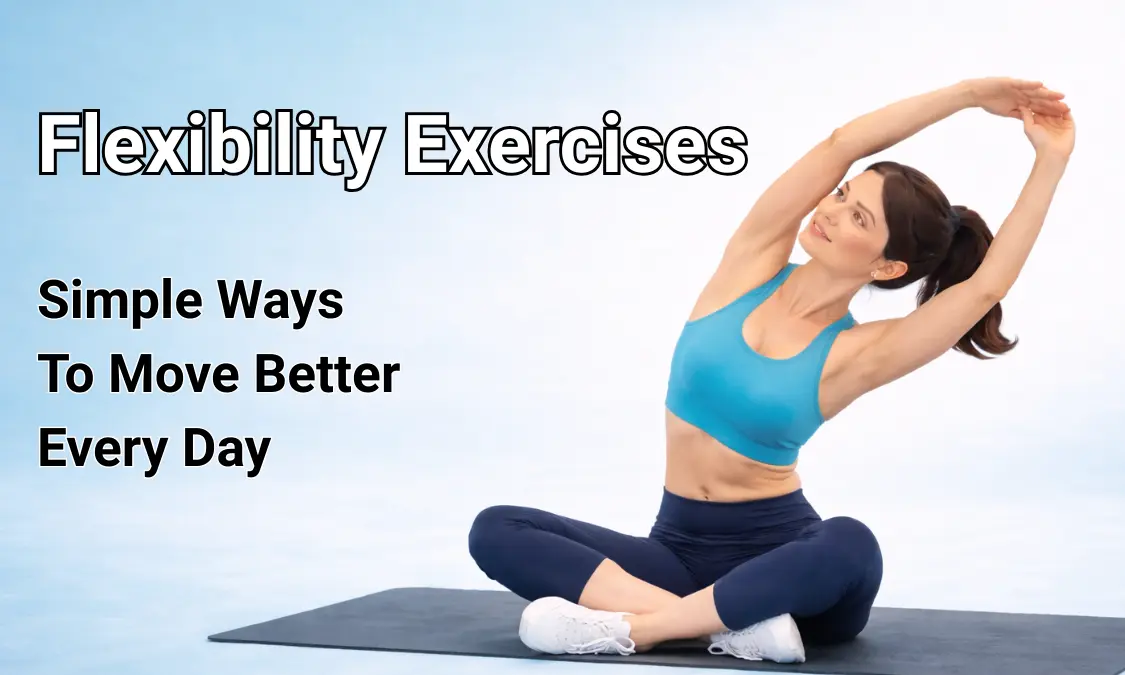
Many people wake up with a stiff neck, tight hips, or a sore back. Sitting for long hours, using phones, and low daily movement slowly make the body tight. Over time, simple actions like bending, walking, or turning the head start to feel uncomfortable. Most people think this is normal or linked only to age, but in many cases, it is caused by tight muscles and lack of regular movement.
From real experience, small changes make a big difference. People who feel stiff often believe they need hard workouts or complex plans. In reality, they need gentle flexibility exercises done the right way. When stretching becomes a simple habit, the body starts to move more freely and daily tasks feel easier. This guide is written to help beginners, desk workers, seniors, and active adults stretch safely and move better.
Table of Contents
Jump to a sectionUse the links below to jump to the section you need.
- What Are Flexibility Exercises
- Why Flexibility Exercises Matter
- Types of Flexibility Exercises
- Warming Up Before Flexibility Exercises
- When and How Often to Do Flexibility Exercises
- Flexibility Exercises for the Upper Body
- Flexibility Exercises for the Lower Body
- Flexibility Exercises for the Spine and Hips
- Flexibility Exercises for Active Adults
- Flexibility Exercises for Seniors and Beginners
- Simple Daily Flexibility Routine (At Home)
- Breathing During Flexibility Exercises
- Common Mistakes to Avoid
- Safety Notes
- How to Track Progress
- Frequently Asked Questions
- Conclusion
Who This Guide Is For
- Desk workers who feel tight in the neck, shoulders, hips, or legs
- Beginners who want simple, safe flexibility exercises at home
- Older adults who want gentle movement and better balance
- Active people who want better movement before workouts and easier recovery after
Key Takeaways
- Flexibility exercises help reduce stiffness and make daily movement easier.
- Warm muscles stretch better than cold muscles.
- Slow breathing helps the body relax during stretches.
- Short sessions done often work better than long sessions once in a while.
- Stretching should feel gentle. Stop if you feel sharp pain.
What Are Flexibility Exercises

Flexibility exercises stretch muscles and joints. They help joints move through a fuller range of motion. These movements are slow and controlled.
When muscles stay tight for long periods, movement feels harder. This often happens with desk jobs, long drives, or low activity. Stretching helps reduce that tight feeling.
Flexibility is different from strength training. Strength focuses on muscle force. Flexibility focuses on how far muscles and joints can move.
Flexibility is also different from mobility. Flexibility is how far a muscle can stretch. Mobility is how well a joint moves during motion. Most people benefit from working on both.
Why Flexibility Exercises Matter
Flexibility exercises support everyday movement. They make it easier to bend, reach, walk, and turn.
They are helpful for:
- Office workers with long sitting hours
- Beginners with stiff muscles
- Active adults after workouts
- Older adults who want easier movement
Benefits include:
- Less muscle stiffness
- Better posture
- Smoother joint movement
- Improved balance
- More comfort during daily tasks
Flexible muscles also recover better after activity.
Types of Flexibility Exercises

Different stretches serve different needs.
Stretching types: quick comparison
Static Stretching
Static stretching means holding a stretch in one position. Most stretches are held for 15 to 30 seconds.
This type works well after exercise or during calm sessions at home. It helps muscles relax.
Dynamic Stretching
Dynamic stretching uses slow and controlled movement. The body moves in and out of a stretch.
This type works best before activity. It prepares the body for motion.
Active Stretching
Active stretching uses your own muscles to stretch another area of the body.
This helps with control and joint support, which is useful for active adults.
Breathing matters during all stretches. Breathe slowly through your nose and out through your mouth. Do not hold your breath.
Warming Up Before Flexibility Exercises

Muscles stretch better when they are warm. Cold muscles often feel tight and uncomfortable.
A warm-up can be simple:
- Walk for three to five minutes
- March in place
- Do light arm or leg movements
This step is important for beginners, seniors, and people with stiff joints.
When and How Often to Do Flexibility Exercises
Dynamic stretches work best before physical activity.
Static stretches work best after activity or during quiet sessions.
Stretching two to three times per week works well for most people. Gentle stretching can be done daily, especially for tight areas.
Short sessions done often are effective. Five to ten minutes is enough.
Flexibility Exercises for the Upper Body

Neck Rotation
Sit or stand tall. Slowly turn your head to one side. Return to center. Switch sides.
This helps reduce neck stiffness from screen time.
Neck Stretch
Tilt your head toward one shoulder. Keep shoulders relaxed. Hold briefly. Switch sides.
This helps with neck tension from long sitting.
Shoulder Rolls
Lift shoulders up, then roll them back and down. Move slowly.
This helps posture and shoulder comfort.
Flexibility Exercises for the Lower Body

Calf Stretch
Step one foot back. Keep the heel down. Bend the front knee. Switch legs.
This helps people who sit, walk, or stand a lot.
Standing Hamstring Stretch
Place one foot forward. Keep the leg straight. Lean slightly at the hips.
This helps tight legs and lower back comfort.
Lying Quad Stretch
Lie on one side. Bend the top knee. Hold the ankle gently.
This supports knee and hip comfort.
Flexibility Exercises for the Spine and Hips

Cat-Cow
Move the spine slowly between rounded and arched positions while breathing.
This supports spine movement and desk-related stiffness.
Knees to Chest
Lie on your back. Pull knees toward the chest.
This helps the lower back relax.
90/90 Stretch
Sit with both knees bent at right angles. Rotate legs slowly side to side.
This supports hip movement and sitting comfort.
Flexibility Exercises for Active Adults
Forward Lunges
Step forward into a lunge. Keep posture upright. Switch legs.
This supports hips and thighs.
Side Lunges
Step to the side and bend one knee. Switch sides.
This helps inner thighs and hip movement.
Standing Quad Stretch
Stand on one leg. Pull the other foot toward the body.
This helps the front of the legs after workouts.
Flexibility Exercises for Seniors and Beginners
Slow and gentle movement works best.
Use a chair or wall for support if needed. Short holds are enough. Comfort matters more than depth.
Stretching should feel easy and controlled.
Simple Daily Flexibility Routine (At Home)

This routine works well for desk workers, beginners, and seniors:
- Neck rotation – 30 seconds
- Shoulder rolls – 30 seconds
- Cat-cow – 1 minute
- Standing hamstring stretch – 30 seconds each side
- Calf stretch – 30 seconds each side
- Knees to chest – 1 minute
Total time: under 10 minutes.
Breathing During Flexibility Exercises
Breathing helps muscles relax.
Breathe slowly through your nose. Let the air out through your mouth. If breathing feels tense, ease the stretch.
Common Mistakes to Avoid
- Stretching cold muscles
- Bouncing during stretches
- Holding breath
- Forcing painful positions
- Moving too fast
Stretching should never cause sharp pain.
Safety Notes
Stop stretching if you feel sharp pain, numbness, or tingling.
Important
Stretching should feel gentle. Stop if you feel sharp pain, numbness, or tingling. Do not bounce. Do not force a position. If you have an injury or ongoing pain, speak with a qualified health professional before starting.
Stretch only as far as feels comfortable. If you have ongoing pain or injury, speak with a qualified health professional before starting.
How to Track Progress
Progress is simple to notice:
- Movement feels easier
- Less stiffness in the morning
- Daily tasks feel smoother
Small changes show improvement.
Frequently Asked Questions
Should I stretch every day?
Yes, gentle stretching can be done daily, especially for tight areas.
Is stretching before exercise safe?
Yes. Use dynamic stretches before activity. Save long holds for after.
How long before results show?
Many people notice small changes within a few weeks when they stay consistent.
Conclusion
From real experience, flexibility improves when people stay patient and consistent. The body does not respond well to force or rushing. It responds to calm movement done often. I have seen office workers reduce stiffness, beginners gain confidence, and older adults move with more ease through simple flexibility exercises. You do not need long workouts or special tools. Gentle stretching, slow breathing, and regular practice are enough to help the body move comfortably every day.
