


Most people do not notice their hips until they start to feel stiff or uncomfortable. It often begins after long hours of sitting, driving, or training. Getting up from a chair feels heavy. Squats feel shallow. The lower back feels tight for no clear reason. Over time, simple movements stop feeling smooth.

I started using the elevated pigeon stretch after dealing with constant hip tightness from both desk work and workouts. Floor pigeon felt too aggressive and often caused knee discomfort. Standing versions gave me much better control and far less joint stress. After using this stretch daily, hip movement felt smoother, posture improved, and sitting became more comfortable. That is why this stretch is now part of my regular routine and something I recommend often.
Table of Contents
Jump to a sectionUse the links below to jump to the section you need.
- What Is the Elevated Pigeon Stretch?
- Who Benefits Most From the Elevated Pigeon Stretch?
- What Muscles Does the Elevated Pigeon Stretch Work?
- Why the Elevated Pigeon Stretch Helps
- How to Do the Elevated Pigeon Stretch (Step by Step)
- Beginner Setup: Start the Right Way
- How High Should the Surface Be?
- How Long Should You Hold the Elevated Pigeon Stretch?
- Breathing During the Elevated Pigeon Stretch
- Static vs Dynamic Elevated Pigeon Stretch
- Common Mistakes to Avoid
- Elevated Pigeon Stretch Knee Pain Fixes
- Elevated Pigeon Stretch Hip Pinching Fixes
- Simple Visual Form Checks
- When to Use the Elevated Pigeon Stretch
- Elevated Pigeon Stretch vs Floor Pigeon
- Who Should Be Careful With This Stretch?
- Frequently Asked Questions
- Final Thoughts
Who This Guide Is For
- People with tight hips from long sitting
- Beginners who feel knee pain in floor pigeon
- Gym-goers who want better hip movement for squats
- Runners or walkers who feel stiff hips after activity
- Anyone who wants a safe stretch they can repeat often
Key Takeaways
- Elevated pigeon is easier to control than floor pigeon.
- Higher surface usually means less knee stress.
- You should feel the stretch in the glute, not sharp knee pain.
- Short daily sessions work better than rare long sessions.
- Move slow and breathe calm during the hold.
What Is the Elevated Pigeon Stretch?
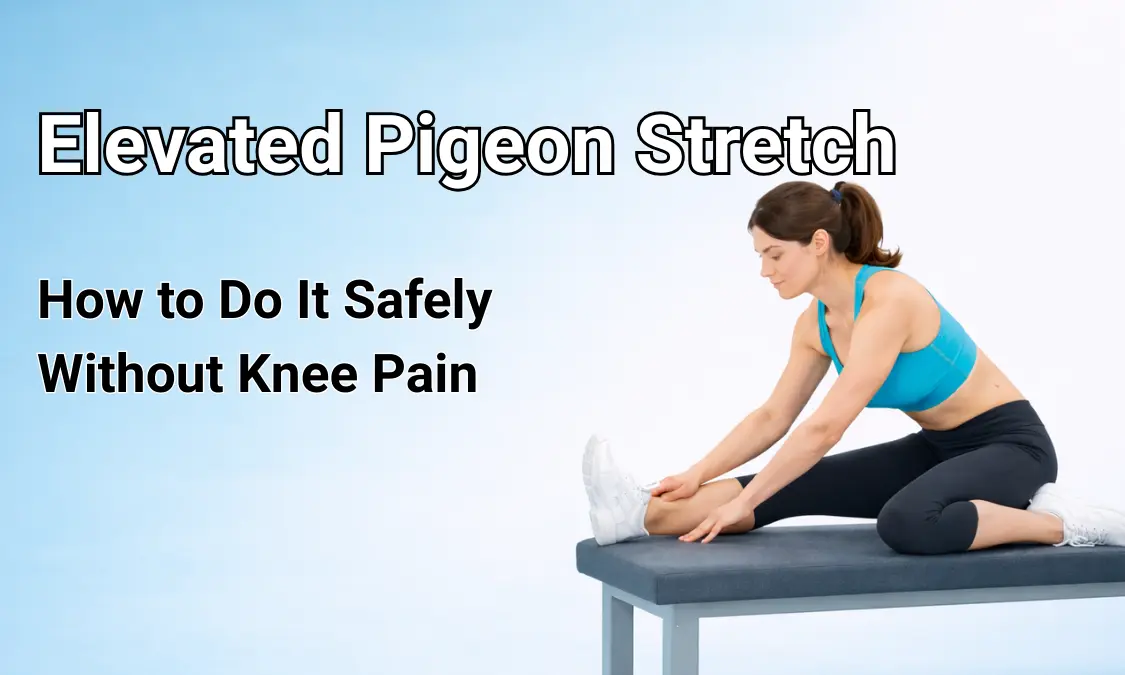
The elevated pigeon stretch is a hip stretch done with one leg raised on a surface like a bench, chair, or bed. The other leg stays on the floor while you stay upright or lean forward slowly.

Because the leg is elevated, the stretch feels more controlled. This makes it easier for beginners and safer for people who feel pain during the floor version. Many people also call it standing pigeon or bench pigeon stretch.
Who Benefits Most From the Elevated Pigeon Stretch?
This stretch works well for a wide range of people.
It is especially helpful if you:
- Sit for long hours at work
- Feel stiff hips after workouts
- Get knee pain during floor pigeon
- Run or walk often
- Feel nervous about deep stretches
It fits real life because you can do it at home, at work, or at the gym.
What Muscles Does the Elevated Pigeon Stretch Work?
The elevated pigeon stretch mainly targets the hip of the front leg.
It works:
- Glutes
- Piriformis
- Deep hip rotator muscles
You may also feel a mild stretch in the hip flexors or lower back. The main feeling should stay in the glute and outer hip. Sharp knee pain means the setup needs adjustment.
Why the Elevated Pigeon Stretch Helps
Tight hips often come from sitting, driving, running, lifting, and daily stress. The elevated pigeon stretch places the hip in external rotation, which helps lengthen deep hip muscles.
When these muscles relax:
- Hip movement feels smoother
- Squats and lunges feel easier
- Walking and running feel more natural
- Lower back stress often decreases
Because you control the height and depth, you can use this stretch often without fear.
How to Do the Elevated Pigeon Stretch (Step by Step)
Follow these steps slowly.

- Stand in front of a bench, chair, or bed
- Place one leg on the surface
- Keep the shin at a comfortable angle
- Keep the foot active, not loose
- Square your hips forward
- Stand tall with your chest up
- Slowly hinge forward at the hips
- Stop when you feel the stretch in the glute
- Hold and breathe
Your back should stay long. You should not feel strain in the knee or lower back.
Beginner Setup: Start the Right Way
If you are new to this stretch, start high and simple.

Use:
- A high surface like a bed or tall bench
- An upright chest
- A small forward lean
Do not chase depth. Comfort comes first. This setup works well for beginners, desk workers, and people returning from time off.
How High Should the Surface Be?
Surface height changes how strong the stretch feels.
Use this rule:
- Higher surface = easier stretch
- Lower surface = deeper stretch
You can use:
- Bench
- Chair
- Couch
- Desk
- Low table
Higher surfaces make the stretch easier. Lower surfaces make it deeper. Choose what feels safe and controlled.
If knee pain appears, raise the surface.
Quick setup table
Use the safest height first. Go lower only when your hips stay square and the knee feels calm.
How Long Should You Hold the Elevated Pigeon Stretch?
Hold time depends on how you use it.
For daily mobility or desk breaks:
- 20 to 30 seconds per side
After workouts or runs:
- 30 to 90 seconds per side
Do 1 to 2 sets per side. Even 60 seconds at your desk can help reduce stiffness after long sitting.
Breathing During the Elevated Pigeon Stretch
Breathing matters more than depth.
Use this pattern:
- Breathe in through your nose
- Breathe out slowly as you hinge forward
- Keep breathing calm during the hold
Slow breathing helps the hips relax and makes the stretch feel safer.
Static vs Dynamic Elevated Pigeon Stretch
You can use this stretch in two ways.
Dynamic
- Best before workouts
- Hold 10 to 20 seconds
- Move in and out gently
Static
- Best after workouts or at night
- Hold 30 to 90 seconds
- Stay still and relaxed
Both styles are useful. Choose based on timing.
Common Mistakes to Avoid

Avoid these common errors:
- Forcing the shin flat
- Letting hips twist open
- Leaning too far forward
- Letting the ankle collapse inward
- Holding your breath
- Pushing through sharp pain
The stretch should feel strong but calm.
Elevated Pigeon Stretch Knee Pain Fixes
You should feel the stretch in the glute, not the knee.
If knee pain shows up:
- Move the foot closer to your body
- Shorten the shin angle
- Raise the surface height
- Place a towel under the knee
- Stay more upright
Never force the knee into position.
Elevated Pigeon Stretch Hip Pinching Fixes
Hip pinching usually means the angle is too deep.
Try this:
- Reduce forward lean
- Raise the surface
- Keep hips facing forward
- Stop before pain appears
If pinching continues, stop the stretch.
Simple Visual Form Checks
These cues help without a mirror.
From the side:
- Back stays flat
- Chest stays open
From the front:
- Hips face forward
- Knee feels supported
If something feels off, reduce depth.
When to Use the Elevated Pigeon Stretch
This stretch fits many routines.
Use it:
- After long sitting
- At your desk for 60 seconds per side
- After leg workouts
- After running
- Before lower body training (dynamic)
Short sessions done often work best.
Elevated Pigeon Stretch vs Floor Pigeon

Both stretches target the hips.
Floor pigeon
- Deeper position
- More knee and hip stress
- Harder for stiff bodies
Elevated pigeon
- Easier to control
- Safer for beginners
- Easy to adjust
- Works at home, work, or travel
Most people should start elevated before trying the floor version.
Quick comparison
Important
- Stop if you feel sharp pain in the knee or a strong hip pinch.
- Raise the surface if the stretch feels too intense.
- If numbness or tingling starts, stop and reassess.
If pain keeps coming back, it is smart to talk to a health professional.
Who Should Be Careful With This Stretch?
Be careful if you have:
- Recent hip or knee surgery
- Strong joint pain
- Numbness or tingling
If pain stays or feels unusual, talk to a health professional before continuing.
Frequently Asked Questions
Do I need a 90-degree shin angle?
No. Comfort matters more than angles. A relaxed shin angle is fine if you feel the stretch in the glute and the knee stays calm.
How often can I do this stretch?
Daily is fine if it feels good. Short, consistent sessions usually work better than rare long sessions.
Is soreness normal after?
Mild soreness can happen in the glute or outer hip. Sharp pain, numbness, or strong joint pain is not normal.
Can runners use this stretch?
Yes. It can be a simple recovery stretch after a run, especially if your hips and glutes feel tight.
Conclusion
From personal experience and working with many different people, the elevated pigeon stretch works best when done gently and consistently. You do not need to push deep or force your body into pain. Short daily sessions improve hip comfort more than long sessions done once in a while. This stretch fits real life because it works at home, at work, and after training. It is easy to adjust, safe for most bodies, and one of the most practical ways to keep the hips moving well.
