


Most people do not look for stretches unless something already feels wrong. Tight legs when standing up. Stiffness after sitting all day. A pulling feeling behind the knees during simple movements. I have seen this pattern again and again in desk workers, runners, and gym users. Many of them try stretching on their own and end up with knee pain or lower back discomfort instead of relief.
I went through the same issue after years of long sitting and irregular mobility work. My hamstrings became so tight that basic movements felt uncomfortable. Through trial, error, and consistent practice, the half split hamstring stretch became one of the few stretches that truly helped. It was simple, controlled, and safe. Over time, I also used this stretch with others and saw similar results. When done correctly, it improves flexibility without forcing the body. This guide is built from real experience and practical use, not theory.
Table of Contents
Jump to a sectionUse the links below to jump to the section you need.
- What Is the Half Split Hamstring Stretch
- Half Split Hamstring Stretch Sanskrit Name
- Pose Type and Targets
- Muscles Worked in the Half Split Hamstring Stretch
- How to Do the Half Split Hamstring Stretch (Step by Step)
- What You Should Feel
- What You Should Not Feel
- Breathing During the Stretch
- Common Mistakes and How to Fix Them
- Benefits of the Half Split Hamstring Stretch
- Static vs Dynamic Half Split Stretch
- How Long and How Often to Do the Stretch
- Preparatory Poses (Warm-Up)
- Follow-Up Poses (Cool-Down)
- Beginner Modifications
- Advanced Variations
- Safety and Contraindications
- Who Benefits Most From This Stretch
- Frequently Asked Questions
- Conclusion
Who This Guide Is For
- Desk workers with tight legs from long sitting
- Beginners who want clear steps and safe form
- Runners who want better recovery and smoother movement
- Gym users who feel tight after leg workouts
- Older adults who want gentle mobility support
Key Takeaways
- The half split hamstring stretch targets tight hamstrings in a controlled way.
- Good form matters more than how deep you go.
- You should feel a gentle pull, not sharp pain.
- Blocks and a slight knee bend make it safer for beginners.
- Consistency beats intensity for long-term flexibility.
What Is the Half Split Hamstring Stretch

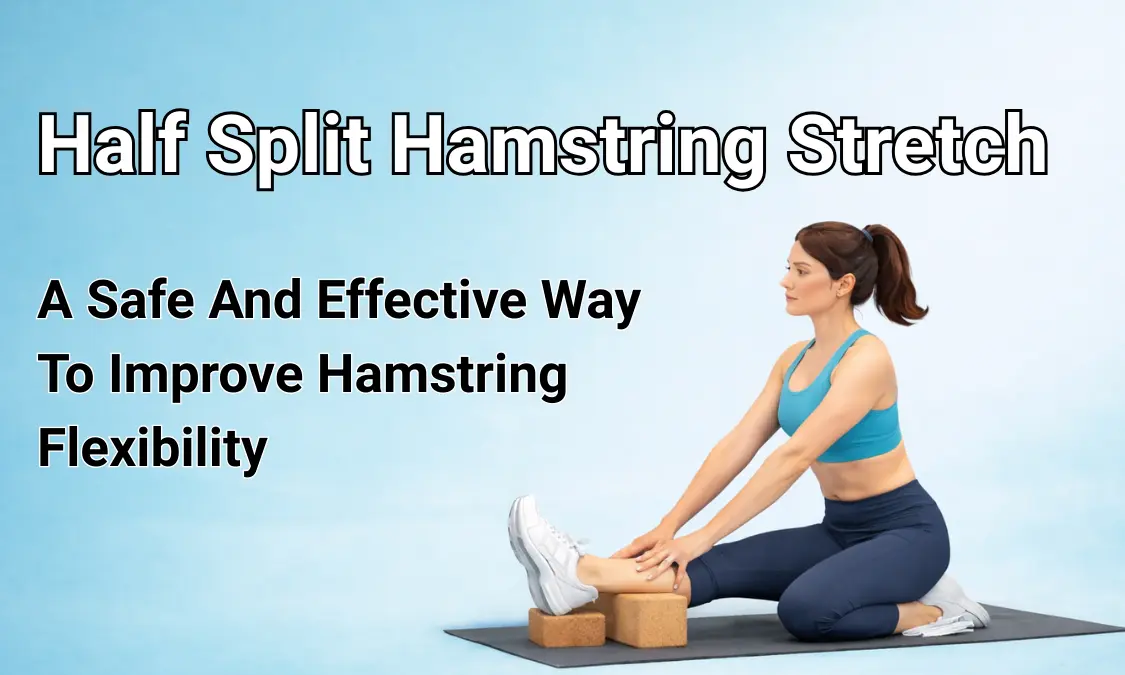
The half split hamstring stretch is done from a kneeling position. One leg stays straight in front. The other knee rests on the floor behind you. The hips move back while the chest stays lifted.
This stretch is often used to reduce stiffness caused by sitting, running, or leg training. It is also used as a preparation for deeper stretches.
Half Split Hamstring Stretch Sanskrit Name

In yoga, this stretch is called Ardha Hanumanasana.
- Ardha means half
- Hanuman is linked with full splits
- Asana means posture
Both names describe the same position and purpose.
Pose Type and Targets
Pose type:
Static stretch / yoga pose
Primary target:
Hamstrings
Secondary targets:
Calves, glutes, hips, lower back (support muscles)
Muscles Worked in the Half Split Hamstring Stretch

Primary Muscles Stretched
- Hamstrings of the front leg
- Area behind the knee
- Upper calf muscles
These muscles often tighten from long sitting or repeated training.
Supporting Muscles
- Glutes
- Hip muscles
- Core muscles
- Lower back muscles
These muscles help keep balance and protect the spine.
How to Do the Half Split Hamstring Stretch (Step by Step)

This version works well for beginners and experienced movers.
- Start in a low kneeling lunge.
- Step one foot forward.
- Shift your hips back over the back knee.
- Straighten the front leg.
- Flex the front foot so toes point up.
- Keep your chest lifted and back long.
- Place hands on the floor or on blocks.
- Hold and breathe slowly.
Exit the stretch with control. Switch sides.
What You Should Feel
You should feel:
- A stretch along the back of the front leg
- Mild tension behind the knee
- Light stretch in the calf
The stretch should feel slow and controlled.
What You Should Not Feel
Stop or reduce depth if you feel:
- Sharp pain
- Strong pressure in the knee
- Lower back pain
- Tingling or numbness
Pain means the stretch is too deep.
Breathing During the Stretch
Breathing helps muscles relax.
- Inhale through the nose to lengthen the spine
- Exhale slowly and let the hips settle back
- Do not hold your breath
Slow breathing makes the stretch more effective.
Common Mistakes and How to Fix Them

Rounding the back
Fix: Lift the chest and keep the spine long.
Locking the front knee
Fix: Keep a slight bend if needed.
Forcing the stretch
Fix: Stop before pain appears.
Letting hips twist
Fix: Keep hips facing forward.
Good form matters more than depth.
Benefits of the Half Split Hamstring Stretch
This stretch offers many benefits:
- Improves hamstring flexibility
- Reduces stiffness from sitting
- Supports runners and gym users
- Helps reduce lower back tension
- Makes daily movement easier
Many people notice improvement within weeks when practiced regularly.
Static vs Dynamic Half Split Stretch
Holding the stretch still is a static stretch.
This works best after workouts or at the end of the day.
Adding small controlled movements turns it into a dynamic stretch.
This is useful before activity and helps build control.
Both styles have value. Use them based on your goal.
How Long and How Often to Do the Stretch
Hold time:
20 to 40 seconds for beginners
Up to 60 seconds for experienced users
Frequency:
- Desk workers: daily
- Active people: after workouts
- Beginners: 3 times per week
Consistency matters more than intensity.
Simple plan (hold time and frequency)
Preparatory Poses (Warm-Up)
Warm muscles stretch better.
Good warm-up options:
- Standing forward fold
- Gentle lunges
- Leg swings
- Hip circles
This reduces injury risk.
Follow-Up Poses (Cool-Down)
After the stretch, help the body relax:
- Child’s pose
- Seated forward fold
- Light walking
This helps prevent stiffness later.
Beginner Modifications

- Use blocks under your hands
- Bend the front knee slightly
- Stay more upright
- Place padding under the back knee
These options reduce strain.
Advanced Variations
- Lean forward with a flat back
- Add slow chest lifts and lowers
- Try light active leg lifts
- Hold longer with steady breathing
Only progress if the body feels stable.
Safety and Contraindications
Important
The stretch should never cause sharp pain. If you feel strong joint pressure, tingling, or numbness, stop and reduce the depth. Use blocks or a slight knee bend if needed. Controlled stretching is safer than forcing depth. If you have an injury or the pain keeps coming back, talk to a qualified healthcare professional before continuing.
Avoid or modify this stretch if you have:
- Hamstring tear
- Knee injury
- Severe hip pain
- Recent surgery
Normal stretch discomfort feels dull and slow.
Injury pain feels sharp and sudden.
Who Benefits Most From This Stretch
This stretch helps:
- Desk workers with tight legs
- Runners and athletes
- Gym users after leg workouts
- Beginners in yoga
- Older adults with stiffness
It supports better movement in daily life.
Frequently Asked Questions
Why does my lower back feel tight?
Tight hamstrings can pull on the pelvis and make the lower back feel tight. Keep your back long and avoid rounding during the stretch.
Can I do this stretch every day?
Yes, if it feels gentle and does not cause pain. If you feel sore, do fewer sets or hold for less time.
Is this good for runners?
Yes. It supports recovery and helps the legs move more comfortably. Use a light version before training and longer holds after.
Should I stretch before or after workouts?
Use gentle, shorter holds before workouts. Use longer holds after workouts to relax tight muscles.
Is this stretch safe for older adults?
Often yes, but keep it gentle. Use blocks, add padding under the knee, and avoid forcing depth.
Conclusion
From personal experience and years of working with mobility routines, tight hamstrings are one of the most common causes of daily discomfort. Most people do not need complex programs. They need a few reliable movements they can repeat consistently. The half split hamstring stretch is one of those movements.
I still use this stretch regularly after workouts and on days when I sit too much. When practiced with patience, proper alignment, and steady breathing, it helps the body move better without stress. Simple, consistent practice makes more difference than any complicated routine.
