


If you sit for long hours, scroll on your phone, or train your chest often, you may feel this problem already. Your chest feels tight. Your shoulders sit forward. Lying flat on the floor feels uncomfortable. Even simple movements like lifting your arms can feel restricted. Many people feel this but ignore it until stiffness becomes part of daily life.
I have experienced this myself and seen it in many others. Long screen time and upper-body workouts slowly tightened the chest. Basic stretches did not help much. Using a foam roller changed that. The pec stretch on foam roller allowed the chest to open without forcing movement. With regular use, shoulder movement felt easier and posture improved. That is why this stretch is now part of many recovery routines.
Table of Contents
Jump to a sectionUse the links below to jump to the section you need.
- Purpose
- Set Up
- Movement
- Breathing During the Stretch
- Body Alignment Cues
- Tips
- Beginner vs Advanced Adjustments
- How to Do Foam Roller Pec Stretch (Left)
- Instructions
- Choosing the Right Foam Roller
- Who Should Do This Stretch
- Benefits of the Pec Stretch on Foam Roller
- Why Chest Tightness Affects the Upper Back
- Daily Habits That Make Pec Tightness Worse
- Common Mistakes to Avoid
- Safety and Precautions
- Frequently Asked Questions
- Conclusion
Who This Guide Is For
- Desk workers who sit for long hours
- Gym users and home workout people
- Beginners new to stretching or foam rolling
- Anyone with chest tightness, rounded shoulders, or shoulder stiffness
Key Takeaways
- Keep the stretch gentle. Do not force the arms.
- Use slow breathing to help the chest relax.
- Good alignment matters more than intensity.
- 30 to 60 seconds is enough for most people.
- Daily practice beats doing it once in a while.
Purpose
The main purpose of the pectoral stretch on foam roller is to lengthen tight chest muscles.
This stretch can help with:
- Chest tightness
- Rounded shoulders
- Shoulder stiffness
- Upper body discomfort
- Poor posture from sitting
It is useful for desk workers, gym users, and people with long screen time.
Set Up
Follow these steps before starting:
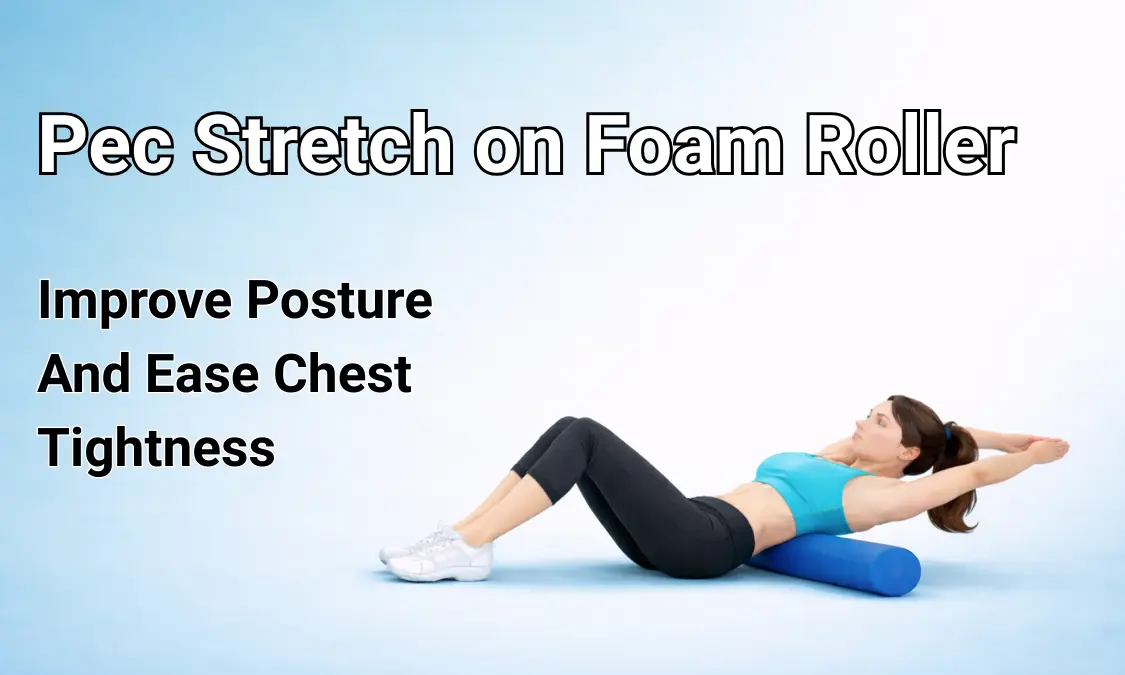
- Place a foam roller on the floor
- Sit at one end of the roller
- Slowly lie back so your spine rests along the roller
- Keep your head supported
- Bend your knees and keep feet flat on the floor
- Keep your lower back neutral
Your body should feel stable and relaxed.
Movement

Now begin the foam roller pec stretch:
- Open your arms out to the sides
- Keep elbows slightly bent
- Let gravity pull your arms down
- Palms can face up or forward
- Relax your shoulders away from your ears
Hold this position while breathing slowly.
Stay here for 30 to 60 seconds.
You should feel a gentle stretch across the chest, not pain.
Breathing During the Stretch

Breathing helps this stretch work better.
- Inhale slowly through your nose
- Exhale as your arms relax toward the floor
- Let each breath soften the chest
Slow breathing helps release tension, especially after long sitting.
Body Alignment Cues

Good alignment keeps the stretch safe and effective.
- Keep your spine centered on the foam roller
- Let your ribs stay relaxed, not pushed up
- Keep your neck neutral
- Make sure your head and hips stay supported
If your body shifts, reset before continuing.
Tips
These tips improve comfort and results:
- Stay relaxed
- Do not force your arms lower
- Stop if you feel sharp pain
- Use a soft foam roller if you are new
Small changes in arm position can change the stretch.
Beginner vs Advanced Adjustments
This stretch can be adjusted based on comfort.
Beginner option
- Keep arms bent at 90 degrees
- Hold for a shorter time
More experienced option
- Open arms wider or slightly overhead
- Hold closer to 60 seconds
Increase range slowly over time.
How to Do Foam Roller Pec Stretch (Left)

This version focuses on one side.
- Lie face down
- Place the foam roller near your left chest
- Move the left arm out to the side
- Roll slowly from mid-chest toward the shoulder
- Keep pressure light
- Pause briefly on tight spots
Repeat on the right side.
Instructions
For best results:
- Perform 1 to 2 rounds
- Hold each stretch up to 60 seconds
- Do this once per day
- Best time is after workouts or in the evening
If short on time, even one round helps.
When to do the pec stretch on foam roller
Choosing the Right Foam Roller
The foam roller you use matters.
- A soft foam roller is best for beginners
- A firm foam roller gives deeper pressure
- A long foam roller supports the full spine
- A short foam roller works well for one side
Comfort should come before pressure.
Who Should Do This Stretch
The pec stretch on foam roller works for many people.
It is helpful for:
- Office and remote workers
- Gym and home workout users
- People with rounded shoulders
- Anyone with chest tightness
This stretch fits easily into daily routines.
Benefits of the Pec Stretch on Foam Roller
This stretch offers more than chest relief.
Benefits include:
- Better shoulder movement
- Improved posture
- Less upper body tension
- Easier breathing
It also supports upper-back mobility.
Why Chest Tightness Affects the Upper Back
Tight chest muscles pull the shoulders forward.
This limits upper-back movement and creates stiffness.
When the chest opens, the upper back can move better.
That is why chest and upper-back work go together.
Daily Habits That Make Pec Tightness Worse

Some daily habits increase chest tightness:
- Long desk work
- Phone use with head down
- Driving with shoulders rolled forward
Daily stretching helps balance these habits.
Common Mistakes to Avoid
Avoid these common errors:
- Arching the lower back
- Shrugging shoulders upward
- Holding your breath
- Using too much pressure
Good form matters more than force.
Safety and Precautions
Important
- Stop if you feel sharp, burning, or shooting pain.
- Skip this stretch if you have a recent shoulder injury, recent surgery, or a chest muscle tear.
- Keep the stretch gentle. Do not force your arms down.
Do not perform this stretch if you have:
- A recent shoulder injury
- A chest muscle tear
- Sharp or burning pain
If unsure, reduce range or stop.
Frequently asked questions
How often should I do a pec stretch on foam roller?
Once per day works well for most people.
Can I do this before workouts?
Yes, but keep hold time shorter before training.
Is this better than wall chest stretches?
Both help. Foam rollers allow deeper chest opening.
Conclusion
Chest tightness builds over time through sitting, phone use, and repeated upper-body work. From personal experience, ignoring it only limits shoulder movement more. The pec stretch on foam roller is simple but effective when done with patience and control. I have used it regularly and seen steady improvement without pushing into pain. Calm breathing, good alignment, and consistency matter more than intensity. Small daily effort leads to real change.
