


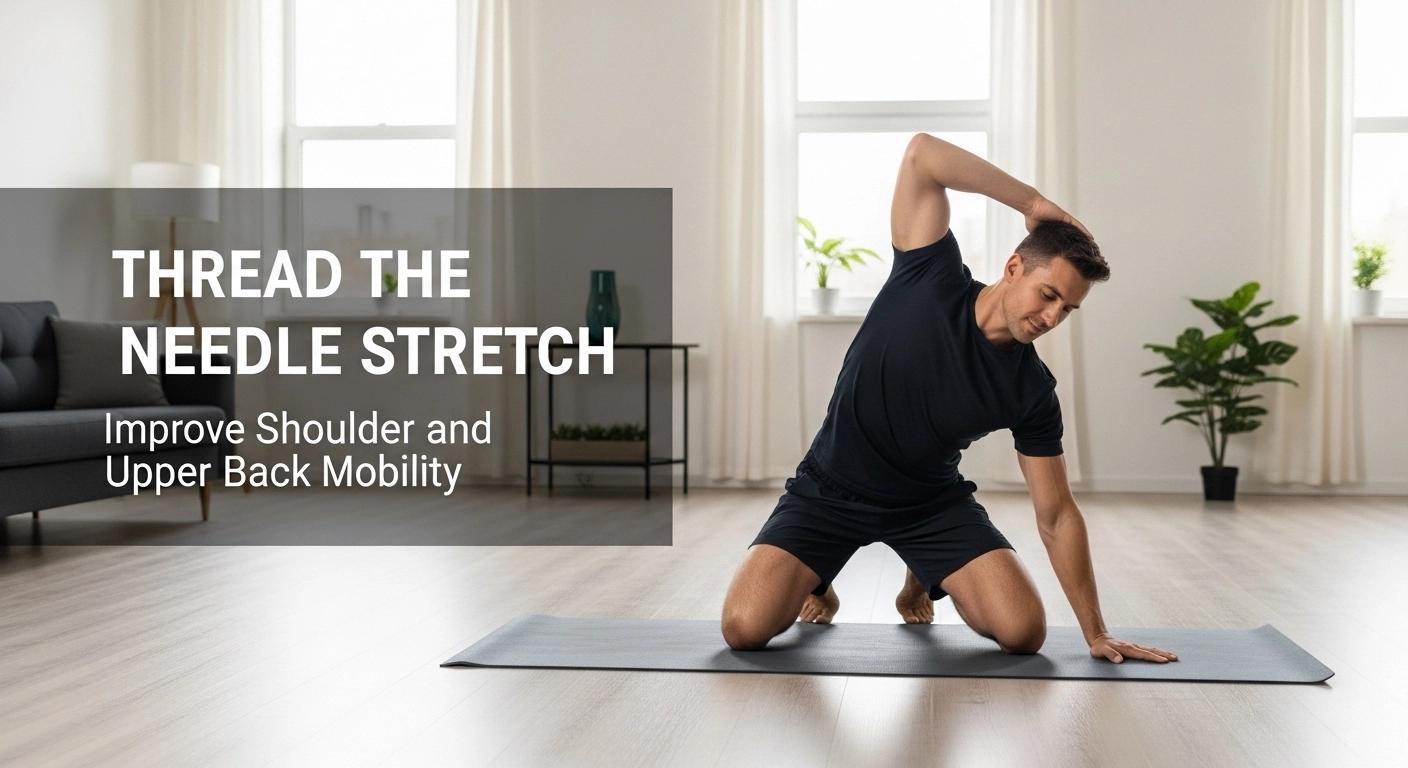
If you spend hours sitting, you may notice tightness in your upper back and shoulders. Turning your neck can feel uncomfortable. Even simple movements may feel stiff. This often happens from long desk work, screen use, or looking down at phones. Over time, this tension can build up and make daily movement feel heavy and restricted.
I first noticed this myself after spending too much time working at a desk. I tried basic stretches, but they did not bring lasting relief. The thread the needle stretch stood out because it felt natural and easy to control. It gently targets the upper back and shoulders without force. With regular use, I felt real improvement in movement and comfort. That is why this stretch has become one I return to and recommend for people dealing with similar stiffness.

Table of Contents
Jump to a sectionUse the links below to jump to the section you need.
- What Is the Thread the Needle Stretch?
- Which Muscles Are Stretched by the Thread the Needle Stretch?
- How to Do the Thread the Needle Stretch
- Benefits of the Thread the Needle Stretch
- Why the Thread the Needle Stretch Helps Relieve Tension
- Thread the Needle Stretch Modifications
- Who Is the Thread the Needle Stretch Suitable For?
- Who Should Not Do the Thread the Needle Stretch?
- When to Do the Thread the Needle Stretch
- The Process: Thread the Needle Stretch
- How Long to Hold the Thread the Needle Stretch
- Breathing During the Thread the Needle Stretch
- Frequently Asked Questions
- Conclusion
Who This Guide Is For
- People who sit for long hours and feel upper back stiffness
- Beginners who want a safe, simple stretch
- Office and remote workers with tight shoulders or neck tension
- Anyone who wants gentle daily movement and better posture support
- People who feel tight after upper body workouts
Key Takeaways
- The thread the needle stretch helps loosen the upper back, shoulders, and neck.
- Move slowly and keep your hips steady for better results.
- Breathing and comfort matter more than stretching deeper.
- Hold 20 to 30 seconds per side, 2 to 3 rounds if it feels good.
- Use a pillow or a smaller twist range if you are a beginner.
What Is the Thread the Needle Stretch?

The thread the needle stretch is a twisting stretch done from a tabletop position.
One arm slides under the chest.
The upper body rotates while the hips stay steady.
This movement helps the upper back loosen up.
It is commonly used in yoga, Pilates, and home mobility routines.
Which Muscles Are Stretched by the Thread the Needle Stretch?

This stretch works several upper body muscles.
It targets:
- Upper back muscles
- Muscles between the shoulder blades
- Shoulder muscles
- Side back muscles
- Neck muscles
It also improves movement in the middle spine.
This area often becomes stiff from long hours of sitting or poor posture.
How to Do the Thread the Needle Stretch

Follow these steps to do the thread the needle stretch safely.
- Start on your hands and knees.
- Place hands under shoulders.
- Place knees under hips.
- Lift your right arm upward.
- Slowly slide that arm under your chest.
- Let the shoulder move closer to the floor.
- Keep hips still and balanced.
- Hold the stretch.
- Return to the start position.
- Switch sides.
Move slowly and with control.
The stretch should feel gentle, not painful.
Benefits of the Thread the Needle Stretch
The thread the needle stretch supports many daily needs.
It helps to:
- Reduce upper back stiffness
- Ease shoulder tightness
- Relax the neck
- Improve spine movement
- Support better posture
This stretch is helpful for people who sit at desks.
It also works well as part of a cool-down after workouts.
Quick overview
Why the Thread the Needle Stretch Helps Relieve Tension
Here’s the thing.
Most tension builds from limited movement and long sitting.
This stretch adds gentle rotation to the spine.
Rotation helps tight muscles relax.
It also improves blood flow to stiff areas.
That is why many people feel relief after just a few reps.
Thread the Needle Stretch Modifications

Not everyone moves the same way.
These options make the stretch safer and more comfortable.
Beginner options
- Place a pillow under the shoulder
- Keep the bottom arm bent
- Reduce how far you twist
Deeper stretch options
- Extend the top arm longer
- Hold the stretch a little longer
- Move slowly in and out of the twist
Comfort is more important than depth.
Who Is the Thread the Needle Stretch Suitable For?
This stretch is suitable for:
- Office workers
- Remote workers
- Beginners
- Older adults
- Light fitness users
It fits well into warm-ups, cool-downs, and short daily routines.
Who Should Not Do the Thread the Needle Stretch?
Some people should limit or avoid this stretch.
Be careful if you have:
- Shoulder injuries
- Neck pain that gets worse with twisting
- Recent back surgery
Important
Stop the stretch if you feel sharp pain, numbness, or dizziness. Move slowly and stay in a comfortable range. If you have an injury, recent surgery, or pain that keeps coming back, talk to a qualified health professional before trying new stretches.
If unsure, keep the movement small or skip it.
When to Do the Thread the Needle Stretch
You can do this stretch:
- In the morning to loosen the back
- During work breaks
- After upper body workouts
- Before sleep to relax
Many people do it daily.
Even short sessions can help.
The Process: Thread the Needle Stretch
The process stays simple.
Move slow.
Breathe steady.
Switch sides evenly.
Focus on control, not force.
How Long to Hold the Thread the Needle Stretch
Hold the thread the needle stretch for 20 to 30 seconds on each side.
Repeat 2 to 3 times per side.
Do not rush the movement.
Slow holds help muscles relax.
Breathing During the Thread the Needle Stretch

Breathing helps the stretch work better.
- Inhale before lifting the arm
- Exhale as the arm slides under the chest
- Keep breathing slow and steady while holding
Calm breathing supports muscle release.
Frequently Asked Questions
Can I do the thread the needle stretch every day?
Yes. Most people can do it daily. It works well as a light mobility stretch.
Is the thread the needle stretch good for posture?
Yes. It helps the upper back move better. Better movement supports posture.
Is this stretch good for beginners?
Yes. Beginners can start with small movements. Support tools can help.
Conclusion
From experience, the thread the needle stretch works best when it becomes part of a remembering daily habit. It does not need long sessions or special tools. What matters is slow movement, steady breathing, and comfort. I have seen it help office workers, beginners, and active people reduce stiffness and move more freely. When done gently and without force, this stretch can support better posture, ease tension, and improve daily movement over time.
