


Many people try planks and sit ups but still feel weak in the belly. The lower back arches, the neck feels tight, and the core never feels stable. I went through this too. I could hold planks for a long time, yet my back still felt sore and my posture was poor.

The hollow body hold changed that. Once I learned how to keep my lower back pressed down and breathe while staying tight, my core finally started to work the way it should. Push ups felt smoother, my posture improved, and my back stopped acting up. This guide is based on that experience and on what I have seen with many people who struggled with the same issues.
Table of Contents
Jump to a sectionUse the links below to jump to the section you need.
- What Is a Hollow Body Hold
- How to Do a Hollow Body Hold
- Why the Hollow Body Hold Matters
- Benefits of a Hollow Body Hold
- Muscles Worked
- Hollow Body Hold for Beginners
- Beginner Progress Plan
- Breathing During a Hollow Body Hold
- Variations
- Common Mistakes
- Safety and Precautions
- How to Add Hollow Holds to Your Workout
- Hollow Body Hold vs Plank
- Frequently Asked Questions
- Conclusion
Who This Guide Is For
- Beginners who want a safer way to train the core.
- People whose lower back arches during planks or sit ups.
- Home workout users who want a no-equipment core exercise.
- Anyone who wants better posture and stronger bracing for workouts.
Key Takeaways
- The hollow body hold trains deep belly control, not just abs burn.
- Your lower back must stay pressed into the floor the whole time.
- Short clean holds beat long holds with bad form.
- Good hollow form helps posture and can reduce lower back strain in other exercises.
What Is a Hollow Body Hold
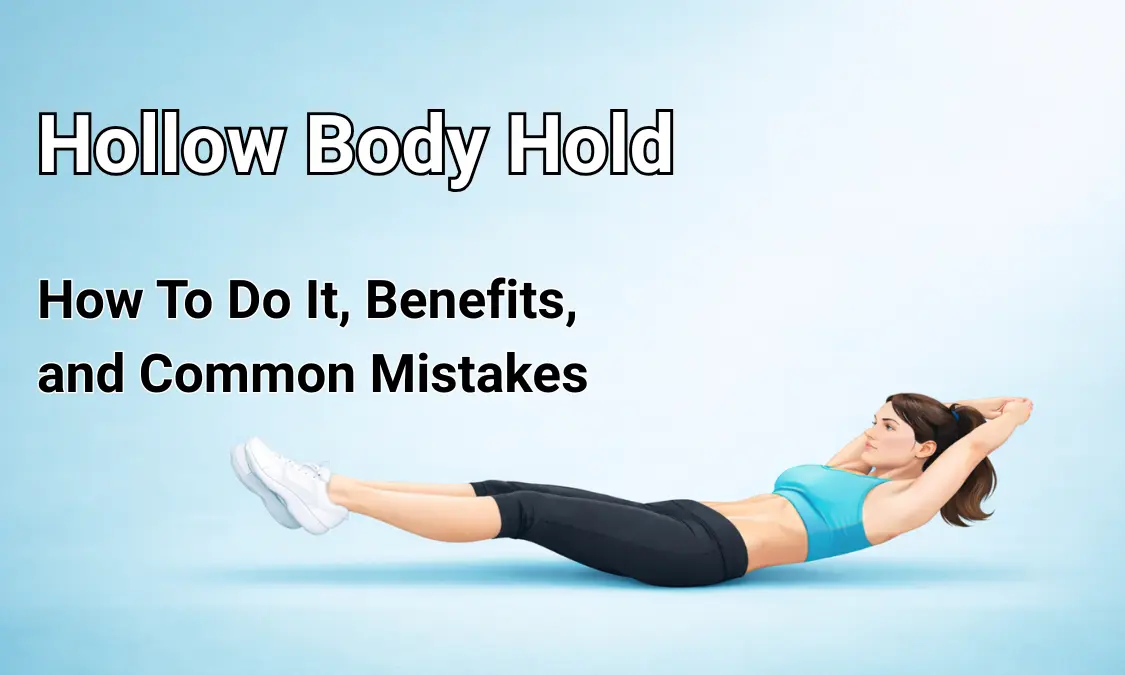
The hollow body hold is a core exercise done on your back. You hold your body in a curved shape while keeping your lower back flat on the floor. Your arms and legs stay off the ground while your abs stay tight.
This trains your body to control your spine during movement. That skill is what protects your back during sports, lifting, and daily life.
How to Do a Hollow Body Hold
Lie flat on your back.
Bend your knees and place your feet on the floor.
Press your lower back into the ground.
Tighten your abs like you are bracing for a cough.
Lift your shoulders slightly.
Lift your legs off the floor.
Extend your arms or keep them by your sides.
Your body should form a gentle curve.
Your lower back must stay pressed down.

If your back lifts, stop and reset.
Important
This guide is for general fitness and core training. If you have an injury, medical condition, or ongoing back or neck pain, talk to a qualified professional before doing this exercise.
Why the Hollow Body Hold Matters
The hollow body hold teaches your core to stop your lower back from arching. This is called anti-extension control.
This matters because your spine needs support when you:
- lift
- push
- pull
- run
- jump
- carry weight
A weak core lets the back take too much load. A strong hollow position keeps your body safe and steady.
Benefits of a Hollow Body Hold
- Stronger abs
- Better posture
- Less lower back strain
- Better balance
- More control in movement
This exercise supports squats, push ups, pull ups, and many other moves.
Muscles Worked
The hollow body hold uses many muscles at once.
Main muscles:
- Abs
- Deep belly muscles
- Obliques
- Hip flexors
Support muscles:
- Lower back
- Shoulders
- Upper back
They work together to keep your body in a stable shape.

Hollow Body Hold for Beginners
Do not rush this exercise.
Start with:
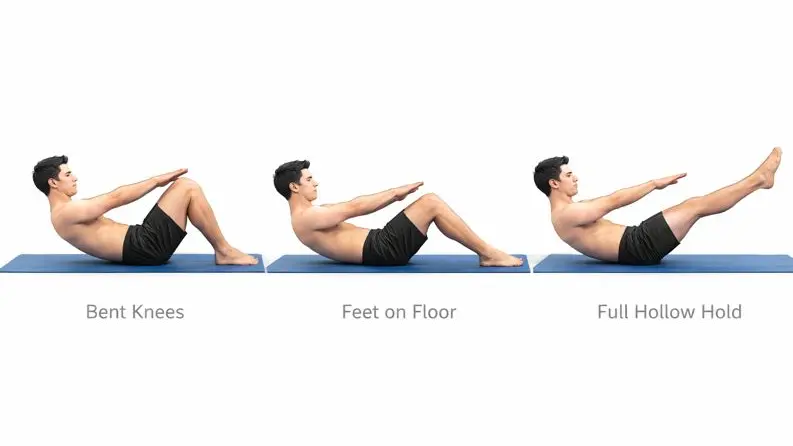
- Bent knees
- Arms by your sides
- Feet closer to the floor
Short holds with clean form are better than long holds with poor form.
Beginner Progress Plan
Week 1
10 second holds
3 sets
Week 2
15 second holds
3 sets
Week 3
20 to 30 second holds
3 sets
If your back lifts, use an easier version.
Quick Progress Table
Breathing During a Hollow Body Hold
Do not hold your breath.
Inhale through the nose.
Exhale through the mouth.
Keep your abs tight while breathing.
If breathing breaks your form, shorten the hold.
Variations
Adjust Your Arms
Keep arms by your sides to make it easier.
Move arms overhead to make it harder.
Bend Your Knees
Bent knees reduce strain.
Feet on the Floor
Keep heels down while bracing.
Dead Bug
Lower opposite arm and leg slowly.
Lower Your Legs
Bring legs closer to the floor.
Add Weight
Hold a light weight overhead.
Hollow Hold Rock
Rock slowly while holding the shape.
Common Mistakes
Lower back lifting
This reduces core work and can cause pain.
Shoulders staying down
Lift the upper back slightly.
Chin tucking
Keep the neck long.
Rushing progress
Skipping easy versions leads to poor form.
Quick Fixes for Common Mistakes
Safety and Precautions
Stop if you feel sharp pain.
Use easier versions if you have back issues.
Train control, not ego.
How to Add Hollow Holds to Your Workout
You can use this move as:
- A warm up
- A core finisher
- A pairing with planks or dead bugs
Train two to three times per week.
Hollow Body Hold vs Plank
Both train the core.
Hollow body hold:
- Trains spine control
- Builds deep belly strength
Plank:
- Loads shoulders more
- Trains the core face down
Using both builds better balance.

Frequently Asked Questions
How long should I hold a hollow body hold?
Start with 10 to 20 seconds. Add time only when your lower back stays flat the whole set.
Is the hollow body hold good for beginners?
Yes. Use bent knees, arms by your sides, or feet on the floor until you can keep clean form.
Why does my lower back hurt during the hollow hold?
Most of the time your back is lifting. Make the exercise easier, shorten the hold, and reset your lower back to the floor.
Can hollow holds replace planks?
No. They train different skills. Use both for balanced core strength.
Do hollow body holds build abs?
They make your abs stronger. Visible abs depend on diet, training, and body fat.
Conclusion
The hollow body hold is not about forcing long hold times or chasing discomfort. It is about control, patience, and clean form. I have seen this exercise change how people move, stand, and train when they use it the right way. When you keep your lower back flat, breathe steady, and build up slowly, this simple hold becomes one of the best tools for building a strong and stable core.
