


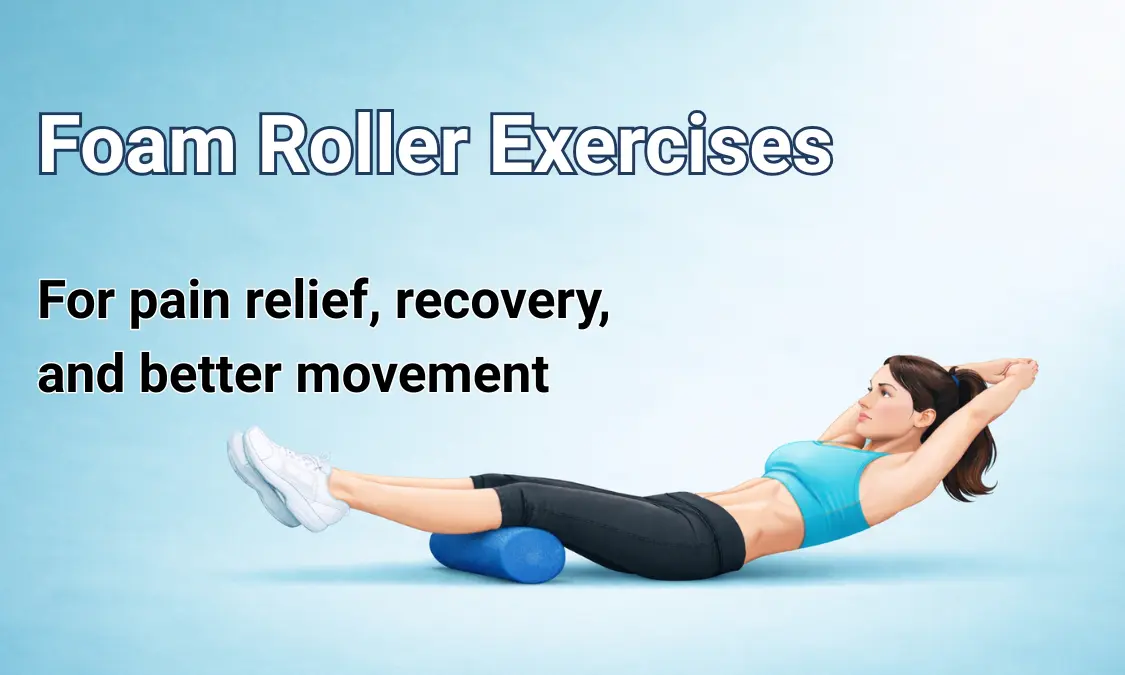
Many people search for foam roller exercises because their body feels tight or sore. It may be a back that hurts after sitting all day. It may be legs that feel heavy after running or gym training. It may be shoulders that never seem to relax. These small problems build up and make daily movement harder than it should be.
I started using a foam roller for the same reasons. At first, I made the mistakes most people make. I rolled too fast. I used too much pressure. It felt painful and confusing. Over time, through regular use and helping others, I learned that foam rolling works best when it is slow, controlled, and done with care. When used the right way, foam roller exercises help the body feel lighter, move easier, and recover better.

Table of Contents
Jump to a sectionUse the links below to jump to the section you need.
- Who This Guide Is For
- What Is Foam Rolling?
- What Do Foam Rollers Actually Do?
- Benefits of Foam Roller Exercises
- How to Use a Foam Roller Correctly
- How Long Should You Foam Roll
- Choosing the Right Foam Roller
- Quick Foam Roller Routines
- Foam Roller Exercises by Body Area
- Foam Roller Exercises for Runners and Recovery
- Foam Roller Exercises for Office Workers
- Foam Roller Exercises for Upper Back Release
- Foam Roller Exercises for Back Pain
- Foam Roller Exercises for Better Posture
- Common Foam Rolling Mistakes
- Pain vs Discomfort While Foam Rolling
- Safety and When to Stop
- Frequently Asked Questions
- Conclusion
Who This Guide Is For
- Beginners who want simple and safe steps
- Office workers who feel stiff from sitting
- Runners and gym users who want faster recovery
- People with mild tightness in legs, back, or shoulders
- Anyone who wants better movement without confusion
Key Takeaways
- Roll slowly and start with light pressure.
- 20 to 40 seconds per muscle is enough for most people.
- Use foam rolling before workouts to warm up and after workouts to relax.
- Discomfort is normal, but sharp pain is not.
- Consistency matters more than force.
- If you have an injury or medical issue, get professional advice.
What Is Foam Rolling?

Foam rolling is a form of self-massage. You use your body weight on a foam roller to press into muscles. This pressure helps tight tissue relax and improves how muscles move.
Foam rolling works on fascia. Fascia is the tissue that supports muscles and joints. When it becomes tight, movement feels stiff and uncomfortable.
What Do Foam Rollers Actually Do?
Foam rollers help muscles release tight areas. This reduces pull on joints and allows smoother movement. Blood flow also increases, which helps muscles feel warmer and more relaxed.
Foam roller exercises do not heal injuries. They support comfort, movement, and recovery when used correctly.
Benefits of Foam Roller Exercises

Foam roller exercises can help with:
- Muscle tightness
- Soreness after workouts
- Stiff hips and legs
- Tight back and shoulders
- Poor posture from long sitting
They work best when combined with light movement and stretching.
How to Use a Foam Roller Correctly

Place the roller under the muscle you want to work. Use your body weight to apply pressure. Roll back and forth in small, slow movements.
Basic tips:
- Move slowly
- Pause on tight spots
- Breathe deeply
- Avoid bones and joints
Stop if pain feels sharp.
Important
Foam rolling should feel like pressure, not sharp pain. Start light, go slow, and avoid bones and joints. Stop if you feel burning, tingling, numbness, or strong pain. If you have a medical condition or injury, ask a health professional first.
How Long Should You Foam Roll
Time matters.
- Roll each muscle for 20 to 40 seconds
- Do not stay longer than 60 seconds on one area
- Beginners should roll for 5 to 10 minutes total
- Experienced users can go up to 15 minutes
Slow sessions work better than long or rushed ones.
Quick Reference: Time and Pressure
Breathing While Foam Rolling

Breathing helps muscles relax.
- Breathe slowly through your nose
- Breathe out when you feel tightness
- Do not hold your breath
Holding breath increases tension and discomfort.
If You Are New to Foam Rolling
Keep it simple.
Start with:
- Light pressure
- Short sessions
- Large muscles like thighs and upper back
Five minutes is enough at first. Build slowly.
Should You Use a Foam Roller Before or After a Workout?
Both options work.
Before exercise:
Light rolling helps warm up muscles and improve movement.
After exercise:
Slower rolling helps muscles relax and reduces soreness.
Foam rolling on rest days helps reduce stiffness from sitting.
Choosing the Right Foam Roller
Foam rollers come in different styles.
- Soft roller: best for beginners
- Firm roller: deeper pressure
- Textured roller: targets small tight spots
- Long roller: good for back and posture
- Short roller: good for legs and arms
Comfort matters more than pressure.
Quick Foam Roller Routines
3-Minute Quick Reset
- Calves – 30 seconds
- Hamstrings – 30 seconds
- Upper back – 1 minute
- Glutes – 1 minute
10-Minute Full Body
- Calves – 1 minute
- Hamstrings – 1 minute
- Quads – 1 minute
- Glutes – 2 minutes
- Upper back – 2 minutes
- Sides and lats – 2 minutes
- Chest and shoulders – 1 minute
These routines work well for busy days.
Foam Roller Exercises by Body Area

Calves
Sit on the floor. Place the roller under your lower leg. Roll from ankle to knee.
Hamstrings
Sit with the roller under the back of your thigh. Roll from hip to knee.
Quadriceps
Lie face down. Place the roller under your thigh. Roll slowly.
Upper Back
Lie on your back with the roller under your shoulder blades. Support your neck and roll gently.
Avoid rolling the lower spine.
Foam Roller Exercises for Runners and Gym Users
Focus on:
- Glutes
- Hamstrings
- Thighs
- IT band
Roll slowly and keep movements controlled. These areas often hold the most tension after training.
Foam Roller Exercises for Office Workers

Long sitting causes stiffness.
Helpful areas:
- Upper back
- Chest
- Hips
Foam rolling helps improve posture and daily comfort.
Foam Roller Exercises for Upper Back Release
Helpful movements include:
- Upper back rolling
- Chest opening on the roller
- Gentle upper back extension
Avoid rolling the neck directly.
Foam Roller Exercises for Back Pain
Foam rolling may help mild tension.
Helpful movements:
- Mid-back rolling
- Arm movements while lying on the roller
- Gentle rotation exercises
Stop if pain increases.
Foam Roller Exercises for Better Posture
Poor posture tightens the chest and upper back.
Helpful focus:
- Chest opening
- Upper back mobility
- Shoulder movement
Slow and controlled movement works best.
Common Foam Rolling Mistakes
Avoid these mistakes:
- Rolling too fast
- Using too much pressure
- Holding your breath
- Rolling on joints
- Ignoring pain signals
Slow and steady gives better results.
Beginner Checklist (Quick Check)
- I roll slowly, not fast.
- I breathe and do not hold my breath.
- I avoid bones and joints.
- I stop if pain is sharp, burning, or causes tingling.
- I keep sessions short and consistent.
Pain vs Discomfort While Foam Rolling
Some discomfort is normal.
Normal feeling:
- Mild pressure
- Dull ache
Stop if you feel:
- Sharp pain
- Burning
- Tingling
- Numbness
Pain is a warning sign.
Foam Roller Exercises to Avoid With Back Pain
Avoid:
- Rolling the lower spine
- Heavy pressure
- Fast or forced movements
Gentle control is safer.
Who Should Avoid Foam Rolling
Avoid foam rolling if you have:
- A new injury
- Nerve pain
- A slipped disc
- Sciatica
- Recent surgery
If unsure, speak with a medical professional.
How Foam Rolling Helps Posture
Sitting and phone use pull shoulders forward. This tightens the chest and upper back. Foam rolling helps open these areas and allows shoulders to rest in a more natural position. Over time, this reduces stiffness in the neck and back.

Frequently Asked Questions
How often should I foam roll?
Once a day is enough for most people. If you train hard, foam roll after workouts too if it feels good.
Can beginners foam roll daily?
Yes. Use light pressure and keep it short. Five to ten minutes is enough at the start.
Is foam rolling supposed to hurt?
It may feel like pressure or a dull ache. Sharp pain, burning, tingling, or numbness means you should stop.
Does foam rolling fix injuries?
No. Foam rolling supports comfort and movement. For injuries, get advice from a health professional.
Is foam rolling better than stretching?
They work best together. Foam rolling helps muscles relax, and stretching helps you keep that range.
Frequently Asked Questions
Conclusion
After years of using foam rolling and watching others use it, one thing is clear. It works best when done with patience and care. People who rush often feel worse. People who slow down often feel relief within minutes. Foam roller exercises do not solve every problem, but they are one of the simplest tools for daily muscle care. They help runners recover, desk workers ease stiff backs, and beginners move with less strain. When used gently and regularly, the body responds with better movement and less discomfort over time.
