


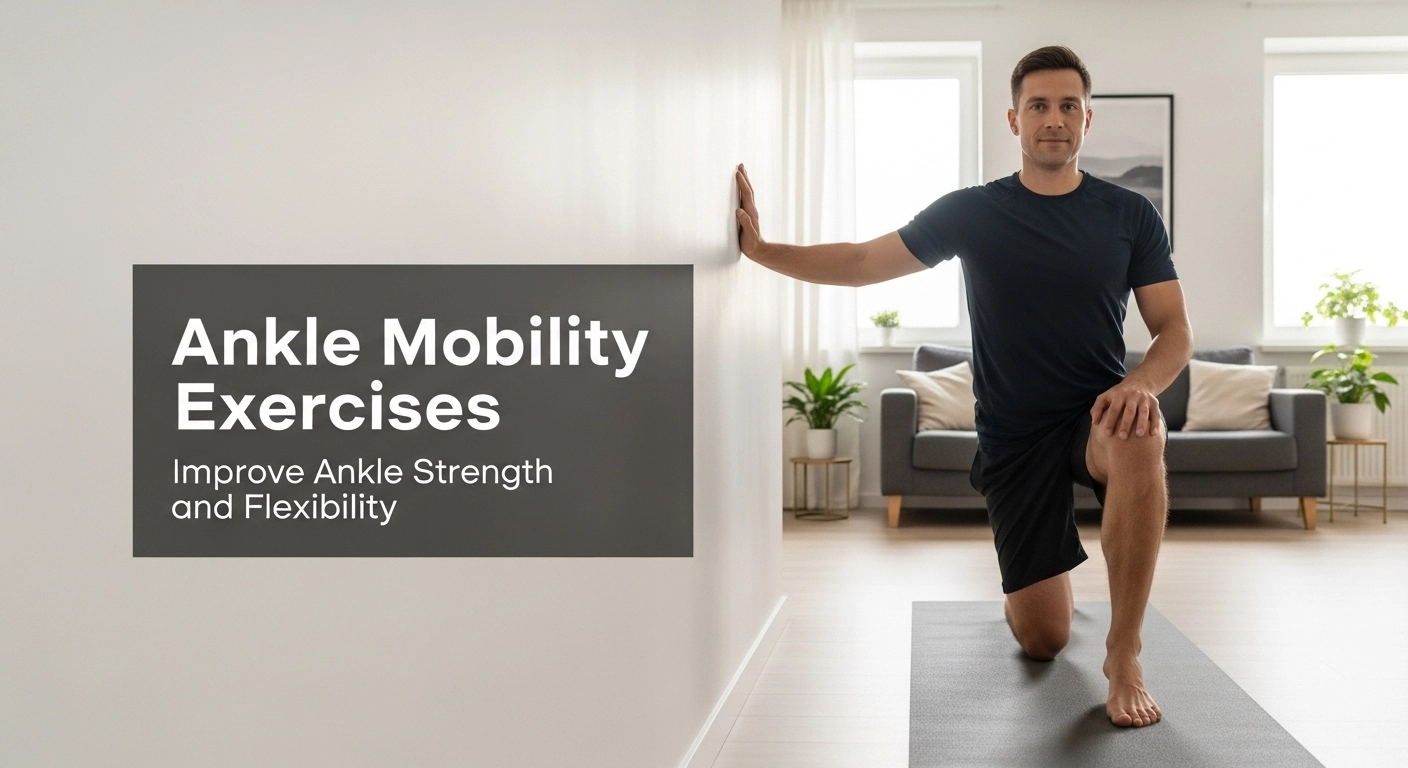
Tight ankles are one of the most common problems people deal with, even if they do not notice it at first. You may feel pain in your heels, calves, or knees when you walk, run, or squat. You may feel stiff when you get out of a chair or go down stairs. For many people, this pain does not come from the knees or hips. It starts at the ankle.
I have seen this again and again with gym users, runners, and people who sit most of the day. In my own training and coaching work, poor ankle movement is often the reason for shallow squats, sore feet, and slow running form. Once people start simple ankle mobility exercises, their movement improves and daily pain often drops in just a few weeks.
Table of Contents
Jump to a sectionUse the links below to jump to the section you need.
- What Is Ankle Mobility?
- Six Movements That Make Up Ankle Mobility
- 3 Benefits of Ankle Mobility
- What Causes Ankle Mobility Issues?
- Ankle Mobility Test
- Ankle Mobility Test Scoring
- Ankle Mobility Stretches and Exercises to Try
- Ankle Mobility Exercises To Try
- Five Specific Ankle Mobility Drills
- How Ankle Mobility Affects Squats
- How Ankle Mobility Helps Runners
- Ankle Mobility for Desk Workers
- Ankle Mobility for Rehab and Weak Ankles
- How Shoes Change Ankle Mobility
- How Often to Do Ankle Mobility Exercises
- When to Be Careful
- How to Tell If Your Ankle Mobility Is Improving
- Frequently Asked Questions
- Conclusion
Takeaway
- Use the wall test to find your starting point.
- Do 5 to 10 minutes most days, not once in a while.
- Keep your heel down when you train dorsiflexion.
- If pain is sharp or your ankle swells, stop and get help.
- Track progress every two weeks, then adjust your routine.
Who This Guide Is For
This guide is for you if your ankles feel tight, stiff, or weak, and you want simple steps that work.
- You sit a lot and feel stiff when you stand up
- You run and want a smoother stride
- You lift weights and want better squats and lunges
- You had an ankle sprain and want safe movement again
- You feel foot, calf, or knee stress that may start at the ankle
What Is Ankle Mobility?

Ankle mobility means how well your ankle moves in all directions.
It controls how far your foot can bend, stretch, and turn.
Good ankle mobility helps you walk, run, squat, and stand with less joint stress.
Poor ankle mobility can lead to pain in the feet, knees, hips, and lower back.
Many people have tight ankles from sitting, old injuries, or weak feet.
Six Movements That Make Up Ankle Mobility
Your ankle moves in six ways:
- Dorsiflexion which means the foot moves up
- Plantarflexion which means the foot moves down
- Inversion which means the foot turns in
- Eversion which means the foot turns out
- Internal rotation
- External rotation
All six motions must work together for smooth movement.
3 Benefits of Ankle Mobility
Reduced Risk of Injury
Better ankle mobility helps your joints handle force.
This lowers the risk of ankle sprains and knee pain.
Have Faster Runs
Free ankle movement helps your foot push off the ground with more control.
This makes running feel smoother.
Get Better Form
Good ankle mobility helps you stay balanced.
This improves squats, lunges, and walking posture.
What Causes Ankle Mobility Issues?
Common causes include:
- Sitting for long hours
- Past ankle sprains
- Arthritis
- Aging
- Tight calf muscles
- Weak foot muscles
- Wearing stiff shoes
These issues limit how far your ankle can move.
Ankle Mobility Test
Stand facing a wall.

Place one foot a few inches away.
Try to touch your knee to the wall without lifting your heel.
If your heel lifts, your ankle mobility is limited.
If your knee touches the wall, your mobility is better.
Ankle Mobility Test Scoring
If your toes are less than 3 inches from the wall and your heel lifts, your ankle mobility is low.
If your toes are 3 to 5 inches from the wall, your mobility is fair.
If your toes are more than 5 inches from the wall and your heel stays down, your mobility is good.
Use this test every two weeks to track change.
Important
Stop if you feel sharp pain, tingling, or numbness. Do not force your ankle if it swells or feels unstable. If you had a serious injury, surgery, or joint disease, talk with a health professional before you start.
Ankle Mobility Stretches and Exercises to Try
These ankle mobility exercises help with pain, stiffness, and daily movement.
Ankle Circles

Move your ankle in slow circles.
Do 10 in each direction.
Calf Stretch
Press the heel down.
Hold for 20 seconds.
Toe Raises
Lift your toes while keeping your heels down.
Do 15 reps.
Standing Heel Drops

Lower your heels slowly from a step.
Do 12 reps.
Foam Roller Calf Release
Roll your calf for 30 seconds.
Heel Toe Rocking
Rock forward and back.
Do 15 reps.
Alphabet Exercise
Write letters in the air with your foot.
Lunges With Ankle Stretch
Push your knee forward while keeping the heel down.
Use This Before Workouts vs Daily
Some moves are better as a quick warm-up. Others are better as daily practice to reduce stiffness.
Good before a workout (1 set each)
- Ankle circles
- Heel toe rocking
- Heel and toe walks
Good daily or after workouts (2 sets each)
- Calf stretch
- Foam roller calf release
- Standing heel drops
- Big toe stretch
- Plantar foot release
Ankle Mobility Exercises To Try
These also build strength.
Elevated Eccentric Calf Raises
Rise on two feet.
Lower on one.
Heel and Toe Walks
Walk on heels.
Then walk on toes.
Ankle Alphabet
This helps joint control.
Big Toe Stretch
Hold for 20 seconds.
Five Specific Ankle Mobility Drills
Banded Ankle Distraction

Use a band around the ankle.
Move the knee forward.
Self Myofascial Release With Massage Stick
Roll the calf and foot.
Forced Dorsiflexion on Box
Drive the knee forward on a box.
Heel Drop Exercise
Lower heels from a step.
Plantar Foot Release
Roll the bottom of the foot on a ball.
Quick Table: What Each Exercise Helps
How Ankle Mobility Affects Squats
During a squat, the ankle must bend forward.

If it cannot, the heels lift.
This makes the knees shift too far and the back lean down.
That adds stress to the knees and lower back.
Better ankle mobility helps you stay upright and go deeper.
How Ankle Mobility Helps Runners
Runners need the ankle to bend and push off.

If it is stiff, the stride becomes short.
This adds stress to the shin, heel, and calf.
Good ankle mobility makes each step smoother.
Ankle Mobility for Desk Workers
Sitting for long hours makes the calves tight.

This pulls the ankle into a stiff position.
Daily ankle mobility work helps reduce stiffness and foot pain from long sitting.
Ankle Mobility for Rehab and Weak Ankles
After an ankle sprain, the joint becomes stiff and unstable.
Light ankle mobility exercises help restore movement.
Start with slow drills like ankle circles and heel toe rocking.
How Shoes Change Ankle Mobility
Shoes with thick heels reduce ankle bend.
They shift weight forward and limit joint use.
Flat and flexible shoes let the ankle move more.
This trains balance and foot control.
How Often to Do Ankle Mobility Exercises
Do ankle mobility exercises every day.
Use 5 to 10 minutes per session.
Do each move for 2 sets.
What Progress Can Look Like
People improve at different speeds, but this is a common pattern if you practice most days.
Most people feel better movement in 2 to 4 weeks.
Some drills work well before workouts.
Others fit better after workouts or before bed.
When to Be Careful
Stop if you feel sharp pain.
Do not force the ankle if it swells or feels unstable.
If you had a serious ankle injury or joint disease, speak with a health professional first.
How to Tell If Your Ankle Mobility Is Improving
Signs include:
- You can get closer to the wall in the test
- Squats feel easier
- Walking feels smoother
- Less foot or knee pain
Frequently Asked Questions
Can I do ankle mobility exercises every day?
Yes. Light ankle mobility drills can be done daily if they feel good and stay pain free. More intense work often fits best three to four times per week.
How long does it take to improve ankle mobility?
Many people feel small changes in one to two weeks. Bigger changes often show up in about four weeks with daily practice.
Should ankle mobility exercises hurt?
A light stretch or pressure is normal. Sharp pain, burning, or joint pain is not. Stop and choose an easier movement if this happens.
Can ankle mobility help knee pain?
Yes. When the ankle moves better, the knee does not have to take extra stress during walking, squats, and running.
Is this useful for runners?
Yes. Better ankle mobility helps push off the ground, reduces calf and heel stress, and supports smoother running form.
Do I need any equipment?
No. Most ankle mobility exercises can be done at home with no tools. A band or small ball can help but is not required.
Conclusion
I have worked with many people who had weak ankles, poor balance, or pain during workouts. Almost all of them had tight ankle movement. When they followed a steady ankle mobility routine, their squats felt stronger, their walking felt smoother, and their foot pain eased. I also use these same exercises in my own training. When my ankles move well, everything else in my body works better. If you test your ankle mobility and practice these exercises each day, you give your body a simple and safe way to move with less pain and more control.
