


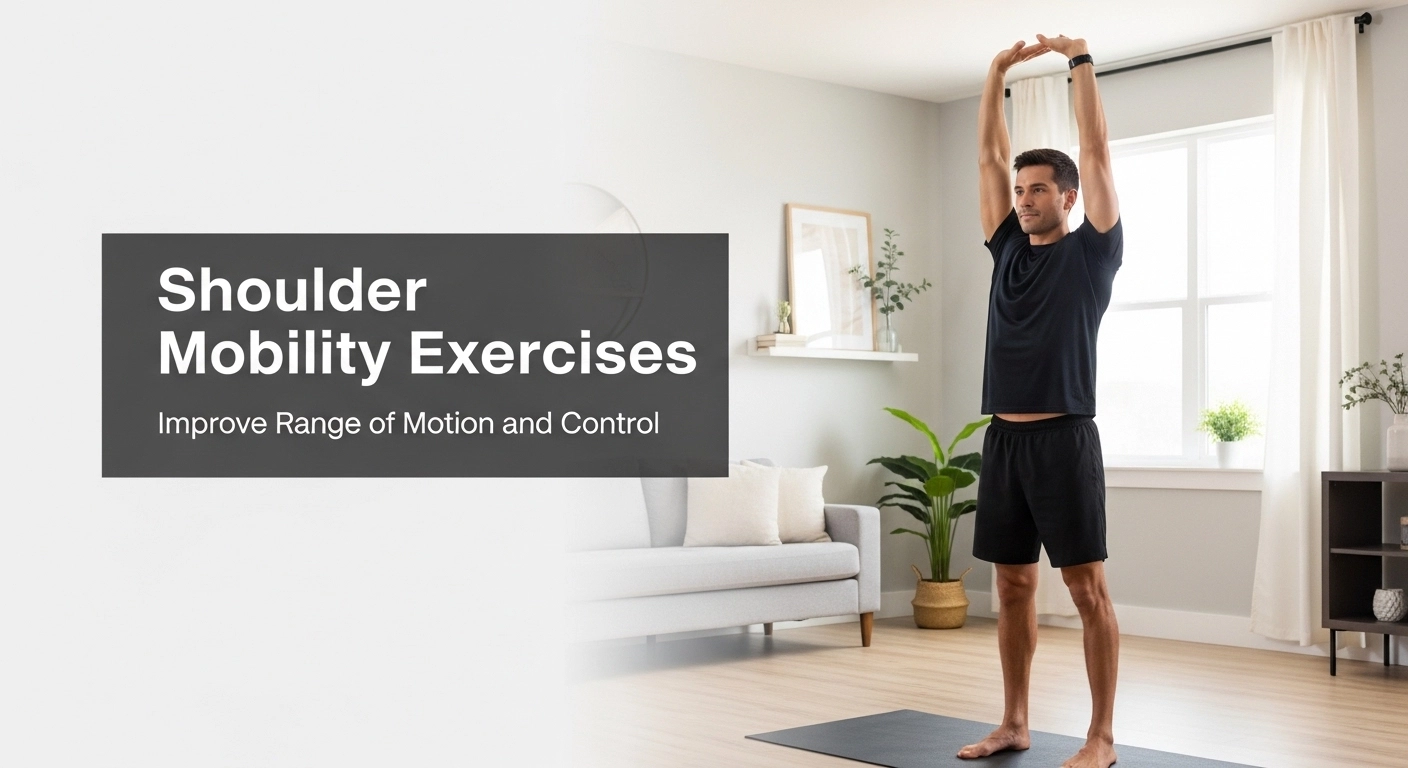
If you sit at a desk, drive a lot, or train in the gym, you may know this feeling. Your shoulders feel tight. Reaching overhead feels hard. Even small moves like putting on a shirt can cause pain. I have felt this too after long work hours and years of lifting. Stiff shoulders can make you feel older than you are and stop you from moving with ease.
I have worked with many people who deal with the same problem. Office workers, gym users, and adults over 30 all face this. Shoulder mobility exercises helped them get back smooth motion and less pain. With short daily drills, they felt safer lifting, sitting, and moving through the day.
Table of Contents
Jump to a sectionUse the links below to jump to the section you need.
- Why Shoulder Mobility Matters
- Causes of Limited Shoulder Mobility
- How to Test Your Shoulder Mobility
- Shoulder Mobility Exercises
- More Shoulder Mobility Drills
- What Some Rehab Hero Drills Do
- Shoulder Blades and Posture
- How Often Should You Work On Shoulder Mobility?
- Simple Daily Shoulder Mobility Plan
- Shoulder Pain and Safety
- How to Keep Your Shoulders Healthy
- Frequently Asked Questions
- Conclusion
Key Takeaways
- Tight shoulders often come from sitting, slouched posture, and a weak upper back.
- A light pull is fine. Sharp pain is not.
- Five to ten minutes a day is enough for most people.
- Shoulder blades matter. Rows and wall angels help a lot.
- Use the quick tests again in 2 to 4 weeks to track progress.
Who This Guide Is For
- Desk workers with tight shoulders or rounded posture
- Gym and home workout people who bench, press, or lift overhead
- Adults over 30 who feel stiff from daily life
- Anyone who wants less soreness and better shoulder range
Why Shoulder Mobility Matters

Your shoulder is a ball and socket joint. It moves in many ways. It lifts your arm up. It moves it back. It also lets you turn your arm.

Good mobility keeps this joint safe. It lowers stress on muscles. It also helps your neck and upper back. When your shoulders move well, your posture looks better and daily tasks feel easy.
Poor mobility can lead to pain. It can make simple things hard. Reaching a shelf may hurt. Putting on a shirt may feel tight. Lifting weights may feel unsafe.
Causes of Limited Shoulder Mobility

Many things can limit how your shoulder moves.
Some common causes are:
- Long hours at a desk
- Slouched posture
- Tight chest muscles
- Weak upper back muscles
- Past injuries
- Little movement in daily life
- Aging
These make the joint stiff. They also pull the shoulder forward, which leads to neck and upper back strain.
How to Test Your Shoulder Mobility
You can check your range at home.
Overhead Reach

Stand tall. Raise both arms over your head.
Can you keep your arms close to your ears?
If not, your mobility is low.
Behind the Back Reach
Put one hand behind your back.
Reach the other from above.
If they do not touch, your shoulders are tight.
Wall Slide
Stand with your back on a wall.
Arms in a goal post shape.
Slide them up.
If they move away from the wall, your range is low.
These tests help you track progress.
Shoulder Mobility Exercises
These moves help pain, posture, and workout safety.
Standing Child’s Pose
Stand with feet apart.
Bend forward.
Hands on a chair or wall.
Push your chest down.
Hold for 20 seconds.
Wall Slides
Back on a wall.
Arms bent.
Slide them up and down.
Do 10 slow reps.
Open Book Rotation

Lie on your side.
Arms in front.
Open the top arm back.
Do 10 reps each side.
Seated Cat Cow
Sit tall.
Round your back.
Then lift your chest.
Do 10 reps.
Tricep Stretch
Lift one arm.
Bend the elbow.
Pull it back.
Hold 20 seconds.
Seated Assisted External Rotation
Sit upright.
Hold a band or towel.
Move the arm out to the side.
Do 12 reps.
Resisted Side Raise
Hold a band.
Lift arm to the side.
Do 10 reps.
Resisted Forward Shoulder Raise
Lift arm in front.
Stop at shoulder height.
Do 10 reps.
Seated Resisted Rows
Sit tall.
Pull a band back.
Squeeze shoulder blades.
Do 12 reps.
Plank
Hands and toes on the floor.
Keep body straight.
Hold 20 to 30 seconds.
This helps shoulder control.
More Shoulder Mobility Drills
These drills give more range and joint control.
- Shoulder CAR
- Wall Angel
- Shoulder Swimmers
- T-Y Raise
- A-T Raise
- Y-Raise Rotation
- T-Raise Rotation
- Sleeper Stretch RAIL
- Sleeper Stretch PAIL
What Some Rehab Hero Drills Do
Shoulder CAR

Moves the joint in a slow circle. This keeps motion smooth.
Sleeper Stretch RAIL and PAIL
Targets the back of the shoulder. This helps desk workers and lifters.
T-Y-A Raises
Train the upper back and shoulder blades. This supports posture.
Shoulder Blades and Posture
Your shoulder blades guide how your arms move. If they are weak or stuck, your shoulders feel tight and sore.

Moves like wall angels, rows, and T-Y raises train these muscles. They help keep the joint steady and lower neck pain.
Sit tall. Keep your chest open. This helps your shoulders rest in a better spot.
How Often Should You Work On Shoulder Mobility?
Light drills can be done every day.
Harder drills can be done three to four times a week.
Five to ten minutes is enough.
Simple Daily Shoulder Mobility Plan
What to Do for Common Shoulder Problems
This plan fits busy days.

- Wall slides, 10 reps
- Open book rotation, 10 each side
- Seated resisted rows, 12 reps
- Shoulder CAR, 5 slow circles each arm
- Tricep stretch, 20 seconds each side
This helps pain, posture, and workout prep.
Shoulder Pain and Safety
These moves should feel smooth. A light pull is fine. Sharp pain is not.
Stop if pain grows. Rest if soreness lasts more than one day. If you feel night pain or loss of strength, see a health expert.
If you had a past tear or surgery, move slow.
Important
This guide is for general shoulder mobility and flexibility. If you have a medical condition or injury, talk to a qualified professional before doing these exercises.
How to Keep Your Shoulders Healthy
Move often.
Do not sit in one spot too long.
Warm up before workouts.
Use slow and steady motion.
Rest when your shoulders feel tired.
Shoulder mobility exercises help you feel better, move with ease, and train with less risk. Stay steady. Small steps add up.
Frequently Asked Questions
Can I do shoulder mobility exercises every day?
Yes. Light drills can be done daily if they feel good and stay pain-free. Harder sessions often work best 3 to 4 times per week.
Should shoulder mobility work hurt?
A light pull is normal. Sharp pain, burning, numbness, or joint pinching is not. Stop and choose an easier move.
How long until I see results?
Many people feel small changes in 1 to 2 weeks. Bigger changes often show up in 4 to 6 weeks if you stay consistent.
Is this helpful for lifting and overhead workouts?
Yes. Use wall slides, open book rotation, and rows as a warm-up. Add shoulder CARs for control before pressing overhead.
Can shoulder mobility help posture?
Yes. Work on shoulder blades with rows, wall angels, and T-Y-A raises, and take short movement breaks during the day.
Conclusion
After using shoulder mobility exercises for years in my own routine and with others, one thing stays clear. Short daily work brings better results than long sessions done once in a while. When you keep your shoulders moving, pain drops, posture gets better, and daily life feels easier. If your shoulders feel stiff or sore, start slow and stay steady. These simple moves can help your joints stay strong and free.
